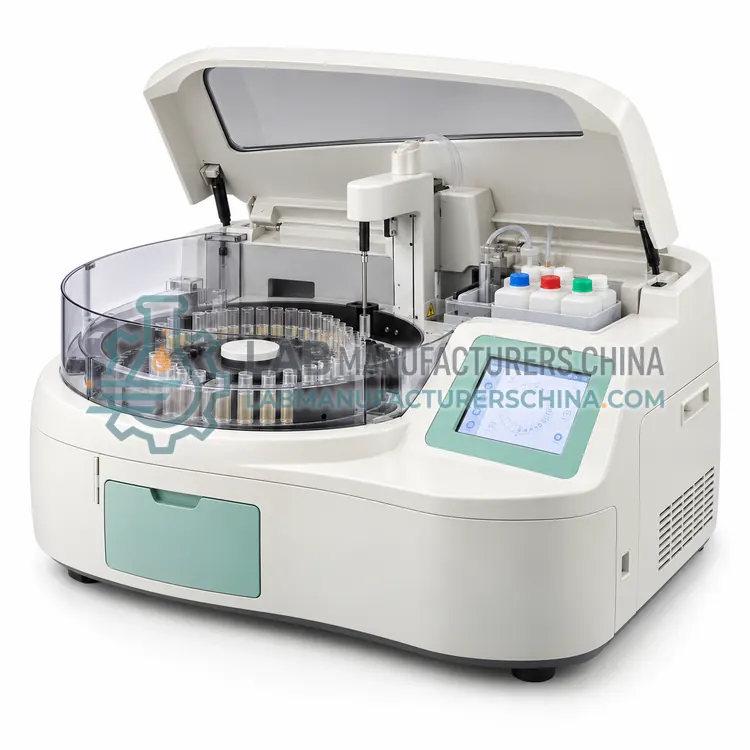
How do Semi-Automatic Analyzers work?
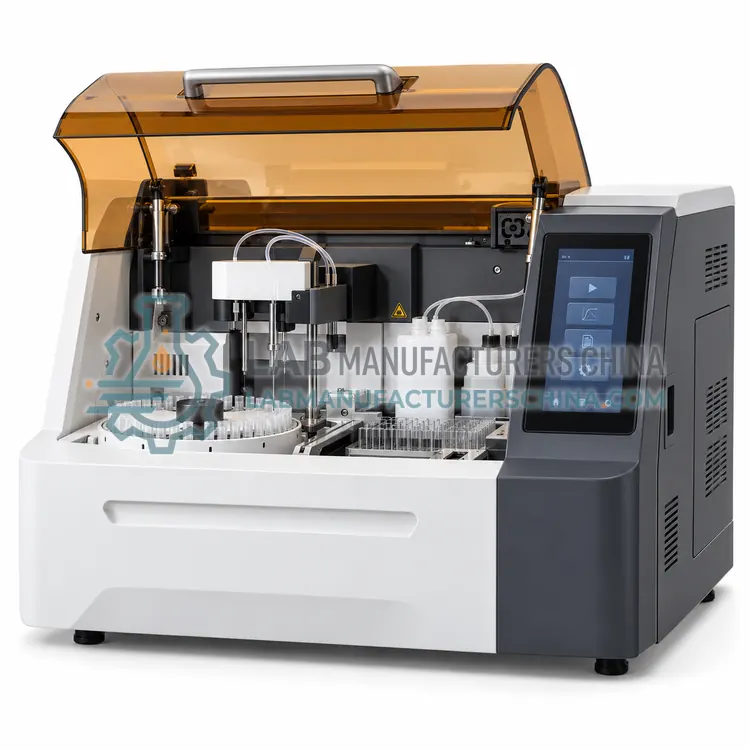
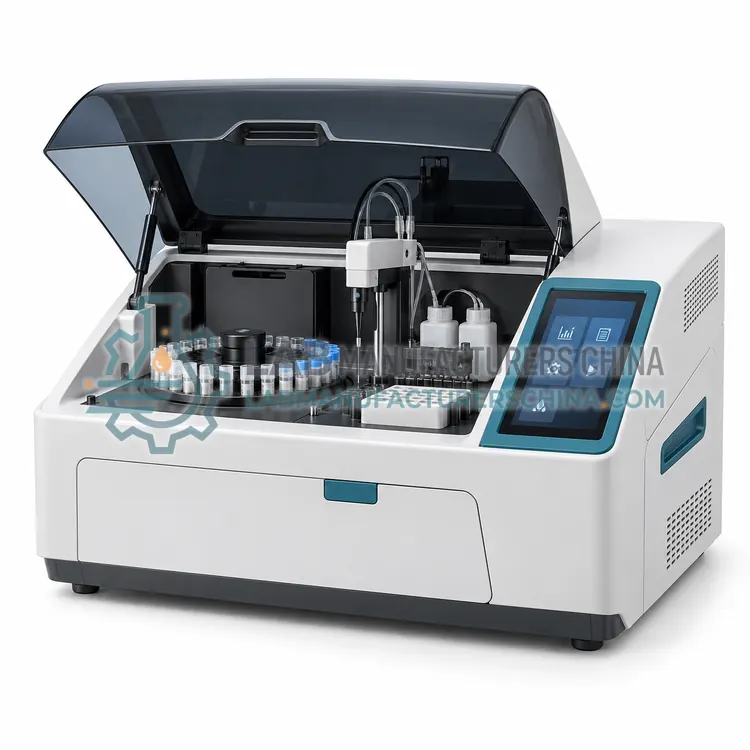
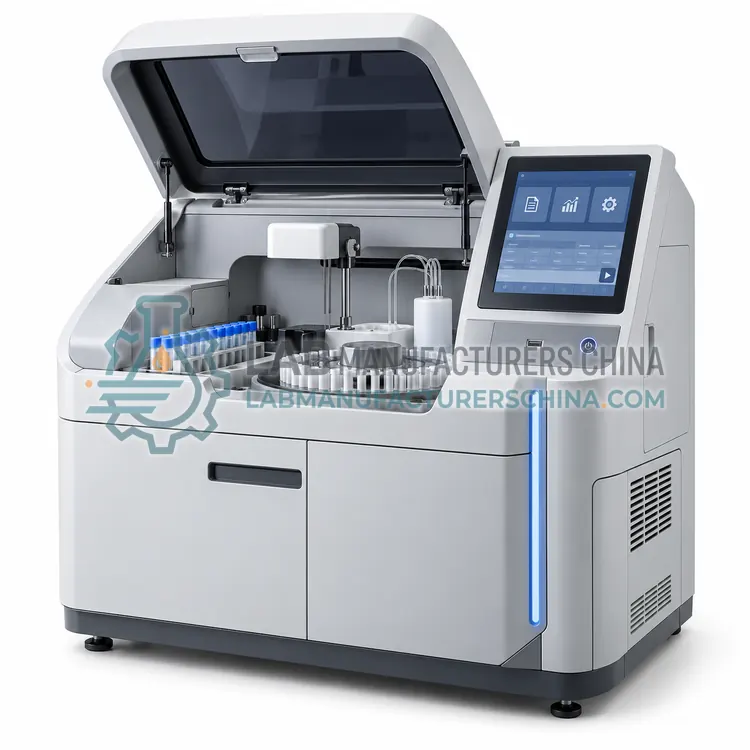
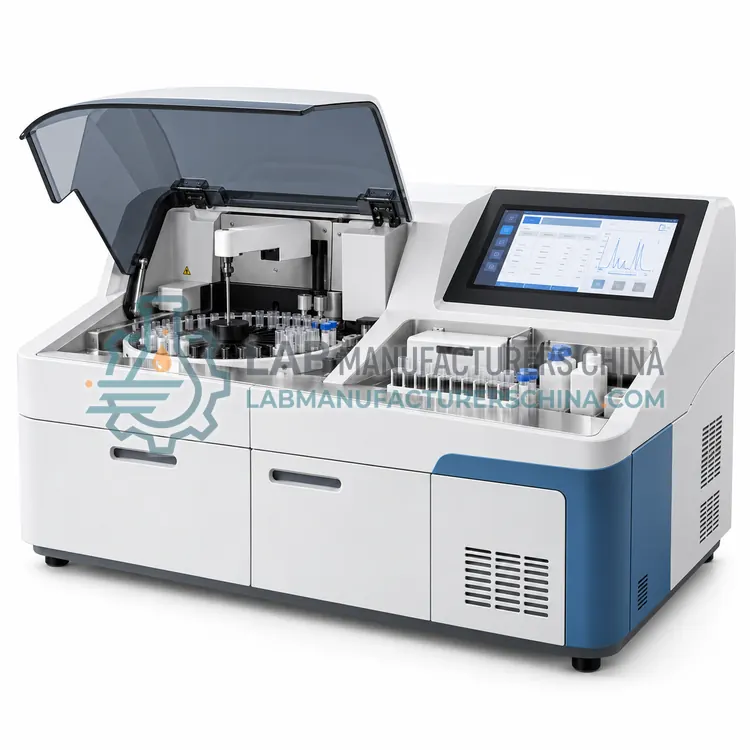
A semi-automatic analyzer contains a light source, a wavelength selector such as interference filters or a grating, a temperature-controlled measuring position and a photodetector. The operator pipettes a measured volume of sample and working reagent into a cuvette or into a flow-through cell, mixes, and starts the reading. The instrument records absorbance at one or more wavelengths at fixed intervals, applies endpoint, kinetic or fixed-time calculation according to the selected program, and converts the signal into concentration using a stored calibration curve. Because the reaction temperature strongly affects enzyme kinetics, the measuring position is held at 37 degrees Celsius or at another programmed temperature, usually within 0.1 degrees Celsius. The operator's pipetting technique, cuvette cleanliness and correct reagent preparation determine the quality of the result, which is why training and written procedures matter more on this platform than on a fully automatic analyzer.
Which Semi-Automatic Analyzers variants are available?
- Semi-Automatic Biochemistry Analyzer with Flow-Through Cuvette — This analyzer aspirates the reaction mixture into a fixed flow-through cuvette, reads absorbance, then washes the cell for the next sample.
- Semi-Automatic Biochemistry Analyzer with Open Reagent Channels — This variant is programmed for user-defined assays so that the laboratory can run third-party reagents, giving flexibility and low reagent cost.
- Semi-Automatic Biochemistry Analyzer with Integrated Incubator — This model includes a temperature-controlled incubation block for reaction tubes or cuvettes on the instrument itself, so that the reaction temperature is defined by the analyzer rather than by an external bath.
- Portable Semi-Automatic Biochemistry Analyzer — A portable semi-automatic analyzer packages the photometer, filters and battery power in a carrying case for field, mobile clinic and veterinary use.
- Semi-Automatic Discrete Chemistry Analyzer with Single Cuvettes — This analyzer reads disposable or reusable single cuvettes one at a time, with no shared flow path, so carryover between samples is eliminated.
How do I choose the right variant?
Choose a semi-automatic analyzer when the budget is limited, when fewer than about one hundred tests are performed per day, or when the reagent menu changes often and single-channel flexibility is valuable. Compare models by the wavelength range and filter set, whether they use a flow-through cell or single cuvettes, the temperature control accuracy, and the calculation modes supported. A flow-through cell reduces cuvette cost but needs careful cleaning between samples to avoid carryover, while disposable cuvettes simplify workflow at higher consumable cost. Check the number of stored programs, the ability to run two-point and multi-point calibration, and whether the analyzer can print or export results. Confirm that reagents are open, since proprietary reagents on a semi-automatic platform usually negate the cost advantage.
Where are Semi-Automatic Analyzers used?
Semi-Automatic Analyzers are specified in low-volume clinical chemistry testing, rural and outreach clinics, veterinary biochemistry and teaching and research laboratories.
Which standards and certifications apply?
Work with Semi-Automatic Analyzers is commonly governed by ISO 15189, CLSI EP05, CLSI EP06, CLSI C24, IEC 61010-1 and IEC 61010-2-101. Instrument certifications such as CE marking are confirmed per configuration and never assumed.
What are the key considerations before purchase?
Install the analyzer on a level bench away from draughts, direct sunlight and vibration, with a stable power supply and a grounded outlet. Verify performance at installation with a reference material or an assigned sample, and check the temperature of the measuring position with an external thermometer. Daily work should include a distilled water blank, a control sample at normal and abnormal levels, and cleaning of the flow cell or cuvette holder. Replace lamps at the end of their rated life or when the blank absorbance rises, keep filters clean and dry, and store reagents according to the label. The laboratory must document operator competence, since results depend on pipetting accuracy, and should review calibration at each new reagent lot.