How do Chemistry Workstations work?
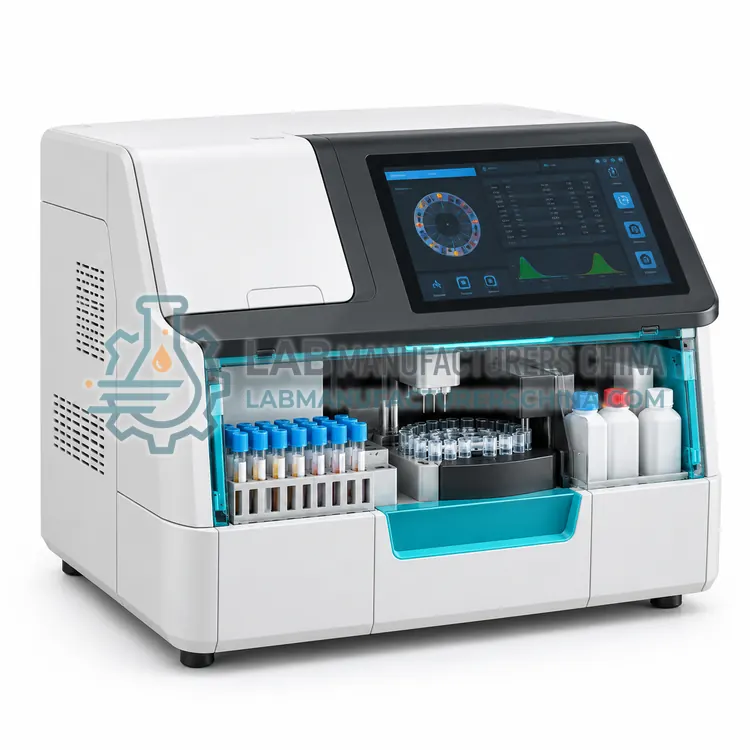
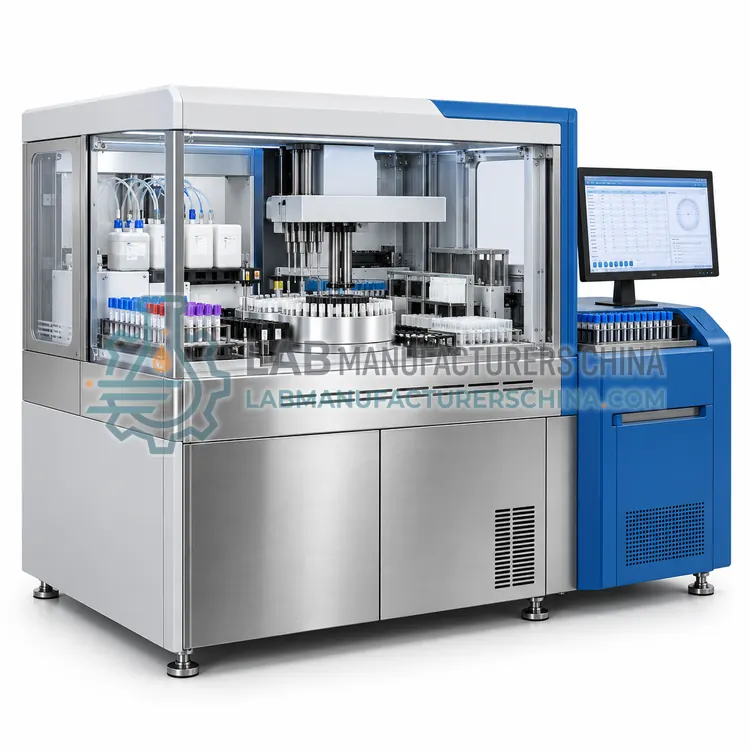
A chemistry workstation is defined by integration rather than by a single measurement principle. Photometric modules using interference filters or gratings measure colorimetric and enzymatic reactions, ion-selective electrode modules measure sodium, potassium, chloride and calcium, and immunoturbidimetric modules measure specific proteins from the light scattered by antigen-antibody complexes. Around these analytical modules the workstation adds pre-analytical handling such as rack loading, tube inspection with cameras for volume and hemolysis assessment, sorting to the correct module, and post-analytical storage of the tubes in a refrigerated archive. Middleware coordinates sample routing, applies reflex and rerun rules, tracks reagent inventory across modules and manages quality control in one record set. Interfaces to the laboratory information system use HL7 or ASTM, so the workstation appears to the user as one analytical unit with a single worklist.
Which Chemistry Workstations variants are available?
- Consolidated Clinical Chemistry Workstation — A consolidated clinical chemistry workstation combines a high-throughput chemistry analyzer with integrated ion-selective electrode and immunoturbidimetry modules under one control system.
- Modular Chemistry Workstation with Expandable Analyzer Units — This workstation is built from identical analyzer units that can be added one at a time, sharing one software and one reagent concept.
- Automated Chemistry Workstation with Sample Sorter and Archiver — This workstation adds barcode-driven sample sorting and a refrigerated archive to the chemistry platform, so tubes are routed to the correct analyzer and stored automatically after testing.
- Chemistry and Immunoassay Integrated Workstation — This workstation integrates a chemistry analyzer with an immunoassay module so that biochemical and immunochemical tests run from the same tube under one worklist.
- Track-Connected Chemistry Workstation for Core Laboratories — This workstation connects to a laboratory automation track, receiving tubes by barcode and returning them to the track after analysis.
How do I choose the right variant?
Decide a workstation configuration only after mapping your test menu by module and your daily tube count, because the integrated platform pays back through reduced handling and consolidated reporting rather than raw speed. Compare candidate systems by which modules can be combined, whether sorting is barcode-driven, whether tube inspection for hemolysis and icterus is included, and how much refrigerated archive capacity is offered. Check that middleware can implement your review rules and that it communicates through a single LIS connection. Confirm the space, water, drainage and power requirements of each module plus the archive, and the validation workload at installation. Ask whether the configuration can be expanded with another module later, and whether the archive can be upgraded independently of the analyzers.
Where are Chemistry Workstations used?
Chemistry Workstations are specified in high-volume consolidated biochemistry testing, core laboratory workflows with automated sorting, multi-module specific protein and electrolyte testing and laboratories with refrigerated sample archiving requirements.
Which standards and certifications apply?
Work with Chemistry Workstations is commonly governed by ISO 15189, CLSI AUTO10, CLSI EP05, CLSI EP06, CLSI C24, IEC 61010-1 and IEC 61010-2-101. Instrument certifications such as CE marking are confirmed per configuration and never assumed.
What are the key considerations before purchase?
A workstation installation is a project rather than a single delivery: plan power distribution, network points, water supply and drainage, air conditioning and floor loading for every module in advance. Verify each analyzer module individually, then validate the integrated workflow for sorting accuracy, sample inspection results, middleware rules and archive retrieval. Build the reagent and consumable logistics for all modules into one inventory system, because running out of one reagent stops the affected channel without stopping the platform, which can mask the problem. Define and rehearse a partial-downtime procedure, clean sample paths and cameras daily, and monitor that middleware rules continue to match the clinical requirements after any software update.