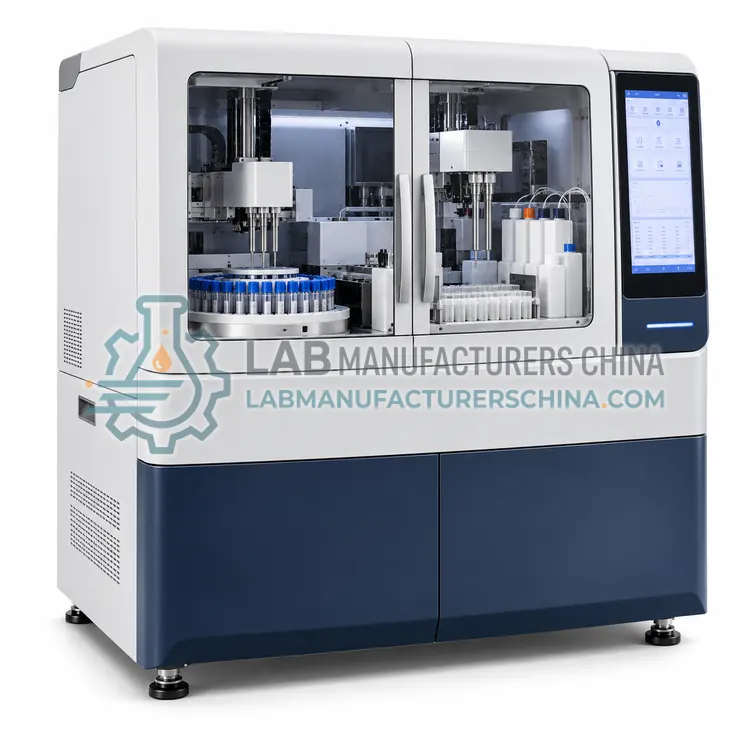
How do Fully Automatic Analyzers work?
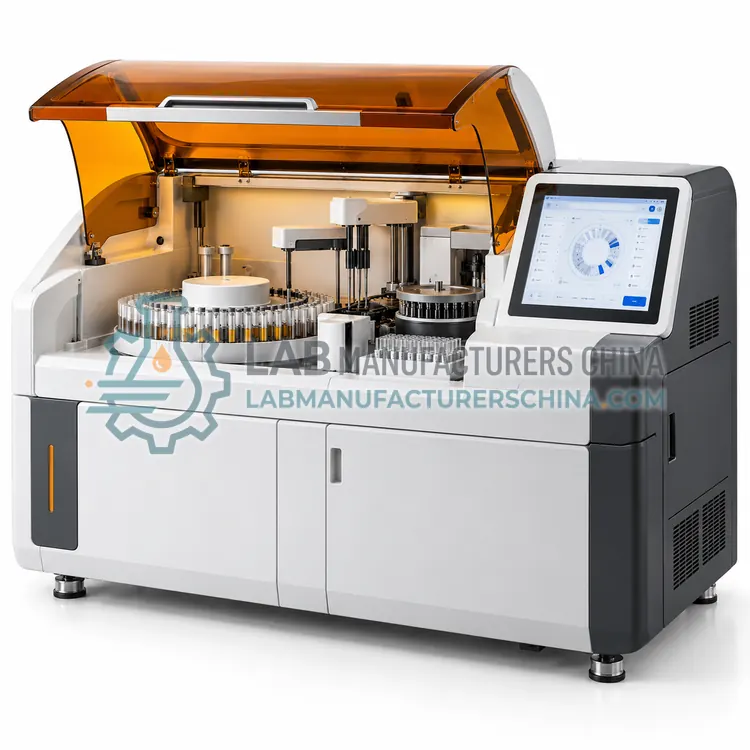
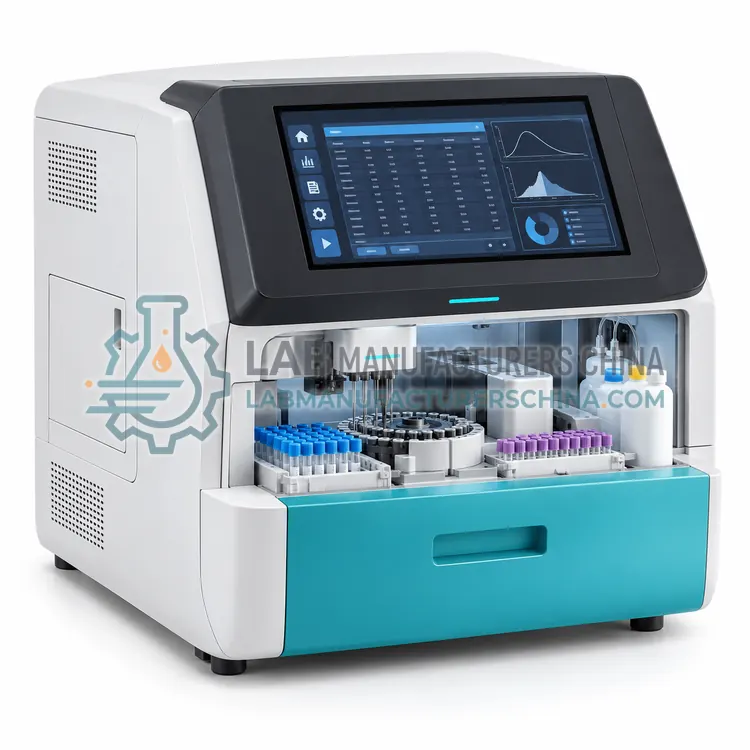
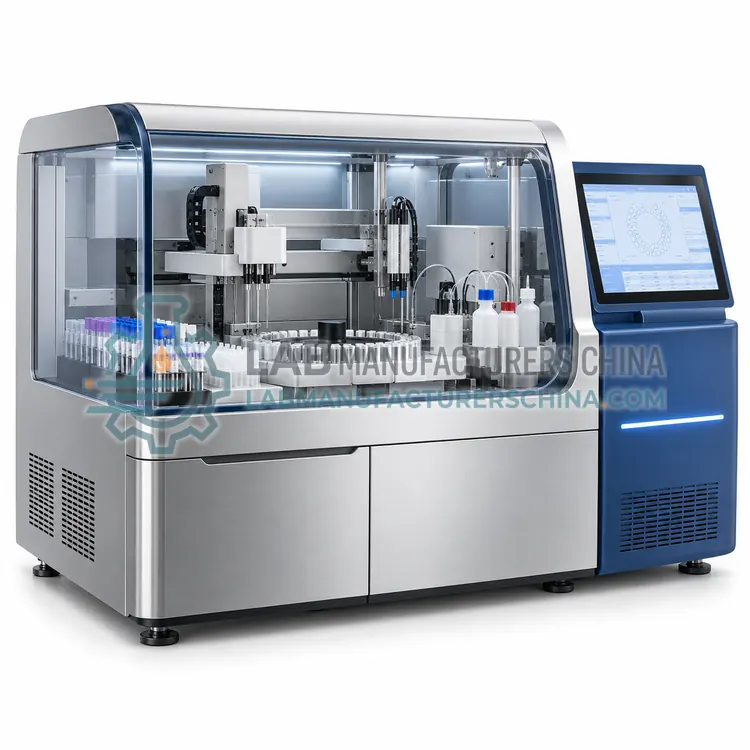
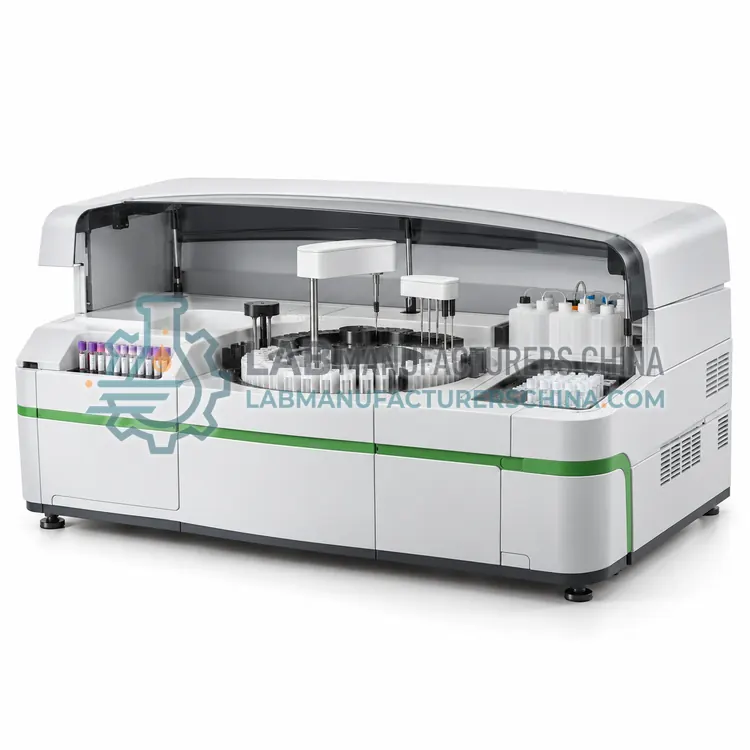
A fully automatic analyzer moves tubes from a sample tray or rack to an aspiration station, where a probe with liquid-level and clot detection withdraws a measured volume. Reagent probes add the programmed volumes from refrigerated reagent positions, and the mixture is delivered into a reaction cuvette on a thermostatted rotor held at 37 degrees Celsius. A photometer with interference filters or a diffraction grating reads absorbance at several wavelengths, and the software applies the programmed calculation mode, converts the signal into concentration using the calibration curve and flags results that fall outside the linear range. Automatic dilution and rerun, carryover-free cuvette washing, onboard quality control with Levey-Jennings charts, and reagent inventory tracking are standard. Sample and reagent barcodes, patient demographics and test orders pass between the analyzer and the laboratory information system through HL7 or ASTM interfaces.
Which Fully Automatic Analyzers variants are available?
- Benchtop Fully Automatic Chemistry Analyzer — A benchtop fully automatic chemistry analyzer provides random-access testing with automatic sample and reagent handling on a footprint of about one square meter.
- Floor-Standing Fully Automatic Chemistry Analyzer — A floor-standing chemistry analyzer uses a larger reaction rotor, bigger reagent storage and a high-throughput sample handler to deliver 800 to 2000 tests per hour.
- Random-Access Fully Automatic Chemistry Analyzer with STAT Priority — This analyzer accepts any combination of tests in any order, inserts emergency samples immediately and reports the first result within a few minutes.
- Fully Automatic Chemistry Analyzer with Integrated ISE Module — This analyzer includes an ion-selective electrode module that measures sodium, potassium, chloride and sometimes calcium from the same sample as the photometric tests.
- Fully Automatic Chemistry Analyzer with Immunoturbidimetry Module — This analyzer integrates immunoturbidimetric detection for specific proteins such as CRP, immunoglobulins and transferrin, so that protein assays run alongside routine chemistry.
How do I choose the right variant?
Size the analyzer by daily and peak-hour test volume, then add thirty percent headroom for repeats and quality control. Determine whether you need open reagent channels for cost control or a closed system for convenience. Check the reaction cuvette type, because reusable cuvettes lower consumable cost but require a wash station, while disposable cuvettes simplify maintenance. Confirm the sample volume, which matters for pediatric work, and the reagent capacity per shift. Decide which integrated modules you need, such as ion-selective electrodes for sodium and potassium or immunoturbidimetry for specific proteins. Verify STAT access, first-result time, onboard water consumption and waste handling, LIS interface protocols, and the local availability of service, spare parts and application support before ordering.
Where are Fully Automatic Analyzers used?
Fully Automatic Analyzers are specified in hospital routine and emergency chemistry, metabolic, liver, kidney and lipid panels, specific protein measurement by immunoturbidimetry and therapeutic drug monitoring on open platforms.
Which standards and certifications apply?
Work with Fully Automatic Analyzers is commonly governed by ISO 15189, CLSI EP05, CLSI EP06, CLSI EP07, CLSI C24, IEC 61010-1 and IEC 61010-2-101. Instrument certifications such as CE marking are confirmed per configuration and never assumed.
What are the key considerations before purchase?
The analyzer needs a stable, level floor or bench with adequate load capacity, a dedicated grounded power supply, controlled temperature and humidity, and purified water of consistent quality. Verify performance at installation with precision, linearity, carryover and method comparison studies following CLSI protocols, and validate the reference intervals against the local population. Daily tasks include checking water quality, reagents and waste, running two or three levels of control and reviewing the calibration status. Weekly and monthly maintenance covers probe cleaning, cuvette washing efficiency and photometer checks, and lamps, tubing and syringes are replaced on schedule. Instruments that handle patient samples must be decontaminated according to the manufacturer procedure before service, and all waste is treated as infectious.