
Laboratory Furniture
实验室家具
CLFU · Laboratory Infrastructure · 5 product types · 25 models
By Lab Manufacturers China Technical TeamLast reviewed
What are Laboratory Furniture?
Laboratory furniture covers benches, island and wall units, storage cabinets and sink units built from chemically resistant, load-rated materials. It provides the work surfaces, storage and service connections that laboratories need, and is specified by bench material, load capacity, service layout and compliance with casework standards.
5 product types in Laboratory Furniture
The 5 product types below are grouped by the exact instrument you need.
- LAB5 models
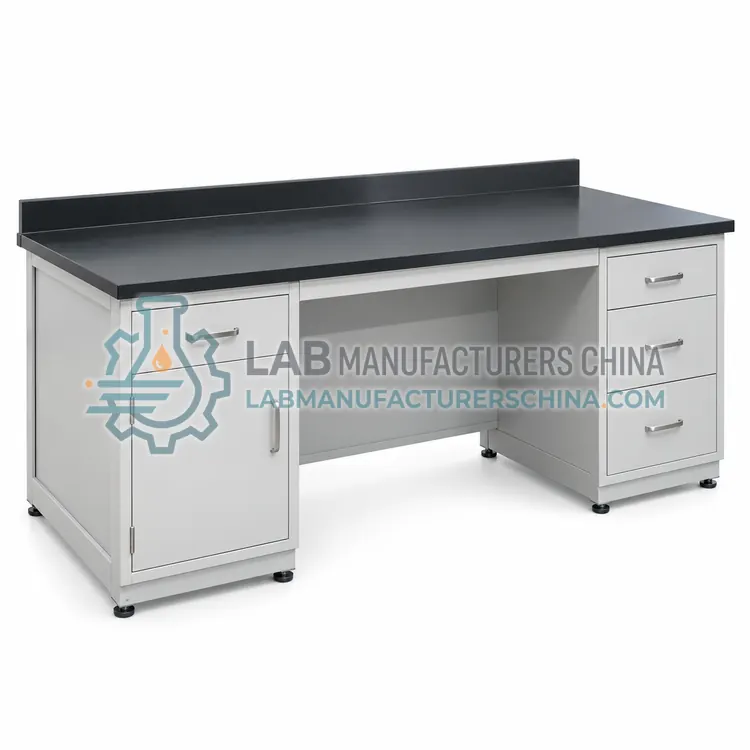
Laboratory Benches
实验台
Laboratory benches are fixed or modular work surfaces with integrated frames and base cabinets that support instruments, sample handling and wet chemistry. They are specified by worktop material, chemical resistance, load capacity and service provision. Chemistry, biology, physics and QC laboratories use them as the primary workstation.
- ISB5 models
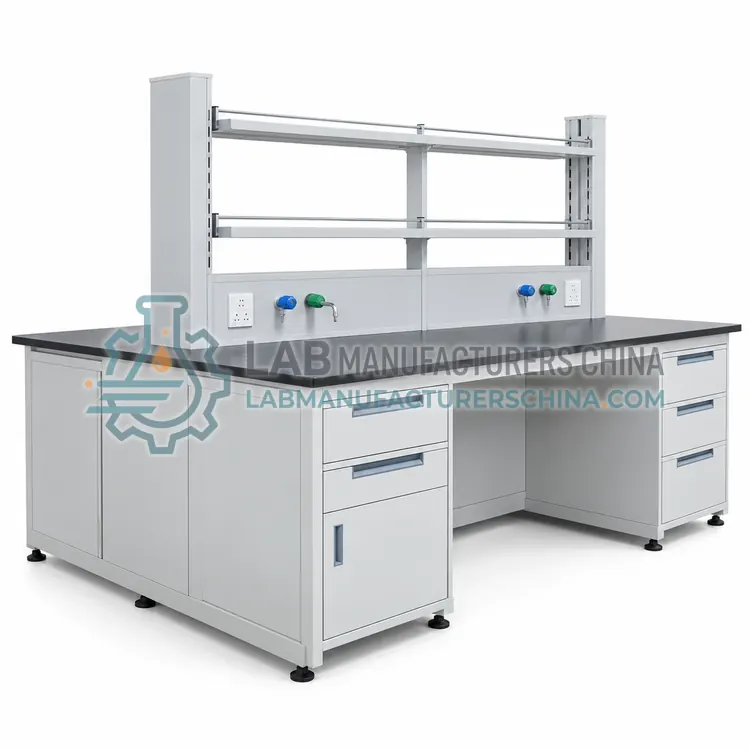
Island Benches
中央实验台
Island benches are freestanding laboratory work stations accessible from all sides, placed in the middle of a room and supplied with services from above or through the floor. They support group work and multi-user workflows in teaching, research and pharmaceutical laboratories.
- WAB5 models
Wall Benches
靠墙实验台
Wall benches are laboratory work surfaces installed against a wall, with base cabinets below and reagent shelves or service panels above. They use wall-mounted services for electricity, gas and water, and are the most space-efficient bench layout for rooms with perimeter utilities.
- SCA5 models
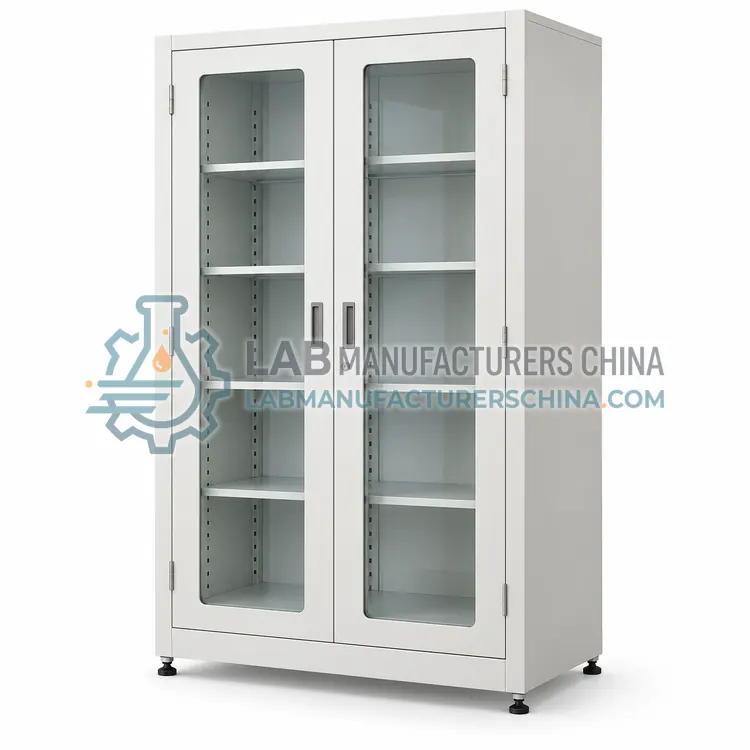
Storage Cabinets
储物柜
Laboratory storage cabinets are enclosed casework units for glassware, consumables, instruments, records and non-hazardous reagents. They are built from steel, stainless steel or moisture-resistant wood and are sized to fit standard bench modules in chemistry, biology and quality control laboratories.
- SIU5 models
Sink Units
水槽单元
Laboratory sink units are cabinet-mounted or bench-integrated basins with taps and waste fittings for rinsing glassware, washing hands and handling aqueous waste. They are made from polypropylene, epoxy resin or stainless steel, selected by chemical exposure, temperature and cleanliness requirements.
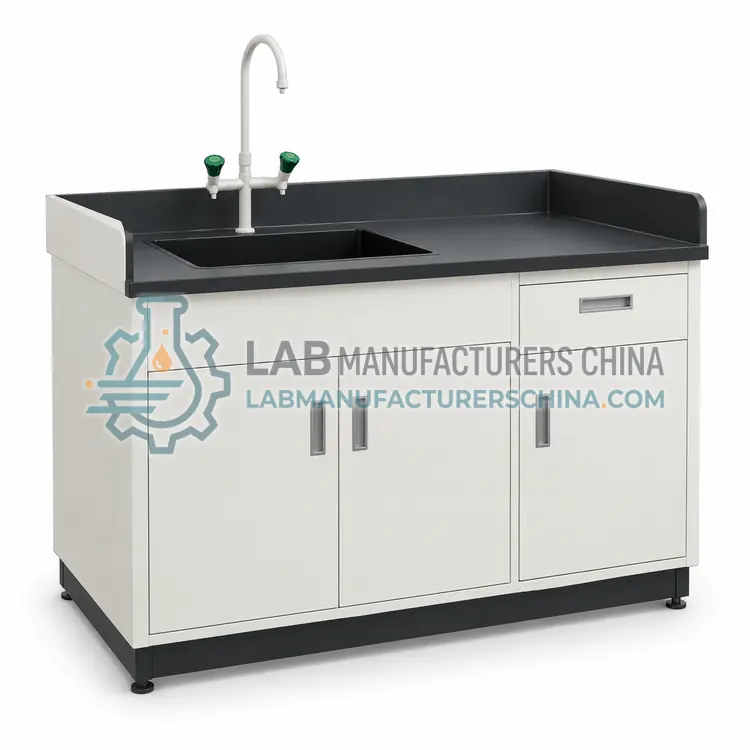
What are Laboratory Furniture?
Laboratory furniture is the fixed and mobile casework that forms a laboratory's work environment: benches, island and peninsula units, wall benches, storage cabinets, sink units and their service fittings. Unlike office furniture, it must resist acids, alkalis, solvents, heat and frequent cleaning, carry heavy instruments, and integrate gas, water, vacuum and electrical services. Frames are usually powder-coated steel, stainless steel or solid wood, while worktops are phenolic resin, epoxy resin, solid-grade laminate, ceramic or stainless steel. The category is selected during laboratory design and fit-out, where layout, flexibility, ergonomics and safety distances are planned together with fume hoods, cabinets and services. Buyers compare working-surface chemical resistance, static load per square metre, modularity, cabinet construction and the availability of test reports against recognised casework standards.
How do Laboratory Furniture work?
Laboratory furniture works as a structural and service system rather than a powered instrument. A load-bearing frame, often a C-frame, H-frame or cantilever, carries the worktop and any shelving, while adjustable feet level the assembly on uneven floors. Worktops provide the chemical, thermal and abrasion resistance, and their edges, drip grooves and coves contain spills. Service spines or pedestals deliver water, gas, vacuum, compressed air and power to the point of use, and drain lines run through sink units to waste systems. Storage cabinets use sealed carcasses, hinged or sliding doors and adjustable shelves, with ventilation or liners for chemicals where required. Modular systems use standard widths, such as 600, 900 and 1200 mm, so benches can be reconfigured as work changes. Mobile and height-adjustable versions add flexibility without altering the services layout.
Where are Laboratory Furniture used?
Laboratory furniture is installed wherever experimental work is performed: chemistry and analytical laboratories, teaching and training facilities, pharmaceutical quality control, biology and clinical laboratories, electronics and materials testing, and food and environmental testing. Chemistry benches with acid-resistant tops serve wet work, while instrument benches with anti-vibration or ESD-safe surfaces carry balances, spectrometers and microscopes. Island benches support shared, collaborative work in research and teaching, wall benches use perimeter space efficiently, and sink units provide rinsing and waste points. Storage cabinets organise glassware, reagents, samples and consumables close to the work area. Correct furniture selection reduces contamination, protects instruments from vibration and spills, and supports safe working postures during long procedures.
Which standards apply to Laboratory Furniture?
Laboratory furniture is commonly evaluated against SEFA 8 for laboratory-grade casework, EN 13150 for laboratory workbenches and EN 14056 for design and installation, with GB 24820 as the Chinese national standard for laboratory furniture. Worktop materials are tested for chemical resistance, for example to reagents in EN 13150 and SEFA 8.1, and for heat, impact and scratch resistance. Flammable-liquid storage cabinets are assessed to EN 14470-1, and electrical components to IEC 61010-1 where services are integrated. Test reports from an accredited laboratory, not merely claims, should be requested. Certificates listed in a quotation are candidates until verified for the specific model and material.
How do I select the right laboratory furniture equipment?
Start from the work performed. Wet chemistry needs chemically resistant tops such as epoxy or phenolic resin, while biology and pharma may prefer stainless steel for disinfection. Check the static load, since instrument benches for balances, centrifuges or ICP systems may need 300 kg per metre or more. Then decide the layout: island benches suit collaborative work and need floor services, wall benches suit perimeter layouts, and mobile or height-adjustable benches suit changing workflows. Match carcass material to the environment, choosing steel, stainless steel or polypropylene. Plan storage and sink quantities per scientist, and confirm service routing, clearances and accessibility. Compare warranty, test reports and modular widths, and verify delivery and installation arrangements.
Laboratory Furniture comparison
| Subcategory | Principle | Typical use | Key spec |
|---|---|---|---|
| Laboratory Benches | Frame plus resistant worktop | General wet and dry work | Load 150–300 kg/m; top 25–30 mm |
| Island Benches | Free-standing bench with floor services | Collaborative research and teaching | Width 1500–2400 mm; service spine |
| Wall Benches | Bench against wall with wall services | Perimeter layouts, instrument stations | Depth 600–750 mm; reagent shelf |
| Storage Cabinets | Sealed carcass with shelves and doors | Glassware, reagents, samples | Width 600–1200 mm; steel or PP |
| Sink Units | Basin, tap and trap in casework | Rinsing and waste handling | Basin 15–40 L; DN40–50 waste |
Frequently asked questions about Laboratory Furniture
Laboratory furniture is chemically resistant, load-rated casework that includes benches, island and wall units, storage cabinets and sink units. It supplies the work surfaces, storage and service connections needed for laboratory procedures and is selected by material, load capacity, layout and compliance with casework standards.
It depends on the work. Epoxy resin gives the broadest chemical resistance for wet chemistry, phenolic resin suits general use and cost control, stainless steel suits biology and cleanroom areas, and ceramic tops handle heat. Compare tested chemical resistance rather than general claims.
General benches are commonly rated for 150–300 kg per metre of length, while instrument benches for centrifuges, balances or heavy analyzers may need higher ratings or reinforced frames. Specify the heaviest instrument and its footprint so the supplier can confirm the rating.
An island bench stands free in the room with access on all sides and carries services from the floor or ceiling. A wall bench sits against a wall and takes services from wall ducts. Islands support collaboration, while wall benches use perimeter space efficiently.
Suppliers can usually provide test reports to standards such as SEFA 8 or EN 13150 for specific models, but certificates should be verified per model and material. Requests for certified status should be confirmed in writing before order, not assumed from catalogue descriptions.
Related categories
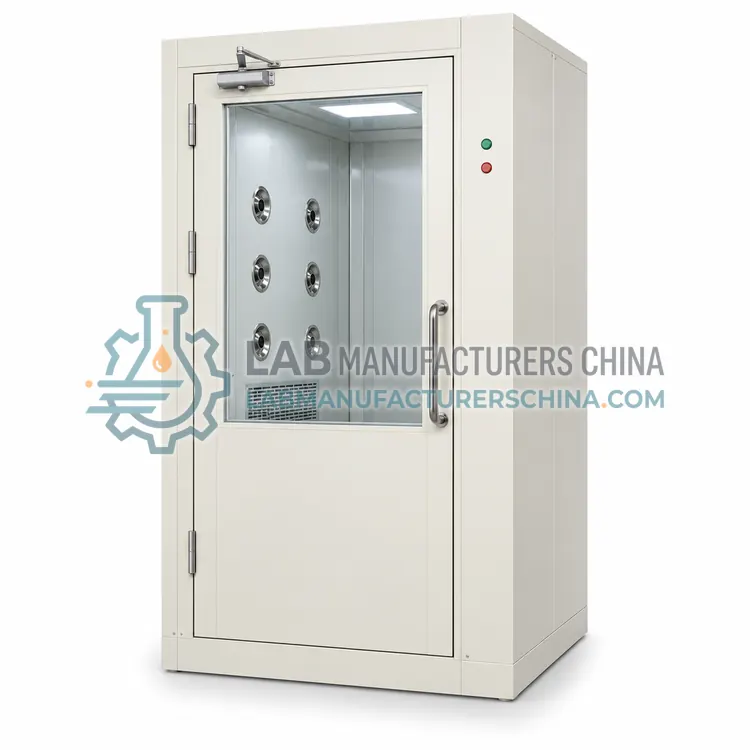 CCEQ洁净室设备Cleanroom equipment covers air showers, pass boxes, clean benches, garment cabinets and accessories that control particles and microbes at the entries, transfer points and work areas of classified rooms. Pharmaceutical, electronics, biotech and laboratory facilities use it to keep contamination within ISO 14644-1 class limits.
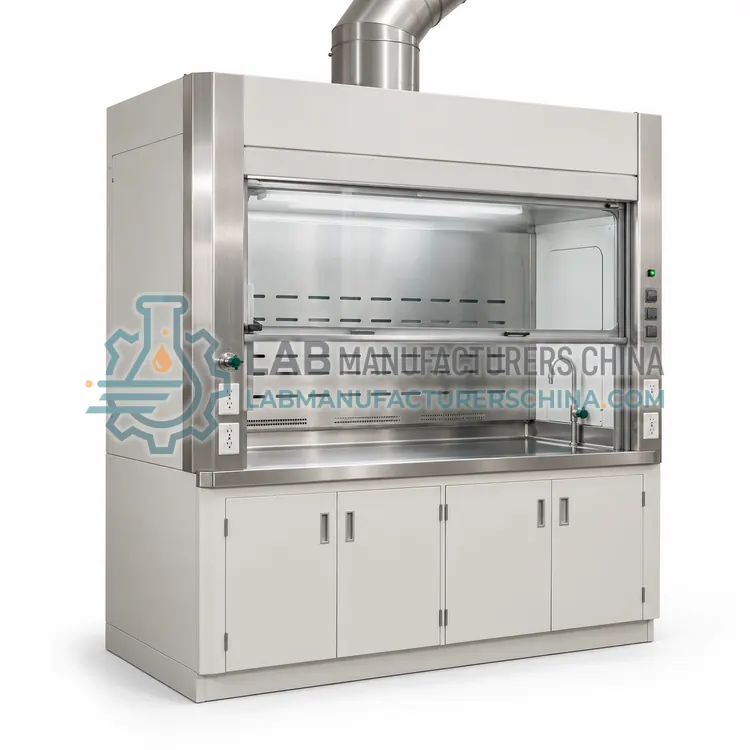 CFUH通风柜Fume hoods are enclosed ventilated workstations that capture and remove hazardous vapours, fumes, gases and dusts from a laboratory work area. Ducted, ductless, acid digestion and perchloric acid models address different chemicals, containment needs and building services.
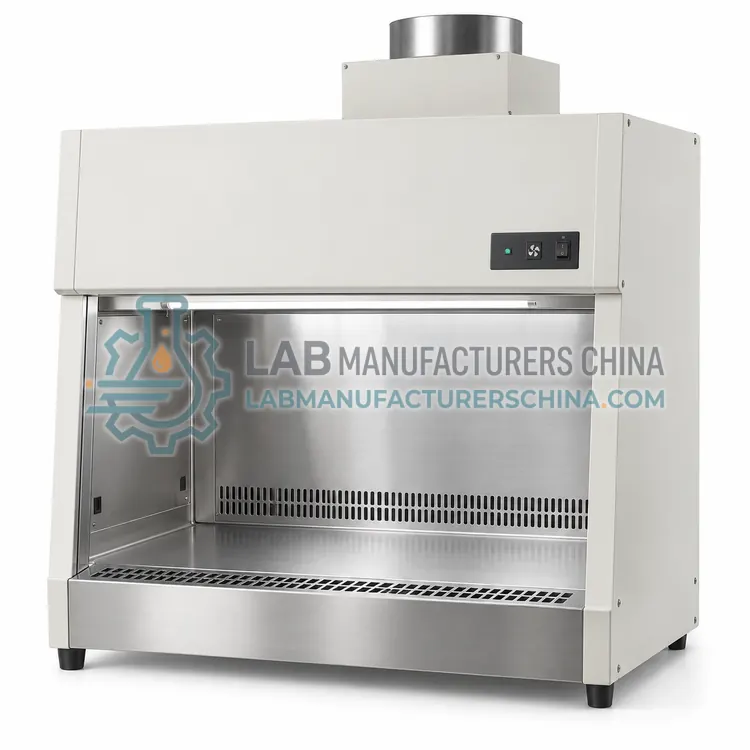 CBIC生物安全柜Biosafety cabinets are ventilated enclosures that use HEPA filtration and controlled airflow to protect operators, the environment and often the work from biological aerosols. Class I, II and III designs and cytotoxic cabinets cover different containment levels.
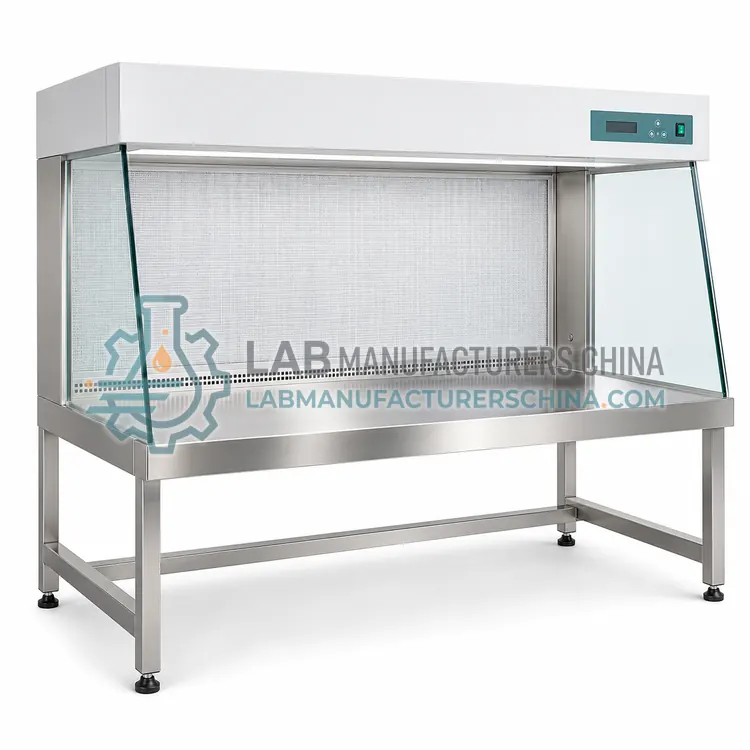 CLFC层流柜Laminar flow cabinets use HEPA-filtered unidirectional airflow to protect a work surface and the samples on it from particles and microbes. Horizontal, vertical, PCR and clean bench designs are used in cleanrooms, cell culture and molecular laboratories.