How do Wall Benches work?
A wall bench consists of a worktop supported by base cabinets, a frame or cantilever brackets, and is fixed to the wall to prevent tipping. Services are delivered through wall-mounted panels, service strips or pipe-chase ducts running behind the bench, and accessed via sockets and taps above the worktop. Standard depth is 650–750 mm, length in 600 mm modules, with an upstand or splashback at the rear. Reagent shelves, glazed wall cabinets and instrument shelves may be mounted above. The wall construction must carry the fixing loads, and the rear void should permit pipework access. Worktops are chosen from epoxy resin, phenolic resin, stainless steel or ceramic according to chemical exposure and cleanliness requirements.
Which Wall Benches variants are available?
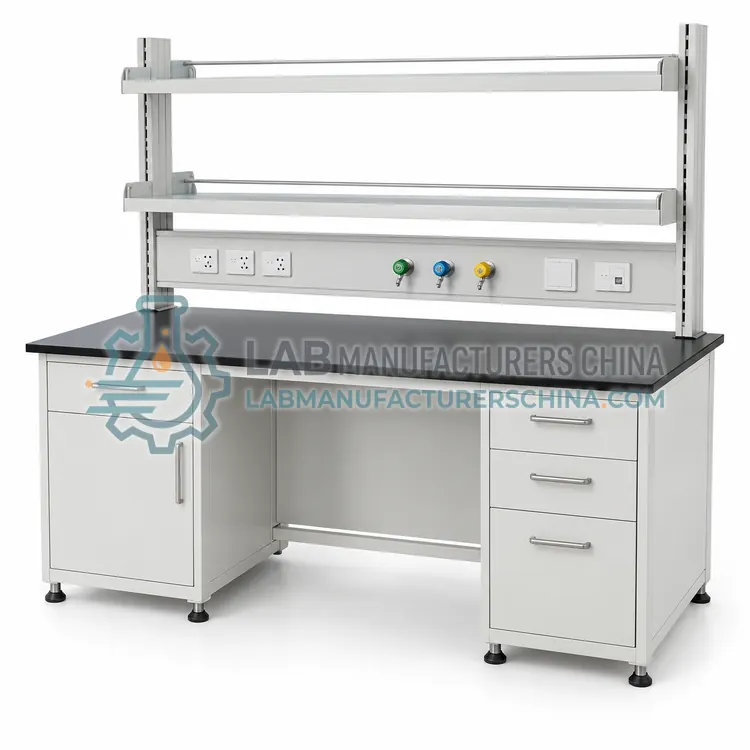
- Base-Cabinet Wall Bench — A base-cabinet wall bench has a worktop supported on floor-standing cabinets and drawers, fixed against the wall.
- Cantilever Wall Bench — A cantilever wall bench is fixed to the wall or supported by C-frame brackets so that the floor beneath remains clear.
- Wall Bench with Reagent Shelf and Service Panel — This wall bench adds a fixed reagent shelf and a wall-mounted service panel above the worktop, bringing electricity, gas, water and data to the bench while keeping reagents within reach.
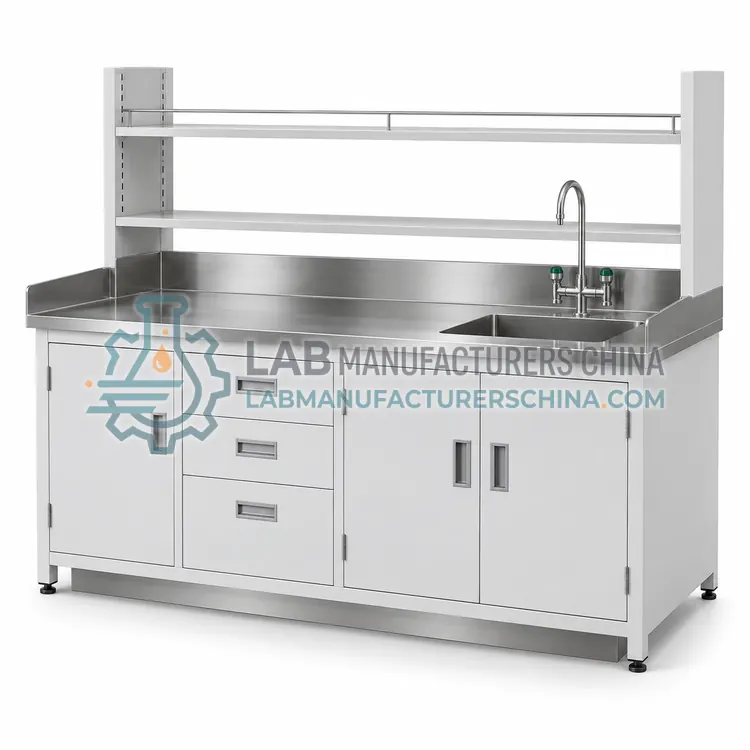
- Wall Bench with Integrated Sink Unit — This wall bench integrates a sink cabinet, draining surface and mixer tap into the bench run, using wall plumbing for supply and waste.
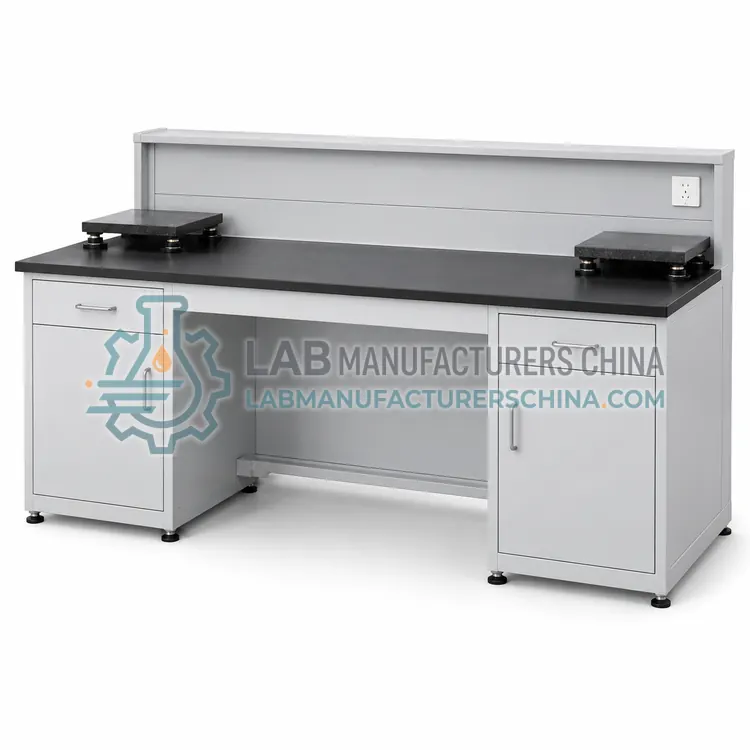
- Wall Bench with Vibration-Damped Balance Station — This wall bench includes a dedicated balance station with a stone or steel slab on vibration-damping pads, isolated from the main worktop.
How do I choose the right variant?
Choose the wall bench type by the room perimeter and the services available. Base-cabinet benches suit storage-heavy labs, cantilever benches leave floor space for cleaning and mobile units, and benches with integrated sinks or fume hood interfaces create complete wet stations. Decide on the depth: 650 mm saves space, while 750 mm holds larger instruments. Check wall construction, service duct access and ceiling height when planning wall cabinets. Select the worktop material from the chemical list and temperature exposure, and set load ratings for balances, ovens and centrifuges. Confirm that the layout leaves aisles of at least 1.2 m along the bench and respects egress routes.
Where are Wall Benches used?
Wall Benches are specified in chemistry laboratories, quality control laboratories, instrument rooms, teaching laboratories and biological laboratories.
Which standards and certifications apply?
Work with Wall Benches is commonly governed by SEFA 8 (laboratory grade casework), EN 13150 (laboratory workbenches), GB 24820 (laboratory furniture), EN 14056 (laboratory furniture design and installation) and IEC 61010-1 (electrical safety, room services). Instrument certifications such as CE marking are confirmed per configuration and never assumed.
What are the key considerations before purchase?
Check the wall before installation: masonry or concrete can take direct fixings, while stud or plasterboard walls need reinforcement. Mark and isolate services behind the bench, and provide access panels so that valves and cables can be reached without removing worktops. Seal the worktop to the wall with chemical-resistant silicone, and fit an upstand where spill containment matters. Verify electrical protection, including RCDs on socket circuits, and keep gas shut-off valves accessible. Inspect fixings, hinges, drawer runners and seals every six months, and clean surfaces with neutral detergents after chemical contact.