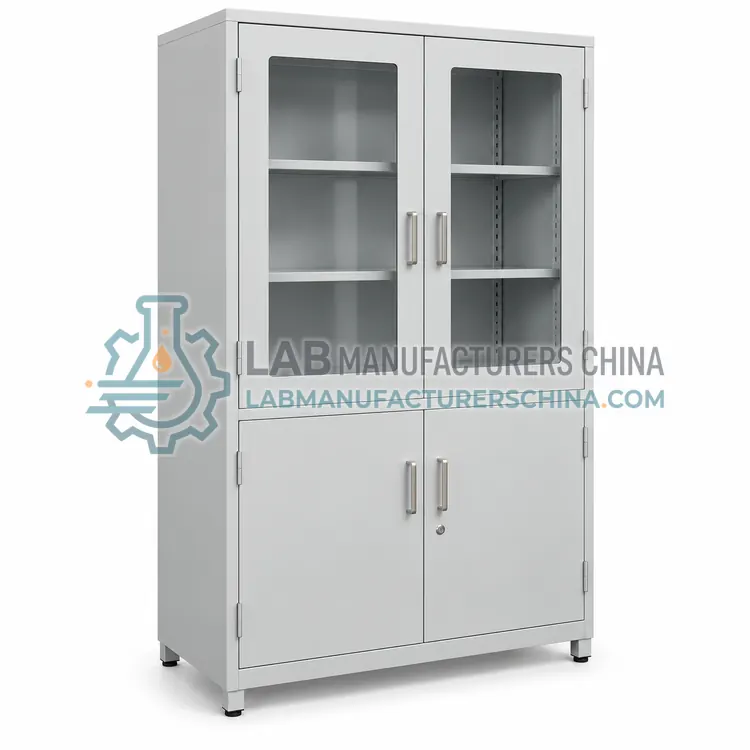
How do Storage Cabinets work?
A storage cabinet is a rigid carcass with doors, drawers and adjustable shelves that organizes laboratory inventory. Steel cabinets use 0.8–1.2 mm cold-rolled sheet with epoxy-polyester powder coat, stainless cabinets use 304 sheet, and wood-based cabinets use sealed melamine or laminate board. Doors may be solid, glazed or fitted with transparent panels, and locks restrict access. Shelf load ratings usually range from 40 to 80 kg per shelf, with drawer slides rated to around 40 kg. Wall cabinets are fixed to the structure, floor cabinets use leveling feet, and mobile pedestals run on locking casters. Ventilation slots or perforated panels may be added for moisture control. General storage cabinets are not fire-resistant and are not substitutes for flammable or corrosive safety cabinets.
Which Storage Cabinets variants are available?
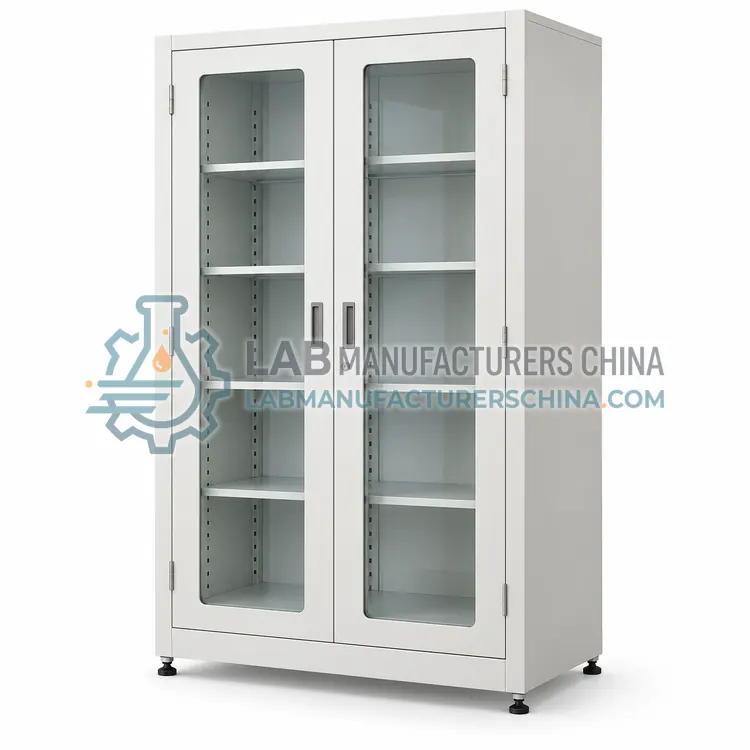
- Glass-Door Steel Reagent Storage Cabinet — A glass-door steel storage cabinet has a powder-coated steel carcass, tempered glass doors and adjustable shelves.
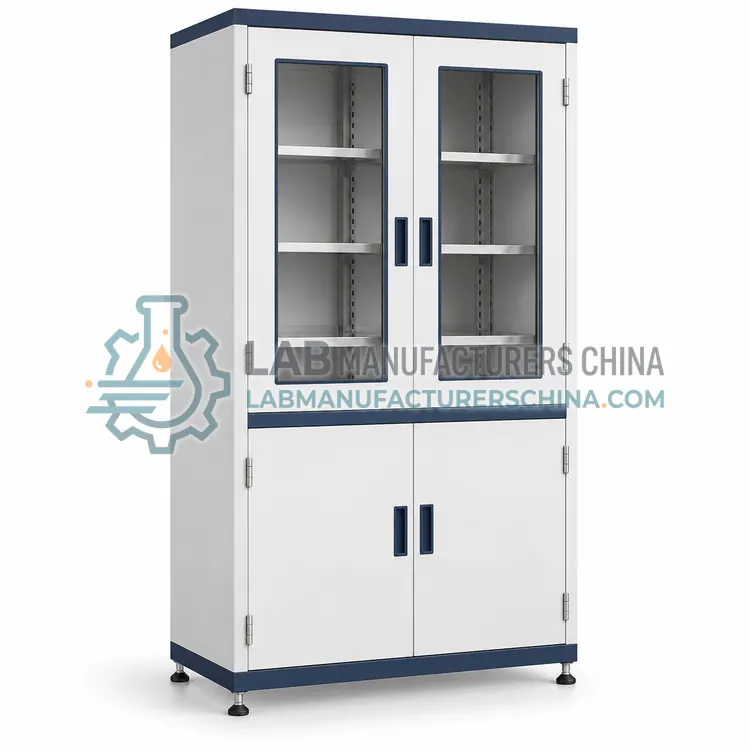
- Tall Full-Height Laboratory Storage Cabinet — A tall full-height storage cabinet stands from floor to about 1800–2000 mm and holds shelves and drawers for bulk glassware, consumables and records.
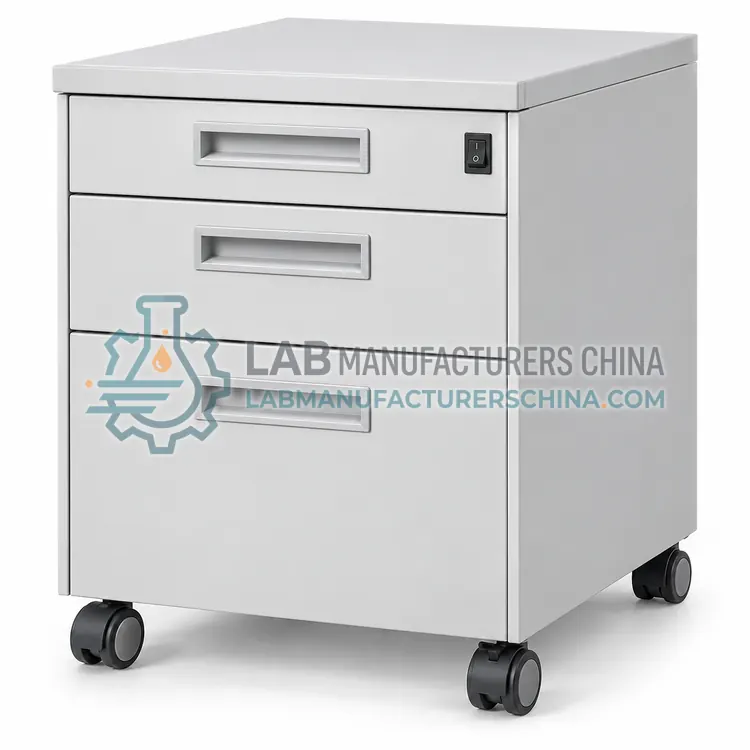
- Under-Bench Mobile Pedestal Cabinet — An under-bench mobile pedestal is a low cabinet with drawers on locking casters that fits beneath a worktop.
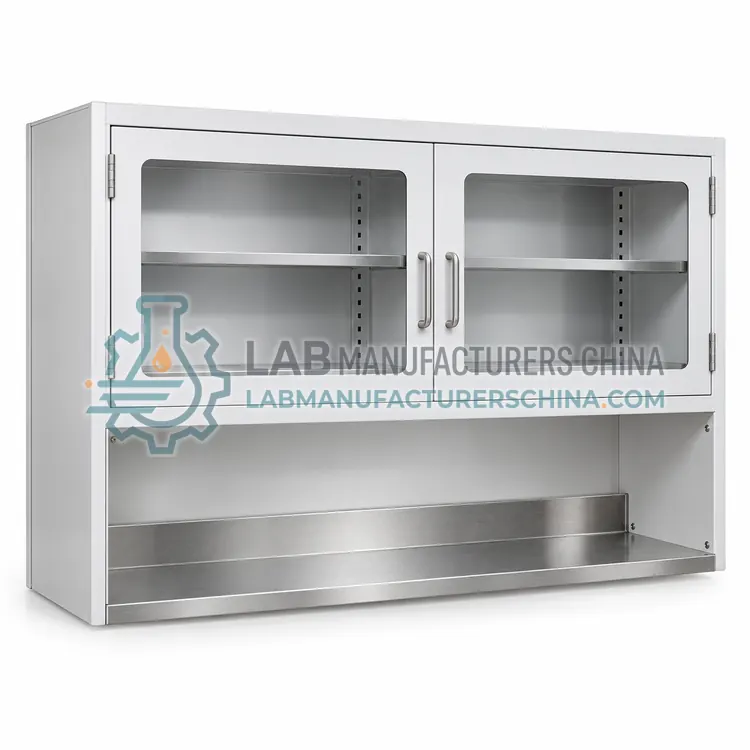
- Wall-Mounted Laboratory Cabinet — A wall-mounted laboratory cabinet hangs above the bench to free worktop space.
- Stainless Steel Storage Cabinet for Cleanroom Areas — A stainless steel storage cabinet is made from AISI 304 sheet with welded seams and sloped top.
How do I choose the right variant?
Decide what will be stored and how often it is accessed. Glass-door cabinets suit visible inventory, while solid doors protect light-sensitive items. Tall units maximize capacity per floor area, under-bench pedestals sit beneath worktops, and wall cabinets free bench space. Match the material to the environment: steel for humid or tropical rooms, stainless steel for cleanrooms and disinfection, wood-based for dry general use. Check shelf and drawer load ratings against the heaviest items. Specify locks, labeling needs and dimensions in multiples of 600 mm modules. Hazardous chemicals must go into certified safety cabinets, not general storage units.
Where are Storage Cabinets used?
Storage Cabinets are specified in glassware and consumables storage, instrument accessories storage, record and sample archive storage, non-hazardous reagent storage and cleanroom supply storage.
Which standards and certifications apply?
Work with Storage Cabinets is commonly governed by SEFA 8 (laboratory grade casework), EN 14056 (laboratory furniture design and installation), EN 13150 (laboratory workbenches, finish tests), GB 24820 (laboratory furniture) and ISO 9001 quality management. Instrument certifications such as CE marking are confirmed per configuration and never assumed.
What are the key considerations before purchase?
Anchor tall and wall cabinets to suitable structure, and check wall loads before installation. Level floor units and keep them away from heat sources. Do not store incompatible chemicals together, and never use general cabinets for flammable solvents beyond small working quantities allowed by local fire codes. Label shelves with maximum loads and keep heavy items low. Clean surfaces with neutral detergent, and inspect hinges, locks and slides every six months. In humid rooms, add ventilated panels or desiccants. Keep an inventory list and periodically review contents for expired materials.