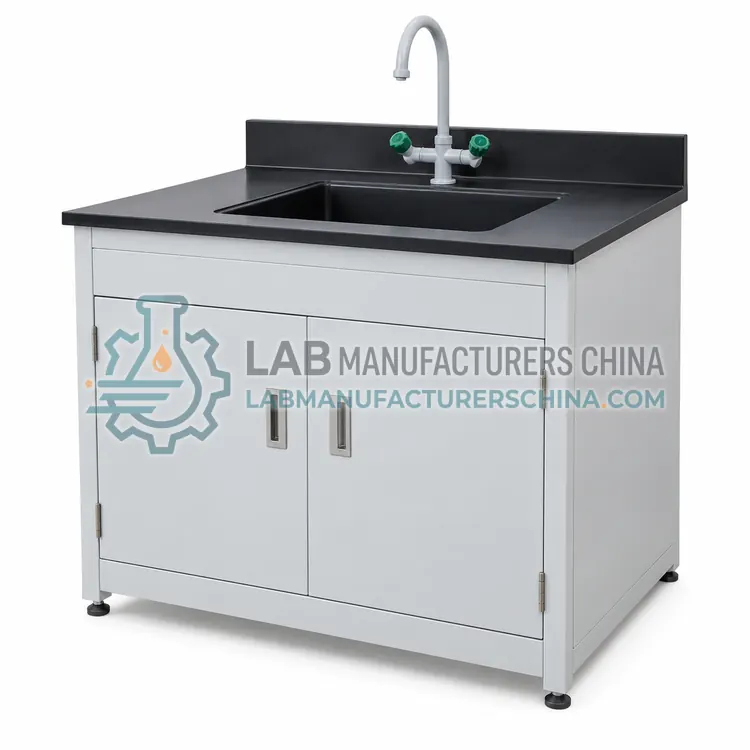
How do Sink Units work?
A laboratory sink unit combines a basin, a worktop or drain board, taps, a waste outlet with trap, and often a cabinet beneath. Basins are molded polypropylene, cast epoxy resin or fabricated stainless steel, with depths of 200–350 mm and capacities of 15–40 litres. Taps include gooseneck mixers, swan-neck or pillar types, with optional pure-water, foot-operated or elbow-operated controls. The waste outlet drains through a chemical-resistant trap, typically polypropylene, sized DN40–DN50, with a removable strainer. Units are designed with slopes toward the outlet and a drip groove, and some include neutralization boxes for acid waste or a pegboard for drying glassware. Water supply and waste connections must respect backflow prevention and local plumbing codes.
Which Sink Units variants are available?
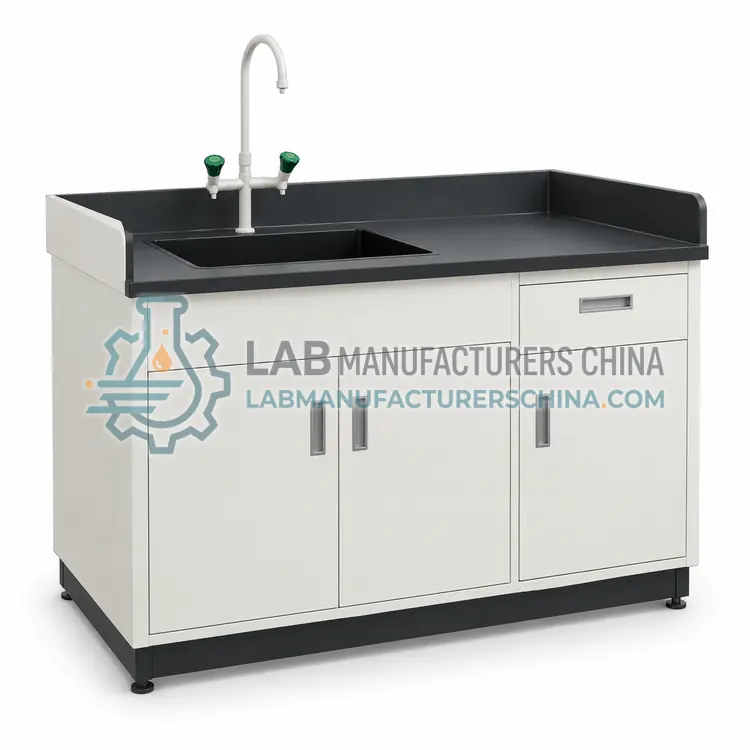
- Polypropylene Laboratory Sink Unit with Cabinet — A polypropylene sink unit has a molded PP basin set into a steel or PP cabinet with a swan-neck tap and waste trap.
- Epoxy Resin Laboratory Sink Unit — An epoxy resin sink unit has a cast resin basin, often bonded to an epoxy worktop, giving seamless construction and high resistance to acids, alkalis and heat.
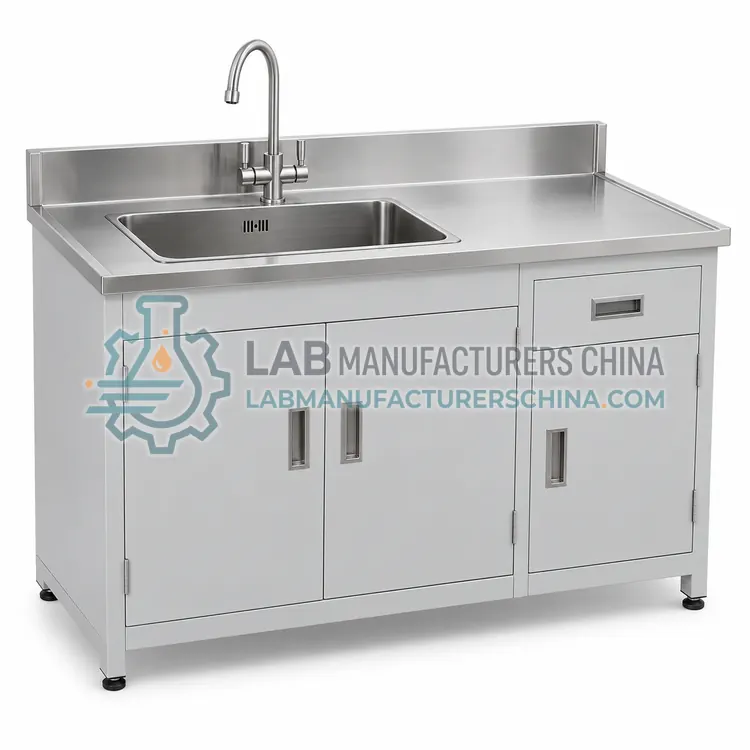
- Stainless Steel Laboratory Sink Unit — A stainless steel sink unit has a welded 304 or 316 basin and optional drain board in a stainless or steel cabinet.
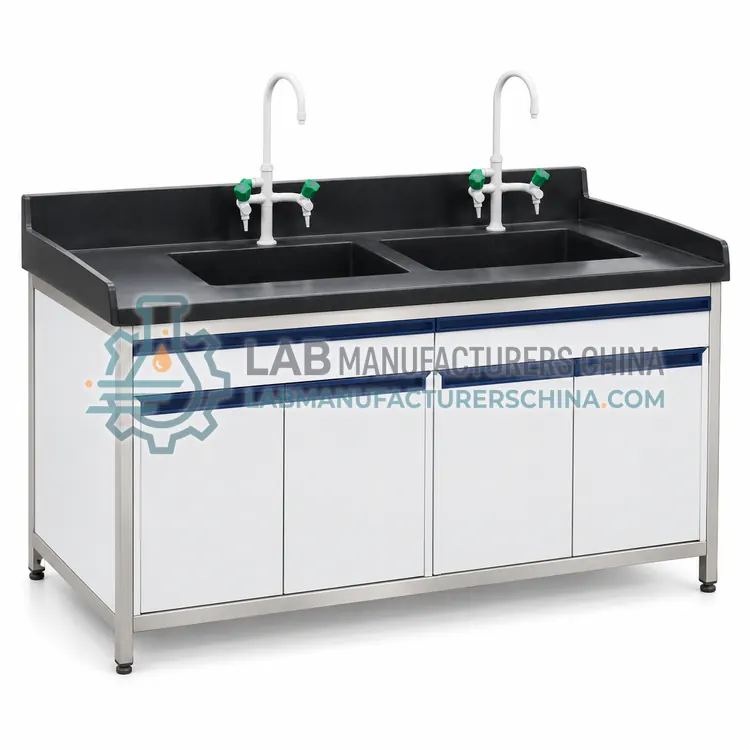
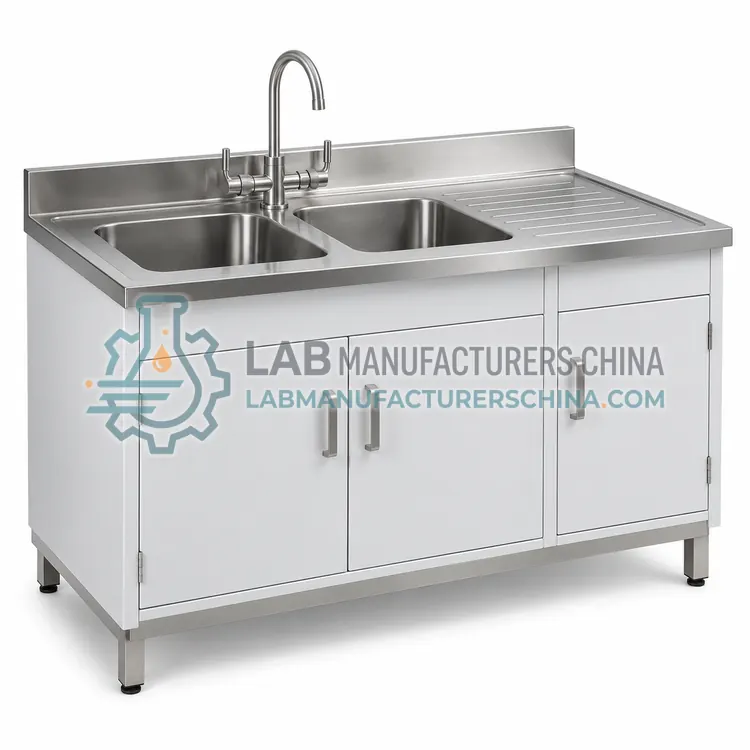
- Double-Bowl Laboratory Sink Unit with Drain Board — A double-bowl sink unit provides two basins, often with a drain board, so that washing and rinsing can be done in sequence.
- Laboratory Cup Sink — A laboratory cup sink is a small round or oval basin, about 150–250 mm in diameter, installed on a fume hood worktop or bench.
How do I choose the right variant?
Select the basin material first. Polypropylene suits general chemistry, acids, alkalis and solvents at moderate temperature; epoxy resin suits heavier use and hot liquids; stainless steel suits biology, pharmaceutical and food labs that need frequent disinfection. Then choose size: single-bowl units save space, double-bowl units separate rinsing and soaking, and cup sinks fit fume hoods and small benches. Consider tap type (hands-free for microbiology), pure-water supply, drain board and pegboard requirements, and neutralization of acid waste. Check plumbing connections, hot-water supply and accessibility height. Confirm the unit is compatible with local wastewater discharge rules and the chemicals in use.
Where are Sink Units used?
Sink Units are specified in glassware washing, hand washing stations, sample preparation, aqueous waste handling and teaching laboratories.
Which standards and certifications apply?
Work with Sink Units is commonly governed by SEFA 8 (laboratory grade casework), EN 14056 (laboratory furniture design and installation), EN 13150 (laboratory workbenches, finish tests), GB 24820 (laboratory furniture) and EN 274 (waste fittings for sanitary appliances, reference). Instrument certifications such as CE marking are confirmed per configuration and never assumed.
What are the key considerations before purchase?
Plan water supply, waste and isolation valves early, and give sink units access panels for trap cleaning. Install backflow prevention on the water supply, and route waste to a chemical-resistant drain system or neutralization tank where acids or solvents are present. Seal the sink rim to the worktop with silicone to prevent leaks. Do not pour hazardous solvents or heavy metals down the drain, and follow local wastewater regulations. Flush traps daily, clean strainers weekly, and inspect seals and taps every six months. Provide eyewash stations within easy reach of sinks used for chemical work.