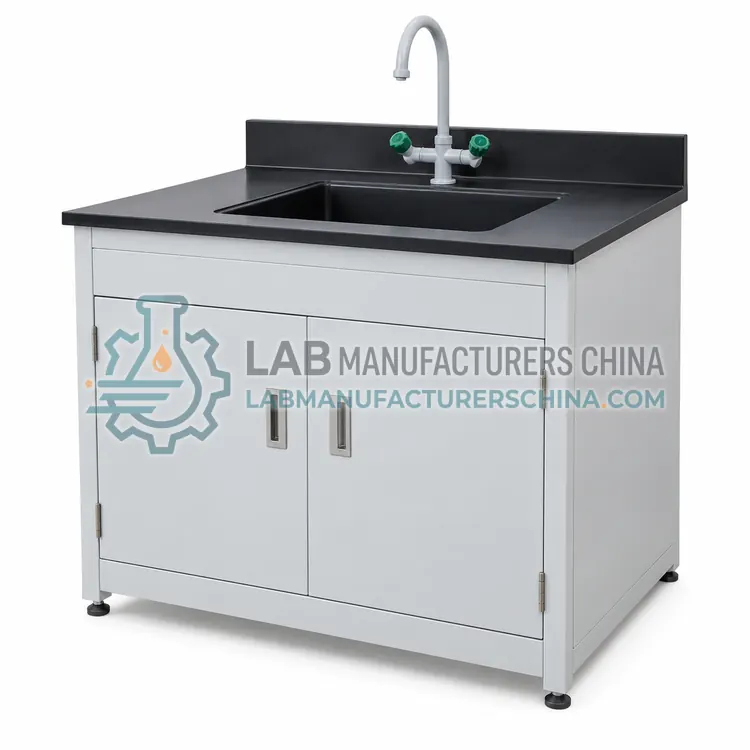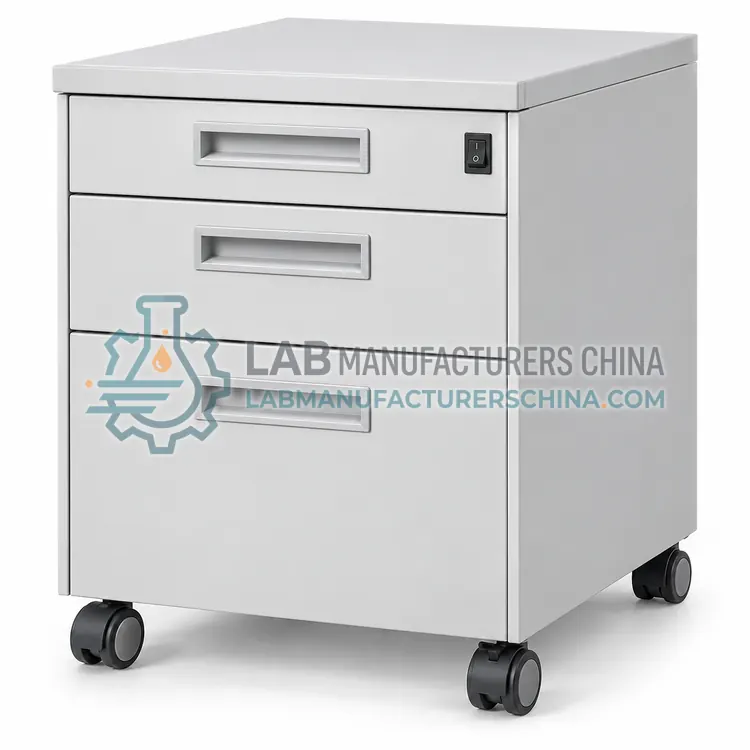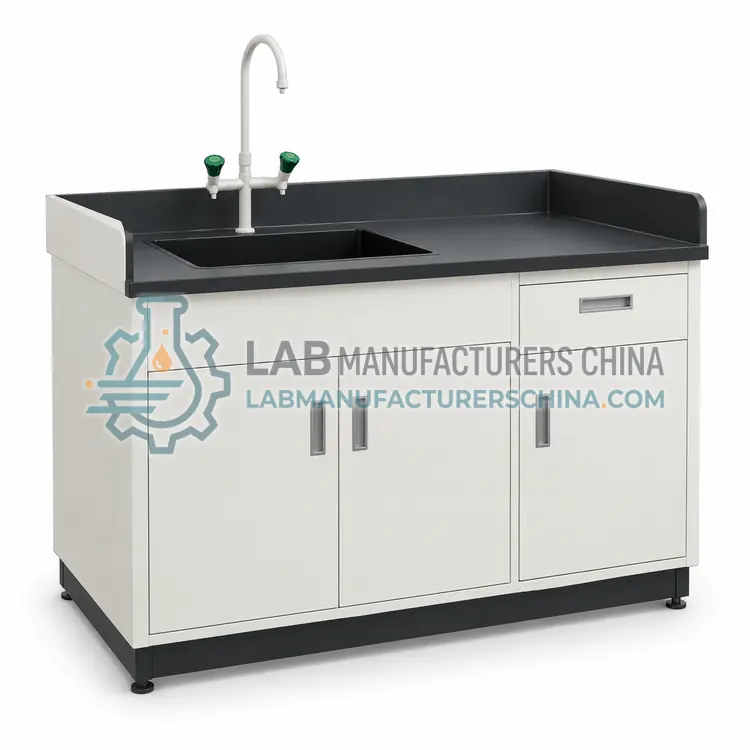
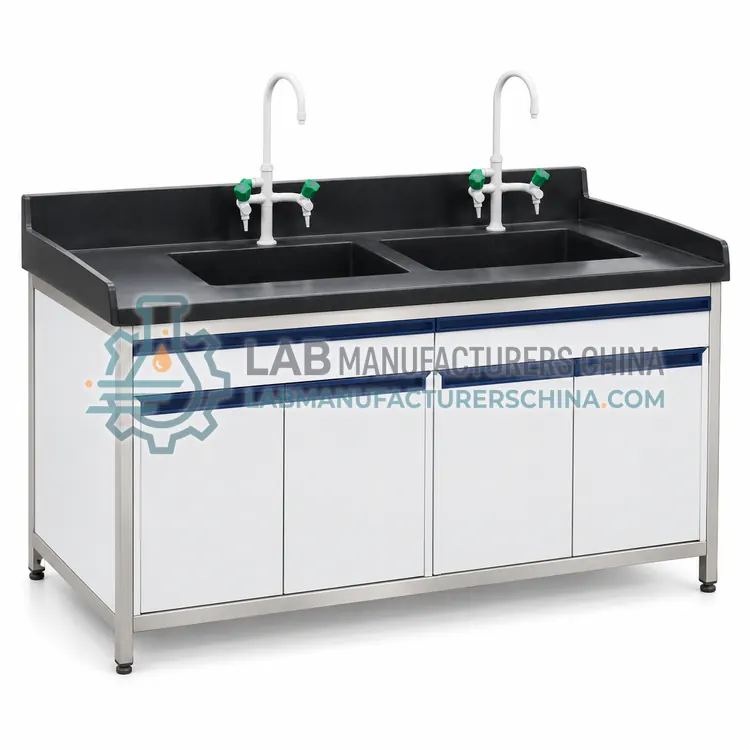
Epoxy Resin Laboratory Sink Unit
环氧树脂实验室水槽单元
- SKU SIU-0002
- Sink Units
- ISO 9001 manufacturing (to be confirmed)
- SEFA 8 test report (to be confirmed)
- WRAS-type water fitting approval for taps (to be confirmed)
Price on request — FOB / CIF quoted per order
Prices depend on configuration, quantity and destination port.
Key specifications
| Basin size | 500 × 400 × 300 mm / 600 × 450 × 300 mm |
|---|---|
| Basin material | Cast epoxy resin |
| Temperature limit | ≈ 150 °C (short term) |
| Basin weight | ≈15–25 kg |
| Worktop | Epoxy resin, 20 mm |
| Tap type | Gooseneck mixer, laboratory fittings |
Request a quote Download brochure · to be provided
By Lab Manufacturers China Technical TeamLast reviewed Standards: SEFA 8 (laboratory grade casework), EN 14056 (laboratory furniture design and installation), EN 13150 (laboratory workbenches, finish tests)
What is the Epoxy Resin Laboratory Sink Unit?
An epoxy resin sink unit has a cast resin basin, often bonded to an epoxy worktop, giving seamless construction and high resistance to acids, alkalis and heat. It suits intensive chemical use and hot rinse water.
What is the Epoxy Resin Laboratory Sink Unit?
An epoxy resin sink unit has a cast resin basin, often bonded to an epoxy worktop, giving seamless construction and high resistance to acids, alkalis and heat. It suits intensive chemical use and hot rinse water.
Overview
The basin is cast or machined from solid epoxy resin and bonded to a resin worktop with chemical-resistant adhesive, forming a flush seam that limits leaks. Standard sizes are 500 × 400 × 300 mm or 600 × 450 × 300 mm, with service temperatures up to about 150 °C for short exposure. The surface is hard, non-porous and resists strong mineral acids, alkalis and most solvents. Unlike polypropylene, it tolerates hot autoclave rinse water and mechanical abuse from glassware better. The cast basin is heavy, with typical weights of 15–25 kg, so cabinets must be rated accordingly. Matching resin drip racks, upstands and splashbacks provide a coordinated, durable wet station in intensive laboratories.
How does it work?
A laboratory sink unit combines a basin, a worktop or drain board, taps, a waste outlet with trap, and often a cabinet beneath. Basins are molded polypropylene, cast epoxy resin or fabricated stainless steel, with depths of 200–350 mm and capacities of 15–40 litres. Taps include gooseneck mixers, swan-neck or pillar types, with optional pure-water, foot-operated or elbow-operated controls. The waste outlet drains through a chemical-resistant trap, typically polypropylene, sized DN40–DN50, with a removable strainer. Units are designed with slopes toward the outlet and a drip groove, and some include neutralization boxes for acid waste or a pegboard for drying glassware. Water supply and waste connections must respect backflow prevention and local plumbing codes.
What are the key features?
- Cast epoxy basin bonded flush to resin worktop
- Service temperature up to about 150 °C short term
- Hard, non-porous surface resistant to acids and alkalis
- Matching drip rack, upstand and splashback options
- Sized 500 × 400 or 600 × 450 mm, 300 mm deep
- Heavy-duty cabinet rated for basin weight
What are the technical specifications?
A typical epoxy resin laboratory sink unit configuration offers basin size of 500 × 400 × 300 mm / 600 × 450 × 300 mm, basin material of Cast epoxy resin, temperature limit of ≈ 150 °C (short term), basin weight of ≈15–25 kg, worktop of Epoxy resin, 20 mm and tap type of Gooseneck mixer, laboratory fittings. Values are indicative of the product class; the exact figures for each configuration are confirmed on the quotation and the calibration documents supplied with the instrument.
Which applications is it used for?
The Epoxy Resin Laboratory Sink Unit is used in intensive chemistry labs, hot rinse operations, acid digestion areas and industrial QC labs. Across the wider Sink Units class, laboratories also deploy it for glassware washing, hand washing stations and sample preparation.
Which standards and certifications apply?
Relevant standards and methods include SEFA 8 (laboratory grade casework), EN 14056 (laboratory furniture design and installation), EN 13150 (laboratory workbenches, finish tests), GB 24820 (laboratory furniture) and EN 274 (waste fittings for sanitary appliances, reference). Certification candidates for this model are ISO 9001 manufacturing, SEFA 8 test report and WRAS-type water fitting approval for taps; each is to be confirmed for the specific configuration before shipment, and certificates are supplied only where they have been issued.
Plan water supply, waste and isolation valves early, and give sink units access panels for trap cleaning. Install backflow prevention on the water supply, and route waste to a chemical-resistant drain system or neutralization tank where acids or solvents are present. Seal the sink rim to the worktop with silicone to prevent leaks. Do not pour hazardous solvents or heavy metals down the drain, and follow local wastewater regulations. Flush traps daily, clean strainers weekly, and inspect seals and taps every six months. Provide eyewash stations within easy reach of sinks used for chemical work.
How do I select the right Epoxy Resin Laboratory Sink Unit?
Choose epoxy resin sinks for intensive chemical use, hot rinses or where seamless integration with resin worktops is required. They are heavier and costlier than PP. Specify basin dimensions, worktop thickness, cabinet strength, tap type, waste size and any upstand or drip rack.
How does it compare with other Sink Units variants?
Select the basin material first. Polypropylene suits general chemistry, acids, alkalis and solvents at moderate temperature; epoxy resin suits heavier use and hot liquids; stainless steel suits biology, pharmaceutical and food labs that need frequent disinfection. Then choose size: single-bowl units save space, double-bowl units separate rinsing and soaking, and cup sinks fit fume hoods and small benches. Consider tap type (hands-free for microbiology), pure-water supply, drain board and pegboard requirements, and neutralization of acid waste. Check plumbing connections, hot-water supply and accessibility height. Confirm the unit is compatible with local wastewater discharge rules and the chemicals in use.
Full specifications
| Basin size | 500 × 400 × 300 mm / 600 × 450 × 300 mm |
|---|---|
| Basin material | Cast epoxy resin |
| Temperature limit | ≈ 150 °C (short term) |
| Basin weight | ≈15–25 kg |
| Worktop | Epoxy resin, 20 mm |
| Tap type | Gooseneck mixer, laboratory fittings |
| Waste pipe | PP DN40–DN50 |
| Cabinet width | 900 / 1200 mm |
| Cabinet load | ≥ 100 kg |
| Drip groove | Machined, 8 mm |
Indicative values for this product class. Final specifications are confirmed on the quotation and in the calibration documents supplied with the instrument.
Applications
- Intensive chemistry labs
- Hot rinse operations
- Acid digestion areas
- Industrial QC labs
Key features
- Cast epoxy basin bonded flush to resin worktop
- Service temperature up to about 150 °C short term
- Hard, non-porous surface resistant to acids and alkalis
- Matching drip rack, upstand and splashback options
- Sized 500 × 400 or 600 × 450 mm, 300 mm deep
- Heavy-duty cabinet rated for basin weight
Frequently asked questions about Epoxy Resin Laboratory Sink Unit
Epoxy resin withstands higher temperatures, about 150 °C short term, and has a harder surface, so it suits intensive use. It costs more and is heavier, so cabinets must support the load.
Minor scratches can be sanded and polished, and small chips filled with matching epoxy filler. Deep cracks usually require replacement, so avoid impacts from heavy glassware and thermal shock from sudden hot-to-cold changes.
A properly bonded, flush resin joint with chemical-resistant adhesive is leak resistant, but it depends on installation quality. Check the seal during commissioning and after any movement of the bench.
Polypropylene is common for general chemistry because it resists acids, alkalis and solvents. Epoxy resin suits heavy use and hot liquids, while stainless steel suits biology and pharmaceutical areas needing disinfection. The right choice depends on the chemicals and temperatures involved.
A neutralization box is advisable when acidic or alkaline wastes regularly enter the drain. It holds limestone or similar media to raise or lower pH toward discharge limits. It does not treat toxic organics or heavy metals, which need separate collection.
Typical single-bowl sinks measure about 500 × 400 mm with 250–300 mm depth. Double-bowl units are 900–1500 mm wide overall, and cup sinks are around 150–250 mm diameter. Check bench module compatibility before ordering.
Related models
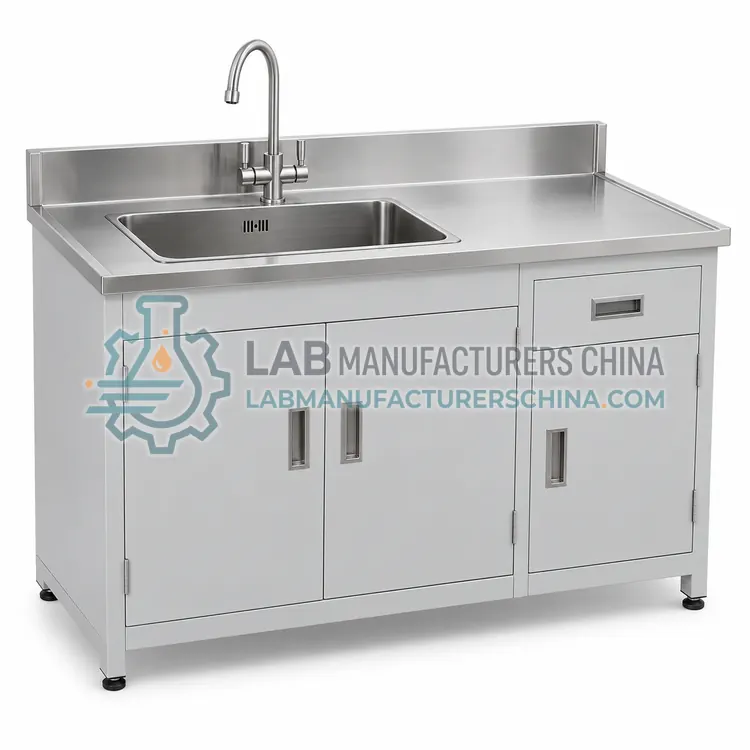
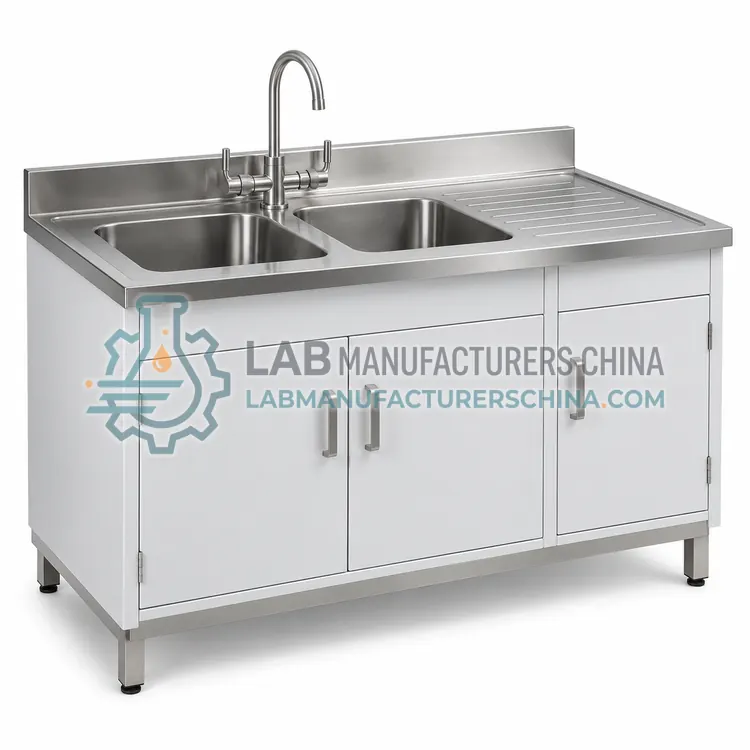
Double-Bowl Laboratory Sink Unit with Drain Board
带沥水板的双槽实验室水槽单元
- ISO 9001 manufacturing (to be confirmed)
- +2