
Fume Hoods
通风柜
CFUH · Laboratory Infrastructure · 4 product types · 20 models
By Lab Manufacturers China Technical TeamLast reviewed
What are Fume Hoods?
Fume hoods are enclosed ventilated workstations that capture and remove hazardous vapours, fumes, gases and dusts from a laboratory work area. Ducted, ductless, acid digestion and perchloric acid models address different chemicals, containment needs and building services.
4 product types in Fume Hoods
The 4 product types below are grouped by the exact instrument you need.
- DFH5 models
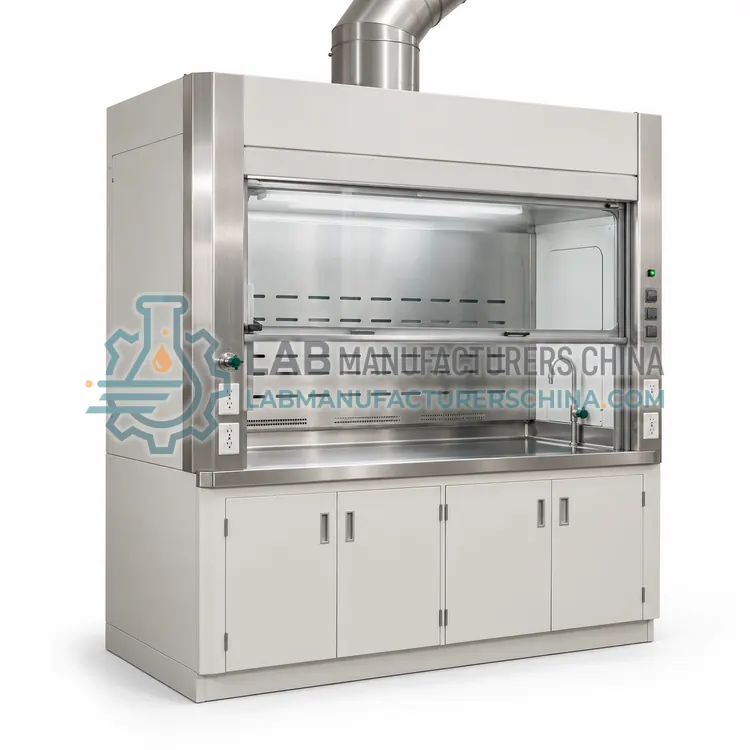
Ducted Fume Hoods
管道式通风柜
Ducted fume hoods are enclosed laboratory workstations that draw contaminated air through a sash opening and exhaust it outdoors through a duct system. Chemistry, pharmaceutical, materials and teaching laboratories use them to protect operators from hazardous vapours, fumes and dusts.
- DUC5 models
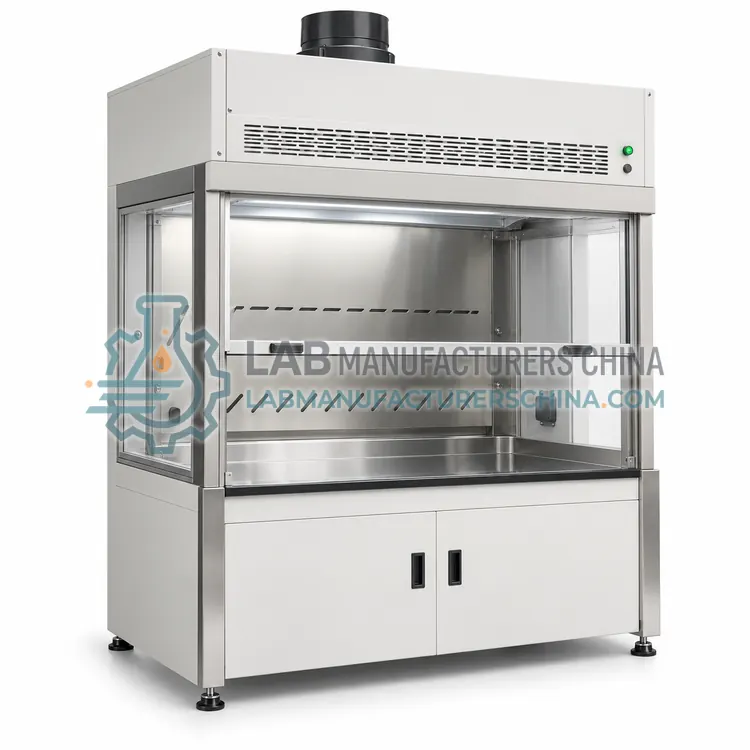
Ductless Fume Hoods
无管道通风柜
Ductless fume hoods draw air through a sash opening and filter it through activated carbon or HEPA media before returning it to the room. They are used for low-volume work with known chemicals, in locations where ducting is impractical.
- ADH5 models
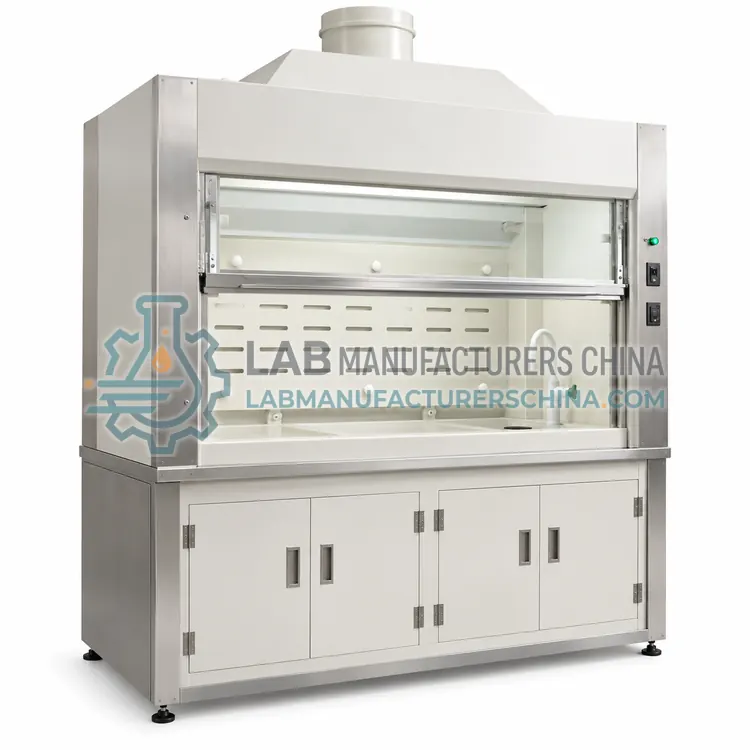
Acid Digestion Hoods
酸消解通风柜
Acid digestion hoods are corrosion-resistant fume hoods built for open-vessel digestions with nitric, hydrochloric, sulfuric or hydrofluoric acid. Trace-metal, environmental and food laboratories use them for sample decomposition before ICP-MS, ICP-OES or atomic absorption analysis.
- PAH5 models
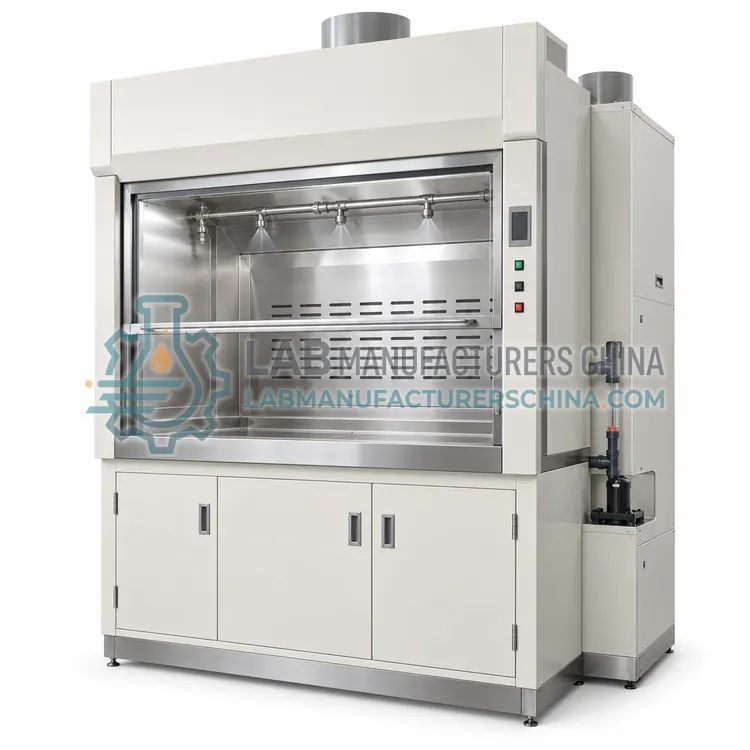
Perchloric Acid Hoods
高氯酸通风柜
Perchloric acid hoods are dedicated fume hoods with water washdown systems and smooth, all-welded ductwork designed for digestions using perchloric acid. They prevent the accumulation of explosive perchlorate salts in the duct and are used in trace-metal and environmental laboratories.
What are Fume Hoods?
Fume hoods are the primary engineering control against inhalation exposure in chemistry and life-science laboratories. An enclosed cabinet with a movable sash, a work surface and a fan creates inward airflow so that vapours, fumes and airborne particles generated inside are drawn away from the operator and discharged. Ducted hoods exhaust to atmosphere through a building duct and fan, while ductless hoods filter and recirculate air into the room. Specialised designs handle specific hazards: acid digestion hoods resist corrosive vapours and may include scrubbers, and perchloric acid hoods add water washdown of the duct to prevent explosive salt deposits. Hoods protect operators rather than products, and are distinct from biosafety cabinets and laminar flow benches. Selection depends on the chemical list, the quantities handled, available building services and the applicable testing standard in the user's jurisdiction.
How do Fume Hoods work?
A fume hood maintains a controlled inward flow of air across the sash opening. The exhaust fan pulls air from the room through the opening, and a baffle system at the rear distributes it across slots at top, middle and bottom so no dead zones form. Face velocity, measured at the sash plane and typically 0.4–0.6 m/s, is the main indication of performance, though containment is also affected by sash position, cross-drafts and internal obstructions. Bypass and variable air volume (VAV) designs hold face velocity as the sash moves, with VAV modulating fan or damper output. A duct carries exhaust to the roof, where treatment such as carbon or scrubber media may be applied. Ductless hoods instead pass air through prefilter, carbon and sometimes HEPA stages before returning it to the room. Airflow monitors and alarms warn users when flow falls outside the safe range.
Where are Fume Hoods used?
Fume hoods are used wherever volatile, toxic, corrosive or odorous substances are handled. Organic and inorganic chemistry laboratories use them for solvent work, digestions and reactions. Pharmaceutical and biopharmaceutical laboratories use them for sample preparation, dissolution media and active ingredient handling, and quality control. Materials and electronics laboratories use them for etching, coating and cleaning. Teaching laboratories use them for undergraduate chemistry, and hospital and clinical laboratories for specimen digestion and staining. Specific hazards drive special designs: trace-metal analysis uses acid digestion hoods to control corrosive vapour and contamination, while perchloric acid digestions require dedicated washdown hoods. Universities, contract laboratories, environmental testing, mining assay and forensic laboratories all rely on hoods as a defined part of their exposure-control plan.
Which standards apply to Fume Hoods?
Fume hood performance and safety are covered by several regional standards. In Europe, EN 14175 parts 2 to 4 define safety and performance requirements, type tests and on-site tests. In North America, ASHRAE 110 describes tracer-gas containment and face velocity testing, and institutional guidance applies to installation and use. China uses GB/T 34269 and related GB codes. Ductless hoods are addressed by AFNOR NF X 15-211. General electrical safety follows IEC 61010-1, and laboratory ventilation design references local building codes. Materials, liners and service fittings should be selected to resist the specific chemicals in use. Where a supplier cites a certificate, treat it as a candidate until the exact model and test report are verified.
How do I select the right fume hoods equipment?
Select a fume hood by matching it to the chemicals and processes, then to the building. Build a chemical list with concentrations, quantities and operating hours; this determines whether a ducted or ductless hood is acceptable. Choose ducted hoods for unknown, high-volume or highly toxic substances and for heated perchloric acid. Pick the width, commonly 1200–1800 mm, to fit apparatus and operators, and confirm depth and internal height for tall setups. Specify the liner: epoxy or fibre-reinforced cement for general chemistry, polypropylene or stainless steel for acids. Decide between constant-volume, bypass and VAV airflow, considering exhaust capacity and energy cost. Add airflow monitoring, alarms, service fittings, sinks and base cabinets as needed. Finally, verify that make-up air, duct sizing and containment testing are planned with the building engineer before ordering.
Fume Hoods comparison
| Subcategory | Principle | Typical use | Key spec |
|---|---|---|---|
| Ducted Fume Hoods | Enclosed cabinet with exhaust fan and duct to atmosphere | General chemistry, pharmaceutical and teaching work | Face velocity 0.4–0.6 m/s; width 1200–1800 mm |
| Ductless Fume Hoods | Carbon and HEPA filtration with recirculation to room | Low-volume work with known chemicals, no ducting | Face velocity 0.4–0.5 m/s; carbon 5–20 kg |
| Acid Digestion Hoods | Corrosion-resistant enclosure, optional scrubber | Trace-metal and acid digestion with corrosive vapours | PP or PVC liner; face velocity 0.4–0.6 m/s |
| Perchloric Acid Hoods | Duct washdown system to prevent salt deposits | Perchloric acid digestions and trace analysis | Water washdown; all-welded duct; PP or stainless steel |
Frequently asked questions about Fume Hoods
A fume hood encloses a work area and draws air inward so vapours, fumes and dusts are carried away from the operator. It is used for safe handling of hazardous, volatile or odorous chemicals in chemistry, pharmaceutical, and teaching laboratories.
Choose ducted for unknown, high-volume or highly toxic substances and for heated perchloric acid. Ductless suits low-volume work with known chemicals where ducting is impractical, but the filter media must match the chemical list.
Most standards target 0.4–0.6 m/s at the sash, though some allow lower values such as 0.3–0.5 m/s. Velocity alone does not prove containment, so commissioning should include a tracer-gas test where required.
Airflow and alarms are commonly checked every 6–12 months, and containment testing is performed at commissioning and after significant changes. Local regulations or institutional safety policy may require more frequent checks.
No. A fume hood protects the operator by removing contaminants, but room air enters the work area, so it does not protect samples from particles or microbes. Use a clean bench or biosafety cabinet for product protection.
Epoxy resin or fibre-reinforced cement suits general chemistry, polypropylene suits acids and trace-metal work, and stainless steel suits some organic applications. The liner must be chosen to resist the specific chemicals in use.
Related categories
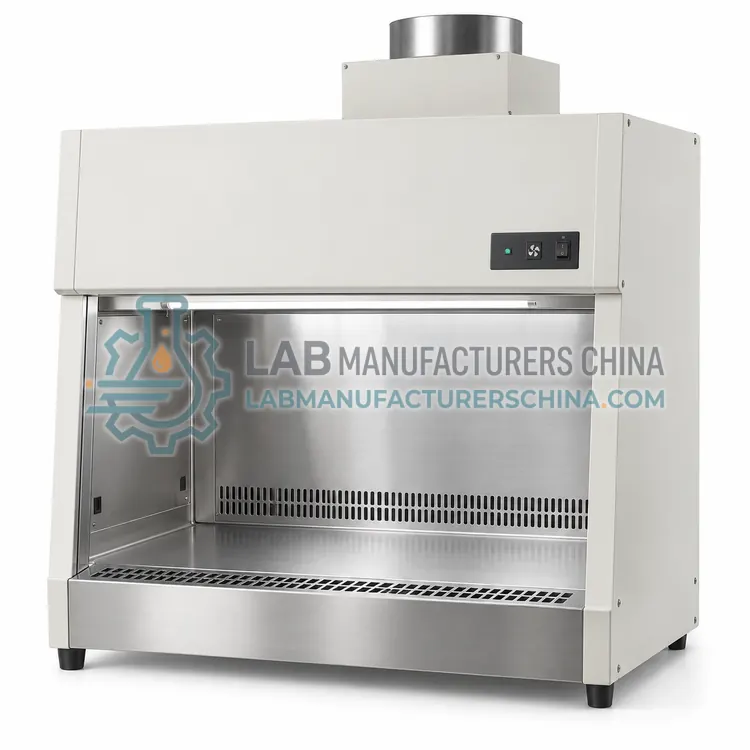 CBIC生物安全柜Biosafety cabinets are ventilated enclosures that use HEPA filtration and controlled airflow to protect operators, the environment and often the work from biological aerosols. Class I, II and III designs and cytotoxic cabinets cover different containment levels.
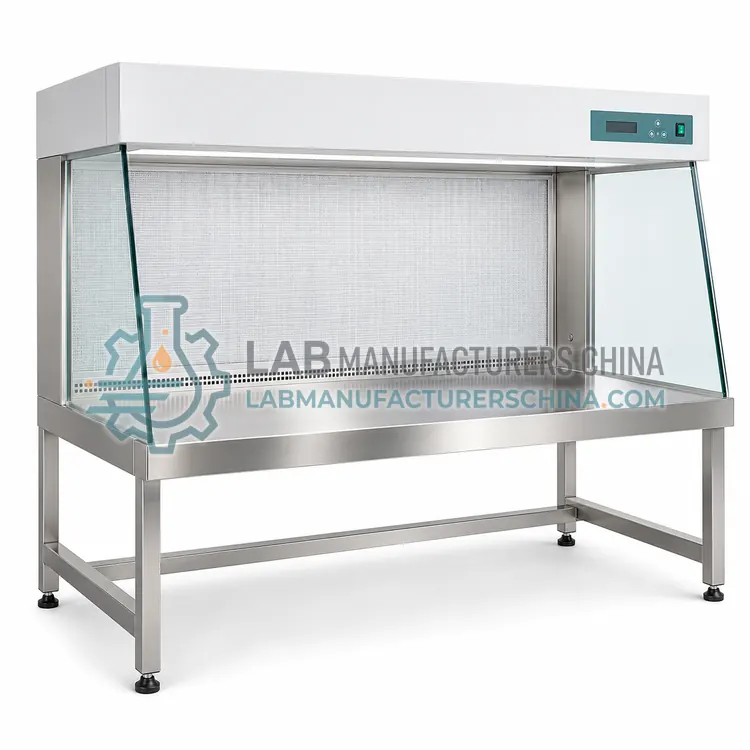 CLFC层流柜Laminar flow cabinets use HEPA-filtered unidirectional airflow to protect a work surface and the samples on it from particles and microbes. Horizontal, vertical, PCR and clean bench designs are used in cleanrooms, cell culture and molecular laboratories.
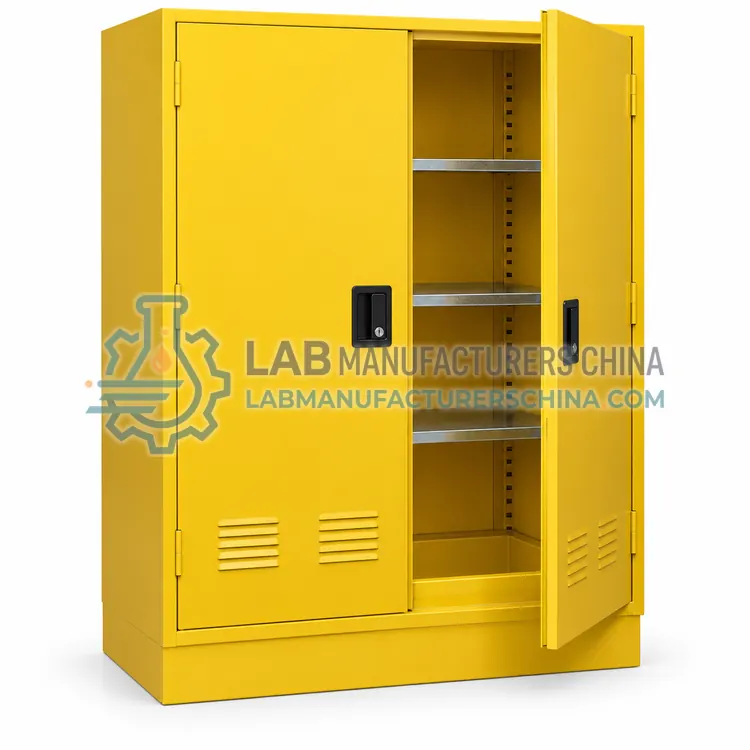 CLBR实验室安全设备Laboratory safety equipment covers cabinets, emergency showers, eyewash stations, spill control supplies and chemical storage that protect people and facilities from fire, chemical exposure and spills. It supports the laboratory's exposure-control and emergency plans.
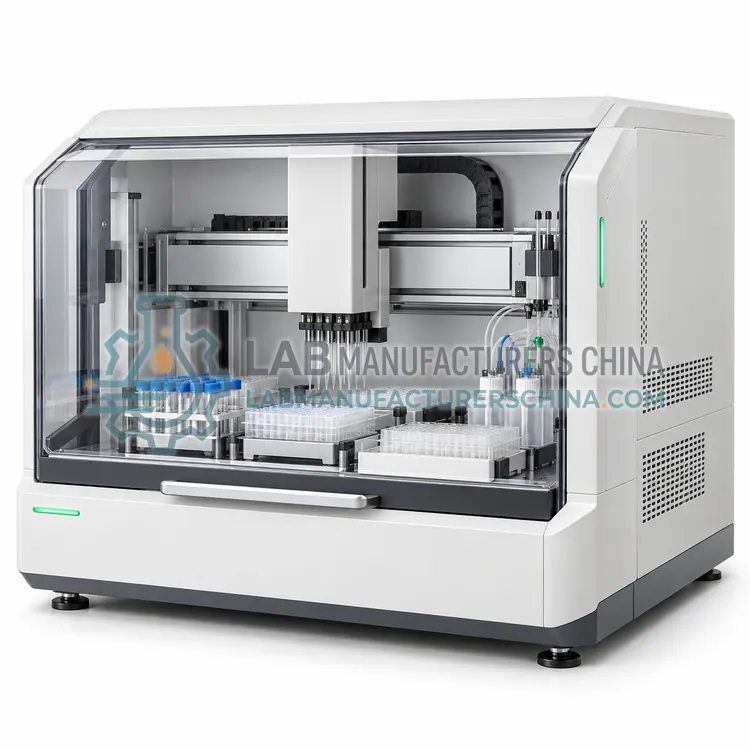 CLAA实验室自动化Laboratory automation covers instruments and software that prepare samples, move liquids, run analyses and feed results into information systems. It raises throughput and reproducibility while reducing manual handling, transcription errors, delays and running cost.