Lab Manufacturers China

Ducted Fume Hoods

管道式通风柜

DFH · Fume Hoods · 5 models

By Lab Manufacturers China Technical TeamLast reviewed Standards: EN 14175-2 (fume cupboards, safety and performance), EN 14175-3 (type test methods), EN 14175-4 (on-site test methods)

Standards referenced

  • EN 14175-2 (fume cupboards, safety and performance)
  • EN 14175-3 (type test methods)
  • EN 14175-4 (on-site test methods)
  • ASHRAE 110 (method of testing performance of laboratory fume hoods)
  • GB/T 34269
  • ISO 14644-1

What are Ducted Fume Hoods?

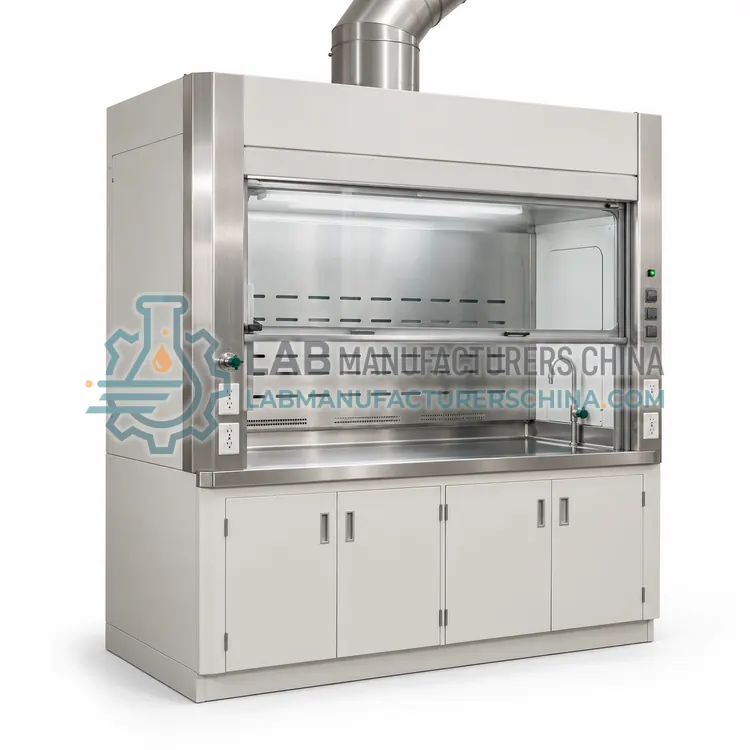
Ducted fume hoods are enclosed laboratory workstations that draw contaminated air through a sash opening and exhaust it outdoors through a duct system. Chemistry, pharmaceutical, materials and teaching laboratories use them to protect operators from hazardous vapours, fumes and dusts.

5 models of Ducted Fume Hoods

The 5 models below are current configurations; specifications are confirmed on quotation.

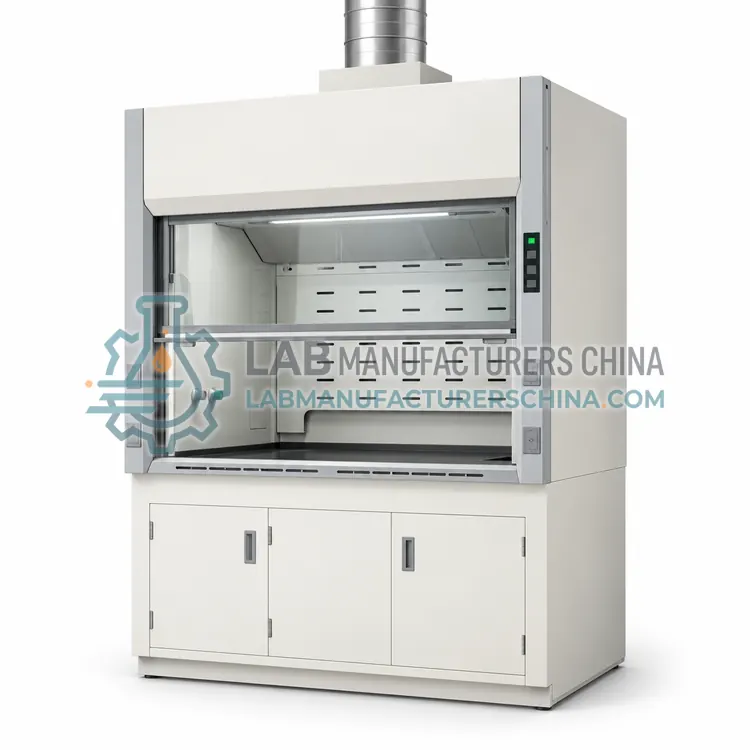
Constant Volume Bypass Fume Hood

定风量旁通式通风柜

  • DFH-0001
  • Ducted Fume Hoods
  • CE (to be confirmed)
  • ISO 9001 manufacturing (to be confirmed)
Width:
1200 / 1500 / 1800 mm
Face velocity:
0.4–0.6 m/s
Exhaust volume:
600–1500 m3/h
Sash opening:
Up to 800 mm
Work-zone height:
1100–1300 mm
Liner material:
Epoxy, FRC or stainless steel

A constant-volume bypass fume hood exhausts a fixed airflow and uses a bypass opening above the sash to keep face velocity within limits as the sash moves. It is the traditional design for laboratories with simple exhaust systems.

Request a quote
View details

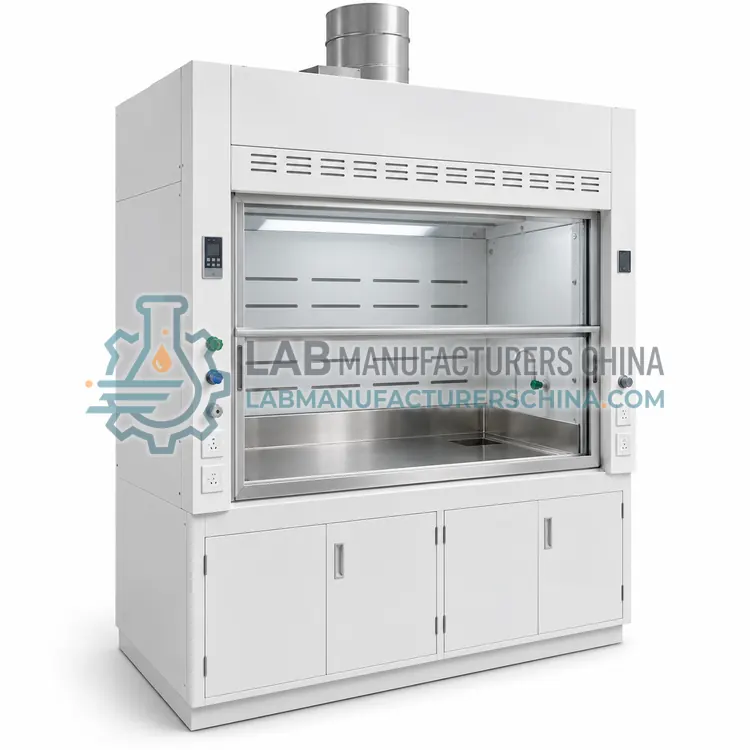
Variable Air Volume (VAV) Fume Hood

变风量(VAV)通风柜

  • DFH-0002
  • Ducted Fume Hoods
  • CE (to be confirmed)
  • ISO 9001 manufacturing (to be confirmed)
Face velocity (held):
0.4–0.5 m/s
Exhaust volume range:
300–1500 m3/h
Response time:
< 3 s
Width:
1200 / 1500 / 1800 mm
Controller:
Digital, PID
Communication:
BACnet or Modbus

A VAV fume hood adjusts exhaust volume as the sash is raised or lowered so face velocity stays constant. It cuts exhaust and conditioning energy in laboratories with multiple hoods where occupancy varies.

Request a quote
View details

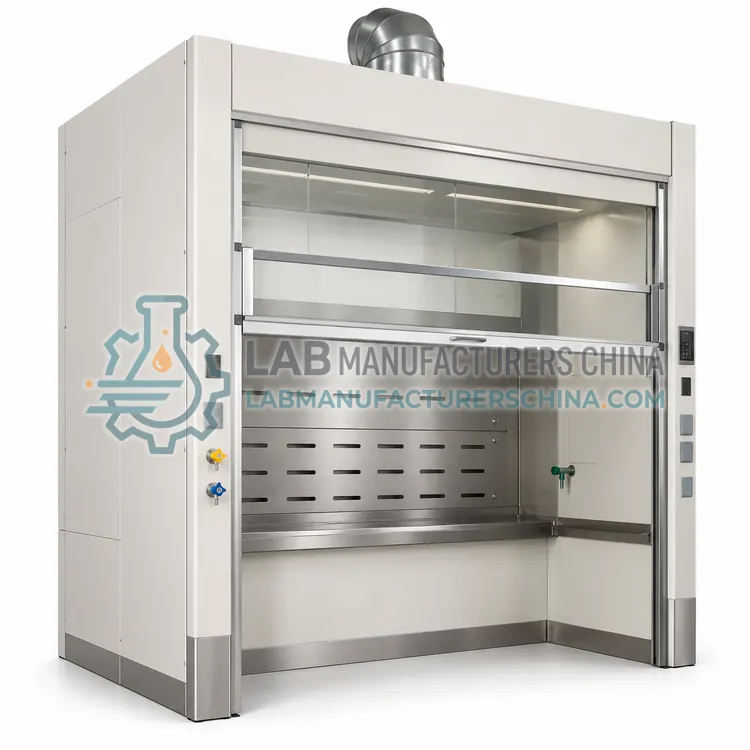
Walk-In Fume Hood

步入式通风柜

  • DFH-0003
  • Ducted Fume Hoods
  • CE (to be confirmed)
  • ISO 9001 manufacturing (to be confirmed)
Width:
1500–2400 mm
Depth:
900–1000 mm
Work-zone height:
2000–2400 mm
Exhaust volume:
1500–4000 m3/h
Face velocity:
0.4–0.5 m/s
Sash type:
Double-hung or horizontal sliding

A walk-in fume hood is a floor-standing hood tall and deep enough to house large apparatus, reactors and drums. It is used for pilot-scale experiments, distillation setups and tall equipment that does not fit a bench hood.

Request a quote
View details

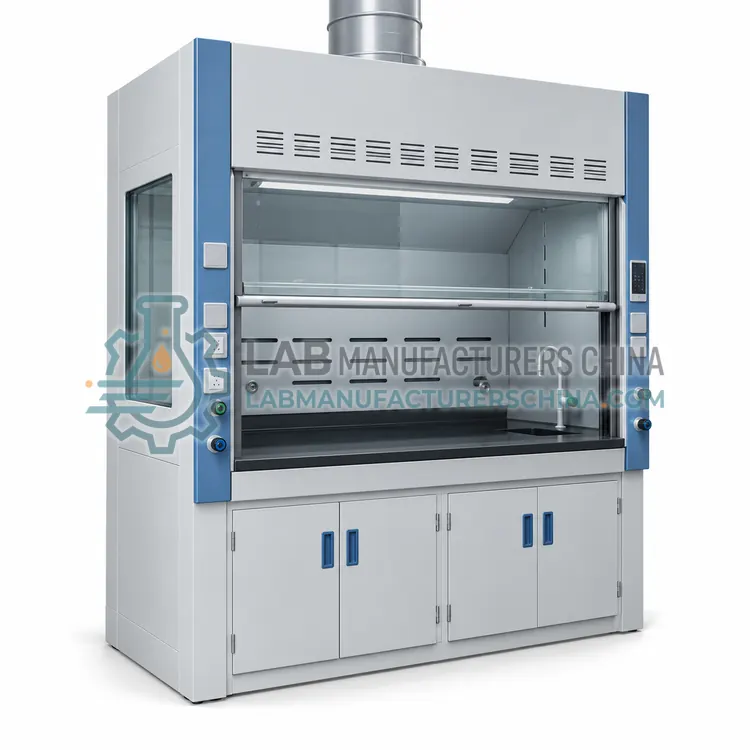
Benchtop Fume Hood

台式通风柜

  • DFH-0004
  • Ducted Fume Hoods
  • CE (to be confirmed)
  • ISO 9001 manufacturing (to be confirmed)
Width:
750 / 900 / 1200 mm
Depth:
600–700 mm
Height:
1000–1200 mm
Exhaust volume:
300–800 m3/h
Face velocity:
0.4–0.5 m/s
Sash opening:
400–500 mm

A benchtop fume hood is a compact ducted hood that sits on an existing bench or cabinet. It suits low-volume chemical work in limited space, such as small teaching or quality control laboratories.

Request a quote
View details

Distillation Fume Hood

蒸馏通风柜

  • DFH-0005
  • Ducted Fume Hoods
  • CE (to be confirmed)
  • ISO 9001 manufacturing (to be confirmed)
Width:
1500 / 1800 mm
Depth:
750–850 mm
Work-zone height:
1500–1800 mm
Exhaust volume:
1000–2000 m3/h
Face velocity:
0.4–0.5 m/s
Liner material:
Epoxy steel or stainless steel

A distillation fume hood is a tall, deep ducted hood designed for distillation racks and reflux assemblies. Its extended height and support rods accommodate vertical glassware, heating mantles and reflux columns, keeping them clear of the sash.

Request a quote
View details

Compare Ducted Fume Hoods models

ModelWidthFace velocityExhaust volumeSash openingWork-zone height
Constant Volume Bypass Fume HoodDFH-00011200 / 1500 / 1800 mm0.4–0.6 m/s600–1500 m3/hUp to 800 mm1100–1300 mm
Variable Air Volume (VAV) Fume HoodDFH-00021200 / 1500 / 1800 mm————
Walk-In Fume HoodDFH-00031500–2400 mm0.4–0.5 m/s1500–4000 m3/h—2000–2400 mm
Benchtop Fume HoodDFH-0004750 / 900 / 1200 mm0.4–0.5 m/s300–800 m3/h400–500 mm—
Distillation Fume HoodDFH-00051500 / 1800 mm0.4–0.5 m/s1000–2000 m3/h—1500–1800 mm

Indicative values for this product class. Final specifications are confirmed on the quotation and in the calibration documents supplied with the instrument.

How do Ducted Fume Hoods work?

A ducted fume hood creates a controlled inward airflow through the sash opening so contaminants generated inside are carried to the exhaust rather than into the room. Face velocity, typically 0.4–0.6 m/s at the sash, is produced by an exhaust fan located on the roof or in the duct. A baffle system at the rear distributes air across slots at the top, middle and bottom to avoid dead zones. A bypass airfoil keeps flow smooth as the sash moves. Variable air volume (VAV) hoods modulate exhaust as the sash opens or closes, saving energy while holding face velocity. The work surface, liner and sash are chemical resistant. Airflow monitors, alarms and lighting complete the hood, and the building make-up air system replaces exhausted air.

Which Ducted Fume Hoods variants are available?

  • Constant Volume Bypass Fume Hood — A constant-volume bypass fume hood exhausts a fixed airflow and uses a bypass opening above the sash to keep face velocity within limits as the sash moves.
  • Variable Air Volume (VAV) Fume Hood — A VAV fume hood adjusts exhaust volume as the sash is raised or lowered so face velocity stays constant.
  • Walk-In Fume Hood — A walk-in fume hood is a floor-standing hood tall and deep enough to house large apparatus, reactors and drums.
  • Benchtop Fume Hood — A benchtop fume hood is a compact ducted hood that sits on an existing bench or cabinet.
  • Distillation Fume Hood — A distillation fume hood is a tall, deep ducted hood designed for distillation racks and reflux assemblies.

How do I choose the right variant?

Select the hood by the chemicals and process. Choose width, commonly 1200, 1500 or 1800 mm, to match equipment and operators, and check that depth and height suit tall apparatus. Decide between constant volume, bypass and VAV designs, taking the building's exhaust capacity and energy costs into account. Specify liner material: fibre-reinforced cement or epoxy for general use, stainless steel or polypropylene for acids. Consider sash type, vertical or combination, face velocity monitoring, service fittings and base cabinet for storage. Confirm whether perchloric acid or radioisotope work requires a specialised hood instead. Coordinate duct size, fan capacity and make-up air with the building engineer, and plan for containment testing.

Where are Ducted Fume Hoods used?

Ducted Fume Hoods are specified in chemistry laboratories, pharmaceutical research, materials testing, teaching laboratories and quality control.

Which standards and certifications apply?

Work with Ducted Fume Hoods is commonly governed by EN 14175-2 (fume cupboards, safety and performance), EN 14175-3 (type test methods), EN 14175-4 (on-site test methods), ASHRAE 110 (method of testing performance of laboratory fume hoods), GB/T 34269 and ISO 14644-1. Instrument certifications such as CE marking are confirmed per configuration and never assumed.

What are the key considerations before purchase?

Commission each hood with a face velocity survey and, where required, a containment test such as EN 14175-3 or ASHRAE 110. Place it away from doors, walkways and supply diffusers, since cross-drafts above 0.15 m/s degrade containment. Keep the sash at or below the marked working height, and avoid blocking baffles with equipment. Check airflow monitors, alarms and exhaust fans at least every 6–12 months, and clean the liner regularly. Plan make-up air so the room does not become negatively pressured. Train users and label the hood with its tested face velocity and date, and do not use it for storage of chemicals beyond what the work requires.

Frequently asked questions about Ducted Fume Hoods

A ducted fume hood is an enclosed laboratory workstation that pulls air inward through a sash opening and exhausts it outdoors via a duct. It protects operators from hazardous vapours, fumes and dusts generated inside.

Need help specifying Ducted Fume Hoods?

Request a quote