Lab Manufacturers China

Acid Digestion Hoods

酸消解通风柜

ADH · Fume Hoods · 5 models

By Lab Manufacturers China Technical TeamLast reviewed Standards: EN 14175-2 (fume cupboards, safety and performance), EN 14175-3 (type test methods), ASHRAE 110 (method of testing performance of laboratory fume hoods)

Standards referenced

  • EN 14175-2 (fume cupboards, safety and performance)
  • EN 14175-3 (type test methods)
  • ASHRAE 110 (method of testing performance of laboratory fume hoods)
  • GB/T 34269
  • ASTM D1193 (reagent water used in digestion blanks)
  • IEC 61010-1

What are Acid Digestion Hoods?

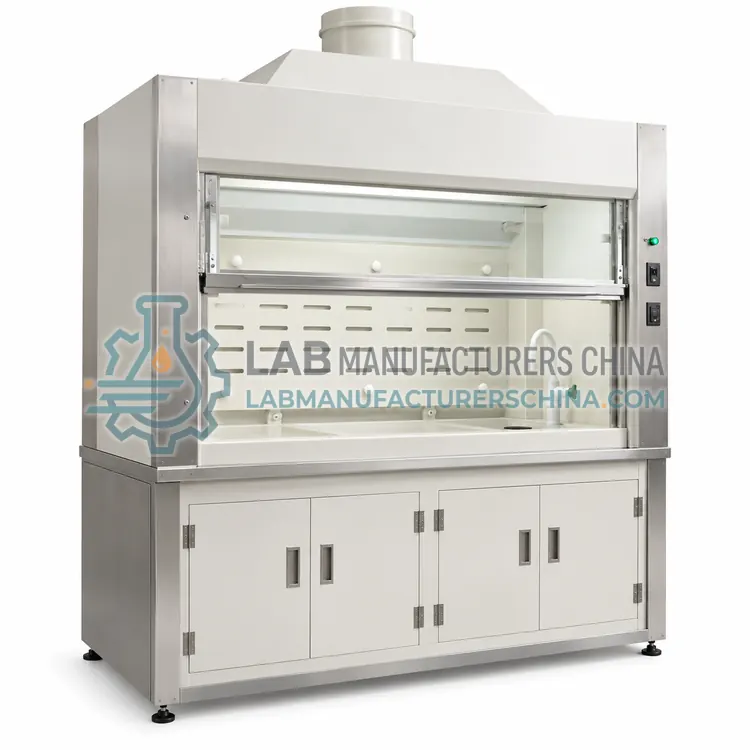
Acid digestion hoods are corrosion-resistant fume hoods built for open-vessel digestions with nitric, hydrochloric, sulfuric or hydrofluoric acid. Trace-metal, environmental and food laboratories use them for sample decomposition before ICP-MS, ICP-OES or atomic absorption analysis.

5 models of Acid Digestion Hoods

The 5 models below are current configurations; specifications are confirmed on quotation.

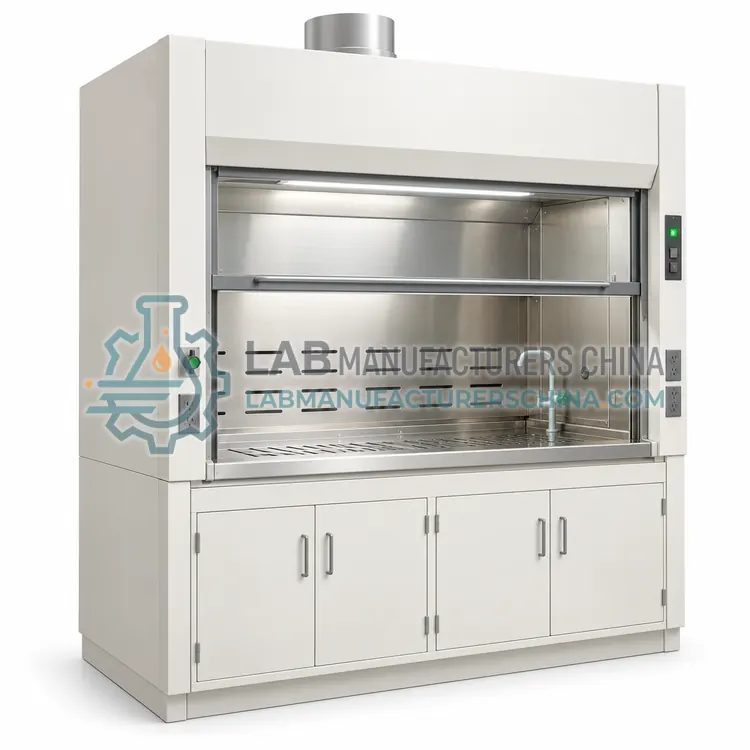
Polypropylene Acid Digestion Hood

聚丙烯酸消解通风柜

  • ADH-0001
  • Acid Digestion Hoods
  • CE (to be confirmed)
  • ISO 9001 manufacturing (to be confirmed)
Body material:
Welded polypropylene, 8–12 mm
Work surface:
PP or ceramic with spill lip
Internal height:
900–1200 mm
Width:
1200–1800 mm
Face velocity:
0.4–0.6 m/s
Airflow:
500–1500 m3/h

A polypropylene acid digestion hood uses welded PP body, liner and sash to resist nitric, hydrochloric, sulfuric and hydrofluoric acid vapours. It is the standard choice for open-vessel trace-metal digestions with corrosive acids.

Request a quote
View details

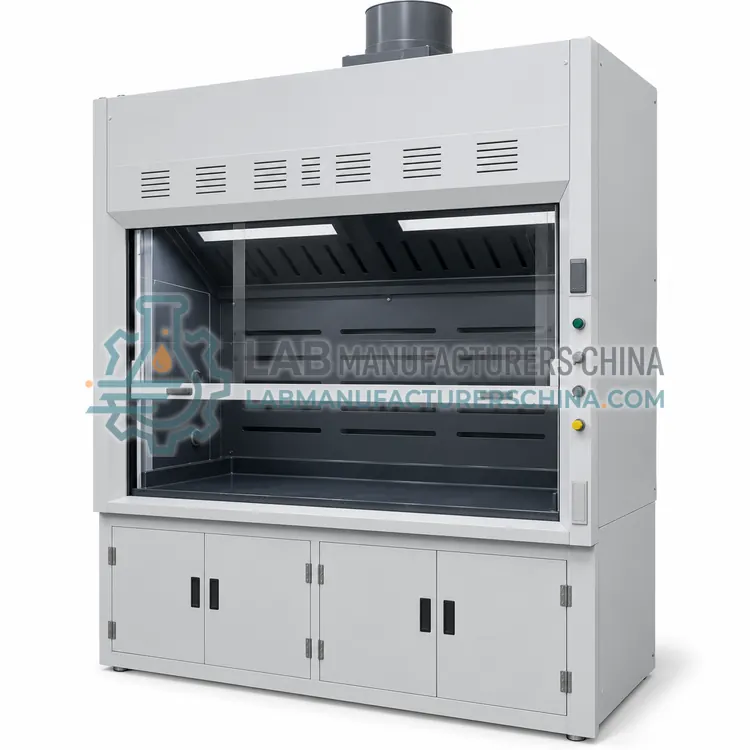
Stainless Steel Acid Digestion Hood

不锈钢酸消解通风柜

  • ADH-0002
  • Acid Digestion Hoods
  • CE (to be confirmed)
  • ISO 9001 manufacturing (to be confirmed)
Body material:
304 or 316L stainless steel
Panel thickness:
1.2–1.5 mm
Internal height:
900–1200 mm
Width:
1200–2400 mm
Face velocity:
0.4–0.6 m/s
Airflow:
600–1500 m3/h

A stainless steel acid digestion hood uses 304 or 316L stainless steel for the body and work surface. It suits high-throughput nitric and hydrochloric acid digestions where strength and heat resistance are needed.

Request a quote
View details

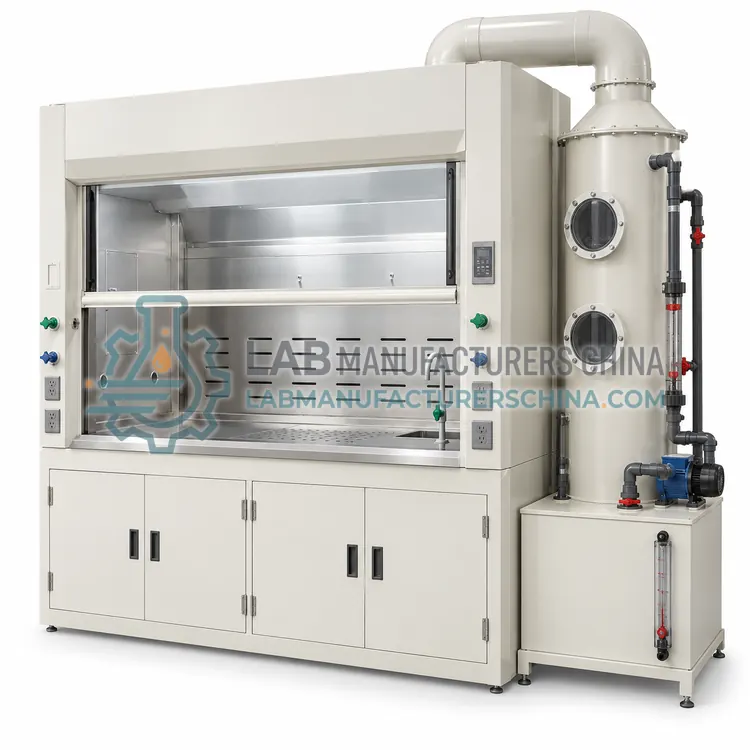
Scrubber-Equipped Acid Digestion Hood

洗涤式酸消解通风柜

  • ADH-0003
  • Acid Digestion Hoods
  • CE (to be confirmed)
  • ISO 9001 manufacturing (to be confirmed)
Scrubber type:
Packed column, wet
Scrubbing efficiency:
90–99 % (per acid)
Scrubbing liquid:
Water or dilute alkali
Face velocity:
0.4–0.6 m/s
Airflow:
600–2000 m3/h
Liquid-to-gas ratio:
2–10 L/m3

A scrubber-equipped acid digestion hood includes a packed-column scrubber that neutralises acid vapour before discharge to atmosphere. It is chosen where acid volumes are high or stack emission limits are strict for the site.

Request a quote
View details

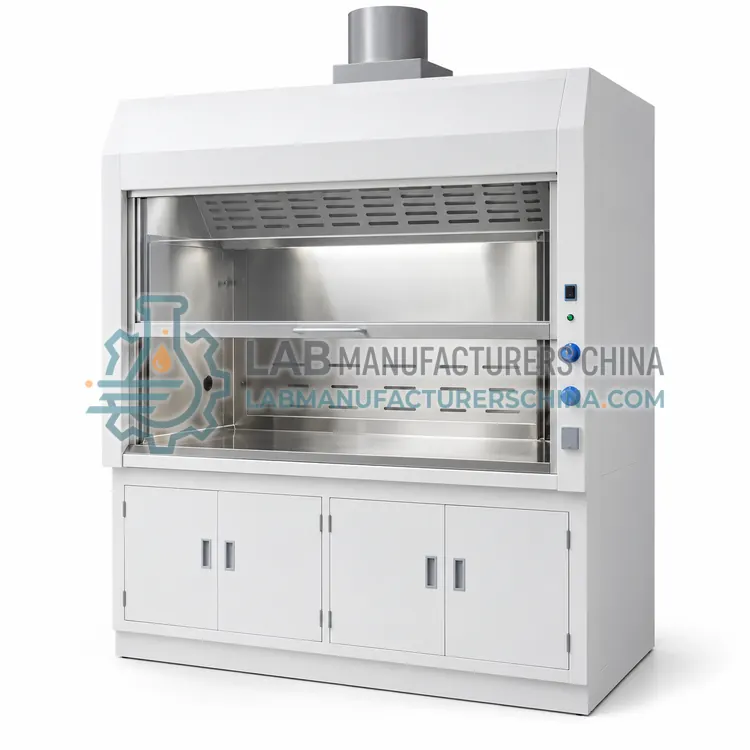
Benchtop Acid Digestion Hood

台式酸消解通风柜

  • ADH-0004
  • Acid Digestion Hoods
  • CE (to be confirmed)
  • ISO 9001 manufacturing (to be confirmed)
Body material:
Polypropylene, 8–10 mm
Width:
600–1200 mm
Depth:
500–700 mm
Vessel capacity:
1–6 positions
Face velocity:
0.4–0.6 m/s
Airflow:
200–500 m3/h

A benchtop acid digestion hood is a compact, acid-resistant enclosure placed on an existing laboratory bench. It suits small digestion batches of a few vessels in laboratories with limited floor space and a short duct run.

Request a quote
View details

Walk-In Acid Digestion Hood

步入式酸消解通风柜

  • ADH-0005
  • Acid Digestion Hoods
  • CE (to be confirmed)
  • ISO 9001 manufacturing (to be confirmed)
Body material:
Welded polypropylene, 10–15 mm
Height:
2000–2500 mm
Width:
1500–2400 mm
Depth:
900–1500 mm
Face velocity:
0.4–0.6 m/s
Airflow:
1000–2500 m3/h

A walk-in acid digestion hood has a floor-level work area that allows operators to load large racks and tall vessels. It is used for high-throughput multi-vessel acid digestions in mining, metallurgical and environmental laboratories.

Request a quote
View details

Compare Acid Digestion Hoods models

ModelBody materialInternal heightWidthFace velocityAirflow
Polypropylene Acid Digestion HoodADH-0001Welded polypropylene, 8–12 mm900–1200 mm1200–1800 mm0.4–0.6 m/s500–1500 m3/h
Stainless Steel Acid Digestion HoodADH-0002304 or 316L stainless steel900–1200 mm1200–2400 mm0.4–0.6 m/s600–1500 m3/h
Scrubber-Equipped Acid Digestion HoodADH-0003Polypropylene——0.4–0.6 m/s600–2000 m3/h
Benchtop Acid Digestion HoodADH-0004Polypropylene, 8–10 mm—600–1200 mm0.4–0.6 m/s200–500 m3/h
Walk-In Acid Digestion HoodADH-0005Welded polypropylene, 10–15 mm—1500–2400 mm0.4–0.6 m/s1000–2500 m3/h

Indicative values for this product class. Final specifications are confirmed on the quotation and in the calibration documents supplied with the instrument.

How do Acid Digestion Hoods work?

An acid digestion hood encloses the hotplate or block digester on a chemically resistant work surface and draws acid vapours away through a rear baffle and exhaust duct. The body, liner and sash are made from polypropylene, PVC or acid-resistant stainless steel so that nitric, hydrochloric and hydrofluoric acid vapours do not corrode the surfaces. Face velocity at the sash is held at 0.4–0.6 m/s, and a corrosion-resistant fan, usually plastic or PVC-coated, moves air to atmosphere. Because digestion releases dense acid fumes and heat, larger air volumes and deeper baffles are used than in a general-purpose hood. Some models add a scrubber that neutralises acid in a packed column before discharge, reducing emissions to the stack. Water washdown and low dead volume help prevent salt accumulation and cross contamination between trace-metal samples.

Which Acid Digestion Hoods variants are available?

  • Polypropylene Acid Digestion Hood — A polypropylene acid digestion hood uses welded PP body, liner and sash to resist nitric, hydrochloric, sulfuric and hydrofluoric acid vapours.
  • Stainless Steel Acid Digestion Hood — A stainless steel acid digestion hood uses 304 or 316L stainless steel for the body and work surface.
  • Scrubber-Equipped Acid Digestion Hood — A scrubber-equipped acid digestion hood includes a packed-column scrubber that neutralises acid vapour before discharge to atmosphere.
  • Benchtop Acid Digestion Hood — A benchtop acid digestion hood is a compact, acid-resistant enclosure placed on an existing laboratory bench.
  • Walk-In Acid Digestion Hood — A walk-in acid digestion hood has a floor-level work area that allows operators to load large racks and tall vessels.

How do I choose the right variant?

Choose the construction from the acids used. Hydrofluoric acid attacks glass and requires polypropylene or special liners; nitric and hydrochloric acid work needs polypropylene, PVC or acid-grade stainless steel. Decide whether a scrubber is required by local emission limits and the acid volumes handled. Match the internal height to the hotplate, rack and reflux glassware, and choose depth for tall condensers. Consider a dedicated water washdown system if the duct could collect salts. Select face velocity monitoring and alarms, and a work surface with a spill lip. Confirm the fan is corrosion-resistant rather than mild steel, and plan for acid-resistant duct material and drainage. Large multi-position digestions may need a walk-in or dual-duct layout.

Where are Acid Digestion Hoods used?

Acid Digestion Hoods are specified in trace-metal sample digestion, environmental soil and water analysis, food and feed elemental analysis, mining and geological assay and metallurgical quality control.

Which standards and certifications apply?

Work with Acid Digestion Hoods is commonly governed by EN 14175-2 (fume cupboards, safety and performance), EN 14175-3 (type test methods), ASHRAE 110 (method of testing performance of laboratory fume hoods), GB/T 34269, ASTM D1193 (reagent water used in digestion blanks) and IEC 61010-1. Instrument certifications such as CE marking are confirmed per configuration and never assumed.

What are the key considerations before purchase?

Install the hood away from doors and air supply diffusers, and provide corrosion-resistant ducting with the correct slope and drainage. Commission face velocity and, where required, containment by tracer gas at the sash. Establish a hotplate and acid-usage log, and inspect the liner, sash and fittings monthly for etching or discoloration. Replace exhausted scrubber media on the schedule set by the acid load, and treat scrubber effluent as acidic waste. Keep the work surface clean and free of salt deposits, especially around the inside of the duct connection. Provide secondary containment trays and confirm the fan, duct and roof discharge are rated for the acids in use.

Frequently asked questions about Acid Digestion Hoods

It encloses open-vessel acid digestions so corrosive vapours are removed from the operator's breathing zone. It is used for decomposing soil, water, food, geological and metallurgical samples before trace-metal analysis.

Need help specifying Acid Digestion Hoods?

Request a quote