Benchtop Acid Digestion Hood
台式酸消解通风柜
- SKU ADH-0004
- Acid Digestion Hoods
- CE (to be confirmed)
- ISO 9001 manufacturing (to be confirmed)
Price on request — FOB / CIF quoted per order
Prices depend on configuration, quantity and destination port.
Key specifications
| Body material | Polypropylene, 8–10 mm |
|---|---|
| Width | 600–1200 mm |
| Depth | 500–700 mm |
| Vessel capacity | 1–6 positions |
| Face velocity | 0.4–0.6 m/s |
| Airflow | 200–500 m3/h |
Request a quote Download brochure · to be provided
By Lab Manufacturers China Technical TeamLast reviewed Standards: EN 14175-2 (fume cupboards, safety and performance), EN 14175-3 (type test methods), ASHRAE 110 (method of testing performance of laboratory fume hoods)
What is the Benchtop Acid Digestion Hood?
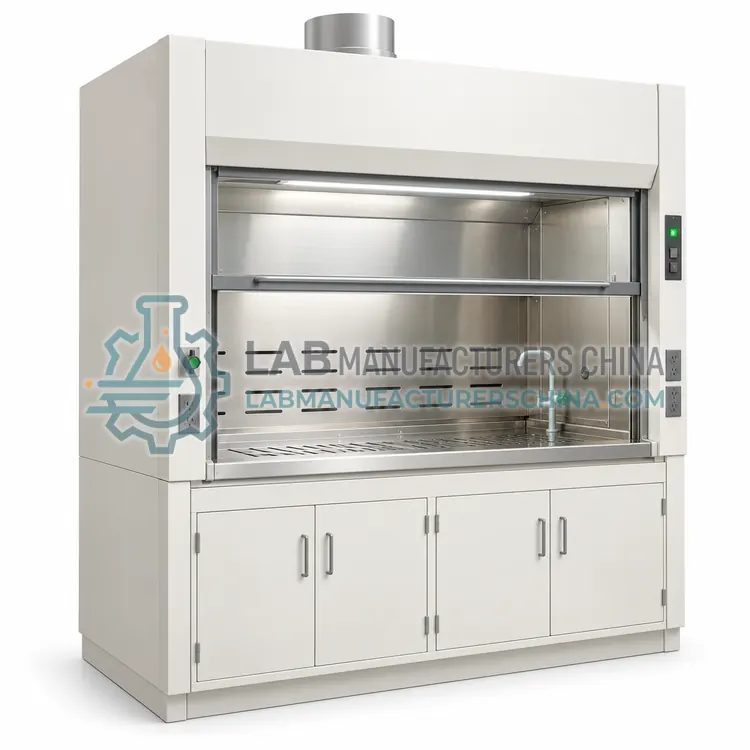
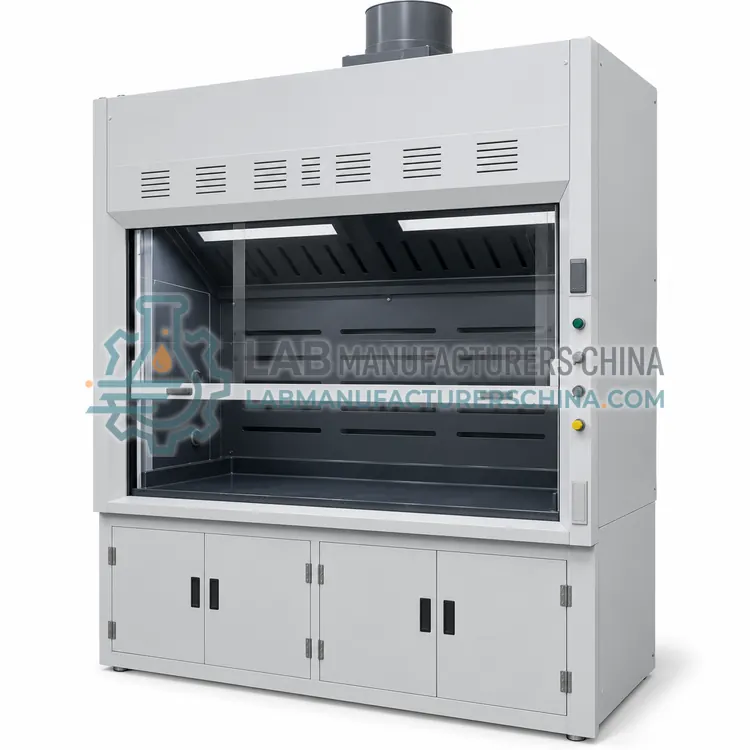
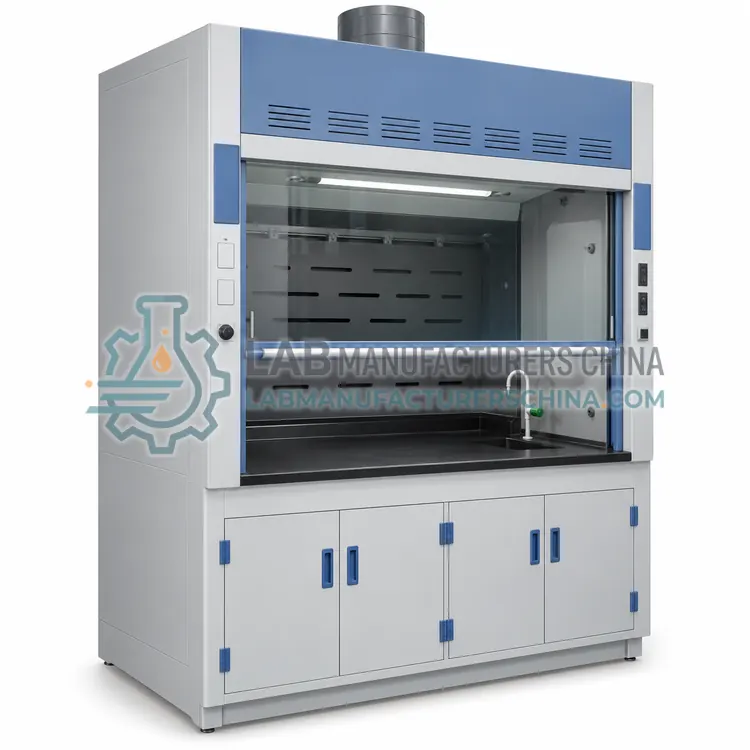
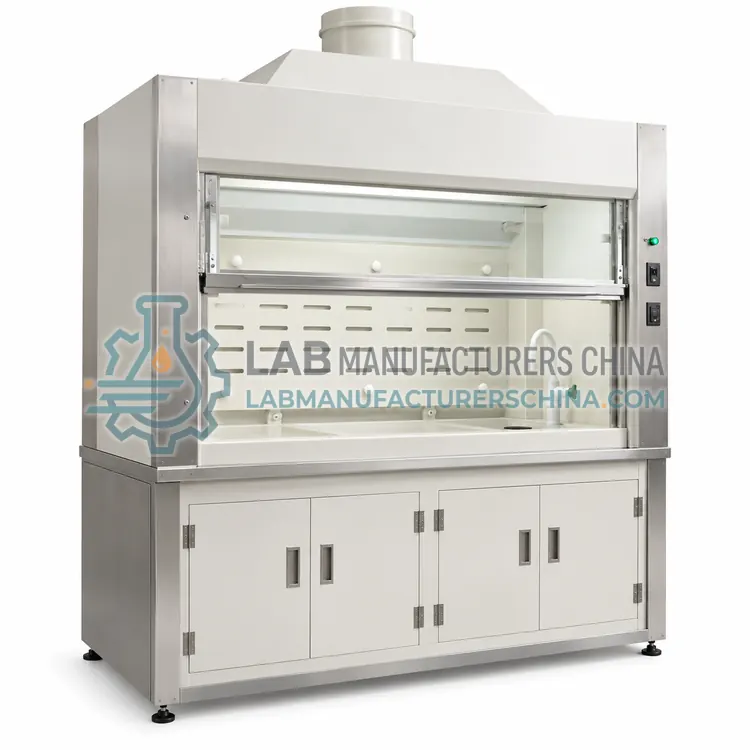
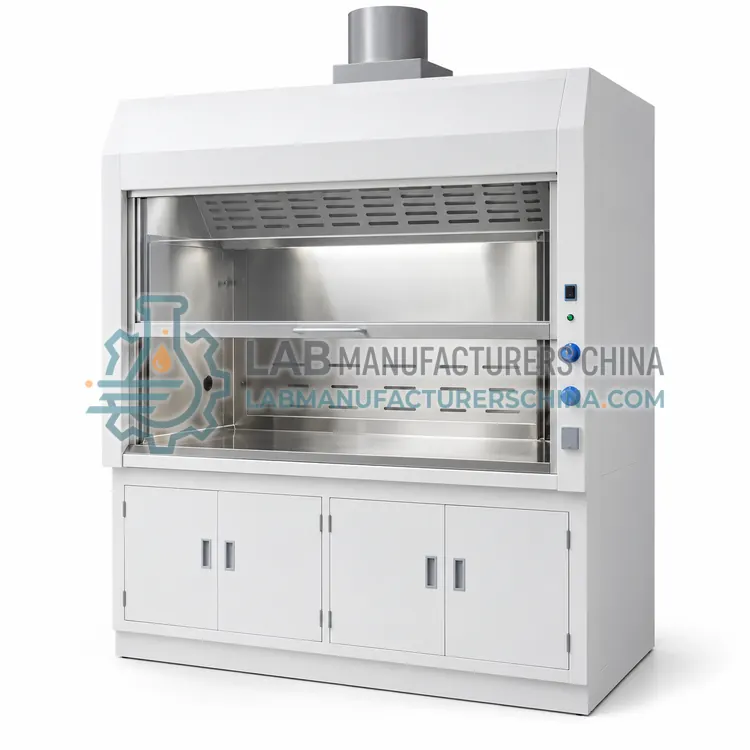
A benchtop acid digestion hood is a compact, acid-resistant enclosure placed on an existing laboratory bench. It suits small digestion batches of a few vessels in laboratories with limited floor space and a short duct run.
What is the Benchtop Acid Digestion Hood?
A benchtop acid digestion hood is a compact, acid-resistant enclosure placed on an existing laboratory bench. It suits small digestion batches of a few vessels in laboratories with limited floor space and a short duct run.
Overview
This unit is a low-profile enclosure, typically 600–1200 mm wide and 500–700 mm deep, built in polypropylene with a hinged or sliding sash. It houses a small hotplate or block digester for one to six vessels. Face velocity is 0.4–0.6 m/s, achieved with airflow of 200–500 m3/h through a rear baffle and a flexible or rigid duct to an existing exhaust connection. A built-in fan variant can recirculate after carbon filtration, but recirculation is limited for acid work. The compact design means a shorter duct run and lower fan duty than a full hood, but internal working height is reduced, so reflux glassware may not fit. Interior lighting, a drip tray and airflow indication complete the unit.
How does it work?
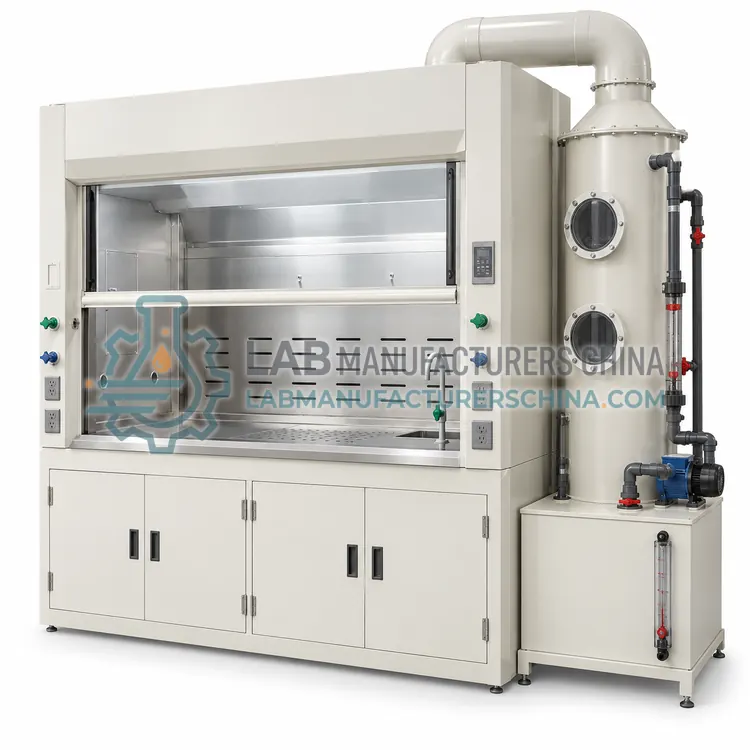
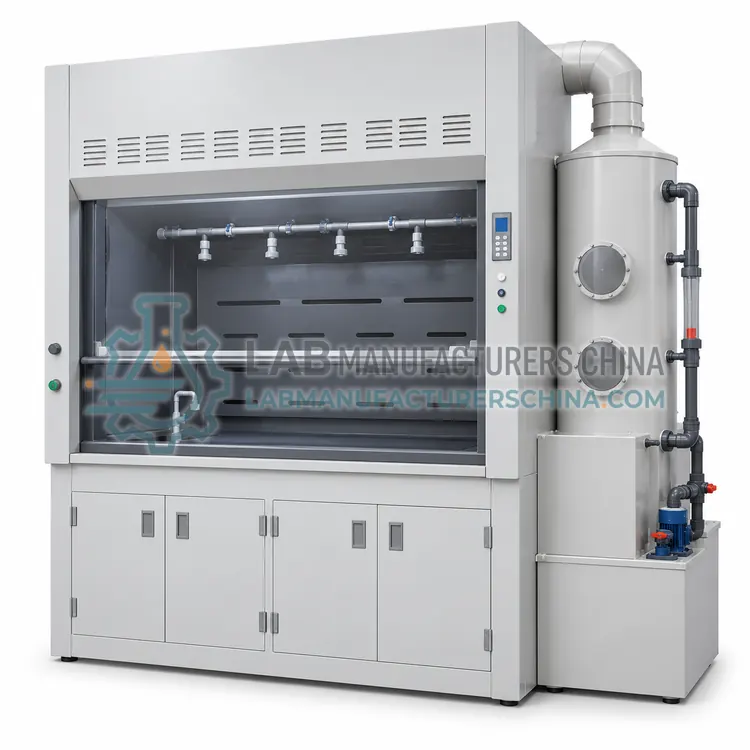
An acid digestion hood encloses the hotplate or block digester on a chemically resistant work surface and draws acid vapours away through a rear baffle and exhaust duct. The body, liner and sash are made from polypropylene, PVC or acid-resistant stainless steel so that nitric, hydrochloric and hydrofluoric acid vapours do not corrode the surfaces. Face velocity at the sash is held at 0.4–0.6 m/s, and a corrosion-resistant fan, usually plastic or PVC-coated, moves air to atmosphere. Because digestion releases dense acid fumes and heat, larger air volumes and deeper baffles are used than in a general-purpose hood. Some models add a scrubber that neutralises acid in a packed column before discharge, reducing emissions to the stack. Water washdown and low dead volume help prevent salt accumulation and cross contamination between trace-metal samples.
What are the key features?
- Compact polypropylene enclosure for bench mounting
- Width 600–1200 mm, depth 500–700 mm
- Houses hotplate or block for 1–6 vessels
- Airflow 200–500 m3/h at 0.4–0.6 m/s
- Rigid or flexible duct connection
- Drip tray and interior lighting
What are the technical specifications?
A typical benchtop acid digestion hood configuration offers body material of Polypropylene, 8–10 mm, width of 600–1200 mm, depth of 500–700 mm, vessel capacity of 1–6 positions, face velocity of 0.4–0.6 m/s and airflow of 200–500 m3/h. Values are indicative of the product class; the exact figures for each configuration are confirmed on the quotation and the calibration documents supplied with the instrument.
Which applications is it used for?
The Benchtop Acid Digestion Hood is used in small digestion batches, teaching and research digestion, field-sample processing and quality control micro-digestion. Across the wider Acid Digestion Hoods class, laboratories also deploy it for trace-metal sample digestion, environmental soil and water analysis and food and feed elemental analysis.
Which standards and certifications apply?
Relevant standards and methods include EN 14175-2 (fume cupboards, safety and performance), EN 14175-3 (type test methods), ASHRAE 110 (method of testing performance of laboratory fume hoods), GB/T 34269, ASTM D1193 (reagent water used in digestion blanks) and IEC 61010-1. Certification candidates for this model are CE and ISO 9001 manufacturing; each is to be confirmed for the specific configuration before shipment, and certificates are supplied only where they have been issued.
Install the hood away from doors and air supply diffusers, and provide corrosion-resistant ducting with the correct slope and drainage. Commission face velocity and, where required, containment by tracer gas at the sash. Establish a hotplate and acid-usage log, and inspect the liner, sash and fittings monthly for etching or discoloration. Replace exhausted scrubber media on the schedule set by the acid load, and treat scrubber effluent as acidic waste. Keep the work surface clean and free of salt deposits, especially around the inside of the duct connection. Provide secondary containment trays and confirm the fan, duct and roof discharge are rated for the acids in use.
How do I select the right Benchtop Acid Digestion Hood?
Choose a benchtop unit for one to six vessels when floor space is limited and a short duct run is possible. Check that reflux glassware fits the internal height. RFQ: vessel count and size, acids used, available exhaust connection and bench strength.
How does it compare with other Acid Digestion Hoods variants?
Choose the construction from the acids used. Hydrofluoric acid attacks glass and requires polypropylene or special liners; nitric and hydrochloric acid work needs polypropylene, PVC or acid-grade stainless steel. Decide whether a scrubber is required by local emission limits and the acid volumes handled. Match the internal height to the hotplate, rack and reflux glassware, and choose depth for tall condensers. Consider a dedicated water washdown system if the duct could collect salts. Select face velocity monitoring and alarms, and a work surface with a spill lip. Confirm the fan is corrosion-resistant rather than mild steel, and plan for acid-resistant duct material and drainage. Large multi-position digestions may need a walk-in or dual-duct layout.
Full specifications
| Body material | Polypropylene, 8–10 mm |
|---|---|
| Width | 600–1200 mm |
| Depth | 500–700 mm |
| Vessel capacity | 1–6 positions |
| Face velocity | 0.4–0.6 m/s |
| Airflow | 200–500 m3/h |
| Sash | Hinged or sliding, PP |
| Duct connection | DN 150–200 or flexible |
| Bench load | ≤ 80 kg |
| Power supply | 220 V, 50 Hz, 100–300 W |
Indicative values for this product class. Final specifications are confirmed on the quotation and in the calibration documents supplied with the instrument.
Applications
- Small digestion batches
- Teaching and research digestion
- Field-sample processing
- Quality control micro-digestion
Key features
- Compact polypropylene enclosure for bench mounting
- Width 600–1200 mm, depth 500–700 mm
- Houses hotplate or block for 1–6 vessels
- Airflow 200–500 m3/h at 0.4–0.6 m/s
- Rigid or flexible duct connection
- Drip tray and interior lighting
Frequently asked questions about Benchtop Acid Digestion Hood
It is smaller, sits on an existing bench and uses less airflow, but has lower internal height and capacity. It suits small batch digestions rather than tall reflux setups or high-throughput racks.
Some models can, but recirculation is rarely appropriate for acid work because carbon media has limited capacity for acid gases and local rules may prohibit it. Prefer ducting to atmosphere for acid digestion.
Allow for the hood weight plus hotplate and glassware, typically up to 60–80 kg on the unit footprint. Confirm the bench can carry this load and that the base is level for correct airflow.
It encloses open-vessel acid digestions so corrosive vapours are removed from the operator's breathing zone. It is used for decomposing soil, water, food, geological and metallurgical samples before trace-metal analysis.
Only a model built with polypropylene or a liner rated for HF. HF attacks glass and most metal surfaces, so the body, sash, work surface and duct must all be compatible, and calcium gluconate gel must be available.
It depends on local emission limits and the acid volumes used. A scrubber neutralises acid in a packed column before discharge and may be required for large volumes or restricted locations. Media must be replaced on schedule.
Related models