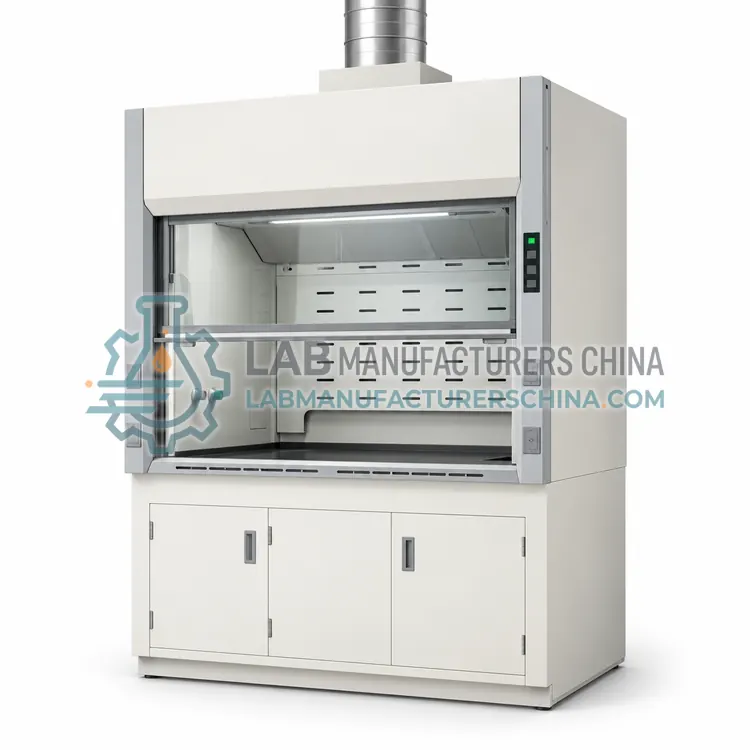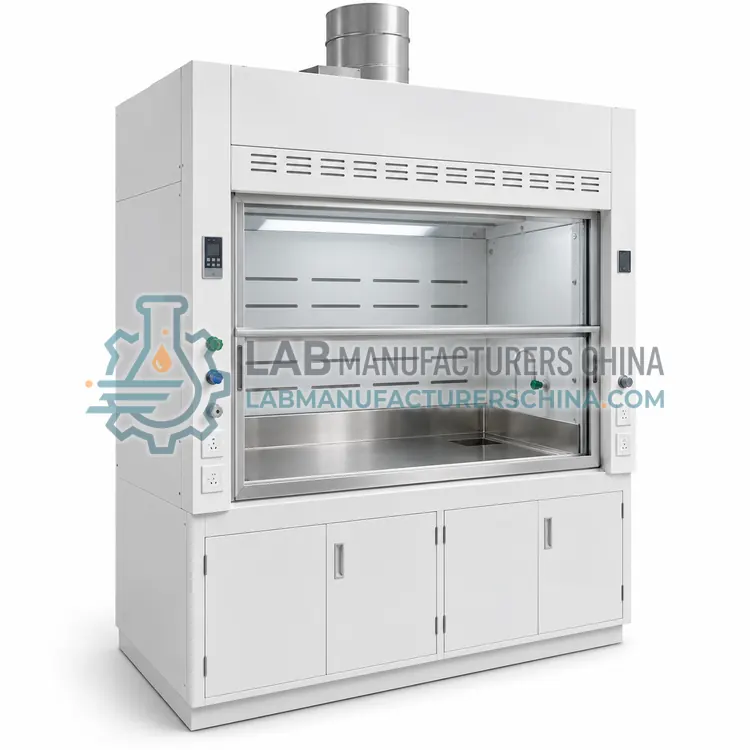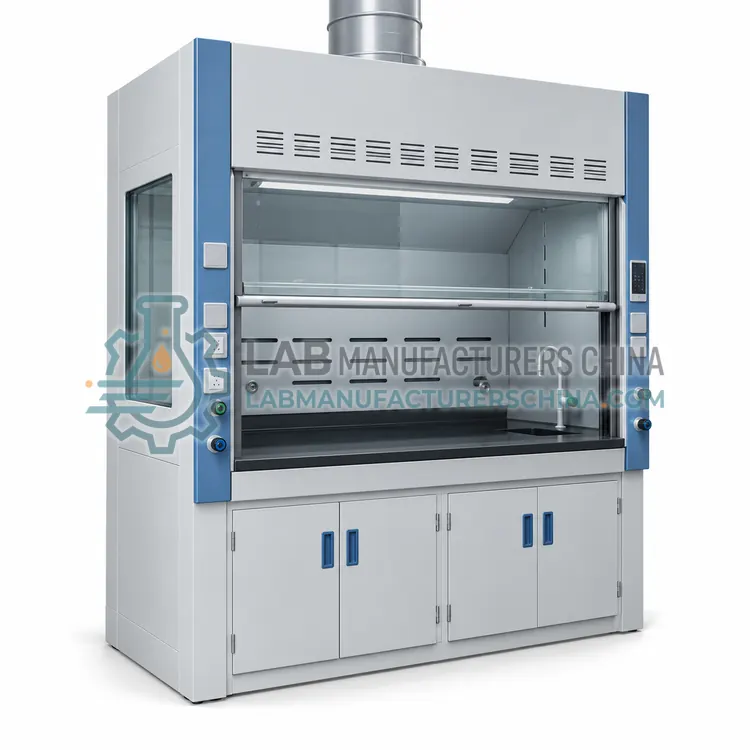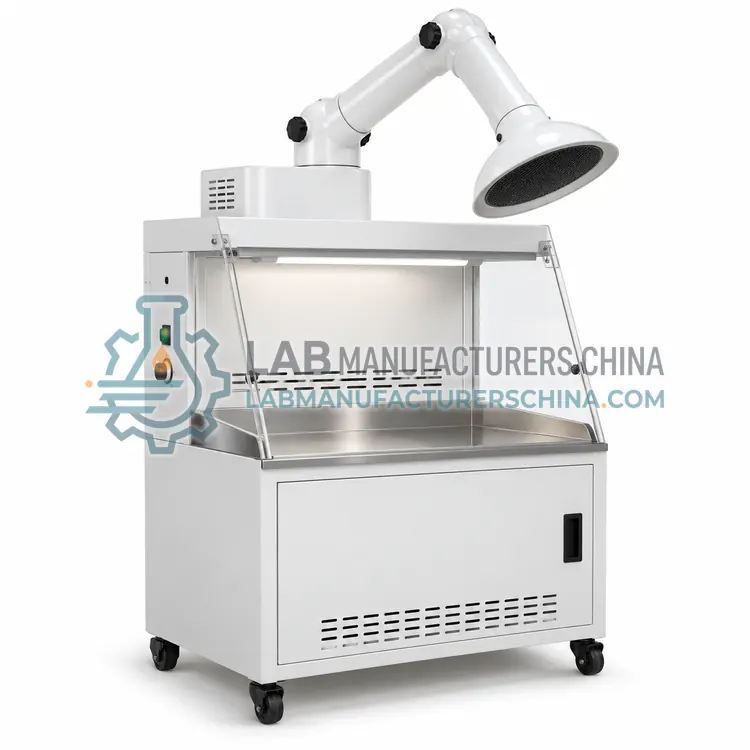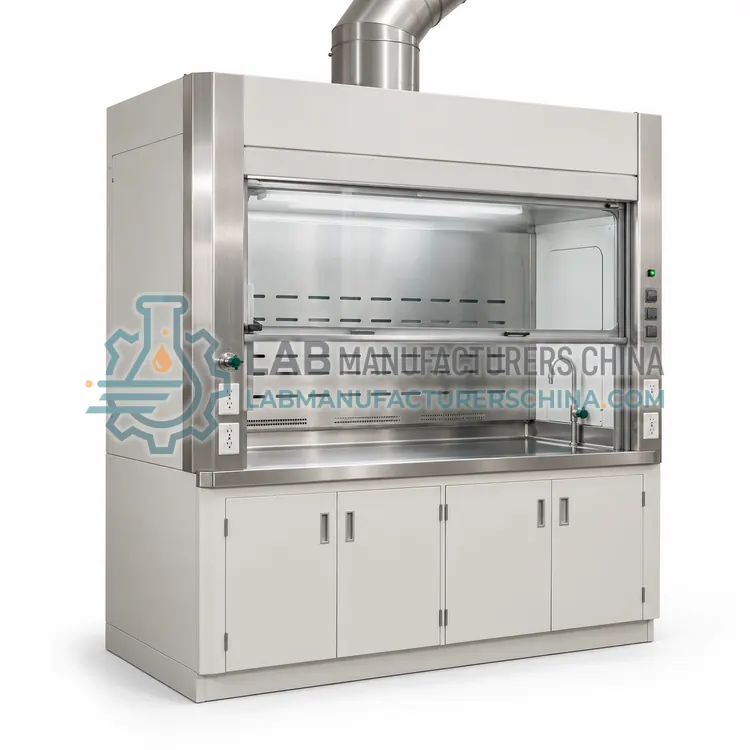
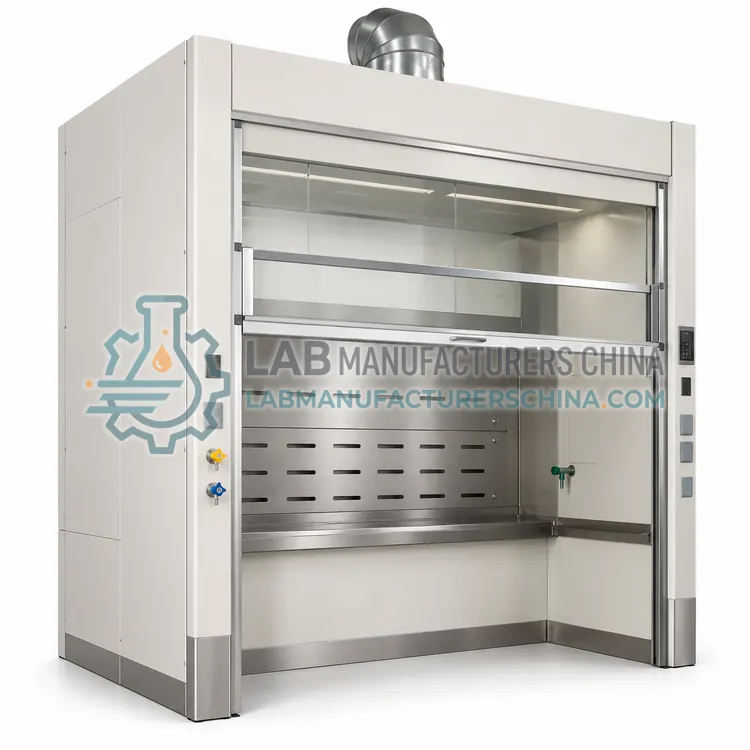
Walk-In Fume Hood
步入式通风柜
- SKU DFH-0003
- Ducted Fume Hoods
- CE (to be confirmed)
- ISO 9001 manufacturing (to be confirmed)
Price on request — FOB / CIF quoted per order
Prices depend on configuration, quantity and destination port.
Key specifications
| Width | 1500–2400 mm |
|---|---|
| Depth | 900–1000 mm |
| Work-zone height | 2000–2400 mm |
| Exhaust volume | 1500–4000 m3/h |
| Face velocity | 0.4–0.5 m/s |
| Sash type | Double-hung or horizontal sliding |
Request a quote Download brochure · to be provided
By Lab Manufacturers China Technical TeamLast reviewed Standards: EN 14175-2 (fume cupboards, safety and performance), EN 14175-3 (type test methods), EN 14175-4 (on-site test methods)
What is the Walk-In Fume Hood?
A walk-in fume hood is a floor-standing hood tall and deep enough to house large apparatus, reactors and drums. It is used for pilot-scale experiments, distillation setups and tall equipment that does not fit a bench hood.
What is the Walk-In Fume Hood?
A walk-in fume hood is a floor-standing hood tall and deep enough to house large apparatus, reactors and drums. It is used for pilot-scale experiments, distillation setups and tall equipment that does not fit a bench hood.
Overview
The hood stands on the floor without a base cabinet, with a work-zone height of about 2000–2400 mm and depth of 900–1000 mm, and widths of 1500–2400 mm. Double-hung vertical sashes or horizontal sliding sashes provide access, and a floor-level access cut-out permits trolleys to roll in. Exhaust volume ranges from 1500 to 4000 m3/h to maintain 0.4–0.5 m/s at the opening. Liners are epoxy-coated steel, stainless steel or polypropylene for acid use, with a chemical-resistant floor trough. Lighting and sockets are mounted outside the airstream. Because of the large air volume, walk-in hoods use considerable energy and usually require VAV or sash limiters. Structural floors must support load from equipment.
How does it work?
A ducted fume hood creates a controlled inward airflow through the sash opening so contaminants generated inside are carried to the exhaust rather than into the room. Face velocity, typically 0.4–0.6 m/s at the sash, is produced by an exhaust fan located on the roof or in the duct. A baffle system at the rear distributes air across slots at the top, middle and bottom to avoid dead zones. A bypass airfoil keeps flow smooth as the sash moves. Variable air volume (VAV) hoods modulate exhaust as the sash opens or closes, saving energy while holding face velocity. The work surface, liner and sash are chemical resistant. Airflow monitors, alarms and lighting complete the hood, and the building make-up air system replaces exhausted air.
What are the key features?
- Floor-standing with no base cabinet
- Work-zone height 2000–2400 mm
- Double-hung or horizontal sliding sashes
- Floor-level access for trolleys
- Epoxy steel, stainless steel or PP liners
- Lighting and sockets outside airstream
What are the technical specifications?
A typical walk-in fume hood configuration offers width of 1500–2400 mm, depth of 900–1000 mm, work-zone height of 2000–2400 mm, exhaust volume of 1500–4000 m3/h, face velocity of 0.4–0.5 m/s and sash type of Double-hung or horizontal sliding. Values are indicative of the product class; the exact figures for each configuration are confirmed on the quotation and the calibration documents supplied with the instrument.
Which applications is it used for?
The Walk-In Fume Hood is used in pilot-scale synthesis, distillation setups, large reactor work and drum handling. Across the wider Ducted Fume Hoods class, laboratories also deploy it for chemistry laboratories, pharmaceutical research and materials testing.
Which standards and certifications apply?
Relevant standards and methods include EN 14175-2 (fume cupboards, safety and performance), EN 14175-3 (type test methods), EN 14175-4 (on-site test methods), ASHRAE 110 (method of testing performance of laboratory fume hoods), GB/T 34269 and ISO 14644-1. Certification candidates for this model are CE and ISO 9001 manufacturing; each is to be confirmed for the specific configuration before shipment, and certificates are supplied only where they have been issued.
Commission each hood with a face velocity survey and, where required, a containment test such as EN 14175-3 or ASHRAE 110. Place it away from doors, walkways and supply diffusers, since cross-drafts above 0.15 m/s degrade containment. Keep the sash at or below the marked working height, and avoid blocking baffles with equipment. Check airflow monitors, alarms and exhaust fans at least every 6–12 months, and clean the liner regularly. Plan make-up air so the room does not become negatively pressured. Train users and label the hood with its tested face velocity and date, and do not use it for storage of chemicals beyond what the work requires.
How do I select the right Walk-In Fume Hood?
Choose a walk-in hood for equipment taller than about 1500 mm or that must be rolled in. It consumes more air than benchtop hoods. RFQ: height, floor load, sash type, access ramp, exhaust capacity and electrical and plumbing needs.
How does it compare with other Ducted Fume Hoods variants?
Select the hood by the chemicals and process. Choose width, commonly 1200, 1500 or 1800 mm, to match equipment and operators, and check that depth and height suit tall apparatus. Decide between constant volume, bypass and VAV designs, taking the building's exhaust capacity and energy costs into account. Specify liner material: fibre-reinforced cement or epoxy for general use, stainless steel or polypropylene for acids. Consider sash type, vertical or combination, face velocity monitoring, service fittings and base cabinet for storage. Confirm whether perchloric acid or radioisotope work requires a specialised hood instead. Coordinate duct size, fan capacity and make-up air with the building engineer, and plan for containment testing.
Full specifications
| Width | 1500–2400 mm |
|---|---|
| Depth | 900–1000 mm |
| Work-zone height | 2000–2400 mm |
| Exhaust volume | 1500–4000 m3/h |
| Face velocity | 0.4–0.5 m/s |
| Sash type | Double-hung or horizontal sliding |
| Floor load | ≥ 500 kg/m2 |
| Liner material | Epoxy steel, SS or PP |
| Duct connection | Ø300–Ø400 mm |
| Noise level | ≤ 68 dB(A) |
Indicative values for this product class. Final specifications are confirmed on the quotation and in the calibration documents supplied with the instrument.
Applications
- Pilot-scale synthesis
- Distillation setups
- Large reactor work
- Drum handling
Key features
- Floor-standing with no base cabinet
- Work-zone height 2000–2400 mm
- Double-hung or horizontal sliding sashes
- Floor-level access for trolleys
- Epoxy steel, stainless steel or PP liners
- Lighting and sockets outside airstream
Frequently asked questions about Walk-In Fume Hood
Typically 1500–4000 m3/h depending on width and sash height, substantially more than a benchtop hood. Building exhaust and make-up air capacity must be verified before selection.
Yes, floor-level access and a recessed trough allow trolleys and drums. Check floor load rating and sill height against the heaviest item.
It can be, with VAV control and sash limiters. Without them, constant high exhaust makes it one of the most energy-intensive laboratory devices.
A ducted fume hood is an enclosed laboratory workstation that pulls air inward through a sash opening and exhausts it outdoors via a duct. It protects operators from hazardous vapours, fumes and dusts generated inside.
Common targets are 0.4–0.6 m/s at the sash opening, with lower values such as 0.3–0.5 m/s in some standards. The correct value is set in commissioning and verified by containment testing, not by velocity alone.
Face velocity and alarms are commonly checked at least every 6–12 months, and containment testing is done at commissioning and after significant changes. Local regulation or an institutional safety policy may require more frequent checks.
Related models