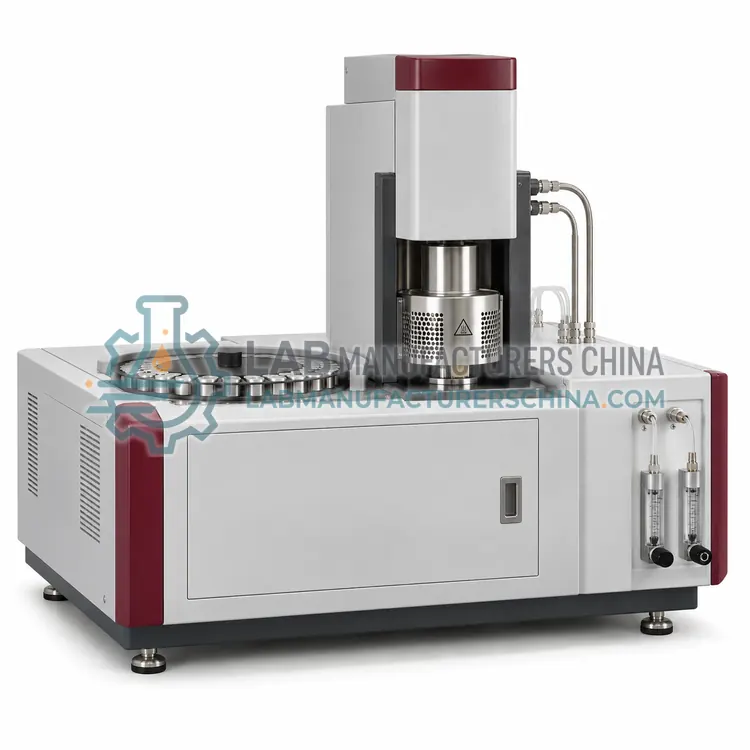
How do DTA work?
The sample and a thermally inert reference, usually calcined alumina, sit in the same furnace and are heated on the same program. A differential thermocouple or two matched thermocouples measure the temperature difference between them, recorded as microvolts against temperature or time, alongside the sample temperature. When the sample undergoes a transition that absorbs heat, its temperature lags the reference and produces an endothermic peak; exothermic reactions such as crystallization or oxidation give a peak in the opposite direction. The peak position identifies the transition temperature and the peak area is roughly proportional to the enthalpy change, although DTA is less quantitative than DSC because the heat path is not calibrated in absolute terms. Sensitivity depends on sample mass, packing density, thermocouple position and atmosphere. Typical samples are 10 to 100 milligrams, and inert, oxidising, reducing or vacuum atmospheres are selectable.
Which DTA variants are available?
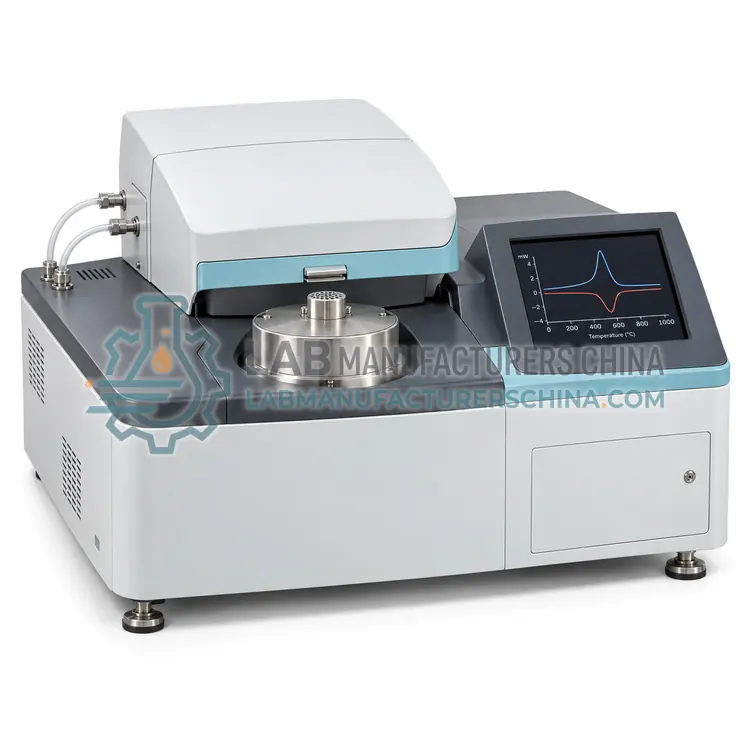
- Standard Differential Thermal Analyzer — A standard differential thermal analyzer covers about minus 150 to 700 degrees Celsius with platinum or chromel-alumel thermocouples, giving qualitative thermal events for polymers, organics, minerals and salts.
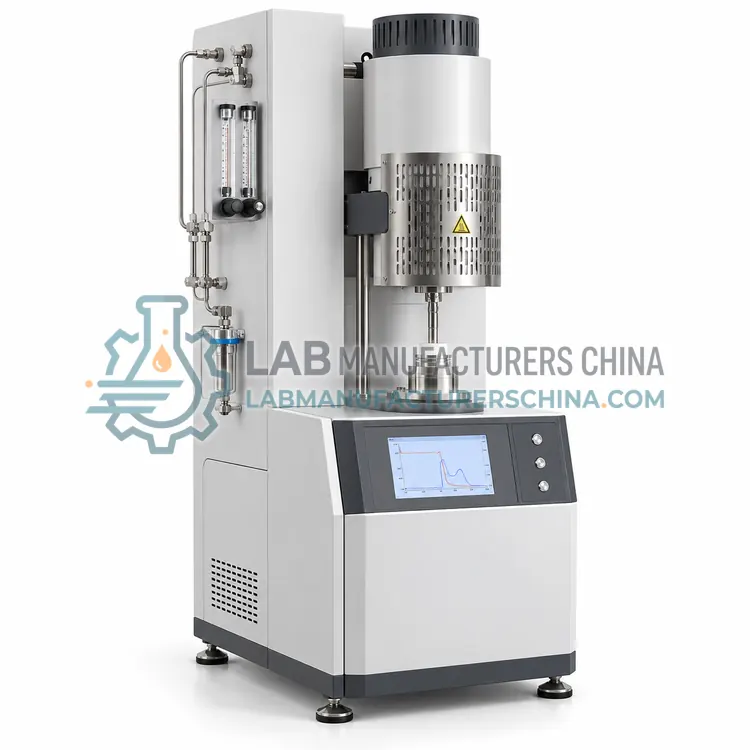
- High-Temperature Differential Thermal Analyzer — A high-temperature differential thermal analyzer reaches 1500 to 1600 degrees Celsius with platinum-rhodium or tungsten-rhenium thermocouples, making it suitable for cements, refractories, ceramics, glasses, slags and minerals whose reactions occur far above 700 degrees Celsius.
- Ultra-High-Temperature Differential Thermal Analyzer — An ultra-high-temperature differential thermal analyzer uses a graphite furnace and tungsten-rhenium thermocouples or optical pyrometry to reach 2000 to 2400 degrees Celsius.
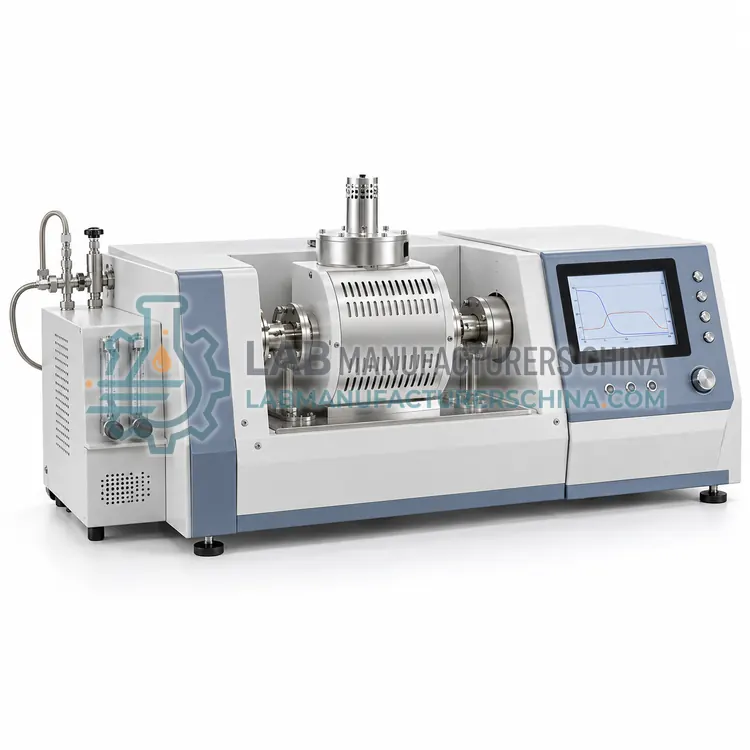
- Low-Temperature Differential Thermal Analyzer — A low-temperature differential thermal analyzer cools with liquid nitrogen or a cascade system to reach minus 150 degrees Celsius or below, resolving freezing, glass transitions and low-temperature phase changes in foods, polymers, hydrates and biological materials.
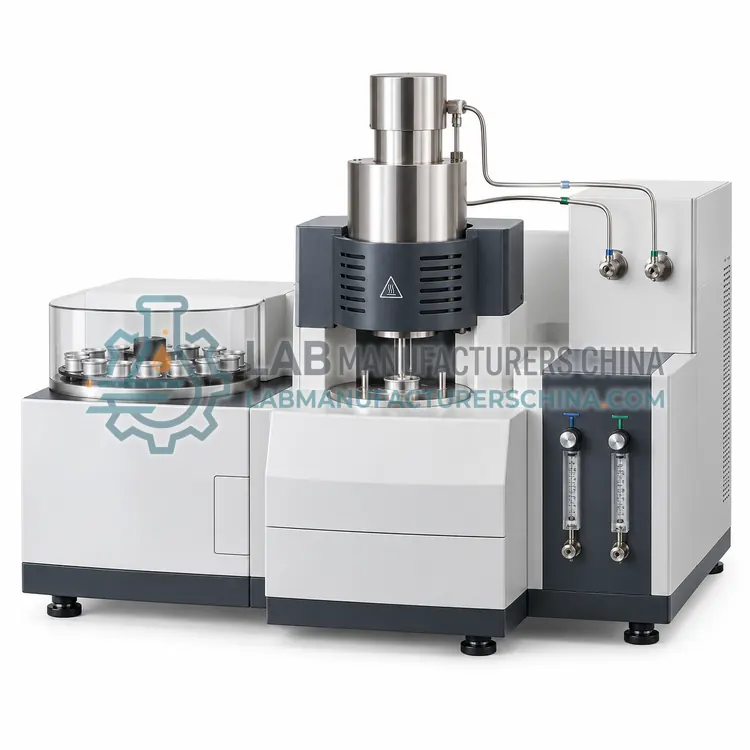
- Automated Differential Thermal Analyzer — An automated differential thermal analyzer adds a robotic sample changer and automatic calibration checks so that long sequences of mineral, cement or ceramic samples run unattended.
How do I choose the right variant?
The decisive parameter is the temperature range, because DTA is chosen mainly when transitions lie above the working range of a DSC: minerals, clays, cements, refractories and glasses often require 1500 to 1600 degrees Celsius, and some slags and alloys need graphite furnaces above 2000 degrees Celsius. Below 700 degrees Celsius a DSC is usually a better choice because it also gives enthalpies. After range, consider the thermocouple type and hence the maximum temperature, the crucible and thermocouple materials compatible with the sample, atmosphere and vacuum control, sensitivity to small transitions, and whether automation is required. Peak resolution depends on the heat path, so sample packing and mass must be matched between runs. For routine quality control, an automated instrument with a sample changer reduces operator time, and calibration with melting point and phase transition references should be part of the method.
Where are DTA used?
DTA are specified in clay and mineral phase identification, cement and gypsum dehydration studies, ceramic and refractory development, glass transition and crystallization analysis and metal and alloy phase transformation checks.
Which standards and certifications apply?
Work with DTA is commonly governed by ASTM E967, ASTM E794, ASTM D3418, ISO 11357-1, IEC 61010-1 and GB/T 13464. Instrument certifications such as CE marking are confirmed per configuration and never assumed.
What are the key considerations before purchase?
Package the sample uniformly and keep mass and packing the same as the reference to avoid baseline distortion, and dilute reactive samples with alumina when necessary. Select crucible and thermocouple materials that do not react with the sample at the working temperature, and use a platinum or alumina holder for oxidising conditions. Purge the furnace with the intended gas at a stable flow, and verify the thermocouple pair against melting point standards such as indium, tin, aluminium, silver or gold depending on range. Record the crucible type, sample mass, gas, flow rate and heating rate with every curve. Thermal analysis of minerals often shows overlapping peaks that require a consistent, documented heating rate and reference material to be compared between laboratories, so method details should be exchanged with results.