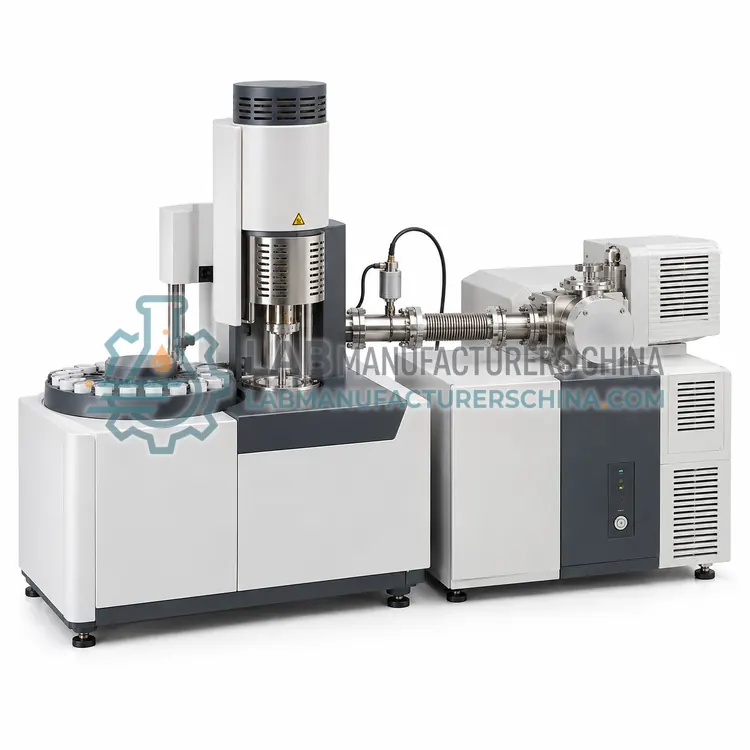
How do TGA work?
A sensitive balance holds the sample in a furnace whose temperature follows a program, usually from ambient to 1000 or 1600 degrees Celsius, at rates of 1 to 50 degrees Celsius per minute. The balance beam is purged to protect it from heat and condensable vapours, and a separate purge gas flows over the sample to set the atmosphere: inert nitrogen or argon for decomposition studies, air or oxygen for oxidative tests, or a reactant gas for specific reactions. The instrument records mass against temperature or time, and the derivative curve is used to locate the onset of each mass loss step. Buoyancy and gas-flow effects are corrected with a blank run. Calibration uses certified mass standards and Curie-point or melting-point references for temperature. Typical balance resolution is 0.1 microgram with a sample of a few milligrams, giving a measurement precision of about 0.1 percent by mass.
Which TGA variants are available?
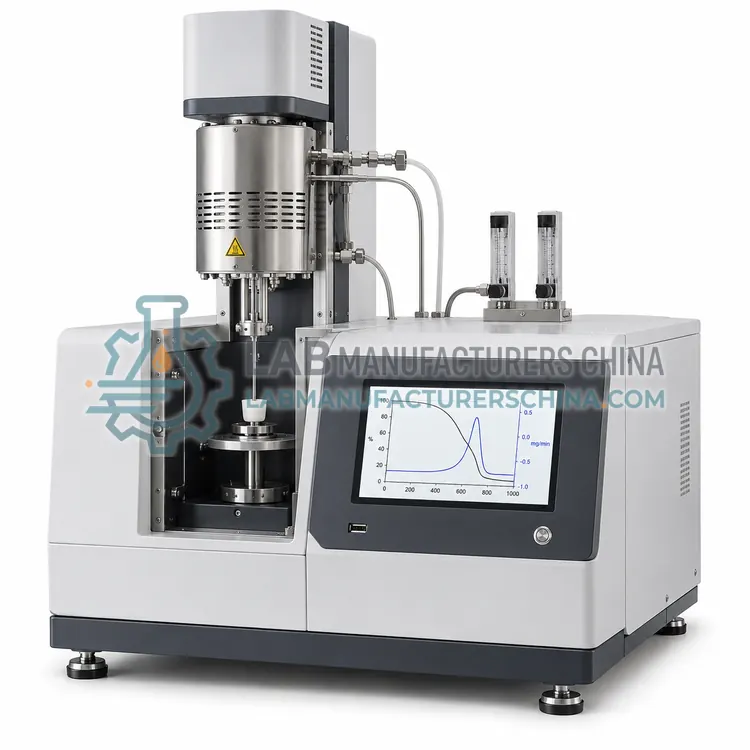
- Standard Thermogravimetric Analyzer — A standard thermogravimetric analyzer combines a microbalance with a furnace up to 1000 degrees Celsius and programmable purge gas, giving mass loss curves for polymers, pharmaceuticals and general materials.
- High-Temperature Thermogravimetric Analyzer — A high-temperature thermogravimetric analyzer uses a graphite, tungsten or silicon carbide furnace to reach 1500 to 1600 degrees Celsius.
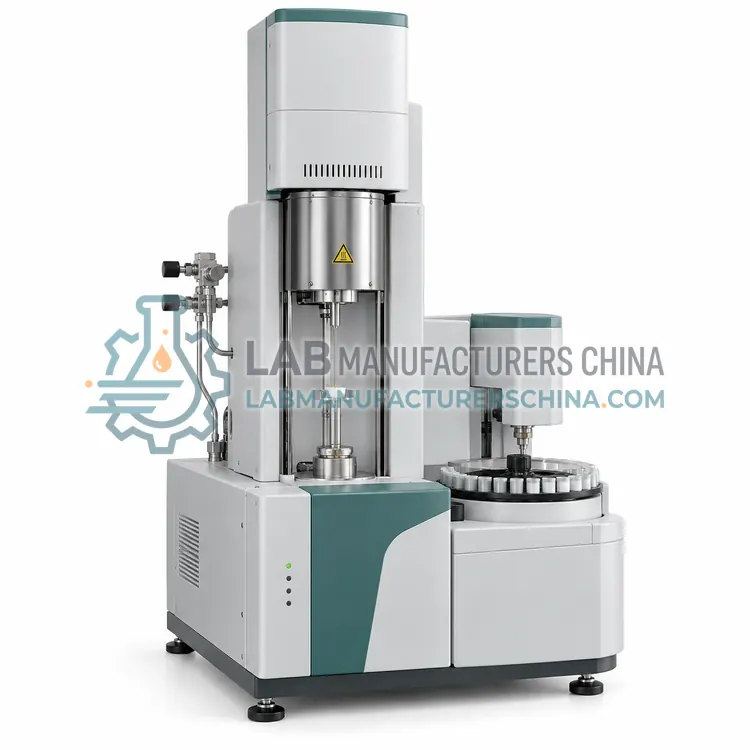
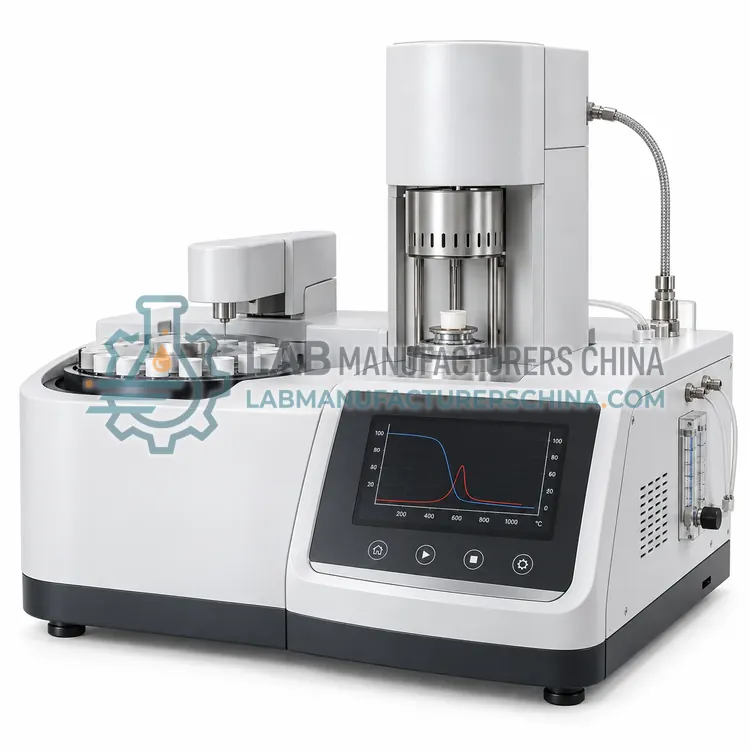
- Automated Thermogravimetric Analyzer — An automated thermogravimetric analyzer includes a robotic autosampler that loads 30 to 100 crucibles, runs a sequence of methods and automatically recalibrates.
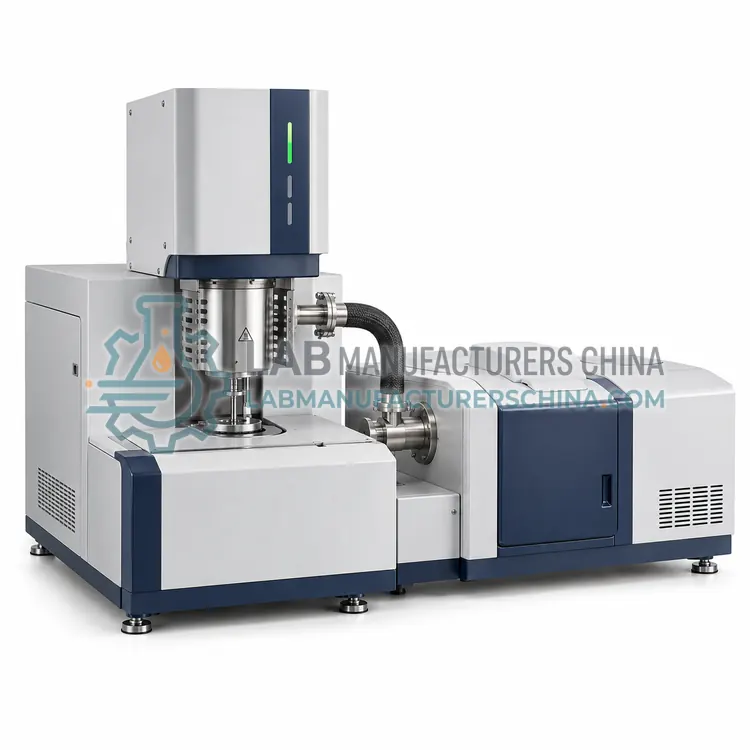
- TGA-FTIR Coupled Thermogravimetric Analyzer — A TGA-FTIR coupled analyzer passes the gases evolved from a thermogravimetric run through a heated infrared gas cell, identifying functional groups such as water, carbon dioxide, carbonyls and hydrocarbons as they are released.
- TGA-MS Coupled Thermogravimetric Analyzer — A TGA-MS coupled analyzer samples evolved gases through a heated capillary into a mass spectrometer, giving mass-to-charge spectra that identify individual species by molecular mass.
How do I choose the right variant?
Decide the maximum temperature you need, because it drives the furnace design: 1000 degrees Celsius covers most polymers and pharmaceuticals, 1500 to 1600 degrees Celsius is needed for ceramics, metal oxides and slags. Then define the atmosphere and whether evolved gases must be identified, which determines whether an FTIR or mass spectrometer coupling is required. Consider the balance resolution you need: routine filler and moisture determinations work with microgram resolution, while thin films or residues need sub-microgram sensitivity. Automatic sample changers pay back quickly in quality control laboratories that run many samples. Check baseline stability, buoyancy correction, purge gas control, crucible material and the maximum heating rate, and confirm that the instrument's calibration procedures match the method you must follow, such as ASTM E1131 or ISO 11358.
Where are TGA used?
TGA are specified in polymer composition and filler content, pharmaceutical hydrate and solvate studies, coal, biomass and fuel analysis, ceramic and inorganic material testing and battery material thermal stability.
Which standards and certifications apply?
Work with TGA is commonly governed by ASTM E1131, ASTM E2550, ASTM D3850, ISO 11358-1, ISO 11358-2 and USP <891>. Instrument certifications such as CE marking are confirmed per configuration and never assumed.
What are the key considerations before purchase?
Choose crucibles that do not react with the sample or the gas: alumina for most work, platinum for oxidative tests or when high thermal conductivity helps, and quartz or ceramic for high-temperature inert runs. Keep sample mass between 5 and 20 milligrams so the gas flow is not restricted and heat transfer is even. Run a blank to correct buoyancy and purge effects before starting a series, and verify mass with a calibration weight periodically. Condensable decomposition products must be kept out of the balance chamber, usually by a trap or by a higher balance purge flow. Temperature calibration should be repeated after a furnace or sensor change, and every run should record crucible type, gas, flow rate, heating rate and sample mass so results can be reproduced. Compliance laboratories should keep the raw curves, not just the calculated numbers.