Lab Manufacturers China

DSC

差示扫描量热仪

DSC · Thermal Analysis Instruments · 5 models

By Lab Manufacturers China Technical TeamLast reviewed Standards: ASTM E967, ASTM E968, ASTM E1356

Standards referenced

  • ASTM E967
  • ASTM E968
  • ASTM E1356
  • ASTM E1269
  • ISO 11357-1
  • ISO 11357-2
  • USP <891>

What are DSC?

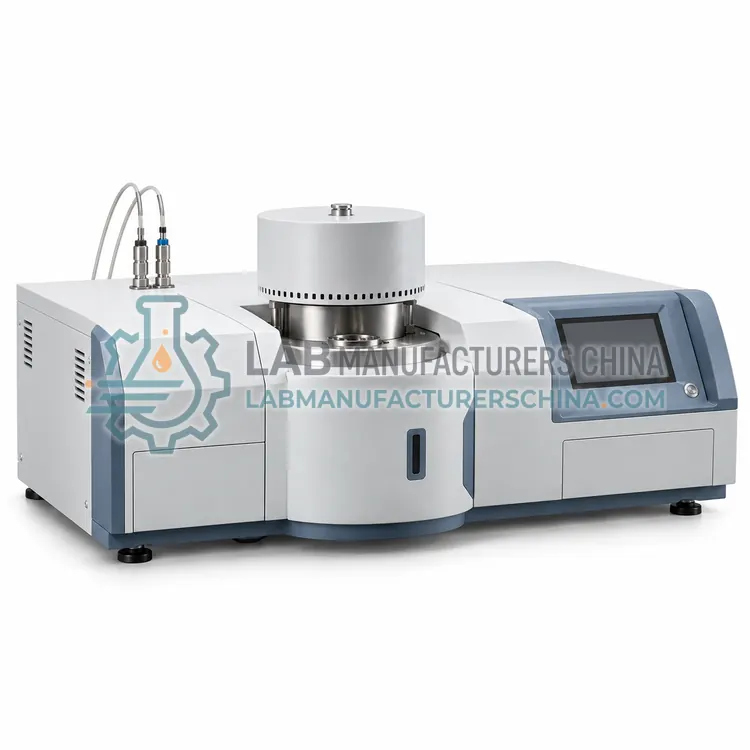
A differential scanning calorimeter measures the heat flow into or out of a sample while its temperature is programmed, revealing melting, crystallization, glass transition, curing and decomposition events. It is used in materials, polymer, pharmaceutical, food and energy research and quality control.

5 models of DSC

The 5 models below are current configurations; specifications are confirmed on quotation.

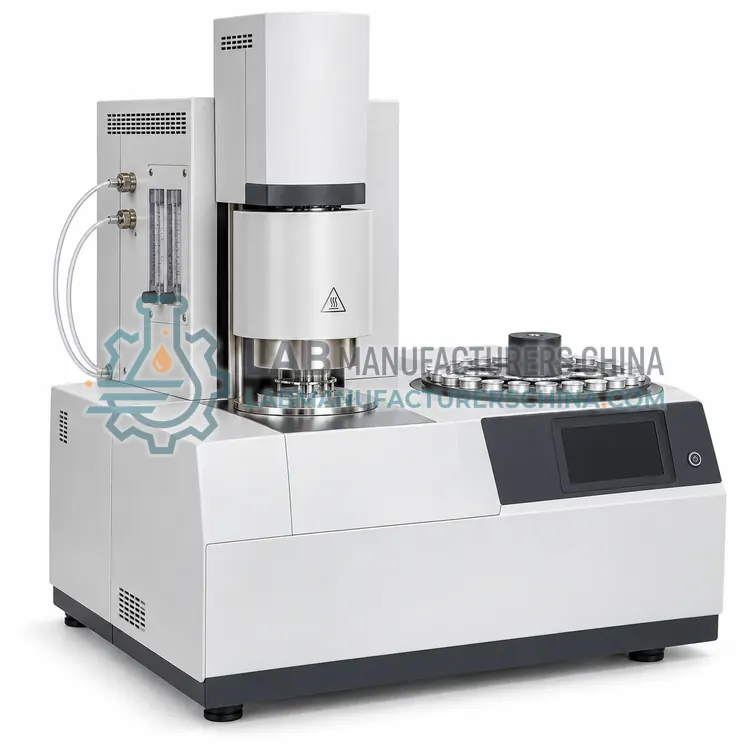
Heat-Flux Differential Scanning Calorimeter

热流型差示扫描量热仪

  • DSC-0001
  • DSC
  • CE (to be confirmed)
  • IEC 61010-1 safety (to be confirmed)
  • ISO 9001 manufacturing (to be confirmed)
Temperature range:
−90–600 °C (cooling dependent)
Heating rate:
0.1–100 °C/min
Cooling rate:
up to 50 °C/min with liquid nitrogen
Temperature accuracy:
±0.1 °C (indium)
Calorimetric accuracy:
±1%
Temperature precision:
±0.02 °C

A heat-flux DSC uses one furnace and a disc sensor to measure the temperature difference between sample and reference, which is converted to heat flow. It is the most widely used type for routine melting, crystallization and glass transition testing in materials and quality control laboratories.

Request a quote
View details

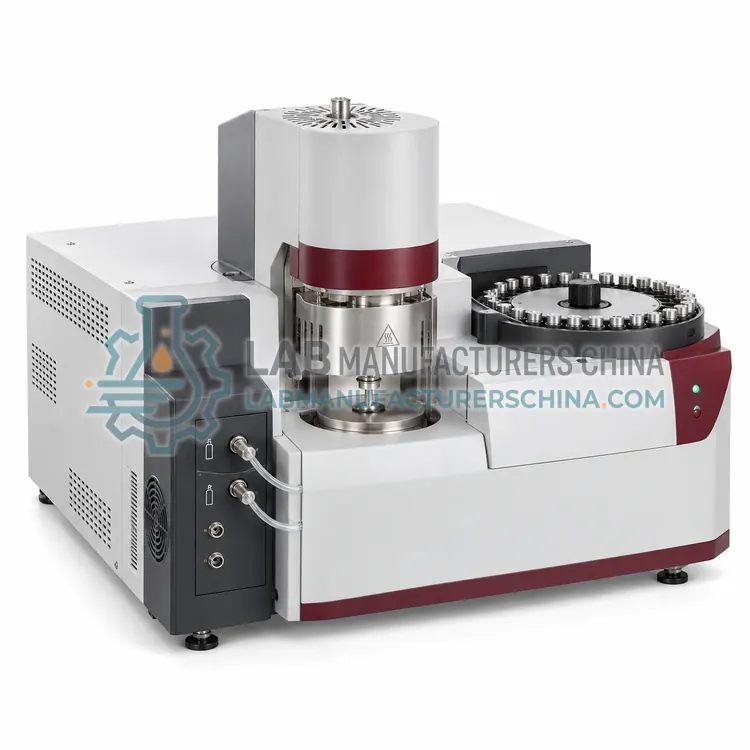
Power-Compensation Differential Scanning Calorimeter

功率补偿型差示扫描量热仪

  • DSC-0002
  • DSC
  • CE (to be confirmed)
  • IEC 61010-1 safety (to be confirmed)
  • ISO 9001 manufacturing (to be confirmed)
Temperature range:
−170–730 °C
Heating rate:
0.1–200 °C/min
Cooling:
Liquid nitrogen or mechanical, up to 100 °C/min
Temperature accuracy:
±0.1 °C
Temperature precision:
±0.01 °C
Enthalpy precision:
±0.5%

A power-compensation DSC heats the sample and reference in separate small furnaces and records the power difference needed to keep them at identical temperature. Sharp peak shapes and fast response make it suited to small transitions, fast heating rates and precise heat capacity work.

Request a quote
View details

Temperature-Modulated Differential Scanning Calorimeter

温度调制差示扫描量热仪

  • DSC-0003
  • DSC
  • CE (to be confirmed)
  • IEC 61010-1 safety (to be confirmed)
  • ISO 9001 manufacturing (to be confirmed)
Temperature range:
−90–600 °C
Modulation amplitude:
±0.01–2 °C
Modulation period:
10–100 s
Underlying heating rate:
0.1–5 °C/min
Temperature accuracy:
±0.1 °C
Heat capacity accuracy:
±2%

A temperature-modulated DSC superimposes a small sinusoidal oscillation on the linear heating ramp, separating reversing from non-reversing heat flow. It resolves weak glass transitions that overlap melting and gives heat capacity in a single experiment.

Request a quote
View details

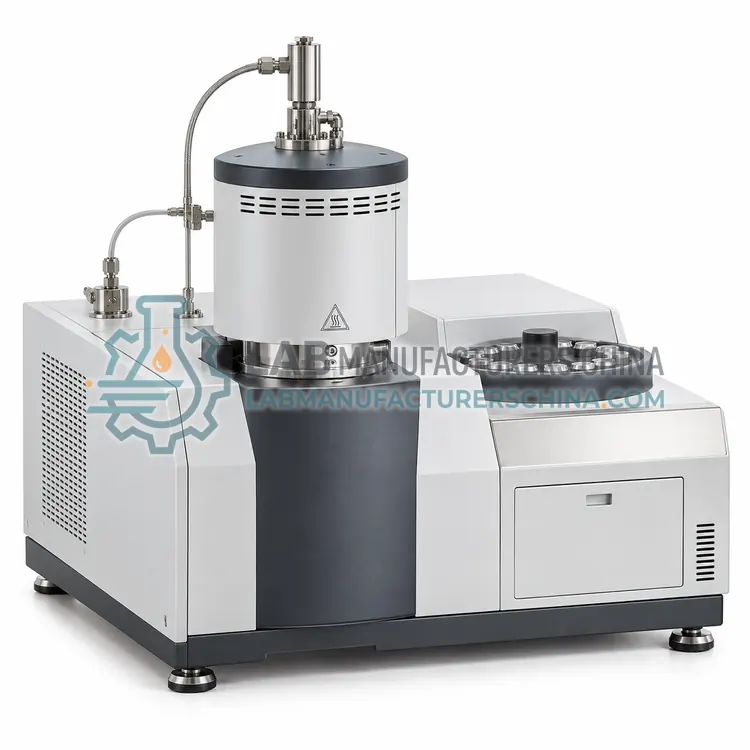
High-Pressure Differential Scanning Calorimeter

高压差示扫描量热仪

  • DSC-0004
  • DSC
  • CE (to be confirmed)
  • IEC 61010-1 safety (to be confirmed)
  • ISO 9001 manufacturing (to be confirmed)
Pressure range:
0.1–15 MPa
Temperature range:
25–600 °C
Heating rate:
0.1–50 °C/min
Temperature accuracy:
±0.2 °C
Calorimetric accuracy:
±2%
Crucible type:
Sealed stainless steel or gold-plated

A high-pressure DSC measures heat flow in a sealed pressure cell, typically 1 to 15 MPa, so reactions, oxidation and phase behaviour can be studied at elevated pressure or with volatile samples retained. It is used for oils, lubricants, polymers and propellants.

Request a quote
View details

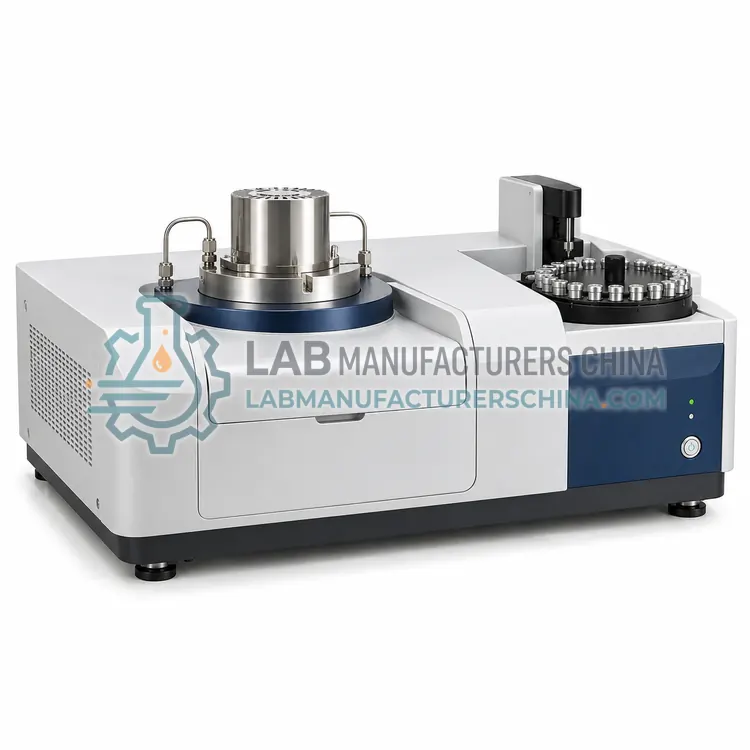
Low-Temperature Differential Scanning Calorimeter

低温差示扫描量热仪

  • DSC-0005
  • DSC
  • CE (to be confirmed)
  • IEC 61010-1 safety (to be confirmed)
  • ISO 9001 manufacturing (to be confirmed)
Temperature range:
−180–600 °C (liquid nitrogen)
Mechanical cooling range:
−90–600 °C
Heating rate:
0.1–50 °C/min
Cooling rate:
up to 30 °C/min (mechanical)
Temperature accuracy:
±0.1 °C
Temperature precision:
±0.02 °C

A low-temperature DSC uses liquid nitrogen or a cascade cooler to reach as low as minus 180 degrees Celsius, making it suitable for frozen foods, elastomers, biologics and any material whose transitions lie well below ambient temperature.

Request a quote
View details

Compare DSC models

ModelTemperature rangeHeating rateCooling rateTemperature accuracyCalorimetric accuracy
Heat-Flux Differential Scanning CalorimeterDSC-0001−90–600 °C (cooling dependent)0.1–100 °C/minup to 50 °C/min with liquid nitrogen±0.1 °C (indium)±1%
Power-Compensation Differential Scanning CalorimeterDSC-0002−170–730 °C0.1–200 °C/min—±0.1 °C—
Temperature-Modulated Differential Scanning CalorimeterDSC-0003−90–600 °C——±0.1 °C—
High-Pressure Differential Scanning CalorimeterDSC-000425–600 °C0.1–50 °C/min—±0.2 °C±2%
Low-Temperature Differential Scanning CalorimeterDSC-0005−180–600 °C (liquid nitrogen)0.1–50 °C/minup to 30 °C/min (mechanical)±0.1 °C—

Indicative values for this product class. Final specifications are confirmed on the quotation and in the calibration documents supplied with the instrument.

How do DSC work?

The sample and an empty reference pan sit on a sensor in a furnace whose temperature follows a program. In heat-flux instruments a single furnace heats both positions and thermocouples measure the small temperature difference that develops when the sample absorbs or releases heat; the difference is converted to heat flow using a calibration factor. Power-compensation instruments place the sample and reference in separate small furnaces and vary the heating power needed to keep both at the same temperature, recording power difference directly. Either way the result is a curve of heat flow against temperature or time, with the area under a peak giving transition enthalpy in joules per gram. A purge gas, usually nitrogen, prevents oxidation and removes volatiles, and cooling may use liquid nitrogen, a mechanical cooler or an air vortex. Temperature and enthalpy calibration use indium, zinc and other reference materials of known melting point and enthalpy.

Which DSC variants are available?

  • Heat-Flux Differential Scanning Calorimeter — A heat-flux DSC uses one furnace and a disc sensor to measure the temperature difference between sample and reference, which is converted to heat flow.
  • Power-Compensation Differential Scanning Calorimeter — A power-compensation DSC heats the sample and reference in separate small furnaces and records the power difference needed to keep them at identical temperature.
  • Temperature-Modulated Differential Scanning Calorimeter — A temperature-modulated DSC superimposes a small sinusoidal oscillation on the linear heating ramp, separating reversing from non-reversing heat flow.
  • High-Pressure Differential Scanning Calorimeter — A high-pressure DSC measures heat flow in a sealed pressure cell, typically 1 to 15 MPa, so reactions, oxidation and phase behaviour can be studied at elevated pressure or with volatile samples retained.
  • Low-Temperature Differential Scanning Calorimeter — A low-temperature DSC uses liquid nitrogen or a cascade cooler to reach as low as minus 180 degrees Celsius, making it suitable for frozen foods, elastomers, biologics and any material whose transitions lie well below ambient temperature.

How do I choose the right variant?

Start with the temperature range you need, because it decides the cooling system: studies above room temperature need only an air or mechanical cooler, while glass transitions well below zero require liquid nitrogen. Then choose the measuring principle. Heat-flux instruments are robust, accept larger samples and cover most materials work; power-compensation instruments give sharper peaks and better resolution for small transitions and fast heating rates; temperature-modulated instruments separate reversing from non-reversing events; high-pressure cells are needed for oxidation stability and reactions under pressure. Check calorimetric accuracy and repeatability, resolution of weak transitions, sample pan options including sealed and hermetic pans, purge gas control, autosampler availability and the calibration standards supplied. Specify the heating rates, sample mass and the standards the method must follow.

Where are DSC used?

DSC are specified in polymer melting and crystallinity testing, pharmaceutical polymorph and purity screening, food starch and fat behaviour studies, battery and energy material analysis and adhesive and coating cure monitoring.

Which standards and certifications apply?

Work with DSC is commonly governed by ASTM E967, ASTM E968, ASTM E1356, ASTM E1269, ISO 11357-1, ISO 11357-2 and USP <891>. Instrument certifications such as CE marking are confirmed per configuration and never assumed.

What are the key considerations before purchase?

Calibrate temperature and enthalpy before a measurement campaign, and verify at least one check standard afterwards. Choose the pan material and type for the temperature and chemistry involved: sealed or hermetic pans for volatile samples, high-pressure crucibles for pressure work and open pans for evolved gases. Keep sample mass similar between runs, because thermal lag grows with mass and shifts peaks to higher temperature. Use a defined purge gas flow, dry the cell if moisture condenses, and run an empty baseline periodically. Consumables such as pans, lids and seals are single-use, and crucibles used for pressure work must be inspected for deformation. Follow ASTM E967, E968 or ISO 11357 for calibration and reporting, and record pan type, gas, rate and mass with each curve.

Frequently asked questions about DSC

It measures heat flow as a function of temperature, so it detects melting and crystallization temperatures and enthalpies, glass transitions, specific heat capacity, curing, polymorphic transitions, oxidation induction time and decomposition onset when the sample is sealed.

Need help specifying DSC?

Request a quote