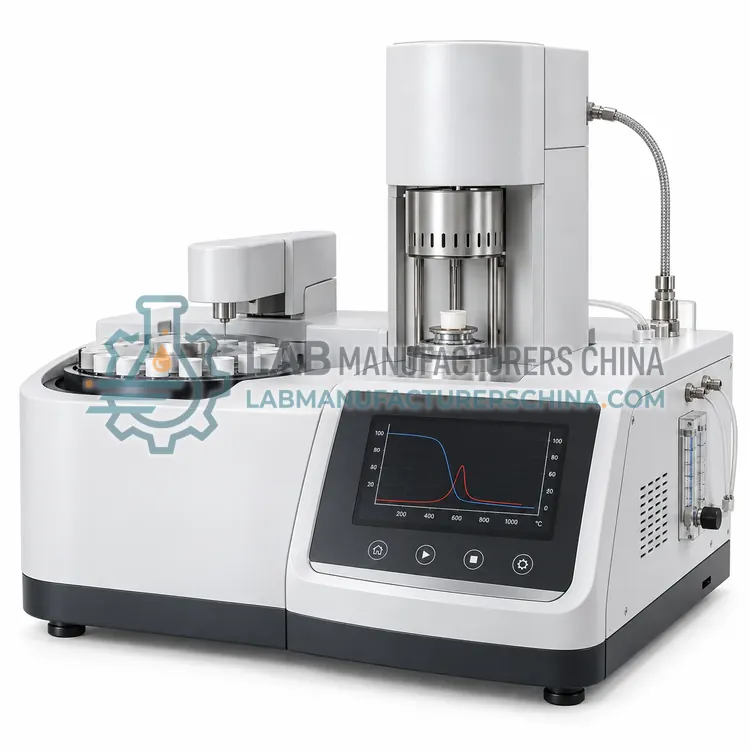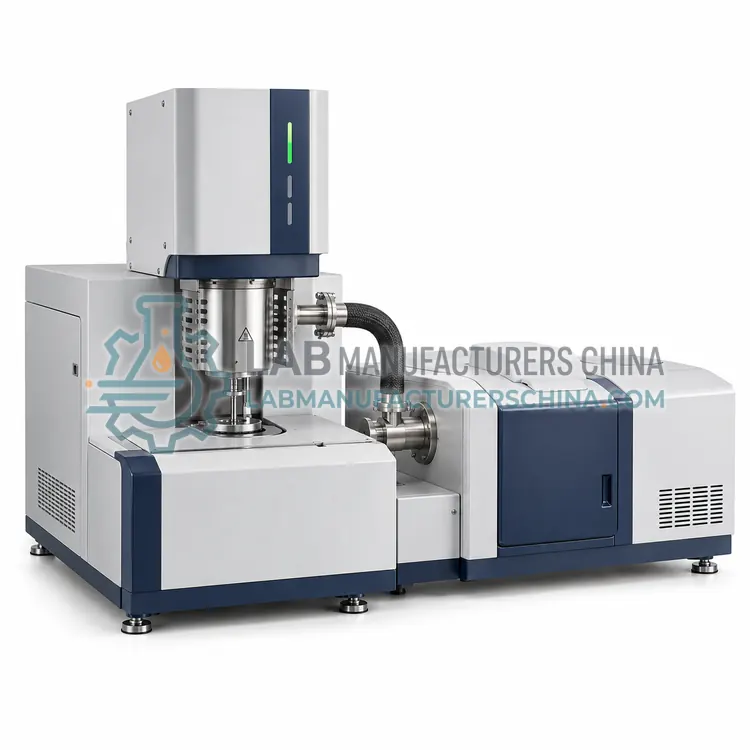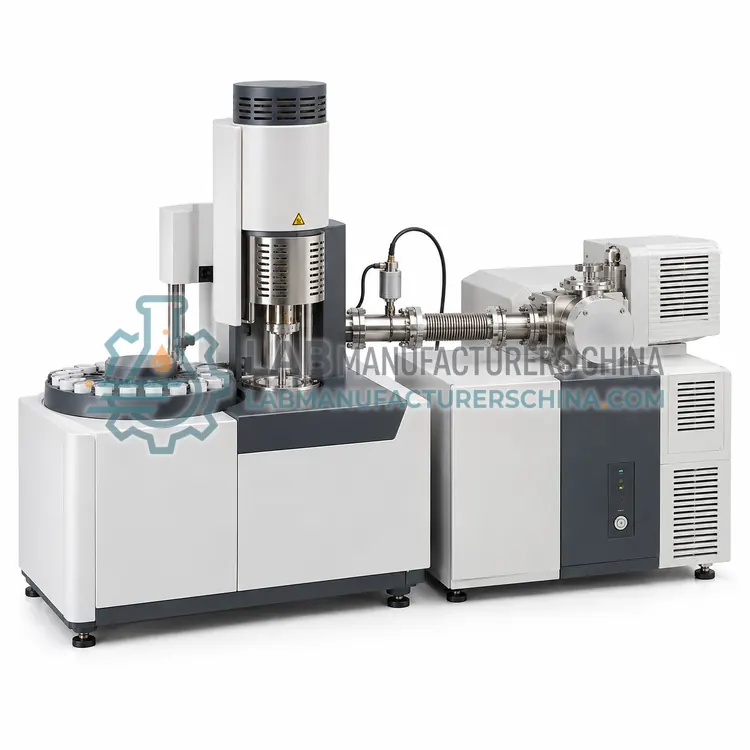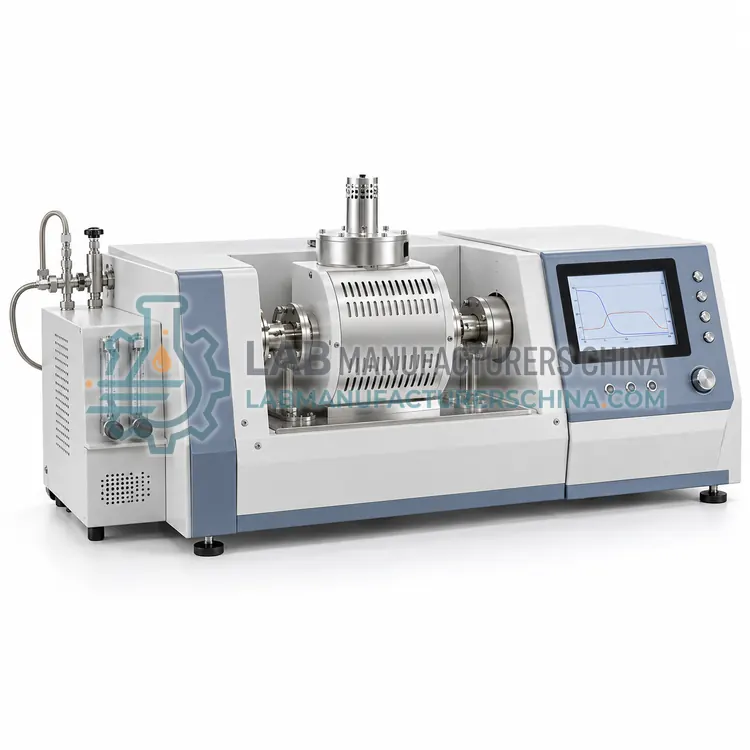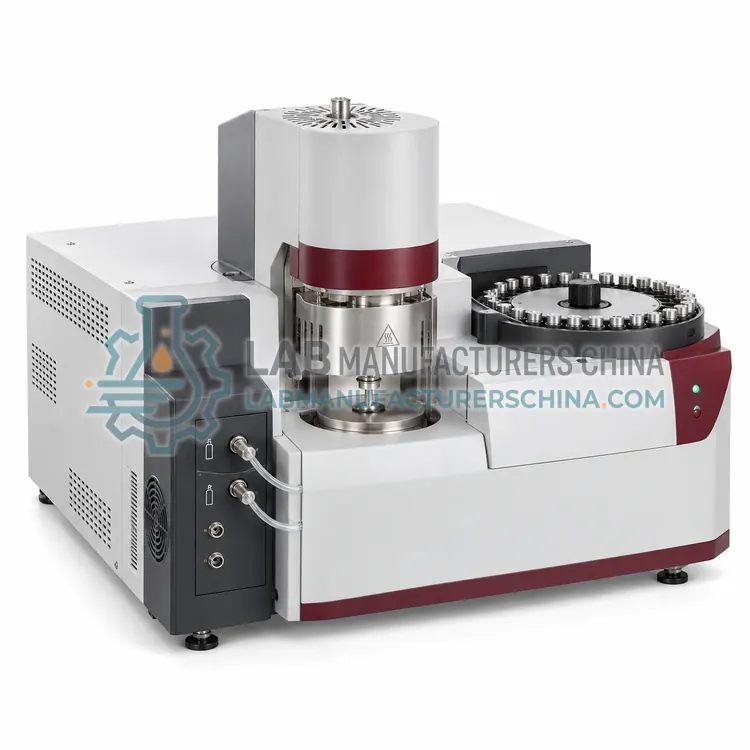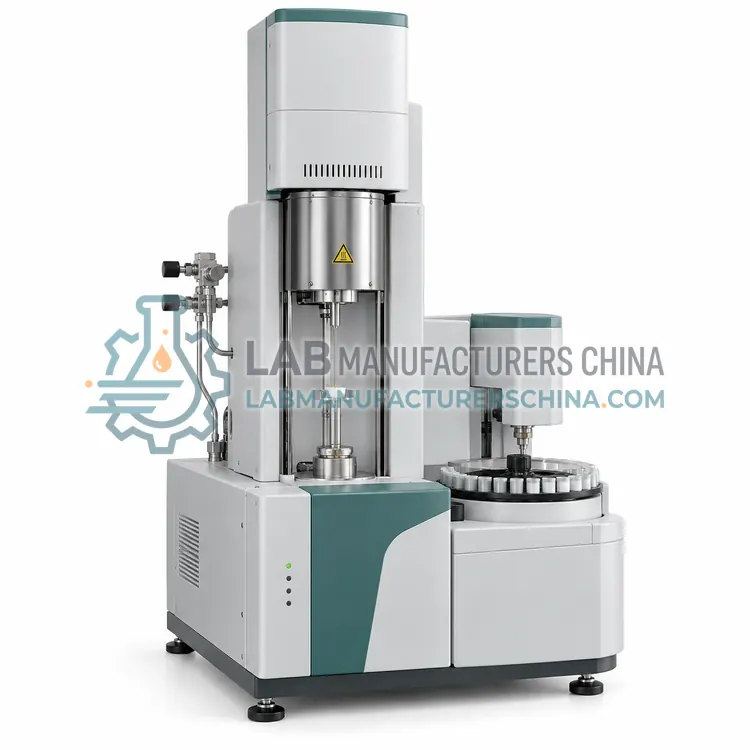
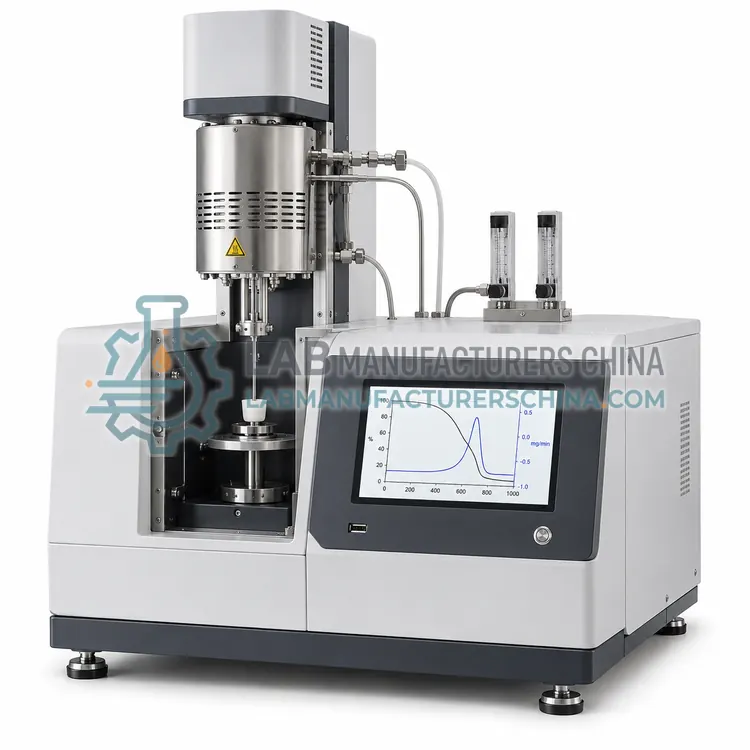
High-Temperature Thermogravimetric Analyzer
高温热重分析仪
- SKU TGA-0002
- TGA
- CE (to be confirmed)
- IEC 61010-1 safety (to be confirmed)
- ISO 9001 manufacturing (to be confirmed)
Price on request — FOB / CIF quoted per order
Prices depend on configuration, quantity and destination port.
Key specifications
| Temperature range | Ambient–1600 °C |
|---|---|
| Furnace element | Graphite, SiC or tungsten |
| Balance resolution | 0.1 µg |
| Heating rate | 0.1–30 °C/min |
| Temperature accuracy | ±2 °C |
| Atmosphere | Argon, helium, nitrogen, vacuum |
Request a quote Download brochure · to be provided
By Lab Manufacturers China Technical TeamLast reviewed Standards: ASTM E1131, ASTM E2550, ASTM D3850
What is the High-Temperature Thermogravimetric Analyzer?
A high-temperature thermogravimetric analyzer uses a graphite, tungsten or silicon carbide furnace to reach 1500 to 1600 degrees Celsius. It is used for ceramics, slags, metal oxides, catalysts and other inorganic materials whose decomposition starts far above 1000 degrees Celsius.
What is the High-Temperature Thermogravimetric Analyzer?
A high-temperature thermogravimetric analyzer uses a graphite, tungsten or silicon carbide furnace to reach 1500 to 1600 degrees Celsius. It is used for ceramics, slags, metal oxides, catalysts and other inorganic materials whose decomposition starts far above 1000 degrees Celsius.
Overview
The furnace is built from materials that survive the temperature: graphite or silicon carbide resistance elements in inert gas, or tungsten in high vacuum. Because oxidation would destroy the heating element, the atmosphere is controlled strictly, usually argon or helium with oxygen below a few parts per million, and the balance is protected by a counter-flow of inert gas. Temperature measurement uses type C or type S thermocouples, or optical pyrometry above the thermocouple limit. Typical specifications are a range from ambient to 1600 degrees Celsius at heating rates of 0.1 to 30 degrees Celsius per minute, with mass resolution retained at 0.1 microgram. Applications include carbonate and sulfate decomposition, reduction and oxidation of metal oxides, ceramic binder burnout, catalyst coke measurement and melting or vaporisation studies. Crucibles are alumina, zirconia, platinum or graphite, and the choice is dictated by the sample and gas.
How does it work?
A sensitive balance holds the sample in a furnace whose temperature follows a program, usually from ambient to 1000 or 1600 degrees Celsius, at rates of 1 to 50 degrees Celsius per minute. The balance beam is purged to protect it from heat and condensable vapours, and a separate purge gas flows over the sample to set the atmosphere: inert nitrogen or argon for decomposition studies, air or oxygen for oxidative tests, or a reactant gas for specific reactions. The instrument records mass against temperature or time, and the derivative curve is used to locate the onset of each mass loss step. Buoyancy and gas-flow effects are corrected with a blank run. Calibration uses certified mass standards and Curie-point or melting-point references for temperature. Typical balance resolution is 0.1 microgram with a sample of a few milligrams, giving a measurement precision of about 0.1 percent by mass.
What are the key features?
- Furnace to 1600 °C using graphite, silicon carbide or tungsten elements
- Strict atmosphere control with oxygen below a few ppm
- Type C or type S thermocouples with optional optical pyrometry
- Counter-flow balance protection for corrosive or reducing gases
- Crucible options in alumina, zirconia, platinum and graphite
- Sub-microgram mass resolution at maximum temperature
What are the technical specifications?
A typical high-temperature thermogravimetric analyzer configuration offers temperature range of Ambient–1600 °C, furnace element of Graphite, SiC or tungsten, balance resolution of 0.1 µg, heating rate of 0.1–30 °C/min, temperature accuracy of ±2 °C and atmosphere of Argon, helium, nitrogen, vacuum. Values are indicative of the product class; the exact figures for each configuration are confirmed on the quotation and the calibration documents supplied with the instrument.
Which applications is it used for?
The High-Temperature Thermogravimetric Analyzer is used in ceramic and refractory decomposition, metal oxide reduction and oxidation, catalyst coke and sulfur loading, slag and mineral analysis and carbonate and sulfate determination. Across the wider TGA class, laboratories also deploy it for polymer composition and filler content, pharmaceutical hydrate and solvate studies and coal, biomass and fuel analysis.
Which standards and certifications apply?
Relevant standards and methods include ASTM E1131, ASTM E2550, ASTM D3850, ISO 11358-1, ISO 11358-2 and USP <891>. Certification candidates for this model are CE, IEC 61010-1 safety and ISO 9001 manufacturing; each is to be confirmed for the specific configuration before shipment, and certificates are supplied only where they have been issued.
Choose crucibles that do not react with the sample or the gas: alumina for most work, platinum for oxidative tests or when high thermal conductivity helps, and quartz or ceramic for high-temperature inert runs. Keep sample mass between 5 and 20 milligrams so the gas flow is not restricted and heat transfer is even. Run a blank to correct buoyancy and purge effects before starting a series, and verify mass with a calibration weight periodically. Condensable decomposition products must be kept out of the balance chamber, usually by a trap or by a higher balance purge flow. Temperature calibration should be repeated after a furnace or sensor change, and every run should record crucible type, gas, flow rate, heating rate and sample mass so results can be reproduced. Compliance laboratories should keep the raw curves, not just the calculated numbers.
How do I select the right High-Temperature Thermogravimetric Analyzer?
Select the high-temperature configuration only when decomposition or reaction occurs above 1000 degrees Celsius, since the furnace costs more, needs inert gas of high purity and has slower cooling. In an RFQ, state maximum temperature, gas type and purity, crucible material, heating rate and whether vacuum operation is required.
How does it compare with other TGA variants?
Decide the maximum temperature you need, because it drives the furnace design: 1000 degrees Celsius covers most polymers and pharmaceuticals, 1500 to 1600 degrees Celsius is needed for ceramics, metal oxides and slags. Then define the atmosphere and whether evolved gases must be identified, which determines whether an FTIR or mass spectrometer coupling is required. Consider the balance resolution you need: routine filler and moisture determinations work with microgram resolution, while thin films or residues need sub-microgram sensitivity. Automatic sample changers pay back quickly in quality control laboratories that run many samples. Check baseline stability, buoyancy correction, purge gas control, crucible material and the maximum heating rate, and confirm that the instrument's calibration procedures match the method you must follow, such as ASTM E1131 or ISO 11358.
Full specifications
| Temperature range | Ambient–1600 °C |
|---|---|
| Furnace element | Graphite, SiC or tungsten |
| Balance resolution | 0.1 µg |
| Heating rate | 0.1–30 °C/min |
| Temperature accuracy | ±2 °C |
| Atmosphere | Argon, helium, nitrogen, vacuum |
| Oxygen limit | < 5 ppm for graphite furnaces |
| Crucible materials | Alumina, zirconia, platinum, graphite |
| Purge gas control | Mass flow controllers, up to 200 mL/min |
| Temperature sensing | Type C or S thermocouple, optional pyrometer |
Indicative values for this product class. Final specifications are confirmed on the quotation and in the calibration documents supplied with the instrument.
Applications
- Ceramic and refractory decomposition
- Metal oxide reduction and oxidation
- Catalyst coke and sulfur loading
- Slag and mineral analysis
- Carbonate and sulfate determination
Key features
- Furnace to 1600 °C using graphite, silicon carbide or tungsten elements
- Strict atmosphere control with oxygen below a few ppm
- Type C or type S thermocouples with optional optical pyrometry
- Counter-flow balance protection for corrosive or reducing gases
- Crucible options in alumina, zirconia, platinum and graphite
- Sub-microgram mass resolution at maximum temperature
Frequently asked questions about High-Temperature Thermogravimetric Analyzer
Graphite and tungsten elements oxidise rapidly above about 600 degrees Celsius, causing element failure and false mass changes from oxide formation or volatilisation. Inert gas purity of 99.999 percent or better, with a gas purifier, is normal practice for these furnaces.
Alumina suits oxidising conditions and many oxides but can react with alkaline or silica-rich samples. Zirconia resists alkaline melts, platinum is inert but softens, and graphite is used in inert or reducing atmospheres and is easy to machine. Select for chemical compatibility first.
Tungsten furnace versions can be pumped to high vacuum, which lowers the apparent decomposition temperature and removes interference from residual gases. Graphite furnaces are normally used with flowing inert gas, because the element and insulation degrade when exposed to residual oxygen during pump-down.
It measures sample mass as a function of temperature or time in a controlled atmosphere. The mass loss steps indicate moisture and volatiles, polymer or additive decomposition, filler and ash content, while the residue shows the non-volatile fraction at the final temperature.
Decomposition products can condense on the balance mechanism and change its calibration, so a protective gas flow keeps hot sample gases out of the balance chamber. The purge rate must be stable, because changes in flow alter apparent mass through buoyancy and drag effects.
Use nitrogen or argon for pyrolysis and composition analysis, because inert gas gives defined decomposition steps. Use air or oxygen when oxidation stability or oxidative decomposition temperature is required, and note that the same material can show very different curves in the two atmospheres.