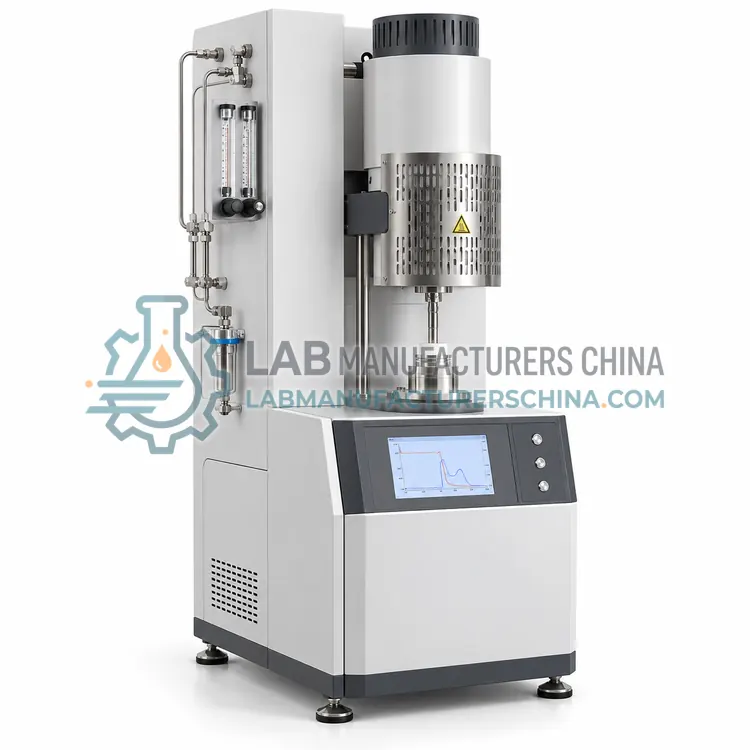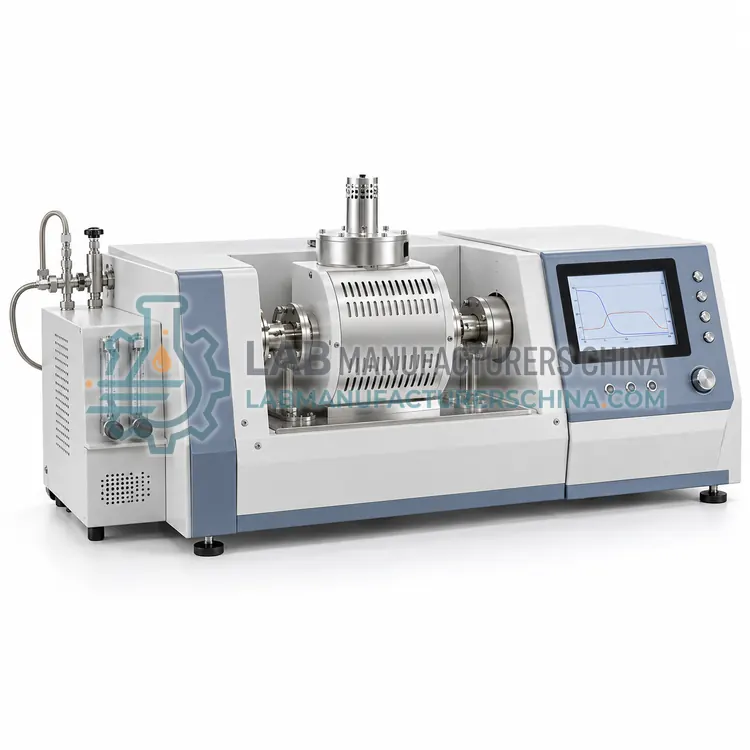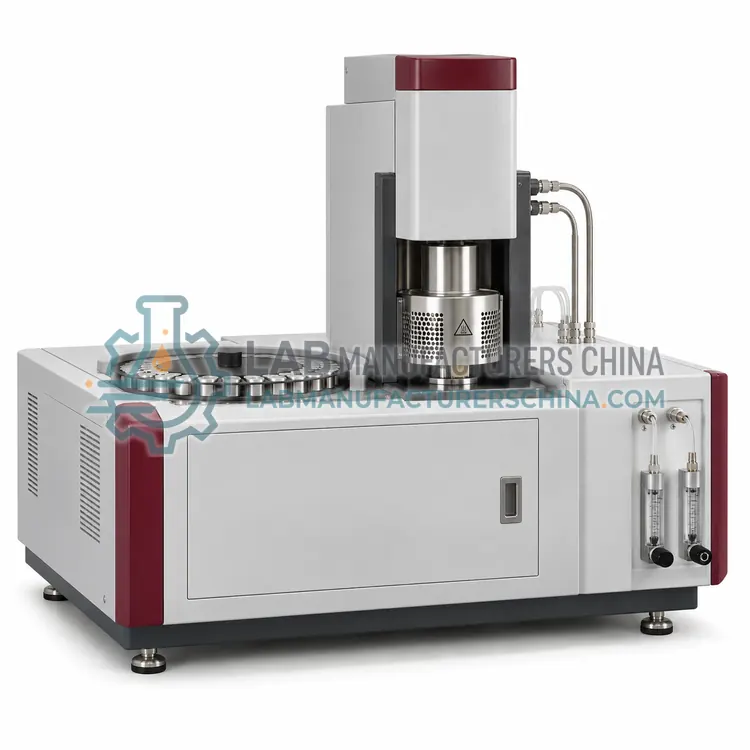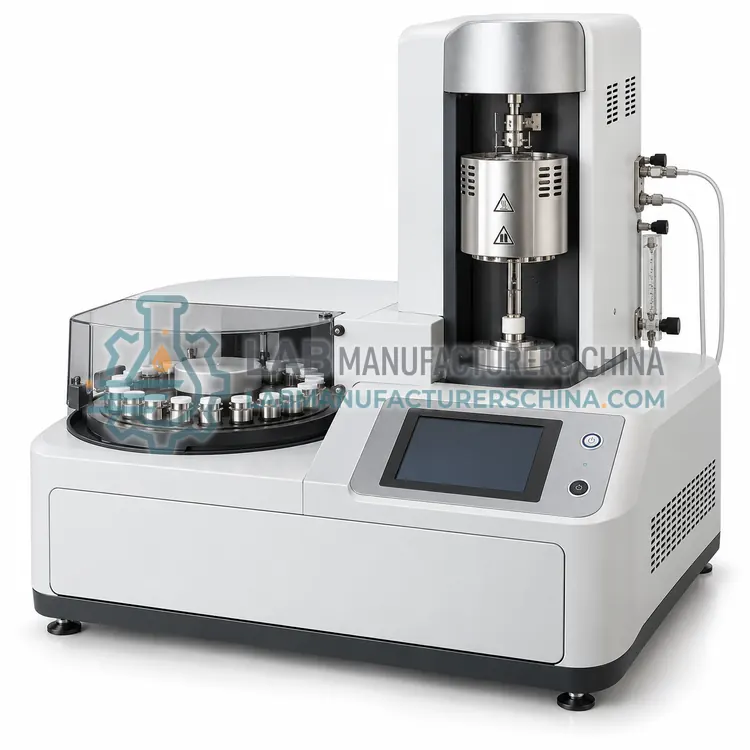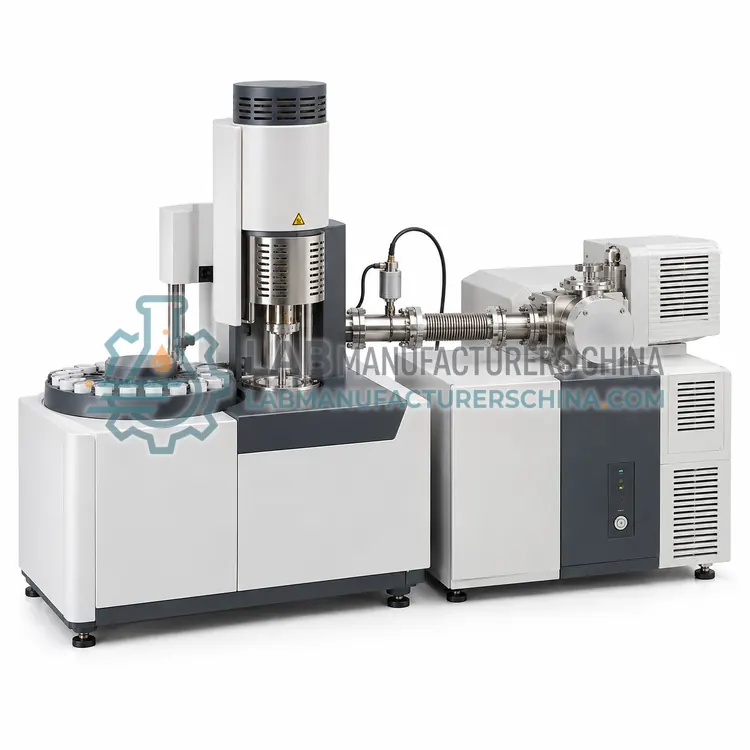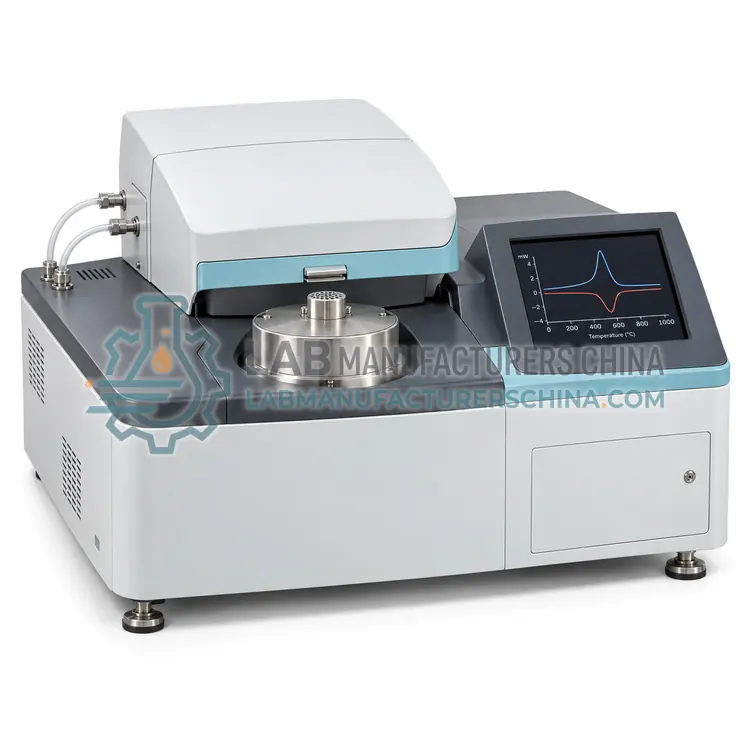
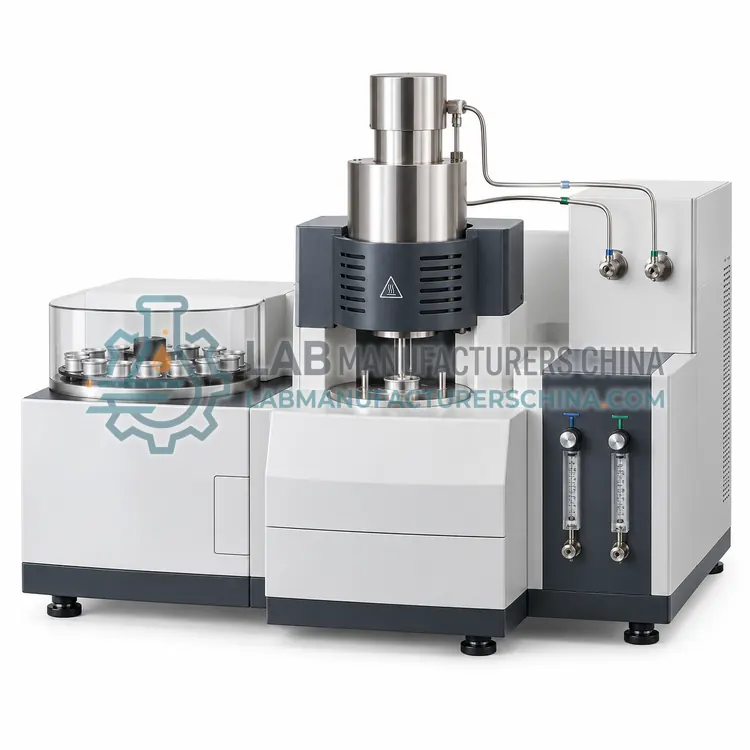
Low-Temperature Differential Thermal Analyzer
低温差热分析仪
- SKU DTA-0004
- DTA
- CE (to be confirmed)
- IEC 61010-1 safety (to be confirmed)
- ISO 9001 manufacturing (to be confirmed)
Price on request — FOB / CIF quoted per order
Prices depend on configuration, quantity and destination port.
Key specifications
| Temperature range | −150–500 °C |
|---|---|
| Cooling method | Liquid nitrogen or cascade cooler |
| Cooling rate | Up to 30 °C/min |
| Temperature accuracy | ±1 °C |
| Signal resolution | 0.05 °C |
| Sample mass | 10–100 mg |
Request a quote Download brochure · to be provided
By Lab Manufacturers China Technical TeamLast reviewed Standards: ASTM E967, ASTM E794, ASTM D3418
What is the Low-Temperature Differential Thermal Analyzer?
A low-temperature differential thermal analyzer cools with liquid nitrogen or a cascade system to reach minus 150 degrees Celsius or below, resolving freezing, glass transitions and low-temperature phase changes in foods, polymers, hydrates and biological materials.
What is the Low-Temperature Differential Thermal Analyzer?
A low-temperature differential thermal analyzer cools with liquid nitrogen or a cascade system to reach minus 150 degrees Celsius or below, resolving freezing, glass transitions and low-temperature phase changes in foods, polymers, hydrates and biological materials.
Overview
Sub-ambient operation requires a cooling accessory: liquid nitrogen with automatic level control reaches the lowest temperatures and the fastest quench rates, while cascade or Stirling coolers avoid consumable nitrogen and give repeatable programmed cooling. Frost control is essential, so the cell is purged with dry gas and the sample chamber is kept above the dew point. Typical ranges are minus 150 to 500 degrees Celsius with liquid nitrogen, with a temperature accuracy of about 1 degree Celsius after calibration with water, cyclohexane and indium. Applications include ice and water transitions in frozen foods and biological samples, glass transitions of elastomers and adhesives, eutectic points in salt hydrates, and polymorphism at low temperature. Reference matching is important because the heat capacity difference between sample and reference changes markedly as the temperature falls, which shifts the baseline if the two wells are not balanced.
How does it work?
The sample and a thermally inert reference, usually calcined alumina, sit in the same furnace and are heated on the same program. A differential thermocouple or two matched thermocouples measure the temperature difference between them, recorded as microvolts against temperature or time, alongside the sample temperature. When the sample undergoes a transition that absorbs heat, its temperature lags the reference and produces an endothermic peak; exothermic reactions such as crystallization or oxidation give a peak in the opposite direction. The peak position identifies the transition temperature and the peak area is roughly proportional to the enthalpy change, although DTA is less quantitative than DSC because the heat path is not calibrated in absolute terms. Sensitivity depends on sample mass, packing density, thermocouple position and atmosphere. Typical samples are 10 to 100 milligrams, and inert, oxidising, reducing or vacuum atmospheres are selectable.
What are the key features?
- Liquid nitrogen or cascade cooling to −150 °C or lower
- Automatic coolant level control for reproducible cooling
- Dry purge and anti-frost chamber design
- Calibration with water, cyclohexane and indium standards
- Matched sample and reference wells for flat baselines
- Programmed heating and cooling cycles for phase studies
What are the technical specifications?
A typical low-temperature differential thermal analyzer configuration offers temperature range of −150–500 °C, cooling method of Liquid nitrogen or cascade cooler, cooling rate of Up to 30 °C/min, temperature accuracy of ±1 °C, signal resolution of 0.05 °C and sample mass of 10–100 mg. Values are indicative of the product class; the exact figures for each configuration are confirmed on the quotation and the calibration documents supplied with the instrument.
Which applications is it used for?
The Low-Temperature Differential Thermal Analyzer is used in frozen food and ice behaviour, elastomer and adhesive glass transitions, salt hydrate and eutectic studies, biologic and cryoprotectant characterisation and low-temperature polymorph screening. Across the wider DTA class, laboratories also deploy it for clay and mineral phase identification, cement and gypsum dehydration studies and ceramic and refractory development.
Which standards and certifications apply?
Relevant standards and methods include ASTM E967, ASTM E794, ASTM D3418, ISO 11357-1, IEC 61010-1 and GB/T 13464. Certification candidates for this model are CE, IEC 61010-1 safety and ISO 9001 manufacturing; each is to be confirmed for the specific configuration before shipment, and certificates are supplied only where they have been issued.
Package the sample uniformly and keep mass and packing the same as the reference to avoid baseline distortion, and dilute reactive samples with alumina when necessary. Select crucible and thermocouple materials that do not react with the sample at the working temperature, and use a platinum or alumina holder for oxidising conditions. Purge the furnace with the intended gas at a stable flow, and verify the thermocouple pair against melting point standards such as indium, tin, aluminium, silver or gold depending on range. Record the crucible type, sample mass, gas, flow rate and heating rate with every curve. Thermal analysis of minerals often shows overlapping peaks that require a consistent, documented heating rate and reference material to be compared between laboratories, so method details should be exchanged with results.
How do I select the right Low-Temperature Differential Thermal Analyzer?
Select a low-temperature instrument when transitions occur below room temperature, for example freezing and glass transitions in foods, hydrates and elastomers. If all events lie above 0 degrees Celsius, a standard instrument is cheaper. In an RFQ, specify the minimum temperature, cooling method, coolant availability and calibration standards.
How does it compare with other DTA variants?
The decisive parameter is the temperature range, because DTA is chosen mainly when transitions lie above the working range of a DSC: minerals, clays, cements, refractories and glasses often require 1500 to 1600 degrees Celsius, and some slags and alloys need graphite furnaces above 2000 degrees Celsius. Below 700 degrees Celsius a DSC is usually a better choice because it also gives enthalpies. After range, consider the thermocouple type and hence the maximum temperature, the crucible and thermocouple materials compatible with the sample, atmosphere and vacuum control, sensitivity to small transitions, and whether automation is required. Peak resolution depends on the heat path, so sample packing and mass must be matched between runs. For routine quality control, an automated instrument with a sample changer reduces operator time, and calibration with melting point and phase transition references should be part of the method.
Full specifications
| Temperature range | −150–500 °C |
|---|---|
| Cooling method | Liquid nitrogen or cascade cooler |
| Cooling rate | Up to 30 °C/min |
| Temperature accuracy | ±1 °C |
| Signal resolution | 0.05 °C |
| Sample mass | 10–100 mg |
| Nitrogen consumption | 1–3 L/h |
| Anti-frost measures | Dry gas purge, positive pressure |
| Crucible materials | Aluminium, alumina, stainless steel |
| Calibration standards | Water, cyclohexane, indium |
Indicative values for this product class. Final specifications are confirmed on the quotation and in the calibration documents supplied with the instrument.
Applications
- Frozen food and ice behaviour
- Elastomer and adhesive glass transitions
- Salt hydrate and eutectic studies
- Biologic and cryoprotectant characterisation
- Low-temperature polymorph screening
Key features
- Liquid nitrogen or cascade cooling to −150 °C or lower
- Automatic coolant level control for reproducible cooling
- Dry purge and anti-frost chamber design
- Calibration with water, cyclohexane and indium standards
- Matched sample and reference wells for flat baselines
- Programmed heating and cooling cycles for phase studies
Frequently asked questions about Low-Temperature Differential Thermal Analyzer
Free water usually crystallizes below 0 degrees Celsius because of supercooling, giving a sharp exothermic peak on cooling or warming, while bound water does not freeze. The size of the ice melting peak therefore indicates the free water content, provided the heating rate is kept consistent.
Heat capacities of sample and reference both fall as temperature decreases, but not at the same rate, so any mismatch in mass or material appears as a sloping baseline. Matching the reference mass and running a blank with empty crucibles corrects most of this drift.
A dry box or a positive-pressure cover is advisable in humid climates, because frost forms on cold sample holders when they are loaded or removed. Frost appears as a broad endothermic artefact near 0 degrees Celsius that can be mistaken for a real transition.
DTA records the temperature difference between sample and reference and is mainly qualitative, while DSC measures heat flow and can be calibrated to give transition enthalpies. DTA is usually preferred at very high temperatures where DSC cells are difficult to build.
Clay minerals show characteristic dehydration, dehydroxylation and recrystallization events at defined temperatures, giving a fingerprint pattern. Kaolinite, for example, loses hydroxyl groups near 500 degrees Celsius and recrystallizes near 980 degrees Celsius, which helps identify the clay type.
Temperature is calibrated with high-purity melting point standards spanning the working range, in contrast to DSC where enthalpies are also calibrated. Peak onset rather than peak maximum is commonly used as the transition temperature, and the same heating rate must be used for standards and samples.
Related models