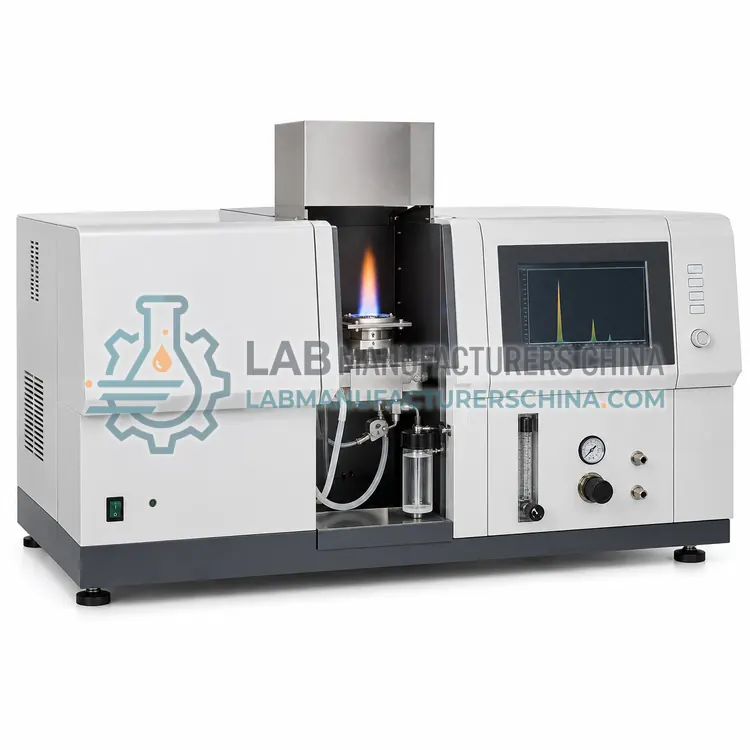
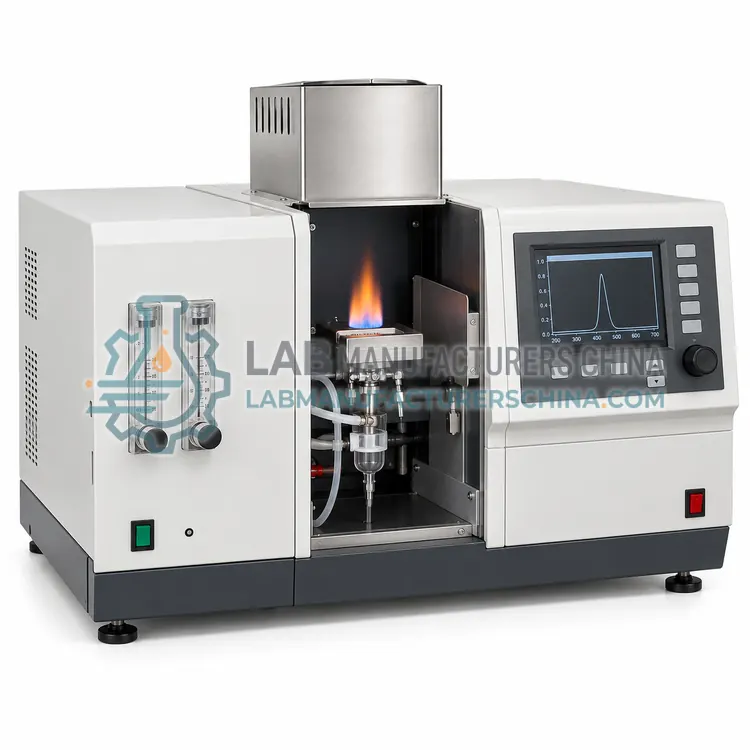
How do Flame AAS work?
A peristaltic pump or the nebulizer vacuum draws sample into a nebulizer, where it forms an aerosol that mixes with fuel and oxidant gases in a burner head. Combustion produces a steady cloud of ground-state atoms. A hollow-cathode lamp specific to the element emits sharp resonance lines that pass through the flame to a monochromator and photodetector. Absorbance is proportional to concentration according to the Beer-Lambert law. The flame composition, burner slot geometry and observation height are chosen so that atomization is efficient and chemical interferences are limited. Deuterium or Zeeman background correction removes signals from smoke, droplets and molecular species. Calibration is performed with aqueous standards matched to the sample acid and matrix, and burner rotation or a flow spoiler extends the linear range for concentrated samples.
Which Flame AAS variants are available?
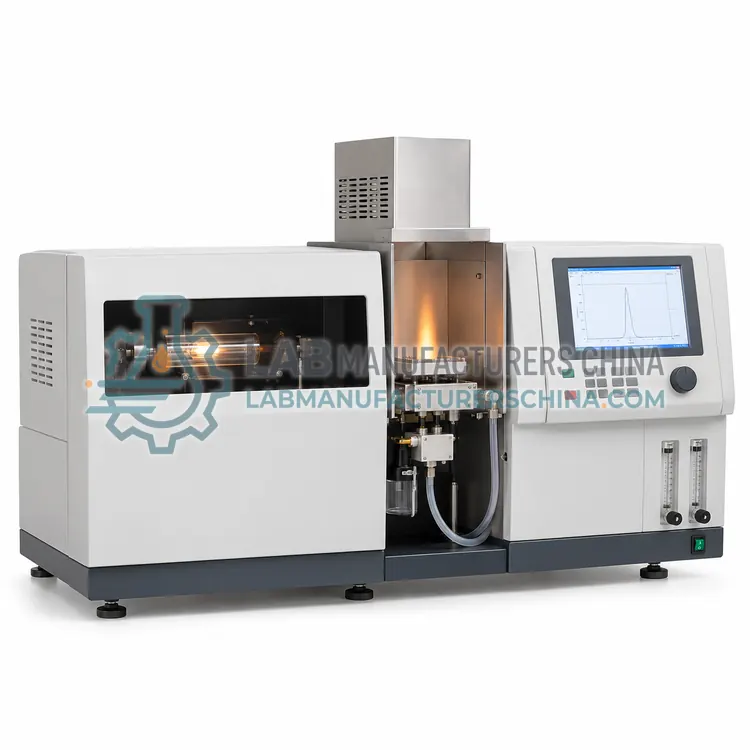
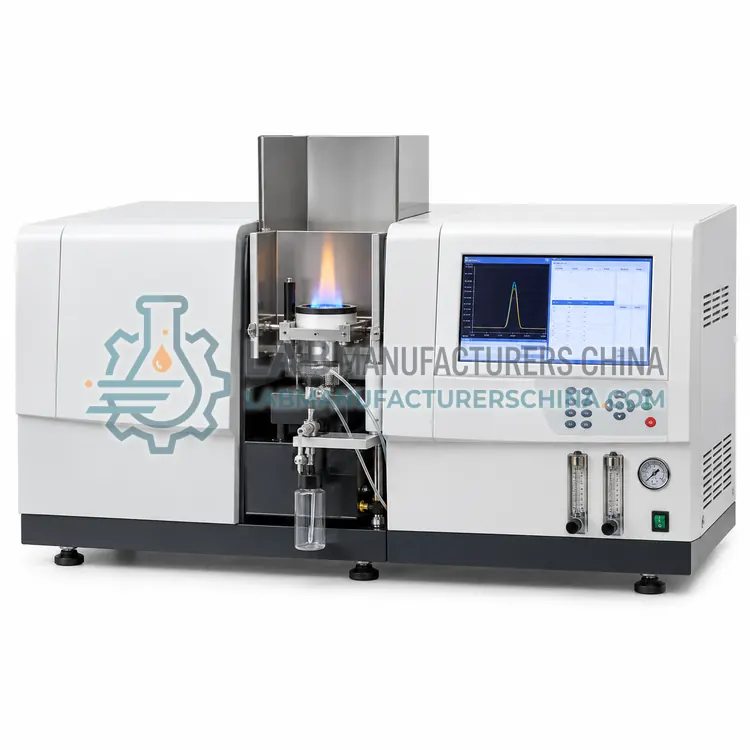
- Single-Beam Flame Atomic Absorption Spectrometer — A single-beam flame atomic absorption spectrometer uses one light path from lamp to detector.
- Double-Beam Flame Atomic Absorption Spectrometer — A double-beam flame atomic absorption spectrometer splits the lamp beam into sample and reference paths for continuous baseline correction.
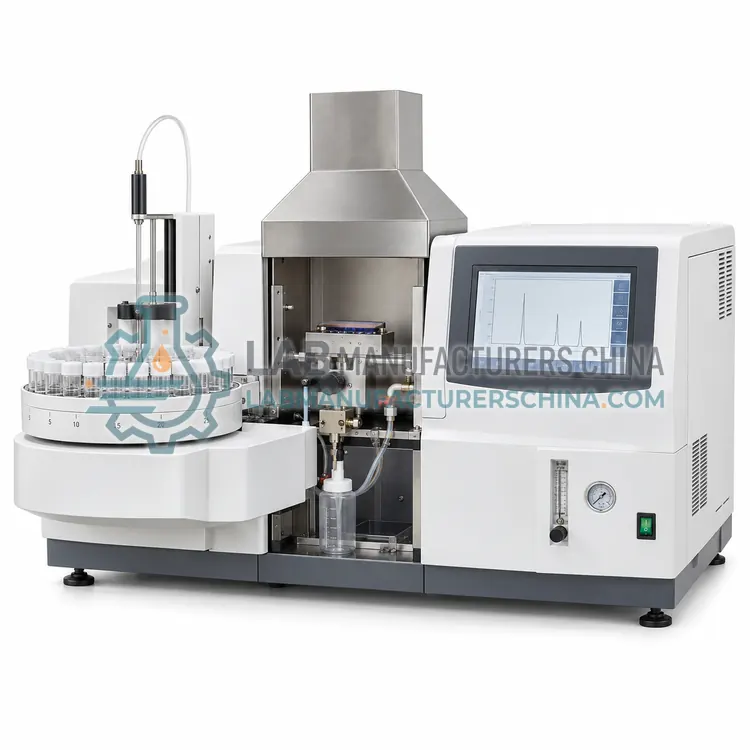
- Automated Flame AAS with Autosampler — An automated flame AAS with autosampler handles calibration standards, samples and quality-control checks without operator intervention.
- Nitrous Oxide-Acetylene Flame AAS for Refractory Elements — This flame AAS is configured with a nitrous oxide-acetylene burner for refractory elements that form stable oxides.
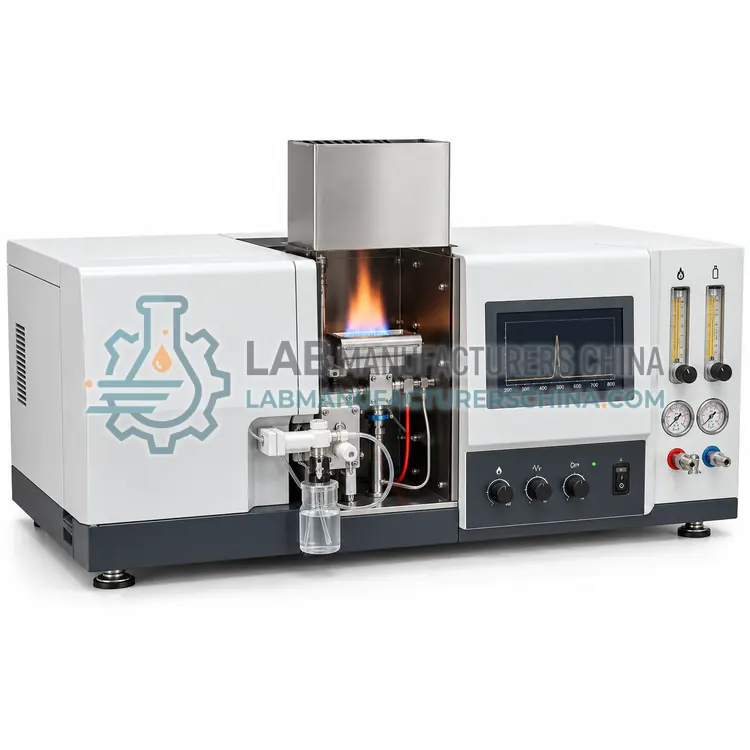
- Flame Emission and Atomic Absorption Spectrometer — This instrument combines flame emission and atomic absorption modes in one spectrometer.
- Compact Flame AAS for Teaching and Field Laboratories — This compact flame AAS trades maximum automation for small size, low cost and simple operation.
How do I choose the right variant?
Select a flame system by the element list, concentration range and matrix. Single-beam optics suit most routine work at lower cost, while double-beam optics reduce drift from lamp and detector fluctuations for long unattended runs. An autosampler is essential for throughput and reproducibility in quality-control laboratories. If refractory elements such as aluminum, titanium or vanadium are required, choose a system with a nitrous oxide-acetylene burner and appropriate safety provisions. Alkali metals can be measured in flame emission mode, which improves sensitivity and avoids hollow-cathode lamp cost. Confirm burner materials suit your acid and dissolved-solids levels, and check that the gas control and interlocks meet local regulations.
Where are Flame AAS used?
Flame AAS are specified in metals in drinking water and wastewater, soil, plant and fertilizer nutrient analysis, food and beverage mineral and toxic metal testing and alloy composition and plating bath control.
Which standards and certifications apply?
Work with Flame AAS is commonly governed by Ph. Eur. 2.2.22 Atomic absorption spectrometry, USP <852> Atomic Absorption Spectroscopy, ISO 8288 Water quality — Flame atomic absorption determination of metals, US EPA Method 7000B, ASTM D4691 and IEC 61010-1. Instrument certifications such as CE marking are confirmed per configuration and never assumed.
What are the key considerations before purchase?
Flame atomic absorption requires a flame hood, secure gas cylinders, regulators and flashback arrestors, with acetylene kept away from oxidizing materials. Install the instrument on a stable bench away from strong drafts, because airflow disturbs the flame. Daily checks include gas pressure, burner cleanliness and calibration verification. The burner slot and nebulizer need periodic cleaning to remove salt deposits that cause noise and drift. Hollow-cathode lamps have limited life and may need warm-up and alignment. Sample solutions should be filtered and matched to standards in acid content, and method blanks track contamination. Keep service and lamp records for traceability.