
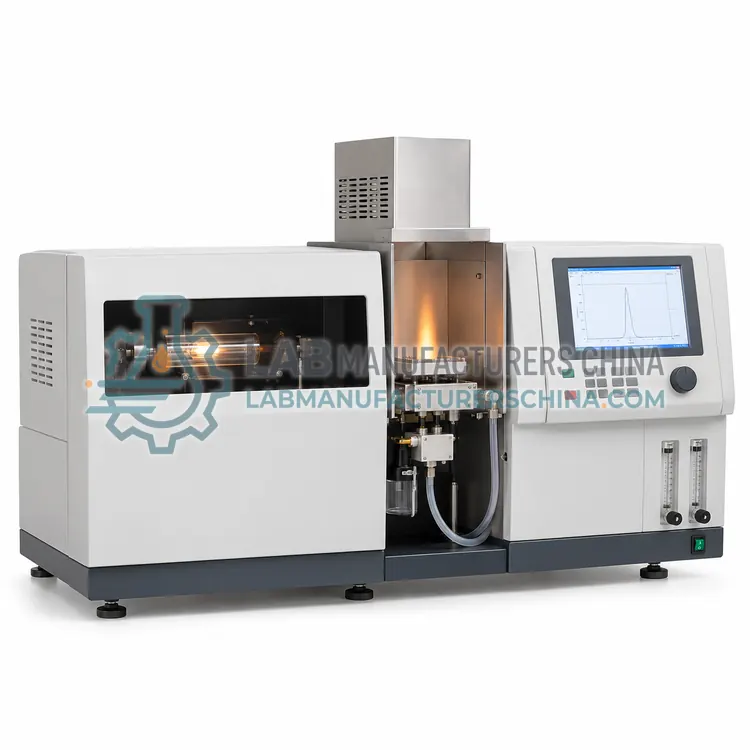
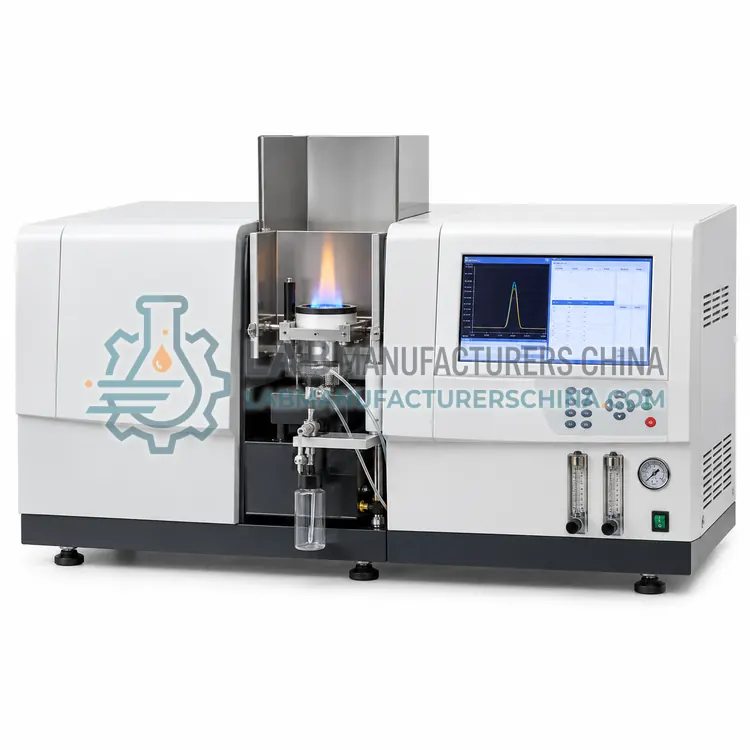
Double-Beam Flame Atomic Absorption Spectrometer
双光束火焰原子吸收光谱仪
- SKU FLA-0002
- Flame AAS
- CE (to be confirmed)
- ISO 9001 manufacturing (to be confirmed)
- 21 CFR Part 11 software compliance (to be confirmed)
Price on request — FOB / CIF quoted per order
Prices depend on configuration, quantity and destination port.
Key specifications
| Wavelength range | 185–900 nm |
|---|---|
| Optical system | double-beam with chopper |
| Baseline drift | ≤ 0.003 A/h |
| Spectral bandwidth | 0.1–2.0 nm selectable |
| Flame types | air-acetylene, N2O-acetylene |
| Detection limit | 0.001–0.1 mg/L typical |
Request a quote Download brochure · to be provided
By Lab Manufacturers China Technical TeamLast reviewed Standards: Ph. Eur. 2.2.22 Atomic absorption spectrometry, USP <852> Atomic Absorption Spectroscopy, ISO 8288 Water quality — Flame atomic absorption determination of metals
What is the Double-Beam Flame Atomic Absorption Spectrometer?
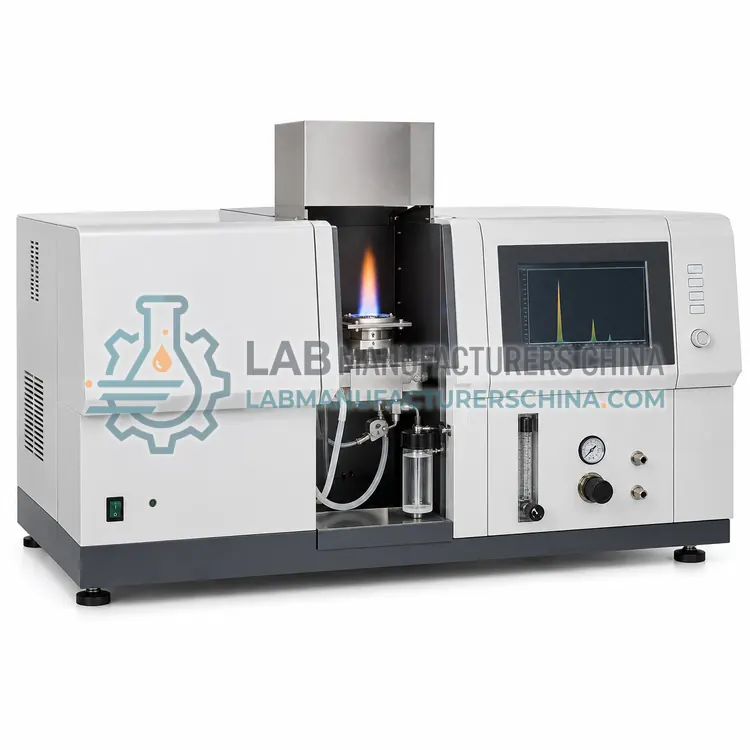
A double-beam flame atomic absorption spectrometer splits the lamp beam into sample and reference paths for continuous baseline correction. It is chosen for long unattended runs and for laboratories that need maximum stability.
What is the Double-Beam Flame Atomic Absorption Spectrometer?
A double-beam flame atomic absorption spectrometer splits the lamp beam into sample and reference paths for continuous baseline correction. It is chosen for long unattended runs and for laboratories that need maximum stability.
Overview
In this design a rotating chopper or mirror divides the hollow-cathode lamp output so that one beam passes through the flame and another bypasses it. The detector alternately measures both, and the ratio corrects for lamp intensity drift, detector aging and electronic fluctuations. This gives a more stable baseline and allows longer runs between recalibrations, which is valuable for autosampler sequences with many samples. The optical system typically covers 185 to 900 nanometers and offers selectable bandwidth and a multi-lamp turret. Both air-acetylene and nitrous oxide-acetylene burners are supported, with automatic gas control and safety interlocks. Deuterium background correction is standard and Zeeman correction may be offered on combined flame and furnace instruments. The cost and complexity are higher than single-beam systems, but stability and productivity are better.
How does it work?
A peristaltic pump or the nebulizer vacuum draws sample into a nebulizer, where it forms an aerosol that mixes with fuel and oxidant gases in a burner head. Combustion produces a steady cloud of ground-state atoms. A hollow-cathode lamp specific to the element emits sharp resonance lines that pass through the flame to a monochromator and photodetector. Absorbance is proportional to concentration according to the Beer-Lambert law. The flame composition, burner slot geometry and observation height are chosen so that atomization is efficient and chemical interferences are limited. Deuterium or Zeeman background correction removes signals from smoke, droplets and molecular species. Calibration is performed with aqueous standards matched to the sample acid and matrix, and burner rotation or a flow spoiler extends the linear range for concentrated samples.
What are the key features?
- Double-beam optics with sample and reference paths
- Automatic gain and baseline correction for stability
- Long unattended runs with infrequent recalibration
- Selectable spectral bandwidth and multi-lamp turret
- Air-acetylene and nitrous oxide-acetylene capability
- Automatic gas control with safety interlocks
What are the technical specifications?
A typical double-beam flame atomic absorption spectrometer configuration offers wavelength range of 185–900 nm, optical system of double-beam with chopper, baseline drift of ≤ 0.003 A/h, spectral bandwidth of 0.1–2.0 nm selectable, flame types of air-acetylene, N2O-acetylene and detection limit of 0.001–0.1 mg/L typical. Values are indicative of the product class; the exact figures for each configuration are confirmed on the quotation and the calibration documents supplied with the instrument.
Which applications is it used for?
The Double-Beam Flame Atomic Absorption Spectrometer is used in high-throughput water and soil analysis, contract laboratory routine metals, food and feed mineral testing and long unattended autosampler sequences. Across the wider Flame AAS class, laboratories also deploy it for metals in drinking water and wastewater, soil, plant and fertilizer nutrient analysis and food and beverage mineral and toxic metal testing.
Which standards and certifications apply?
Relevant standards and methods include Ph. Eur. 2.2.22 Atomic absorption spectrometry, USP <852> Atomic Absorption Spectroscopy, ISO 8288 Water quality — Flame atomic absorption determination of metals, US EPA Method 7000B, ASTM D4691 and IEC 61010-1. Certification candidates for this model are CE, ISO 9001 manufacturing and 21 CFR Part 11 software compliance; each is to be confirmed for the specific configuration before shipment, and certificates are supplied only where they have been issued.
Flame atomic absorption requires a flame hood, secure gas cylinders, regulators and flashback arrestors, with acetylene kept away from oxidizing materials. Install the instrument on a stable bench away from strong drafts, because airflow disturbs the flame. Daily checks include gas pressure, burner cleanliness and calibration verification. The burner slot and nebulizer need periodic cleaning to remove salt deposits that cause noise and drift. Hollow-cathode lamps have limited life and may need warm-up and alignment. Sample solutions should be filtered and matched to standards in acid content, and method blanks track contamination. Keep service and lamp records for traceability.
How do I select the right Double-Beam Flame Atomic Absorption Spectrometer?
Select the double-beam variant when long unattended runs, high sample throughput and stable baselines are important, as in contract or high-volume QC laboratories. Specify the element list, flame types, autosampler capacity and whether electronic records must meet regulated requirements. The higher price is justified when productivity and recalibration frequency matter.
How does it compare with other Flame AAS variants?
Select a flame system by the element list, concentration range and matrix. Single-beam optics suit most routine work at lower cost, while double-beam optics reduce drift from lamp and detector fluctuations for long unattended runs. An autosampler is essential for throughput and reproducibility in quality-control laboratories. If refractory elements such as aluminum, titanium or vanadium are required, choose a system with a nitrous oxide-acetylene burner and appropriate safety provisions. Alkali metals can be measured in flame emission mode, which improves sensitivity and avoids hollow-cathode lamp cost. Confirm burner materials suit your acid and dissolved-solids levels, and check that the gas control and interlocks meet local regulations.
Full specifications
| Wavelength range | 185–900 nm |
|---|---|
| Optical system | double-beam with chopper |
| Baseline drift | ≤ 0.003 A/h |
| Spectral bandwidth | 0.1–2.0 nm selectable |
| Flame types | air-acetylene, N2O-acetylene |
| Detection limit | 0.001–0.1 mg/L typical |
| Lamp turret | up to 8 lamps |
| Background correction | deuterium or Zeeman |
| Gas control | fully automatic with interlocks |
| Interface | Ethernet / USB |
Indicative values for this product class. Final specifications are confirmed on the quotation and in the calibration documents supplied with the instrument.
Applications
- High-throughput water and soil analysis
- Contract laboratory routine metals
- Food and feed mineral testing
- Long unattended autosampler sequences
Key features
- Double-beam optics with sample and reference paths
- Automatic gain and baseline correction for stability
- Long unattended runs with infrequent recalibration
- Selectable spectral bandwidth and multi-lamp turret
- Air-acetylene and nitrous oxide-acetylene capability
- Automatic gas control with safety interlocks
Frequently asked questions about Double-Beam Flame Atomic Absorption Spectrometer
Double-beam correction typically holds baseline drift to about 0.003 absorbance per hour or better, compared with a larger drift for single-beam designs without frequent recalibration. The benefit appears over long runs and with lamp aging. For short runs with bracketed calibration, the difference may be small.
Detection limits depend mainly on flame atomization efficiency, background correction and detector noise, not on the beam configuration. Double-beam optics improve stability rather than sensitivity. The main practical gain is fewer recalibrations and more reliable results across long sequences.
Zeeman correction is more common on graphite furnace instruments because they need strong correction for structured background. On flame systems it is offered on some combined flame and furnace models. For flame-only work, deuterium correction is usually sufficient unless the matrix is highly structured.
Flame atomic absorption usually measures metals from about 0.001 to 100 milligrams per litre, depending on the element and flame conditions. Copper, zinc, iron and manganese are comfortably in this range. Below about 0.01 milligrams per litre, graphite furnace atomic absorption or ICP techniques offer lower detection limits with better reliability.
The flame produces heat, metal vapors and combustion products, and samples may contain acids and toxic elements. A flame hood removes these emissions and protects operators. It also stabilizes the environment around the burner so the flame is not disturbed by room air movement, which improves measurement reproducibility.
Use nitrous oxide-acetylene for refractory elements that form stable oxides in the cooler air-acetylene flame, such as aluminum, titanium, vanadium, silicon and molybdenum. The hotter flame improves atomization, but it also increases chemical interference risk, requires special burner heads and must be handled with additional safety precautions.
Related models
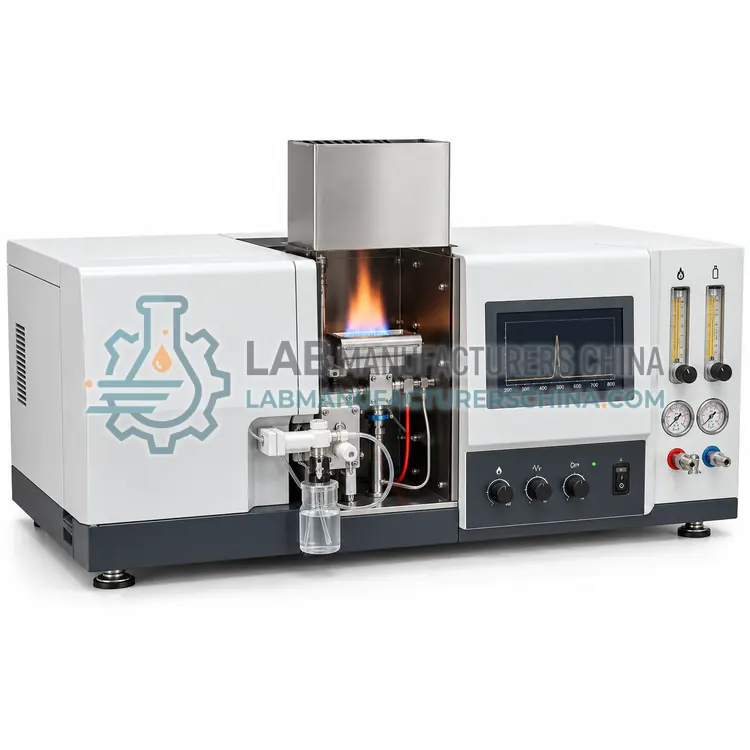
Nitrous Oxide-Acetylene Flame AAS for Refractory Elements
难熔元素一氧化二氮-乙炔火焰原子吸收光谱仪
- CE (to be confirmed)
- +2
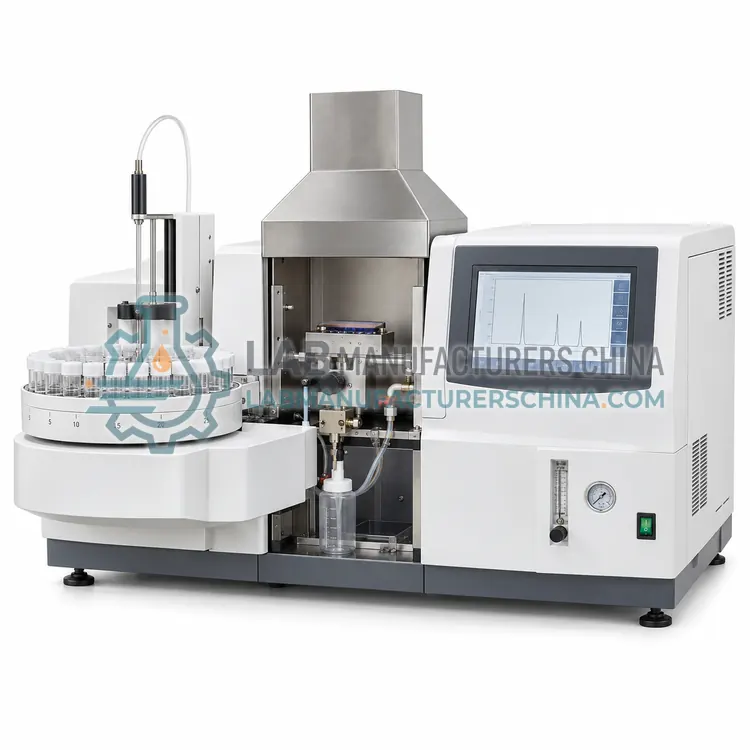
High-Throughput Graphite Furnace AAS with Autosampler and Modifier Dosing
高通量自动进样石墨炉原子吸收光谱仪
- CE (to be confirmed)
- +2