Lab Manufacturers China

Graphite Furnace AAS

石墨炉原子吸收光谱仪

GFA · Atomic Absorption Spectrometers · 6 models

By Lab Manufacturers China Technical TeamLast reviewed Standards: Ph. Eur. 2.2.22 Atomic absorption spectrometry, USP <852> Atomic Absorption Spectroscopy, US EPA Method 7010 Graphite furnace atomic absorption spectrophotometry

Standards referenced

  • Ph. Eur. 2.2.22 Atomic absorption spectrometry
  • USP <852> Atomic Absorption Spectroscopy
  • US EPA Method 7010 Graphite furnace atomic absorption spectrophotometry
  • ISO 15586 Water quality — Determination of trace elements by graphite furnace AAS
  • ICH Q2(R2) Validation of analytical procedures
  • IEC 61010-1

What are Graphite Furnace AAS?

Graphite furnace atomic absorption spectrometers atomize microlitre samples by electrothermal heating inside a graphite tube. They reach microgram per litre and lower detection limits for trace metals and are used in water, food, clinical, environmental and pharmaceutical laboratories.

6 models of Graphite Furnace AAS

The 6 models below are current configurations; specifications are confirmed on quotation.

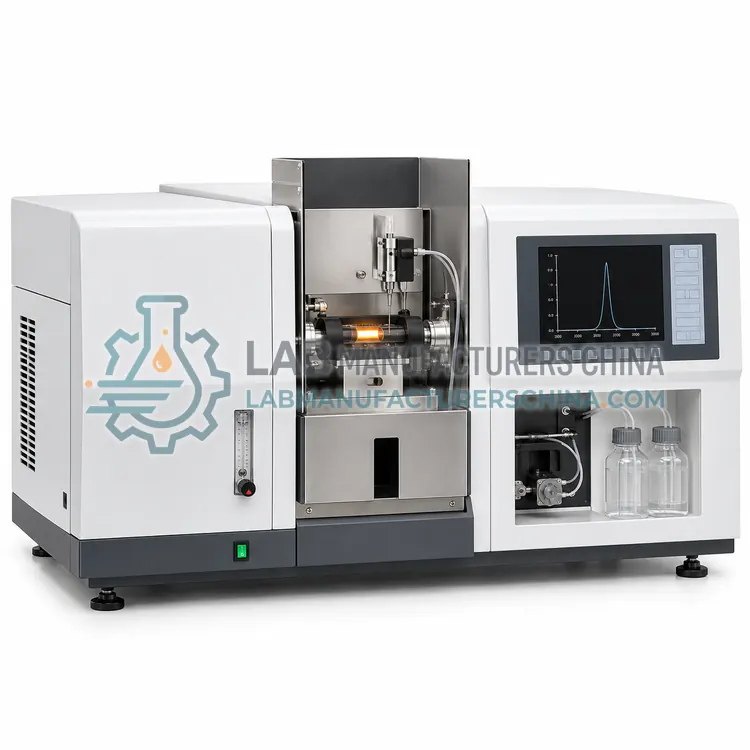
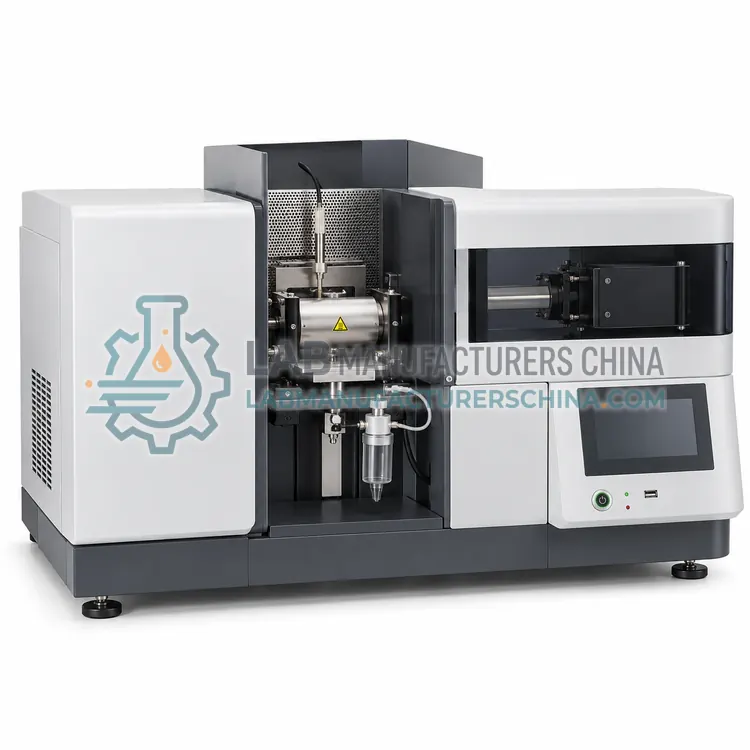
Transverse-Heated Graphite Furnace Atomic Absorption Spectrometer

横向加热石墨炉原子吸收光谱仪

  • GFA-0001
  • Graphite Furnace AAS
  • CE (to be confirmed)
  • ISO 9001 manufacturing (to be confirmed)
  • 21 CFR Part 11 software compliance (to be confirmed)
Atomizer:
transverse-heated graphite tube
Maximum temperature:
3000 °C
Heating rate:
up to 2000 °C/s
Platform:
L'vov platform standard
Detection limit:
0.01–1 µg/L typical
Background correction:
Zeeman effect

A transverse-heated graphite furnace AAS applies current across the whole tube length for a more uniform temperature. It is chosen when peak reproducibility and freedom from condensation and memory interferences matter most in trace analysis.

Request a quote
View details

End-Heated Graphite Furnace Atomic Absorption Spectrometer

端部加热石墨炉原子吸收光谱仪

  • GFA-0002
  • Graphite Furnace AAS
  • CE (to be confirmed)
  • ISO 9001 manufacturing (to be confirmed)
  • IEC 61010-1 safety compliance (to be confirmed)
Atomizer:
end-heated graphite tube
Maximum temperature:
2800–3000 °C
Heating rate:
up to 1500 °C/s
Detection limit:
0.01–1 µg/L typical
Background correction:
deuterium or Zeeman
Sample volume:
5–50 µL

An end-heated graphite furnace AAS passes current along the tube length from cooled end contacts. It is the cost-effective choice for routine trace-metal analysis where the most difficult matrices are not required.

Request a quote
View details

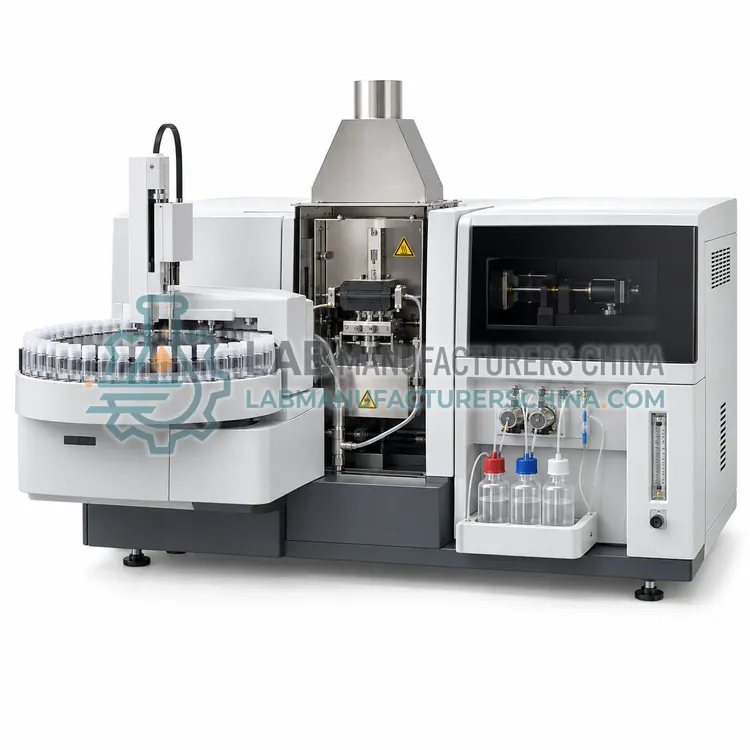
High-Throughput Graphite Furnace AAS with Autosampler and Modifier Dosing

高通量自动进样石墨炉原子吸收光谱仪

  • GFA-0003
  • Graphite Furnace AAS
  • CE (to be confirmed)
  • ISO 9001 manufacturing (to be confirmed)
  • 21 CFR Part 11 software compliance (to be confirmed)
Atomizer:
graphite tube, 3000 °C
Cycle time:
60–120 s per element
Sample volume:
5–50 µL
Autosampler positions:
60–180 vials
Dilution:
automatic, up to 100:1
Standard addition:
automatic in-tube

This graphite furnace AAS pairs a fast furnace with an autosampler that doses sample, modifier and diluent automatically. It is well chosen for laboratories running many routine trace determinations with standard addition procedures.

Request a quote
View details

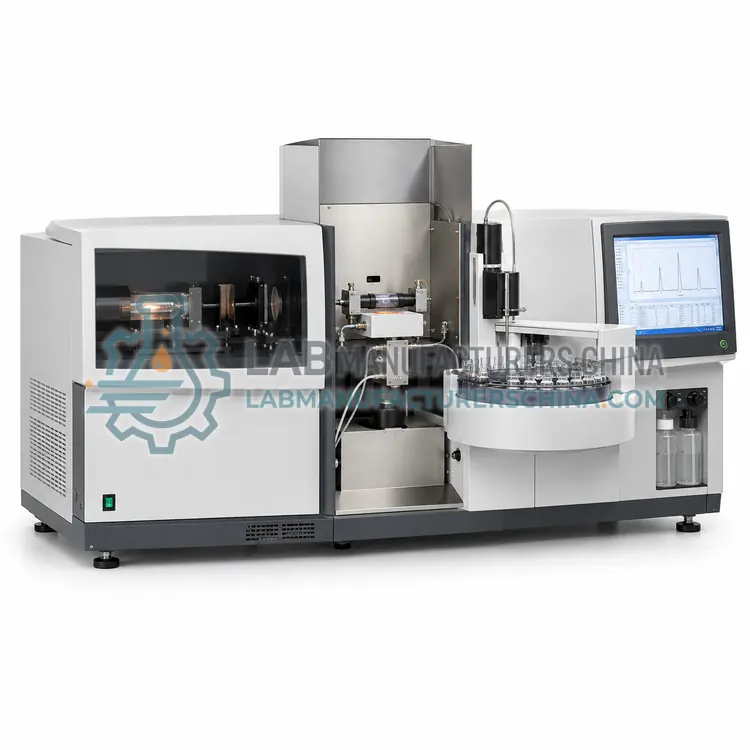
Simultaneous Multi-Element Graphite Furnace AAS

同时多元素石墨炉原子吸收光谱仪

  • GFA-0004
  • Graphite Furnace AAS
  • CE (to be confirmed)
  • ISO 9001 manufacturing (to be confirmed)
  • 21 CFR Part 11 software compliance (to be confirmed)
Simultaneous elements:
2–6
Atomizer:
graphite tube, 3000 °C
Detection limit:
0.05–2 µg/L typical
Optical channels:
fixed per element
Sample volume:
10–50 µL
Background correction:
Zeeman effect

A simultaneous multi-element graphite furnace AAS measures several elements from one atomization using multiple lamps and detectors. It is chosen when high sample numbers and short element lists make single-element sequential runs too slow.

Request a quote
View details

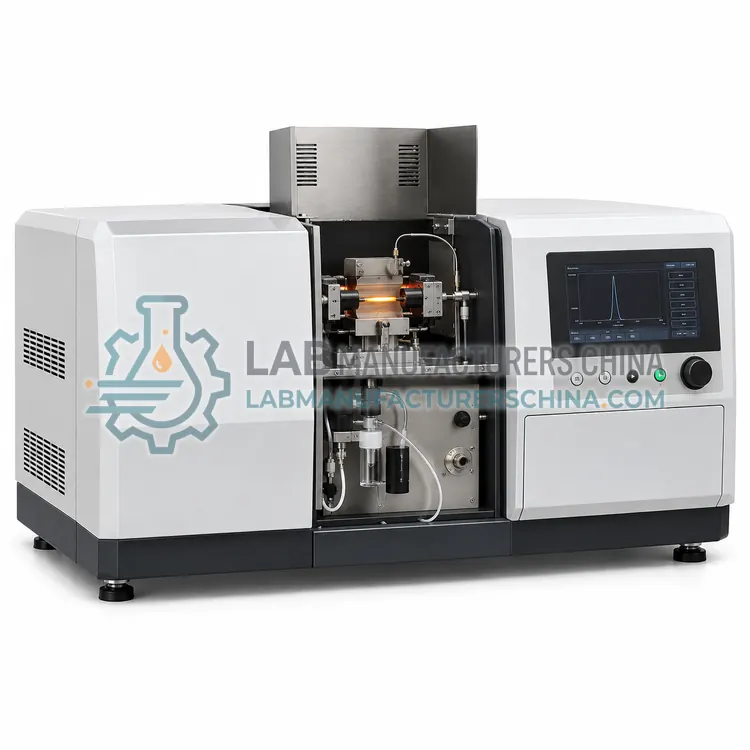
Graphite Furnace AAS with Zeeman Background Correction

带塞曼背景校正的石墨炉原子吸收光谱仪

  • GFA-0005
  • Graphite Furnace AAS
  • CE (to be confirmed)
  • ISO 9001 manufacturing (to be confirmed)
  • 21 CFR Part 11 software compliance (to be confirmed)
Background correction:
Zeeman effect
Magnetic field direction:
transverse or longitudinal
Atomizer:
graphite tube, 3000 °C
Correctable background:
up to 2.5 A
Detection limit:
0.01–1 µg/L typical
Sample volume:
5–50 µL

A graphite furnace AAS with Zeeman background correction uses a magnetic field to separate atomic and background signals. It is chosen for difficult matrices with high or structured background and for regulated trace-metal methods.

Request a quote
View details

Direct Solid Sampling Graphite Furnace AAS

直接固体进样石墨炉原子吸收光谱仪

  • GFA-0006
  • Graphite Furnace AAS
  • CE (to be confirmed)
  • ISO 9001 manufacturing (to be confirmed)
  • IEC 61010-1 safety compliance (to be confirmed)
Sample mass:
0.1–20 mg
Atomizer:
graphite tube with solid sampler
Detection limit:
mg/kg range typical
Balance resolution:
0.001 mg
Maximum temperature:
3000 °C
Background correction:
Zeeman effect

A direct solid sampling graphite furnace AAS introduces milligram solid samples into the furnace without digestion. It is chosen to avoid acid digestion, reduce contamination and measure small or difficult-to-dissolve sample materials directly.

Request a quote
View details

Compare Graphite Furnace AAS models

ModelAtomizerMaximum temperatureHeating ratePlatformDetection limit
Transverse-Heated Graphite Furnace Atomic Absorption SpectrometerGFA-0001transverse-heated graphite tube3000 °Cup to 2000 °C/sL'vov platform standard0.01–1 µg/L typical
End-Heated Graphite Furnace Atomic Absorption SpectrometerGFA-0002end-heated graphite tube2800–3000 °Cup to 1500 °C/soptional0.01–1 µg/L typical
High-Throughput Graphite Furnace AAS with Autosampler and Modifier DosingGFA-0003graphite tube, 3000 °C———0.01–1 µg/L typical
Simultaneous Multi-Element Graphite Furnace AASGFA-0004graphite tube, 3000 °C———0.05–2 µg/L typical
Graphite Furnace AAS with Zeeman Background CorrectionGFA-0005graphite tube, 3000 °C——L'vov platform0.01–1 µg/L typical
Direct Solid Sampling Graphite Furnace AASGFA-0006graphite tube with solid sampler3000 °C——mg/kg range typical

Indicative values for this product class. Final specifications are confirmed on the quotation and in the calibration documents supplied with the instrument.

How do Graphite Furnace AAS work?

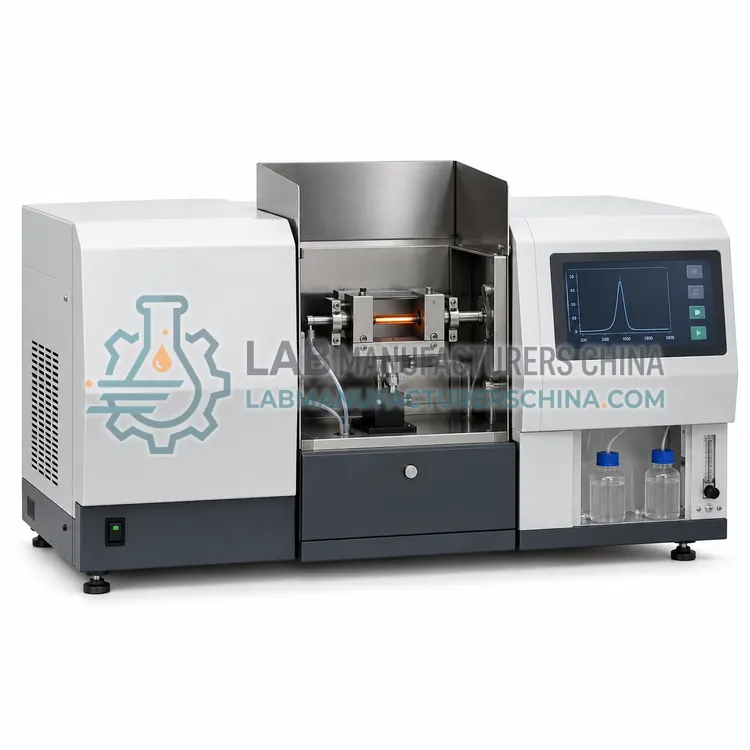
A measured aliquot of sample, typically 5 to 50 microlitres, is deposited into a graphite tube through a dosing hole. The tube is heated in programmed stages: drying to evaporate solvent, pyrolysis to remove organic and inorganic matrix, atomization at high temperature to create a transient cloud of free atoms, and cleaning to remove residue. A hollow-cathode lamp emits the element resonance line through the tube, and the detector records a transient absorbance peak whose area is proportional to the analyte mass. Because atomization is efficient and atoms remain in the optical path longer than in a flame, detection limits are far lower, often in the nanogram per litre range for cadmium and lead. Strong background correction by Zeeman effect or deuterium lamp is essential, and matrix modifiers stabilize analytes during pyrolysis. Tubes and platforms are consumables, and temperature programs are optimized for each matrix.

Which Graphite Furnace AAS variants are available?

  • Transverse-Heated Graphite Furnace Atomic Absorption Spectrometer — A transverse-heated graphite furnace AAS applies current across the whole tube length for a more uniform temperature.
  • End-Heated Graphite Furnace Atomic Absorption Spectrometer — An end-heated graphite furnace AAS passes current along the tube length from cooled end contacts.
  • High-Throughput Graphite Furnace AAS with Autosampler and Modifier Dosing — This graphite furnace AAS pairs a fast furnace with an autosampler that doses sample, modifier and diluent automatically.
  • Simultaneous Multi-Element Graphite Furnace AAS — A simultaneous multi-element graphite furnace AAS measures several elements from one atomization using multiple lamps and detectors.
  • Graphite Furnace AAS with Zeeman Background Correction — A graphite furnace AAS with Zeeman background correction uses a magnetic field to separate atomic and background signals.
  • Direct Solid Sampling Graphite Furnace AAS — A direct solid sampling graphite furnace AAS introduces milligram solid samples into the furnace without digestion.

How do I choose the right variant?

Choose a graphite furnace system when trace or ultratrace detection limits are required for a limited number of elements and sample volumes are small. Transverse-heated tubes give more uniform temperature and better reproducibility, while end-heated tubes are simpler and less costly. Zeeman background correction is preferred for complex matrices that produce high structured background. An autosampler with modifier dosing and automatic dilution is important for throughput and for reproducible standard addition. Simultaneous multi-element instruments reduce analysis time when several elements are required, but single-element sequential operation remains the most common and lowest-cost approach. Confirm the graphite tube type and coating suit your elements, since carbide-forming elements such as silicon and vanadium require special tubes.

Where are Graphite Furnace AAS used?

Graphite Furnace AAS are specified in trace metals in drinking water and wastewater, lead and cadmium in food, blood and urine, elemental impurities in pharmaceutical materials and soil, sediment and atmospheric particulate digests.

Which standards and certifications apply?

Work with Graphite Furnace AAS is commonly governed by Ph. Eur. 2.2.22 Atomic absorption spectrometry, USP <852> Atomic Absorption Spectroscopy, US EPA Method 7010 Graphite furnace atomic absorption spectrophotometry, ISO 15586 Water quality — Determination of trace elements by graphite furnace AAS, ICH Q2(R2) Validation of analytical procedures and IEC 61010-1. Instrument certifications such as CE marking are confirmed per configuration and never assumed.

What are the key considerations before purchase?

Graphite furnace systems need argon of high purity, a stable power supply, temperature-controlled cooling and adequate exhaust for pyrolysis vapors. Acid digestion or dilution precedes most measurements, and ultrapure reagents and clean vessels are essential because contamination is visible at nanogram per litre levels. Matrix modifiers must be prepared accurately and dosed reproducibly. Operating cost is dominated by graphite tubes, platforms and lamps, so tracking firings and sensitivity helps schedule replacement. Daily checks include autosampler alignment, blank levels and calibration verification. Because each matrix behaves differently, temperature programs require development and should be fixed in the method with defined acceptance criteria.

Frequently asked questions about Graphite Furnace AAS

Detection limits are commonly 0.01 to 1 microgram per litre for many elements, with cadmium and lead at the lower end using 20 microlitre injections. Larger injection volumes, preconcentration or a platform can improve limits further. Detection limits depend on matrix, tube condition, lamp and the temperature program used.

Need help specifying Graphite Furnace AAS?

Request a quote