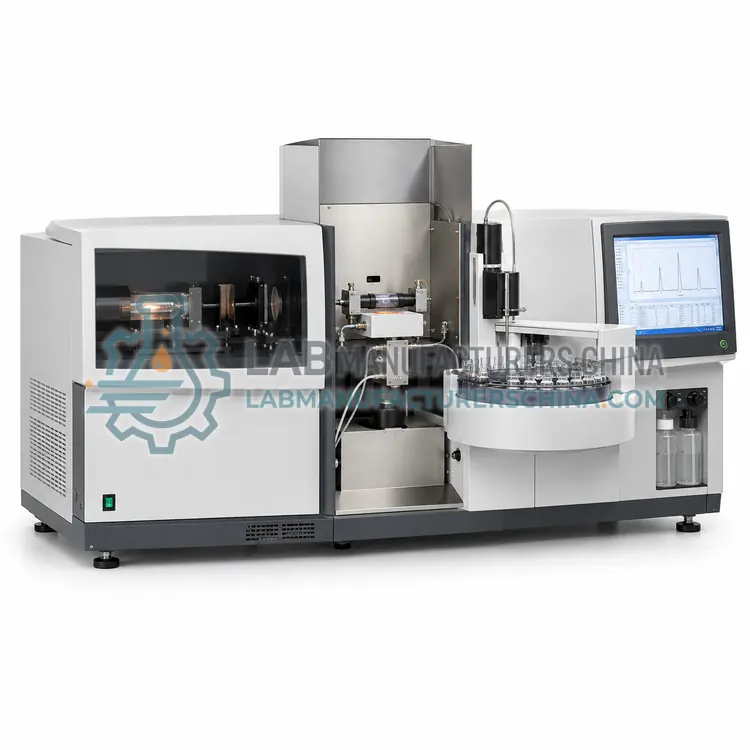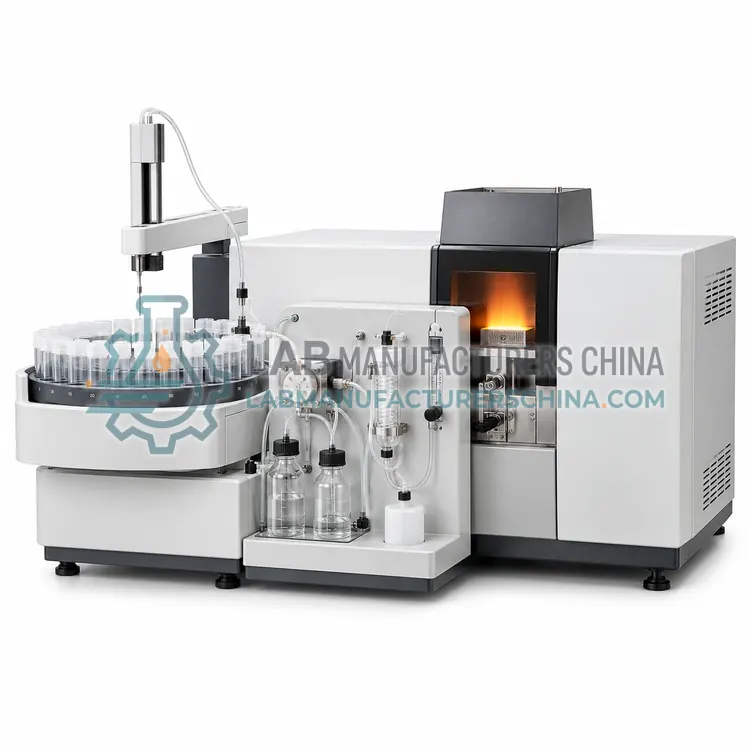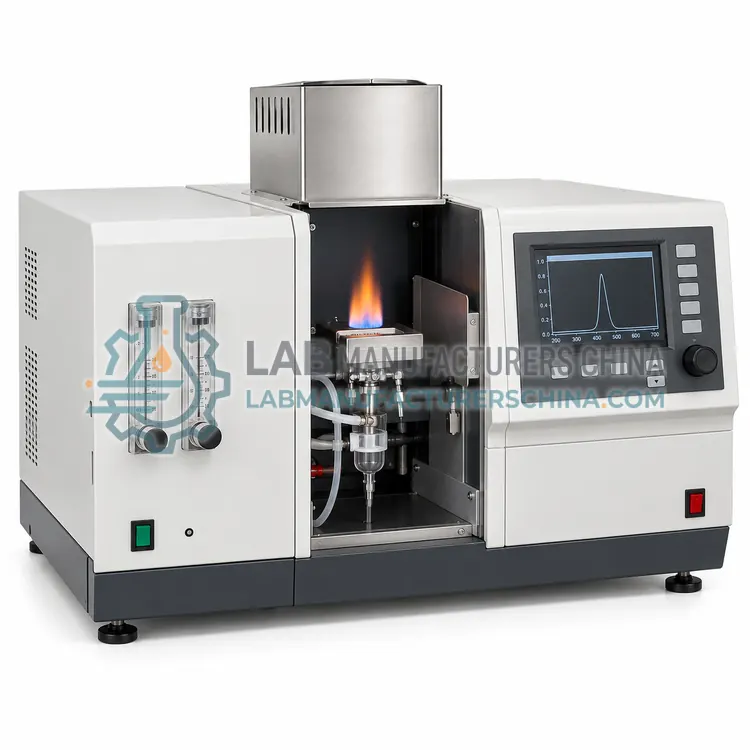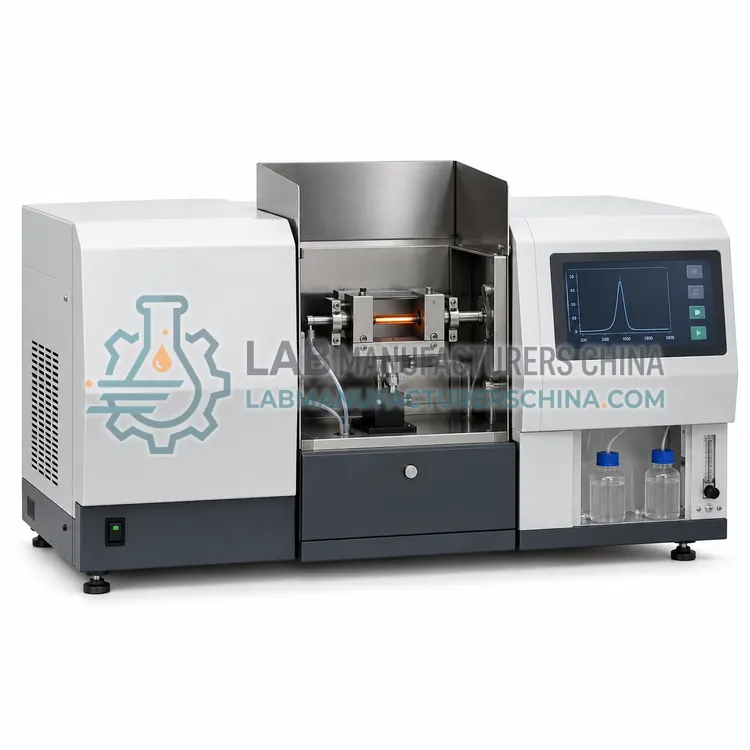
Transverse-Heated Graphite Furnace Atomic Absorption Spectrometer
横向加热石墨炉原子吸收光谱仪
- CE (to be confirmed)
- +2
Welcome to Lab Manufacturers China — laboratory instruments direct from a Chinese manufacturer
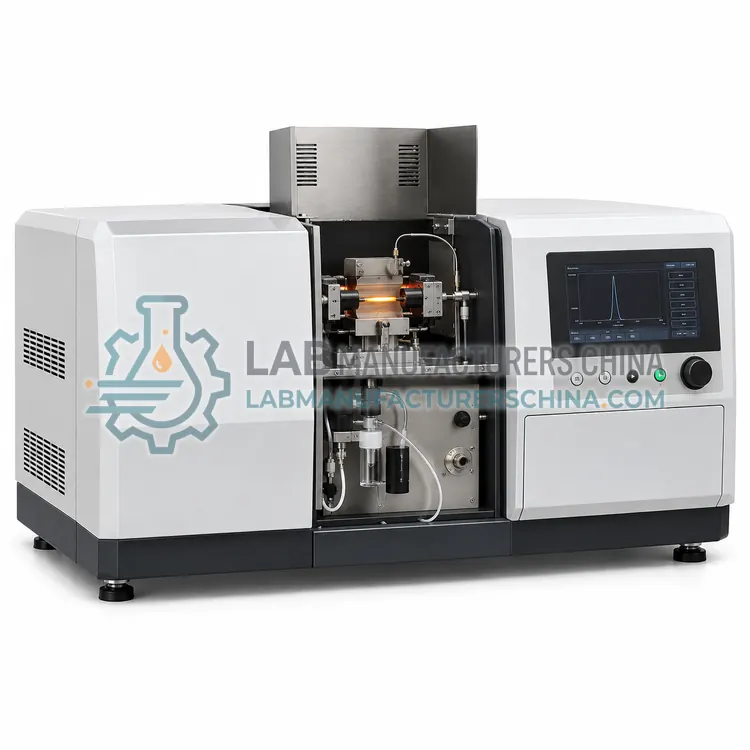
带塞曼背景校正的石墨炉原子吸收光谱仪
Price on request — FOB / CIF quoted per order
Prices depend on configuration, quantity and destination port.
| Background correction | Zeeman effect |
|---|---|
| Magnetic field direction | transverse or longitudinal |
| Atomizer | graphite tube, 3000 °C |
| Correctable background | up to 2.5 A |
| Detection limit | 0.01–1 µg/L typical |
| Sample volume | 5–50 µL |
By Lab Manufacturers China Technical TeamLast reviewed Standards: Ph. Eur. 2.2.22 Atomic absorption spectrometry, USP <852> Atomic Absorption Spectroscopy, US EPA Method 7010 Graphite furnace atomic absorption spectrophotometry
A graphite furnace AAS with Zeeman background correction uses a magnetic field to separate atomic and background signals. It is chosen for difficult matrices with high or structured background and for regulated trace-metal methods.
A graphite furnace AAS with Zeeman background correction uses a magnetic field to separate atomic and background signals. It is chosen for difficult matrices with high or structured background and for regulated trace-metal methods.
Zeeman correction splits the analyte resonance line into components using a strong magnetic field applied at the atomizer. The detector alternately measures the shifted component, which is not absorbed by the analyte, and the unshifted line. The difference isolates atomic absorbance from broadband and structured background. This correction is accurate even when background absorbance is high or changes rapidly during the atomization peak, conditions where deuterium correction can fail. Both transverse and longitudinal field designs exist, and the technique supports the high pyrolysis temperatures and small sample volumes typical of furnace work. It is commonly combined with a L'vov platform and matrix modifiers for complex samples such as blood, seawater, soil extracts and pharmaceutical materials, where accurate trace results are required.
A measured aliquot of sample, typically 5 to 50 microlitres, is deposited into a graphite tube through a dosing hole. The tube is heated in programmed stages: drying to evaporate solvent, pyrolysis to remove organic and inorganic matrix, atomization at high temperature to create a transient cloud of free atoms, and cleaning to remove residue. A hollow-cathode lamp emits the element resonance line through the tube, and the detector records a transient absorbance peak whose area is proportional to the analyte mass. Because atomization is efficient and atoms remain in the optical path longer than in a flame, detection limits are far lower, often in the nanogram per litre range for cadmium and lead. Strong background correction by Zeeman effect or deuterium lamp is essential, and matrix modifiers stabilize analytes during pyrolysis. Tubes and platforms are consumables, and temperature programs are optimized for each matrix.
A typical graphite furnace aas with zeeman background correction configuration offers background correction of Zeeman effect, magnetic field direction of transverse or longitudinal, atomizer of graphite tube, 3000 °C, correctable background of up to 2.5 A, detection limit of 0.01–1 µg/L typical and sample volume of 5–50 µL. Values are indicative of the product class; the exact figures for each configuration are confirmed on the quotation and the calibration documents supplied with the instrument.
The Graphite Furnace AAS with Zeeman Background Correction is used in blood, serum and urine trace metals, seawater and high-salinity matrices, pharmaceutical elemental impurity testing and soil and sediment with complex matrices. Across the wider Graphite Furnace AAS class, laboratories also deploy it for trace metals in drinking water and wastewater, lead and cadmium in food, blood and urine and elemental impurities in pharmaceutical materials.
Relevant standards and methods include Ph. Eur. 2.2.22 Atomic absorption spectrometry, USP <852> Atomic Absorption Spectroscopy, US EPA Method 7010 Graphite furnace atomic absorption spectrophotometry, ISO 15586 Water quality — Determination of trace elements by graphite furnace AAS, ICH Q2(R2) Validation of analytical procedures and IEC 61010-1. Certification candidates for this model are CE, ISO 9001 manufacturing and 21 CFR Part 11 software compliance; each is to be confirmed for the specific configuration before shipment, and certificates are supplied only where they have been issued.
Graphite furnace systems need argon of high purity, a stable power supply, temperature-controlled cooling and adequate exhaust for pyrolysis vapors. Acid digestion or dilution precedes most measurements, and ultrapure reagents and clean vessels are essential because contamination is visible at nanogram per litre levels. Matrix modifiers must be prepared accurately and dosed reproducibly. Operating cost is dominated by graphite tubes, platforms and lamps, so tracking firings and sensitivity helps schedule replacement. Daily checks include autosampler alignment, blank levels and calibration verification. Because each matrix behaves differently, temperature programs require development and should be fixed in the method with defined acceptance criteria.
Select a Zeeman-corrected furnace when matrices are complex, background is high or structured, or the method is regulated and must follow a pharmacopoeial or EPA procedure that specifies Zeeman correction. Confirm the correctable background range exceeds your expected matrix absorbance and that transmission is adequate for your elements.
Choose a graphite furnace system when trace or ultratrace detection limits are required for a limited number of elements and sample volumes are small. Transverse-heated tubes give more uniform temperature and better reproducibility, while end-heated tubes are simpler and less costly. Zeeman background correction is preferred for complex matrices that produce high structured background. An autosampler with modifier dosing and automatic dilution is important for throughput and for reproducible standard addition. Simultaneous multi-element instruments reduce analysis time when several elements are required, but single-element sequential operation remains the most common and lowest-cost approach. Confirm the graphite tube type and coating suit your elements, since carbide-forming elements such as silicon and vanadium require special tubes.
| Background correction | Zeeman effect |
|---|---|
| Magnetic field direction | transverse or longitudinal |
| Atomizer | graphite tube, 3000 °C |
| Correctable background | up to 2.5 A |
| Detection limit | 0.01–1 µg/L typical |
| Sample volume | 5–50 µL |
| Platform | L'vov platform |
| Purge gas | argon, 200–300 mL/min |
| Temperature program steps | up to 20 |
| Interface | Ethernet / USB |
Indicative values for this product class. Final specifications are confirmed on the quotation and in the calibration documents supplied with the instrument.
Deuterium correction assumes background is smooth across a narrow wavelength range near the analyte line. It can fail when background is very high, changes rapidly during the atomization peak, or has structure such as molecular bands. Zeeman correction measures background effectively at the analyte wavelength and handles these cases better.
In transverse design a magnet applies the field across the atomizer, which can slightly reduce light throughput. In longitudinal design the field is applied along the optical axis, preserving light throughput but requiring a polarization technique. Both correct structured background well; the choice depends on optical design and sensitivity needs.
Both correction modes trade some sensitivity for accuracy. Zeeman systems may lose a modest amount of light throughput, and the correction consumes part of the measurement cycle. For difficult matrices the benefit in accuracy and freedom from false positives outweighs the small sensitivity loss.
Detection limits are commonly 0.01 to 1 microgram per litre for many elements, with cadmium and lead at the lower end using 20 microlitre injections. Larger injection volumes, preconcentration or a platform can improve limits further. Detection limits depend on matrix, tube condition, lamp and the temperature program used.
Pyrolysis leaves residual matrix that produces high, structured background and smoke during atomization. Zeeman correction measures background very close to the analyte line and handles this structured background well, whereas deuterium correction can be inadequate when background is high or rapidly changing. That is why Zeeman systems dominate difficult matrices.
Optimize drying to avoid spattering, then increase pyrolysis temperature until analyte loss begins, and set atomization as low as possible for a sharp, complete peak without tailing. Cleanout must remove residue without shortening tube life. Modifier choice, observation of peak shape and recovery from spiked samples guide each step.
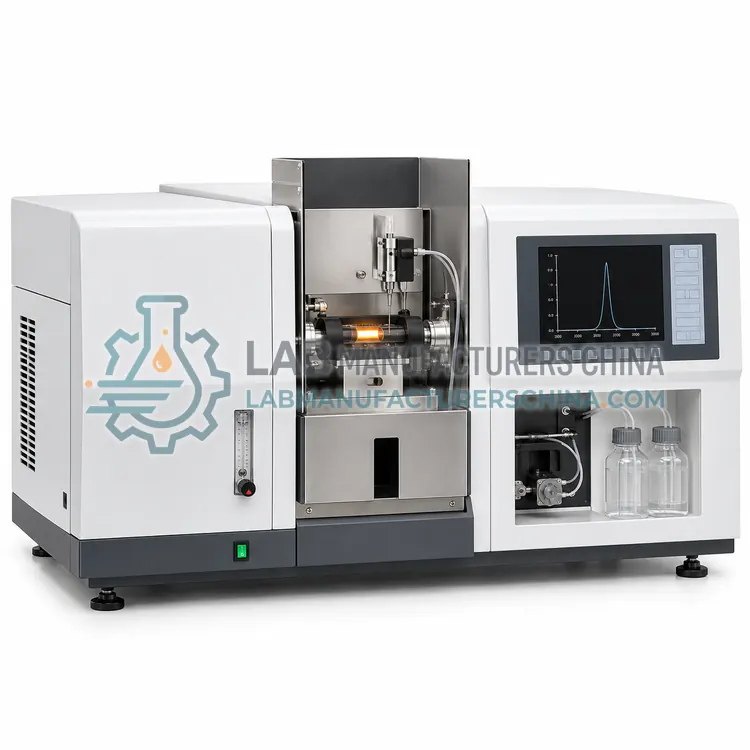
横向加热石墨炉原子吸收光谱仪
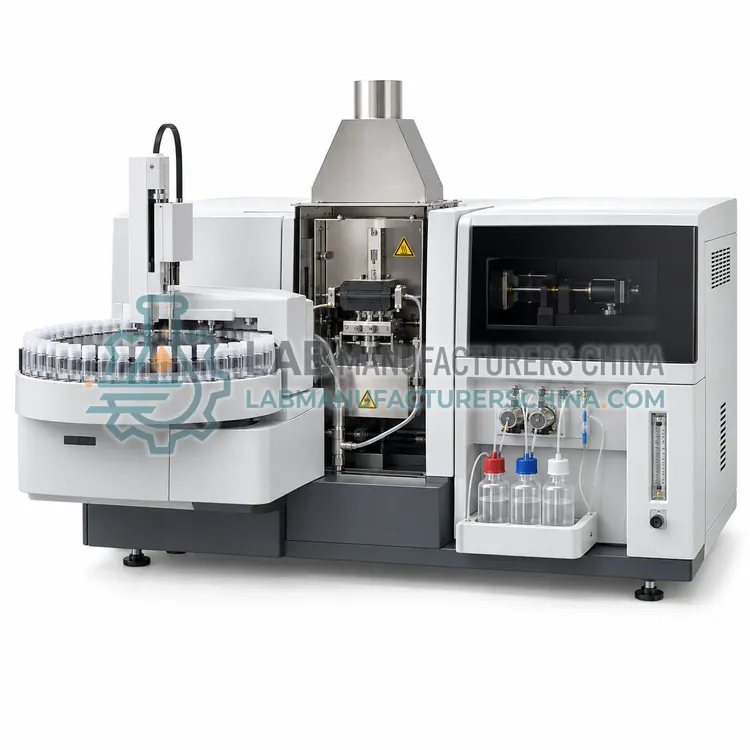
高通量自动进样石墨炉原子吸收光谱仪