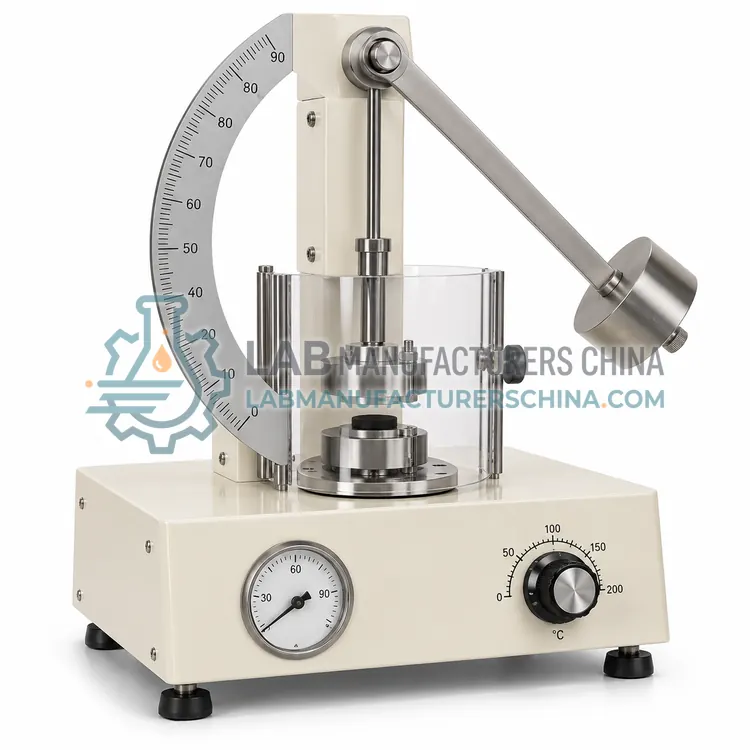
How do Rheometers work?
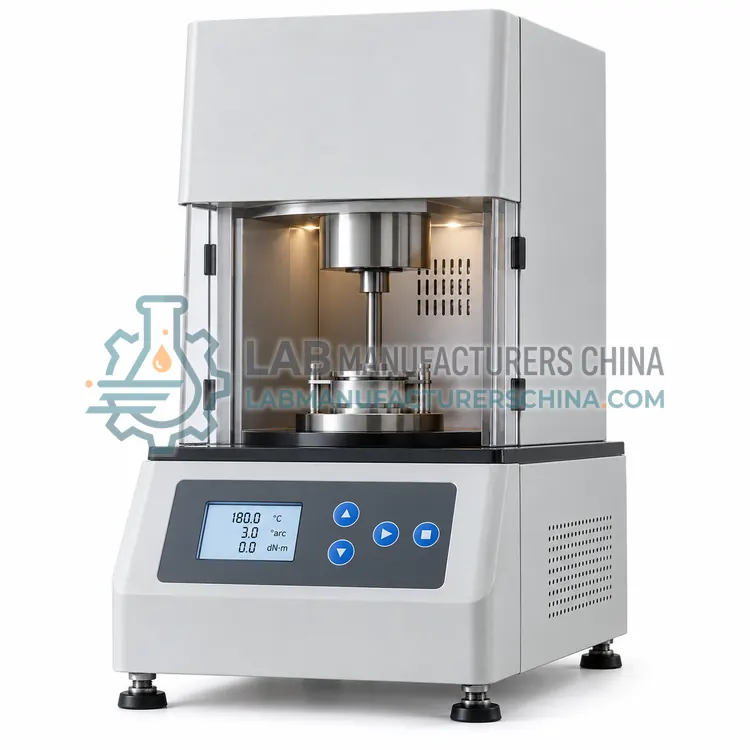
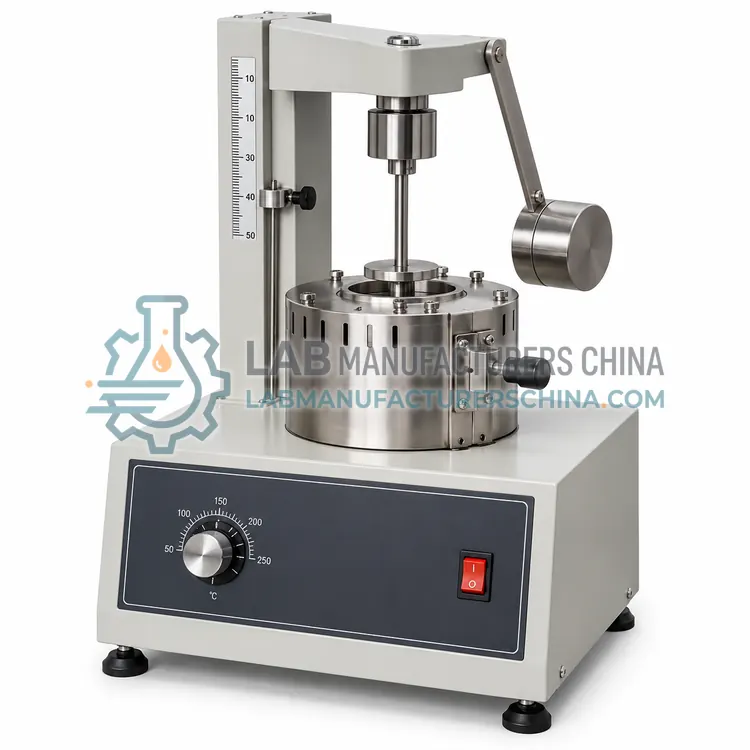
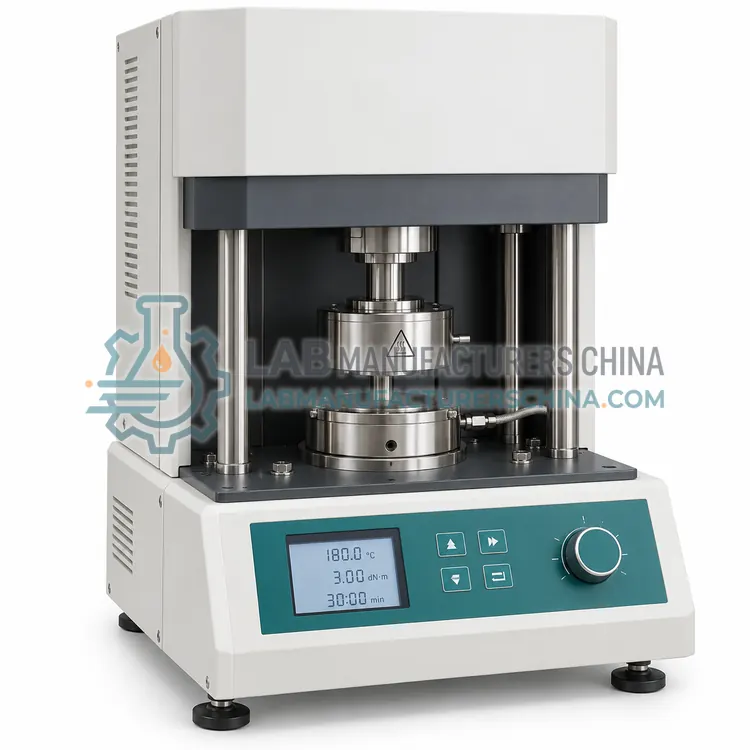
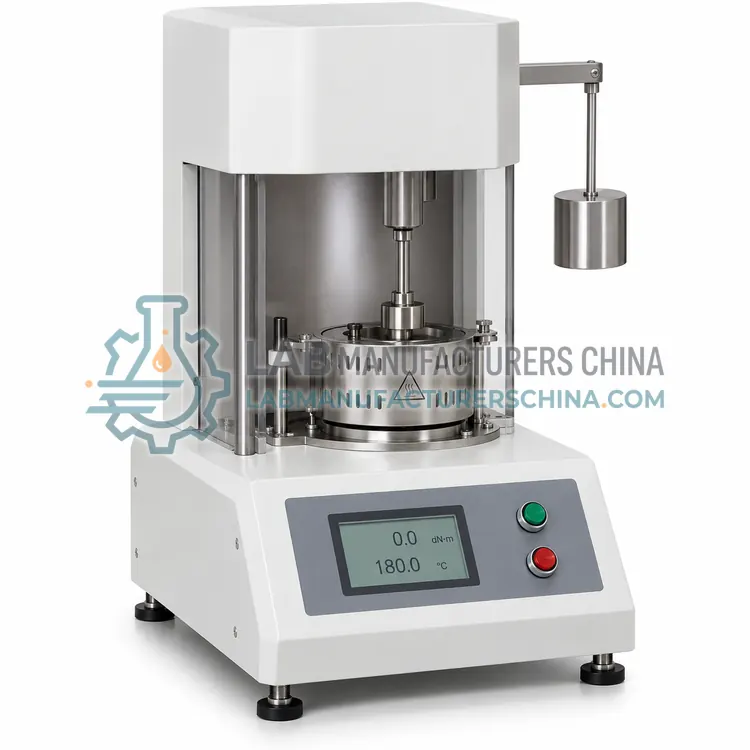
An unvulcanised rubber compound is viscoelastic and its properties change as crosslinking proceeds, so a rheometer records torque or complex modulus against time at a fixed temperature. Curemeters hold the compound in a sealed cavity at vulcanisation temperature and oscillate a rotor or the cavity itself through a small arc, producing a cure curve from which scorch time, optimum cure time and minimum and maximum torque are read. Oscillating disc instruments turn a biconical rotor inside the sample, while rotorless instruments oscillate the lower die and measure the reaction torque on the upper die, giving faster thermal response and lower inertia. Rotational and dynamic mechanical instruments apply small strains over a frequency range to measure viscoelastic moduli, and capillary instruments push the compound through a die to measure process viscosity at extrusion rates.
Which Rheometers variants are available?
- Moving Die Rheometer for Rubber — A moving die rheometer seals a rubber compound in a heated cavity and oscillates the lower die, measuring the torque transmitted to the upper die.
- Oscillating Disc Rheometer for Rubber — An oscillating disc rheometer embeds a biconical rotor in a rubber specimen held in a heated die cavity and rotates it through a small arc, recording torque against time.
- Rotational Rheometer for Rubber Compounds — A rotational rheometer applies controlled shear or oscillation to a rubber compound across a range of strain and frequency, measuring viscoelastic moduli rather than cure torque.
- Capillary Rheometer for Rubber Processing — A capillary rheometer forces a rubber compound through a heated die at controlled piston speed and measures the pressure required, giving process viscosity and die swell.
- Dynamic Mechanical Analyzer for Rubber — A dynamic mechanical analyzer applies an oscillating strain to vulcanised rubber and records storage modulus, loss modulus and damping across temperature and frequency.
How do I choose the right variant?
Begin with the standard your product or customer specifies. Rotorless curemeters dominate modern production control because they reach thermal equilibrium quickly and give repeatable scorch and cure times, while oscillating disc instruments remain in use where historical data or older specifications require them. Where the interest is the compound's response to varying strain and frequency, for example in filler networking or processability studies, a rotorless instrument with frequency sweep capability or a dedicated rotational rheometer is chosen. Capillary instruments are used when extrusion viscosity, die swell or the behaviour of a stiff or highly filled compound must be quantified. For vulcanised rubber, dynamic mechanical analysis describes the viscoelastic behaviour that governs damping, heat build-up and fatigue.
Where are Rheometers used?
Rheometers are specified in scorch and cure time determination for production control, compound development and accelerator selection, batch-to-batch consistency of mixed rubber, filler and process oil effect on viscosity, vulcanised rubber damping and heat build-up studies and extrusion behaviour of rubber profiles and hose compounds.
Which standards and certifications apply?
Work with Rheometers is commonly governed by ISO 6502-1, ISO 6502-2, ISO 6502-3, ASTM D2084, ASTM D5289, ASTM D6204, ASTM D5099, ASTM D5992 and IEC 61010-1. Instrument certifications such as CE marking are confirmed per configuration and never assumed.
What are the key considerations before purchase?
Cavity cleanliness is the main source of error: cured residue from a previous test alters the torque reading, so dies should be cleaned after every specimen and inspected at intervals. Verify cavity temperature with a calibrated probe, because cure rate changes steeply with temperature and a one degree offset changes the optimum cure time measurably. Weigh or volume-dose specimens consistently, close the dies fully and record test temperature, arc amplitude and frequency with every curve. Condition compounds at standard temperature before testing, and store them away from heat. Calibration with reference compounds, such as a certified rubber standard, provides a periodic check on the whole measurement chain.