How do Aging Ovens work?
Accelerated ageing raises one or more degradation factors above service conditions so that measurable change occurs within days rather than years. In a hot air oven the dominant factors are temperature and oxygen, and the test specifies temperature, air exchange rate and duration under the standard method; specimens are then conditioned and their tensile strength, elongation or hardness compared with the unaged values. Ozone chambers generate a controlled ozone concentration and apply static or dynamic strain, because ozone cracking occurs only in strained rubber. Xenon arc chambers reproduce the ultraviolet and visible spectrum of daylight with controlled irradiance, temperature and humidity so that weathering effects on appearance and mechanical properties can be assessed. Oxygen pressure tests place specimens in oxygen at elevated pressure and temperature, which accelerates oxidative degradation far beyond what an air oven achieves.
Which Aging Ovens variants are available?
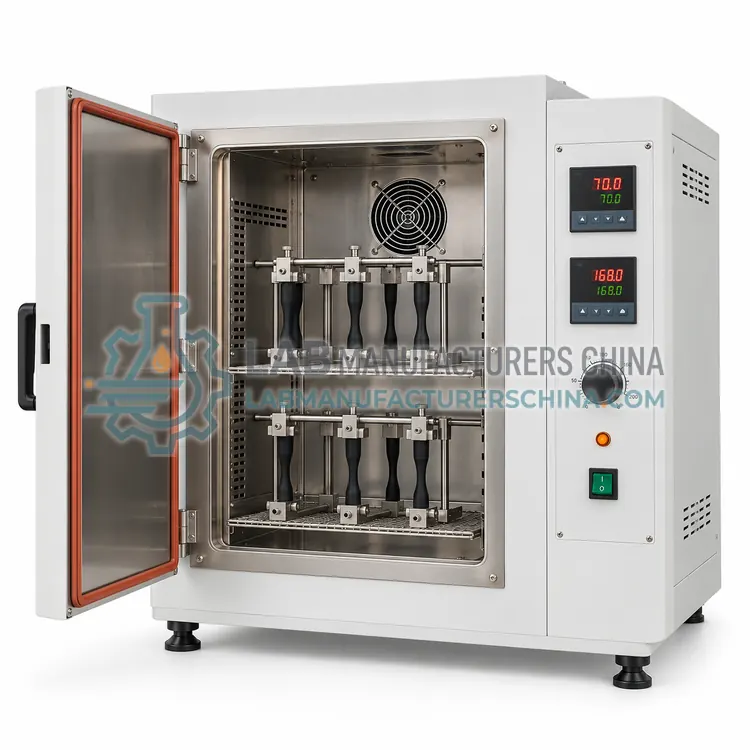
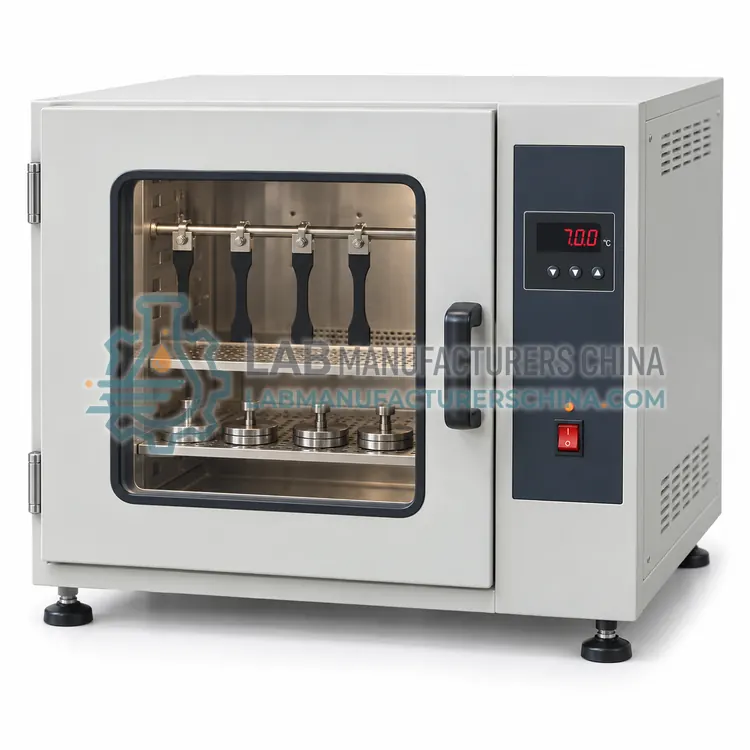
- Hot Air Aging Oven for Rubber — A hot air aging oven exposes rubber specimens to a controlled elevated temperature with natural or moderate air circulation for a defined period.
- Forced-Air Circulation Aging Oven for Rubber — A forced-air circulation aging oven uses a fan to move heated air through the chamber, giving tighter temperature uniformity and defined air velocity across specimens.
- Ozone Aging Test Chamber for Rubber — An ozone aging chamber generates a controlled ozone concentration and holds strained rubber specimens in the flow, producing cracks that reveal resistance to ozone attack.
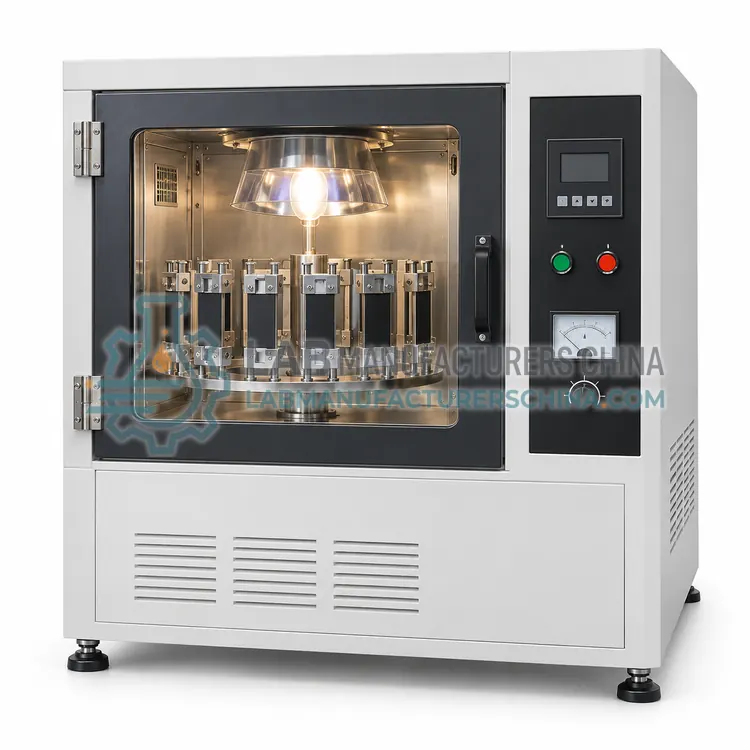
- Xenon Arc Weathering Chamber for Rubber — A xenon arc weathering chamber reproduces the ultraviolet and visible spectrum of daylight with controlled irradiance, temperature and humidity to age rubber products realistically.
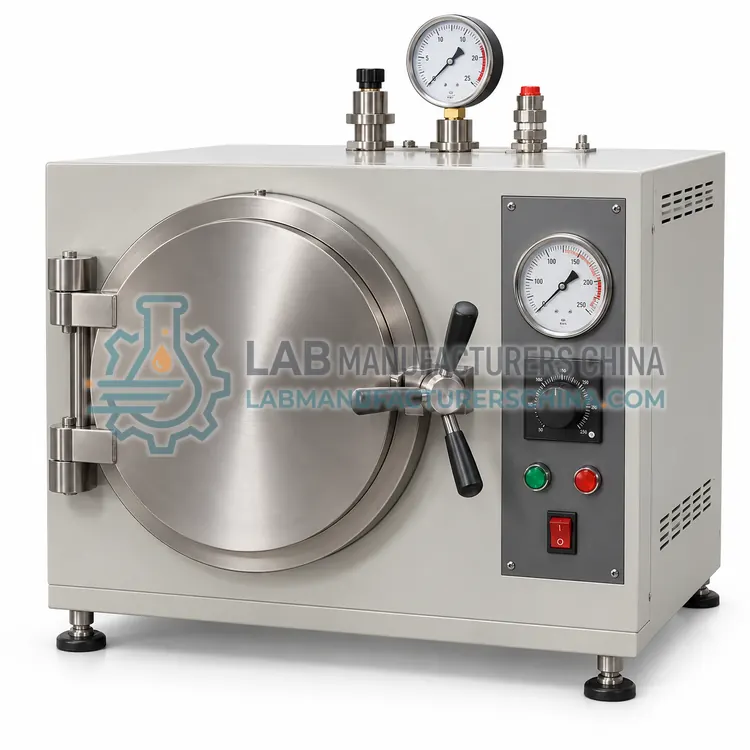
- Oxygen Pressure Aging Tester for Rubber — An oxygen pressure aging tester exposes rubber specimens to oxygen at elevated pressure and temperature in a sealed vessel, accelerating oxidative degradation far beyond air oven conditions.
How do I choose the right variant?
Select the degradation factor that matches the service environment. Heat resistance for engine, hose and belting compounds is tested in air ovens, with forced-air circulation used when temperature uniformity across many specimens matters. Where outdoor exposure involves sunlight, a xenon arc chamber with humidity control is appropriate, and where ozone from electrical equipment or urban air is the concern, a dedicated ozone chamber with strain fixtures is required. Oxygen pressure testing is chosen for rapid screening of antioxidant systems and for specification methods that call for it. Whichever method is used, specify chamber capacity, temperature uniformity, the control ranges for the degrading factor and the specimen holders, and ensure the instrument can reproduce the exact conditions named in the standard.
Where are Aging Ovens used?
Aging Ovens are specified in heat resistance verification of vulcanised rubber, antioxidant and stabiliser system screening, ozone cracking resistance of strained rubber, weathering assessment of outdoor rubber products, hose, seal and belting compound qualification and prediction of service life from accelerated data.
Which standards and certifications apply?
Work with Aging Ovens is commonly governed by ISO 188, ISO 1431-1, ISO 4892-2, ASTM D573, ASTM D572, ASTM D1149, ASTM G155 and IEC 61010-1. Instrument certifications such as CE marking are confirmed per configuration and never assumed.
What are the key considerations before purchase?
Compliance with an aging method depends on the exact conditions, so verify temperature uniformity and airflow with a calibrated recorder, and confirm the air exchange rate of the oven rather than assuming it from the fan setting. Load only the number of specimens the standard allows, since overcrowding reduces airflow and changes results. Record aging time, temperature and atmosphere with each batch, condition specimens after aging and compare them with a control from the same production lot. Ozone and xenon chambers need their sensors and lamps calibrated and replaced on schedule, and oxygen pressure vessels must be inspected and pressure-tested as required by local rules for pressurized equipment.