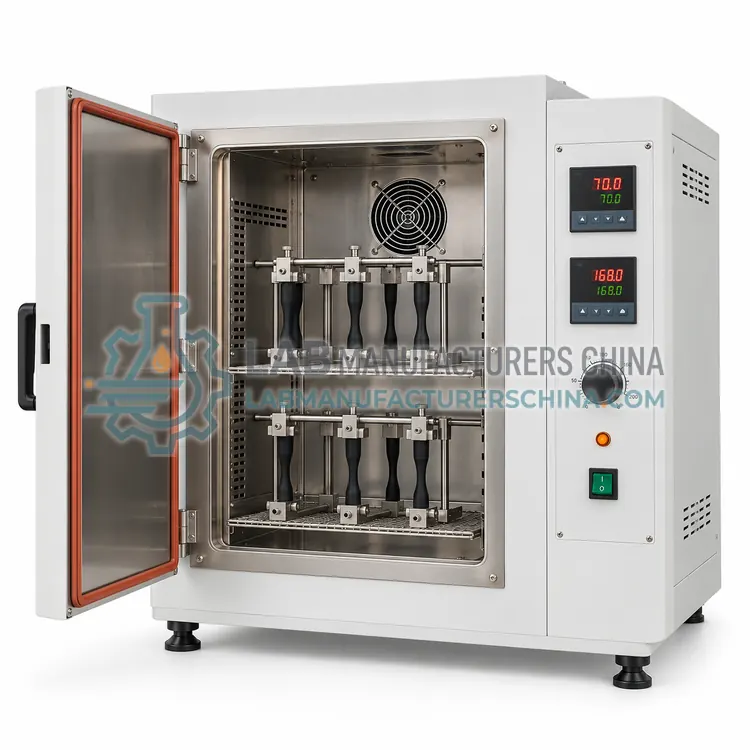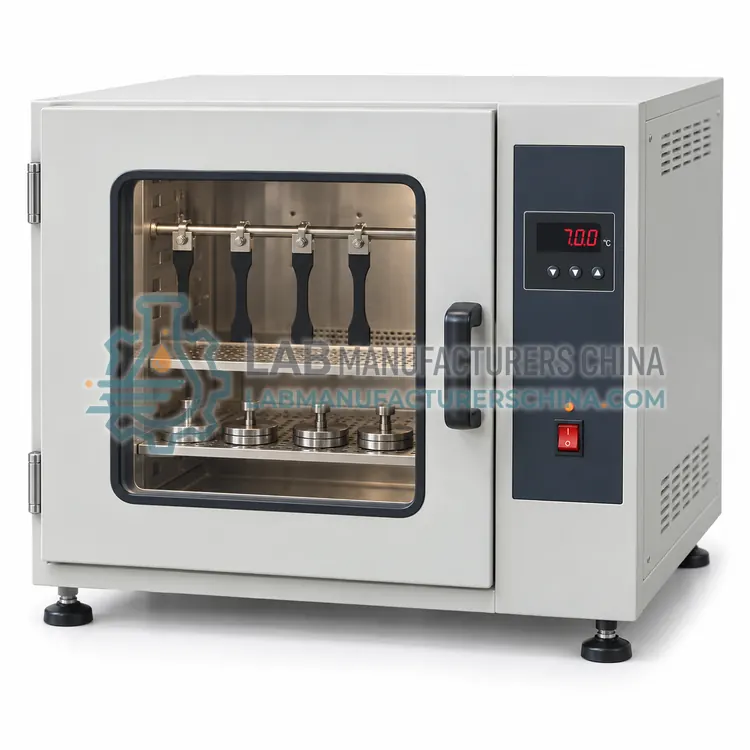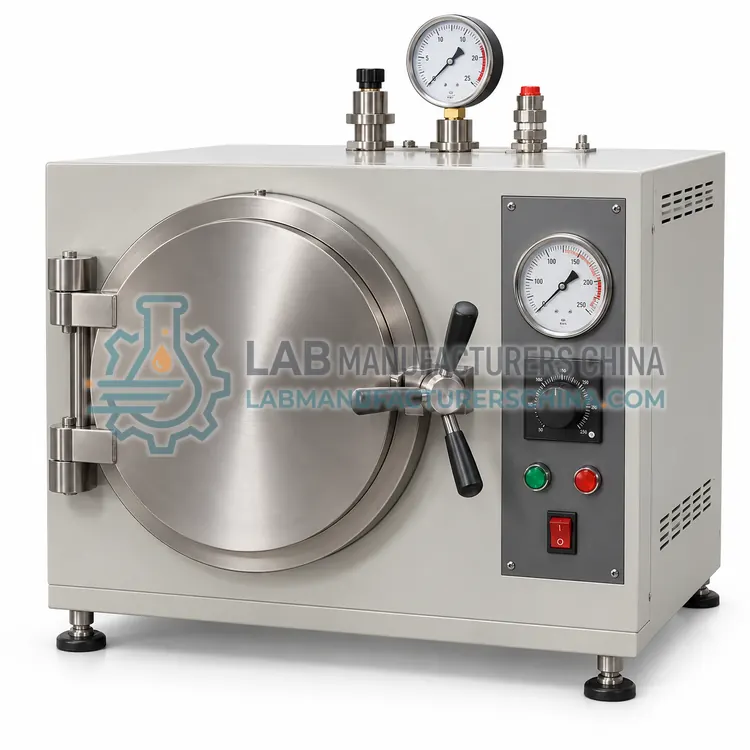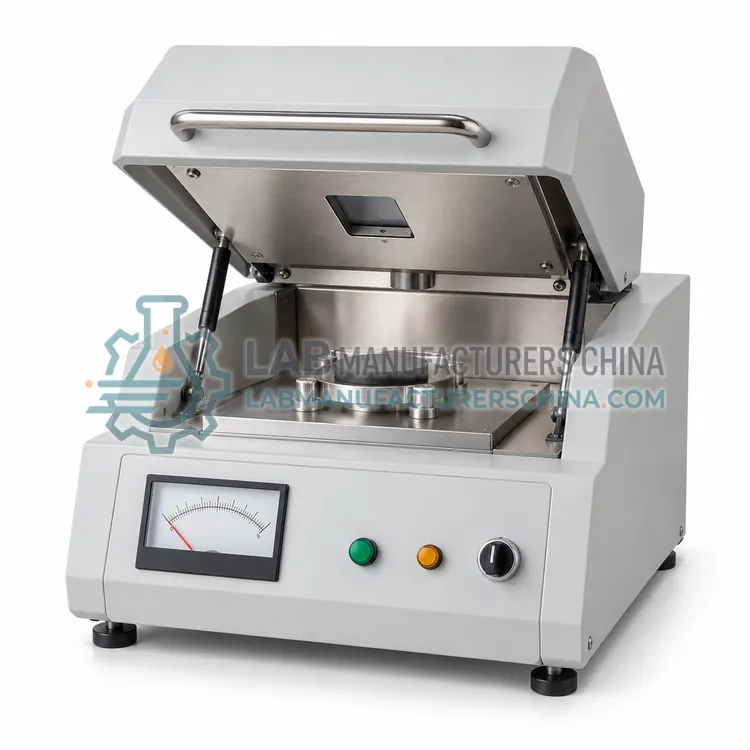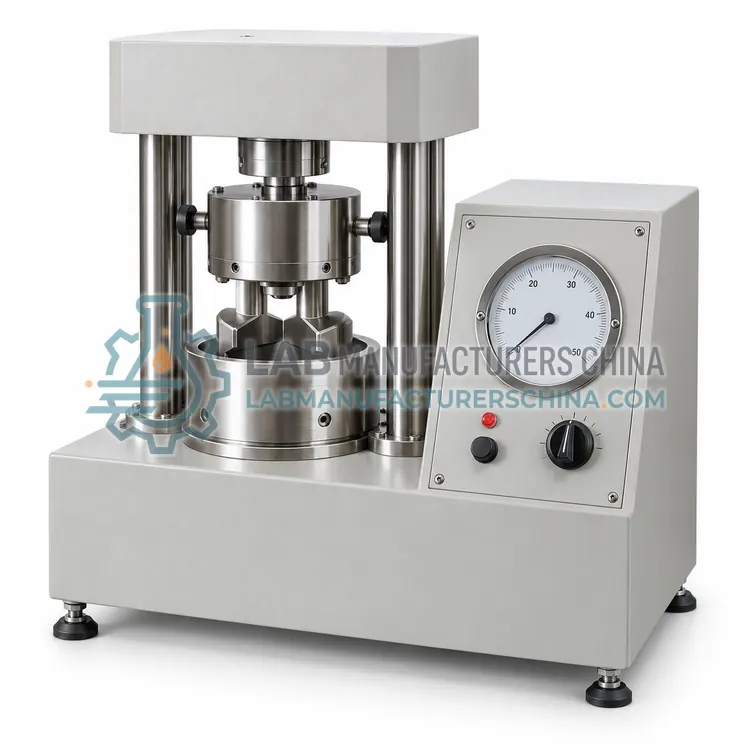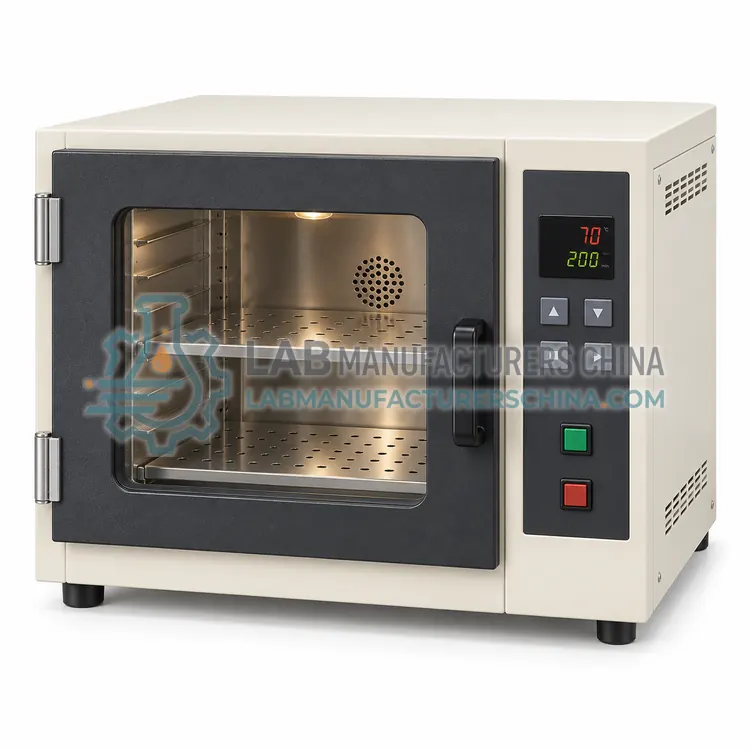
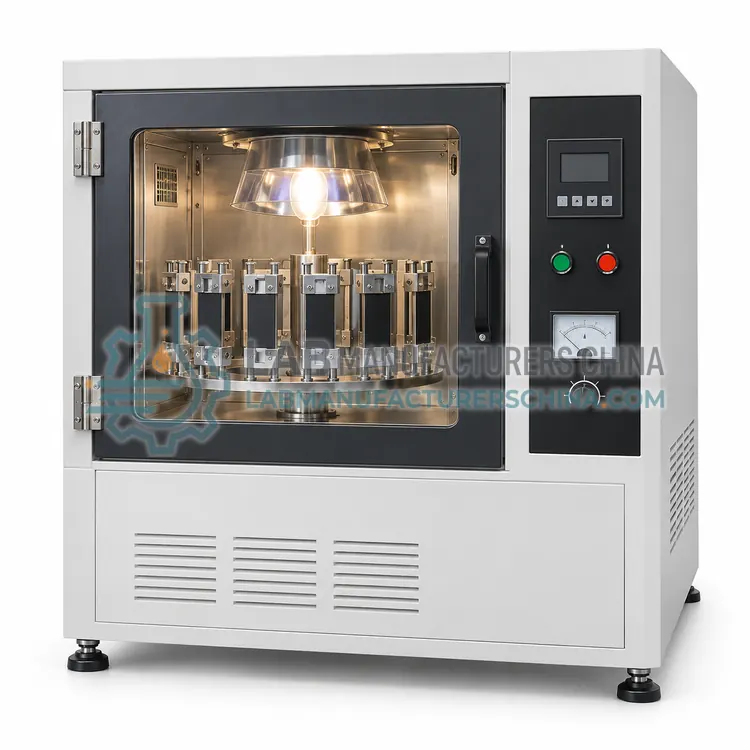
Xenon Arc Weathering Chamber for Rubber
橡胶氙灯老化试验箱
- SKU AGO-0004
- Aging Ovens
- CE (to be confirmed)
- ISO 9001 manufacturing (to be confirmed)
Price on request — FOB / CIF quoted per order
Prices depend on configuration, quantity and destination port.
Key specifications
| Wavelength control point | 340 nm or 420 nm |
|---|---|
| Irradiance range | 0.25–1.50 W/m² at 340 nm |
| Black standard temperature | 40–100 °C |
| Chamber air temperature | 25–70 °C |
| Humidity range | 20–90% RH |
| Sample capacity | Up to 50 specimens of 50 × 80 mm |
Request a quote Download brochure · to be provided
By Lab Manufacturers China Technical TeamLast reviewed Standards: ISO 188, ISO 1431-1, ISO 4892-2
What is the Xenon Arc Weathering Chamber for Rubber?
A xenon arc weathering chamber reproduces the ultraviolet and visible spectrum of daylight with controlled irradiance, temperature and humidity to age rubber products realistically. It is used for outdoor rubber applications where sunlight and rain are the main factors.
What is the Xenon Arc Weathering Chamber for Rubber?
A xenon arc weathering chamber reproduces the ultraviolet and visible spectrum of daylight with controlled irradiance, temperature and humidity to age rubber products realistically. It is used for outdoor rubber applications where sunlight and rain are the main factors.
Overview
A filtered xenon lamp provides a spectrum close to natural daylight, and the instrument controls irradiance at a reference wavelength, usually 340 or 420 nm, together with chamber air temperature, black panel or black standard temperature and relative humidity. Programmes alternate light and dark periods and may include water spray to simulate rain, which reproduces the wet-dry cycling that causes surface crazing in many rubber products. Specimens are mounted on a rotating rack or a flat array so that every position receives a comparable dose, and total radiant exposure is accumulated in joules per square metre so that tests can be compared between duration settings. The method is defined in ISO 4892-2 and ASTM G155, and correlation with outdoor exposure depends on the climate simulated.
How does it work?
Accelerated ageing raises one or more degradation factors above service conditions so that measurable change occurs within days rather than years. In a hot air oven the dominant factors are temperature and oxygen, and the test specifies temperature, air exchange rate and duration under the standard method; specimens are then conditioned and their tensile strength, elongation or hardness compared with the unaged values. Ozone chambers generate a controlled ozone concentration and apply static or dynamic strain, because ozone cracking occurs only in strained rubber. Xenon arc chambers reproduce the ultraviolet and visible spectrum of daylight with controlled irradiance, temperature and humidity so that weathering effects on appearance and mechanical properties can be assessed. Oxygen pressure tests place specimens in oxygen at elevated pressure and temperature, which accelerates oxidative degradation far beyond what an air oven achieves.
What are the key features?
- Filtered xenon lamp with daylight-like spectrum
- Irradiance control at 340 or 420 nm
- Black standard temperature control
- Humidity control and optional water spray
- Rotating rack for uniform exposure
- Accumulated radiant exposure reporting
What are the technical specifications?
A typical xenon arc weathering chamber for rubber configuration offers wavelength control point of 340 nm or 420 nm, irradiance range of 0.25–1.50 W/m² at 340 nm, black standard temperature of 40–100 °C, chamber air temperature of 25–70 °C, humidity range of 20–90% RH and sample capacity of Up to 50 specimens of 50 × 80 mm. Values are indicative of the product class; the exact figures for each configuration are confirmed on the quotation and the calibration documents supplied with the instrument.
Which applications is it used for?
The Xenon Arc Weathering Chamber for Rubber is used in weathering of outdoor rubber seals and profiles, comparison of UV stabiliser systems, roofing and construction rubber durability and coating and surface appearance retention testing. Across the wider Aging Ovens class, laboratories also deploy it for heat resistance verification of vulcanised rubber, antioxidant and stabiliser system screening and ozone cracking resistance of strained rubber.
Which standards and certifications apply?
Relevant standards and methods include ISO 188, ISO 1431-1, ISO 4892-2, ASTM D573, ASTM D572, ASTM D1149, ASTM G155 and IEC 61010-1. Certification candidates for this model are CE and ISO 9001 manufacturing; each is to be confirmed for the specific configuration before shipment, and certificates are supplied only where they have been issued.
Compliance with an aging method depends on the exact conditions, so verify temperature uniformity and airflow with a calibrated recorder, and confirm the air exchange rate of the oven rather than assuming it from the fan setting. Load only the number of specimens the standard allows, since overcrowding reduces airflow and changes results. Record aging time, temperature and atmosphere with each batch, condition specimens after aging and compare them with a control from the same production lot. Ozone and xenon chambers need their sensors and lamps calibrated and replaced on schedule, and oxygen pressure vessels must be inspected and pressure-tested as required by local rules for pressurized equipment.
How do I select the right Xenon Arc Weathering Chamber for Rubber?
Choose a xenon arc chamber when the ageing factors of interest are sunlight, heat and moisture rather than heat alone, and when the method is ISO 4892-2 or ASTM G155. Confirm the irradiance range and control wavelength match the standard you follow, and decide whether water spray is needed, since wet-dry cycling drives many surface failure modes.
How does it compare with other Aging Ovens variants?
Select the degradation factor that matches the service environment. Heat resistance for engine, hose and belting compounds is tested in air ovens, with forced-air circulation used when temperature uniformity across many specimens matters. Where outdoor exposure involves sunlight, a xenon arc chamber with humidity control is appropriate, and where ozone from electrical equipment or urban air is the concern, a dedicated ozone chamber with strain fixtures is required. Oxygen pressure testing is chosen for rapid screening of antioxidant systems and for specification methods that call for it. Whichever method is used, specify chamber capacity, temperature uniformity, the control ranges for the degrading factor and the specimen holders, and ensure the instrument can reproduce the exact conditions named in the standard.
Full specifications
| Wavelength control point | 340 nm or 420 nm |
|---|---|
| Irradiance range | 0.25–1.50 W/m² at 340 nm |
| Black standard temperature | 40–100 °C |
| Chamber air temperature | 25–70 °C |
| Humidity range | 20–90% RH |
| Sample capacity | Up to 50 specimens of 50 × 80 mm |
| Water spray | Optional, programmable cycle |
| Lamp power | 1.5–4.5 kW |
Indicative values for this product class. Final specifications are confirmed on the quotation and in the calibration documents supplied with the instrument.
Applications
- Weathering of outdoor rubber seals and profiles
- Comparison of UV stabiliser systems
- Roofing and construction rubber durability
- Coating and surface appearance retention testing
Key features
- Filtered xenon lamp with daylight-like spectrum
- Irradiance control at 340 or 420 nm
- Black standard temperature control
- Humidity control and optional water spray
- Rotating rack for uniform exposure
- Accumulated radiant exposure reporting
Frequently asked questions about Xenon Arc Weathering Chamber for Rubber
The black standard thermometer represents the temperature reached by the specimen surface under irradiation, which can be much higher than the surrounding air because of absorbed light energy. Degradation rates are driven by that surface temperature, so it is controlled alongside irradiance rather than relying on air temperature alone.
The correlation depends on the spectrum filter, the irradiance, the wet-dry cycle and the climate at the exposure site. Xenon arc tests are best used for ranking materials against each other under identical conditions, while absolute life predictions require comparison with actual exposure data from the intended environment.
Lamp output falls with age and filters change transmission as they solarise, so both are replaced on a schedule based on accumulated hours, typically several thousand hours for the lamp. Irradiance calibration with a reference radiometer is performed at defined intervals and whenever a lamp or filter is changed.
Most standards require the change in tensile strength, elongation at break or hardness after ageing, reported as the retained percentage of the original value or as an absolute change. Specimens from the same production lot must be used for the aged and control values, otherwise the comparison is meaningless.
Degradation products and consumed oxygen accumulate in a sealed or poorly ventilated chamber, which slows further oxidation and changes the effective ageing condition. Methods therefore specify an air exchange rate or airflow, and an oven that cannot sustain it will not reproduce the standard conditions even if temperature is correct.
Specimens are either held at a fixed static elongation, commonly 20%, or cycled between two elongations in a dynamic test. Both the strain level and the orientation of the specimen relative to the ozone flow are specified, because cracking develops perpendicular to the applied stress and is highly strain dependent.
Related models