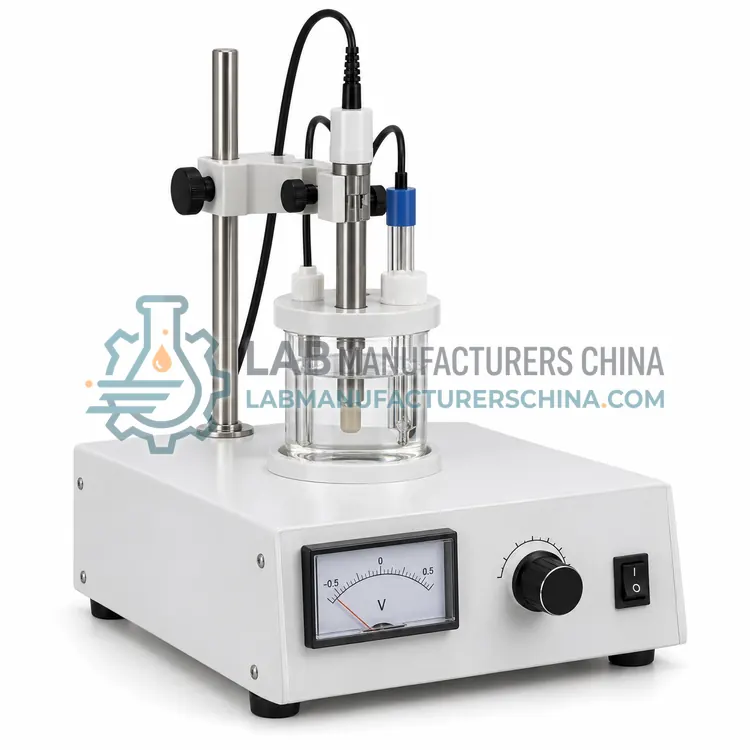
How do Electrochemical Analyzers work?
Electrochemical analysis links an electrical signal to analyte activity or concentration. Potentiometry measures the potential between an indicator electrode, such as a pH glass membrane or ion-selective membrane, and a reference electrode, related to ion activity by the Nernst equation, about 59.16 mV per decade at 25 °C for monovalent ions. Conductometry measures the ability of ions in solution to carry current between electrodes at alternating voltage, with temperature compensation. Amperometric sensors such as Clark cells measure the current from reduction of dissolved oxygen, whereas optical sensors measure luminescence quenching. Voltammetry sweeps potential across a working electrode and records current, with peak position identifying the species and peak height its concentration. Potentiostats control the potential of the working electrode against a reference while measuring current through a counter electrode.
Which Electrochemical Analyzers variants are available?
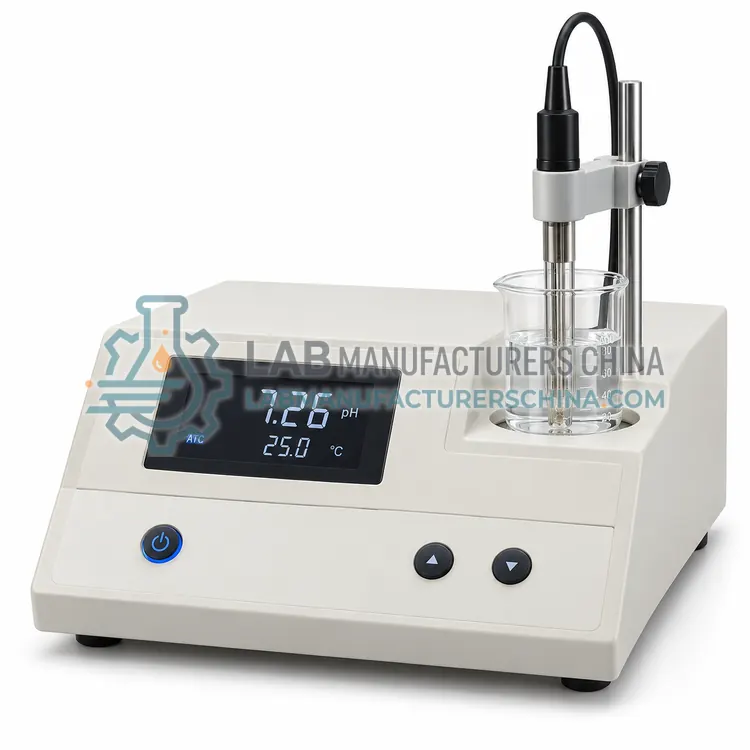
- Benchtop pH and Ion Meter — A benchtop pH and ion meter measures potential from glass or ion-selective electrodes and converts it to pH, mV or ion concentration with temperature compensation.
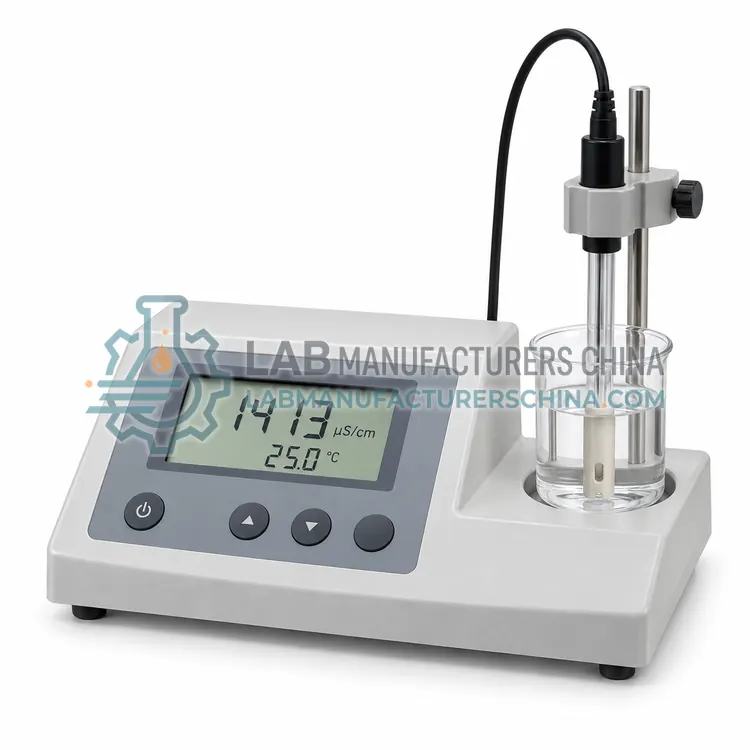
- Benchtop Conductivity, TDS and Resistivity Meter — A benchtop conductivity meter measures the ability of a solution to conduct current between electrodes at alternating voltage, and reports conductivity, resistivity, TDS and salinity.
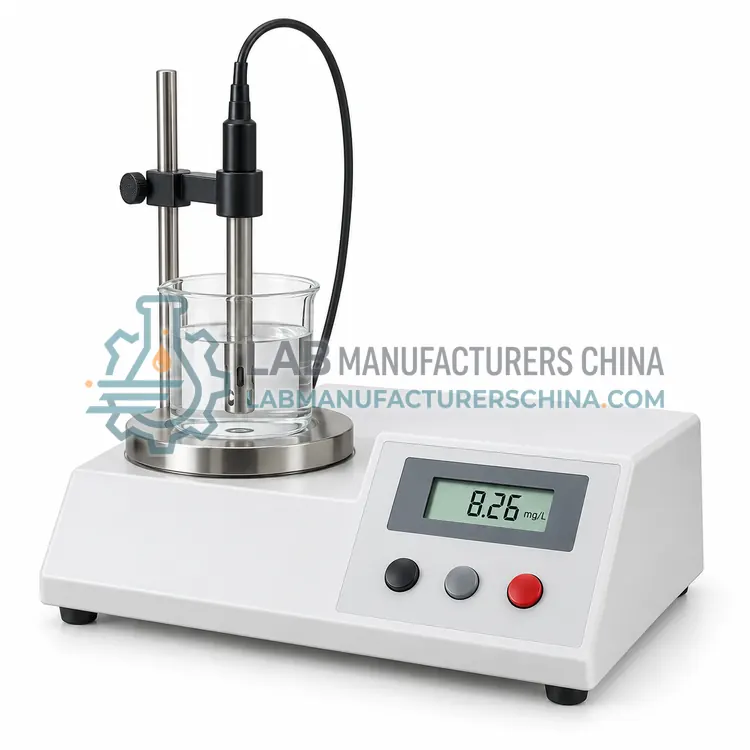
- Optical Dissolved Oxygen Meter — An optical dissolved oxygen meter measures oxygen by luminescence quenching of a sensor cap, reading mg/L or percent saturation without electrolyte or membrane replacement.
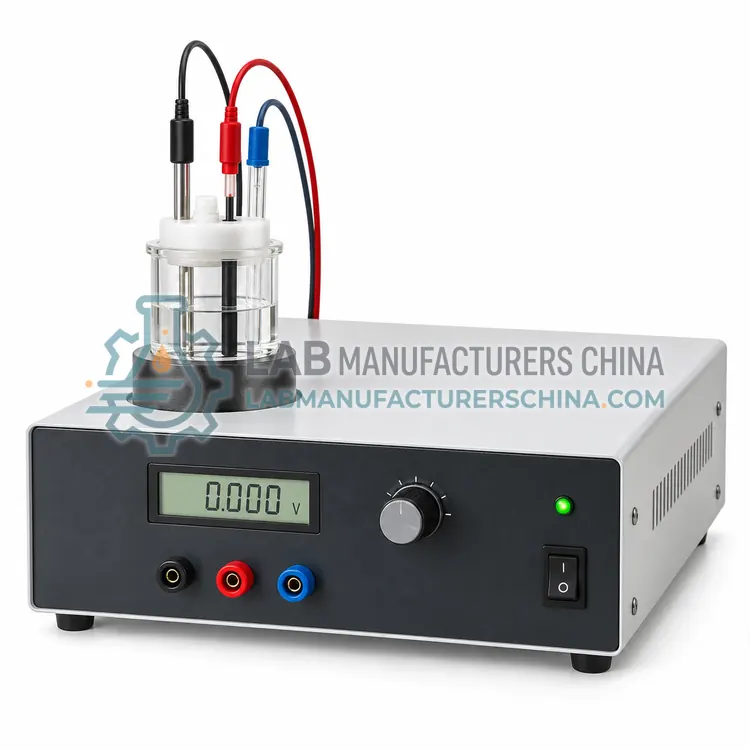
- Electrochemical Workstation (Potentiostat/Galvanostat) — An electrochemical workstation combines a potentiostat, galvanostat and often an impedance analyzer to control potential or current and measure the electrochemical response.
- Anodic Stripping Voltammetry Trace Metal Analyzer — An anodic stripping voltammetry analyzer pre-concentrates metal ions onto an electrode and then strips them off while recording current, giving ppb-level lead, cadmium, copper and zinc.
How do I choose the right variant?
Choose by the measured parameter and accuracy demanded. Routine pH, mV and ion concentration call for a benchtop pH or ion meter with suitable electrodes, and resolution of 0.001 pH is worthwhile only when electrodes and buffers support it. Ultrapure water, boiler water and process streams need a conductivity meter with the right cell constant, with 0.01 for ultrapure water and 1.0 for general use. Dissolved oxygen in water and fermentation suit optical sensors, which avoid electrolyte maintenance. Trace heavy metals at ppb level suit stripping voltammetry. Corrosion, battery and materials research require a potentiostat with adequate current range and impedance capability. Also consider data integrity features, electrode availability and calibration automation.
Where are Electrochemical Analyzers used?
Electrochemical Analyzers are specified in pH and ion control in water and process chemistry, conductivity of ultrapure and boiler water, dissolved oxygen in wastewater and fermentation, trace metal determination by stripping voltammetry and corrosion and battery electrochemistry research.
Which standards and certifications apply?
Work with Electrochemical Analyzers is commonly governed by ASTM D1293, ASTM D1125, ASTM D888, ISO 10523, ISO 7888, USP <645>, ASTM G5 and IEC 61010-1. Instrument certifications such as CE marking are confirmed per configuration and never assumed.
What are the key considerations before purchase?
Electrode condition dominates accuracy. Calibrate pH meters with two or three fresh NIST-traceable buffers bracketing the sample, record slope, which should be 95–105% of theoretical, and replace electrodes with slow response. Store glass electrodes in proper storage solution, never distilled water. Calibrate conductivity cells with certified standards such as 1413 µS/cm at 25 °C and verify temperature compensation. Keep optical dissolved oxygen caps within their service life. Reference electrode fill solutions need topping up and periodic replacement. For potentiostats, use shielded cables, a Faraday cage for nA-level work and correct connection to the working, reference and counter electrodes. Maintain calibration records suited to ISO/IEC 17025.