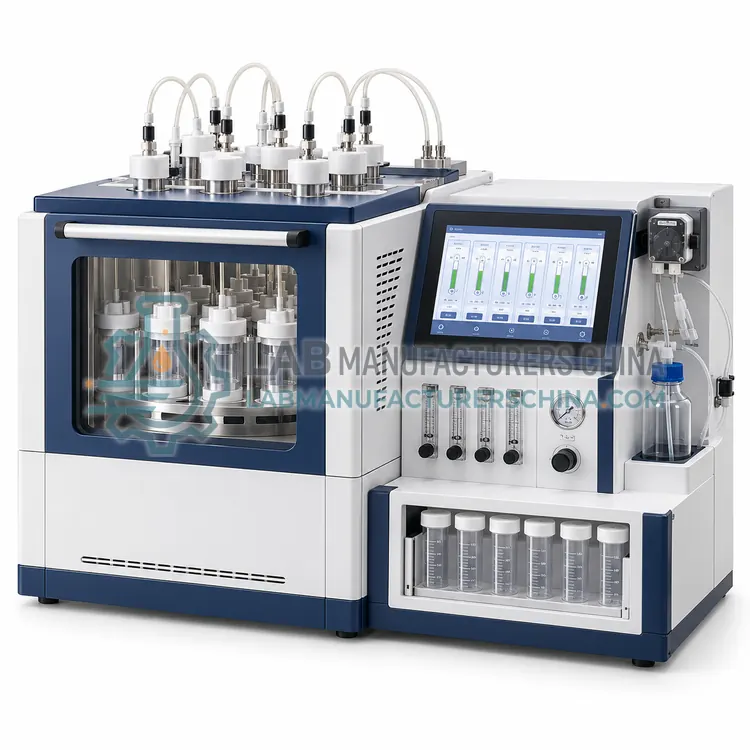
How do Chemical Sample Preparation work?
Preparation reduces a bulk sample to a small, homogeneous portion without changing composition. Size reduction proceeds in stages: jaw or roll crushers break lumps to a few millimeters by compressive force, and pulverizers such as ring-and-puck vibratory mills grind to below 75 µm by impact, shear and attrition in hardened steel, tungsten carbide or agate vessels. Pressing compacts powder with or without binder at 20–40 tons to create flat pellets for XRF. Fusion dissolves oxide samples in molten lithium borate flux at 1000–1100 °C to produce glass beads free of particle effects. Microwave digestion heats samples in acid inside sealed vessels at elevated pressure to convert solids to solutions, using dielectric heating from 2.45 GHz microwaves.
Which Chemical Sample Preparation variants are available?
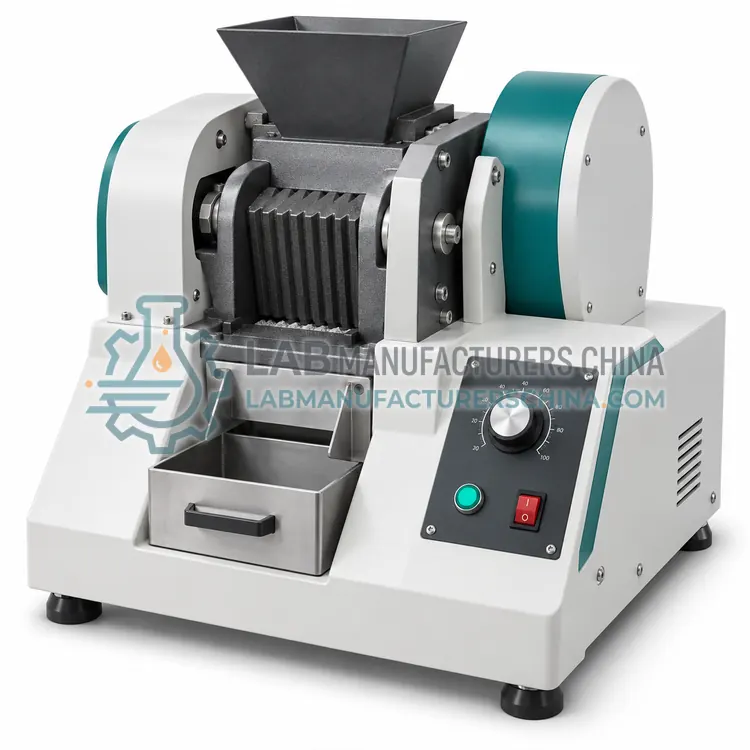
- Laboratory Jaw Crusher — A laboratory jaw crusher reduces hard rock, ore, slag and coke lumps to a few millimeters by compressive force between a fixed and a swinging jaw plate.
- Vibratory Ring-and-Puck Pulverizer — A vibratory ring-and-puck pulverizer grinds a few tens of grams of crushed material to below 75 µm in one to three minutes inside a hardened bowl.
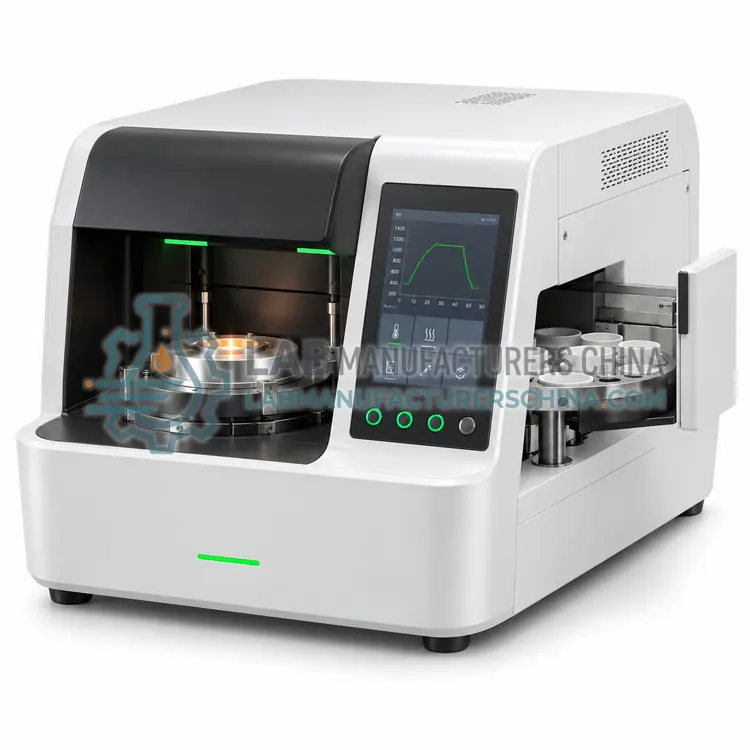
- Automatic Fusion Machine for XRF Beads — An automatic fusion machine melts an oxidized sample with lithium borate flux in a platinum crucible at 1000–1100 °C and casts a homogeneous glass bead.
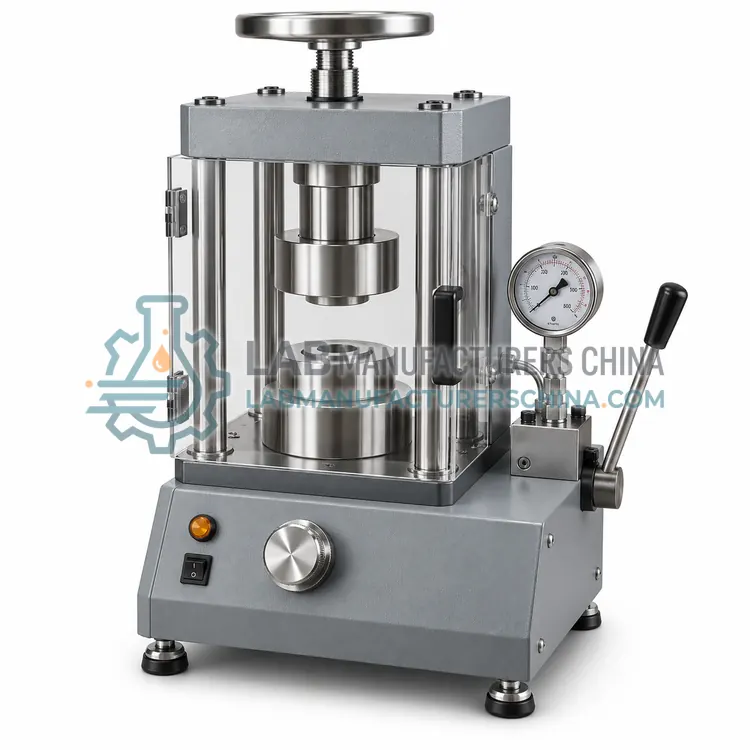
- Hydraulic Pellet Press for XRF — A hydraulic pellet press compresses powder in a die at 10 to 40 tons to form a flat, durable pellet for XRF or FTIR analysis.
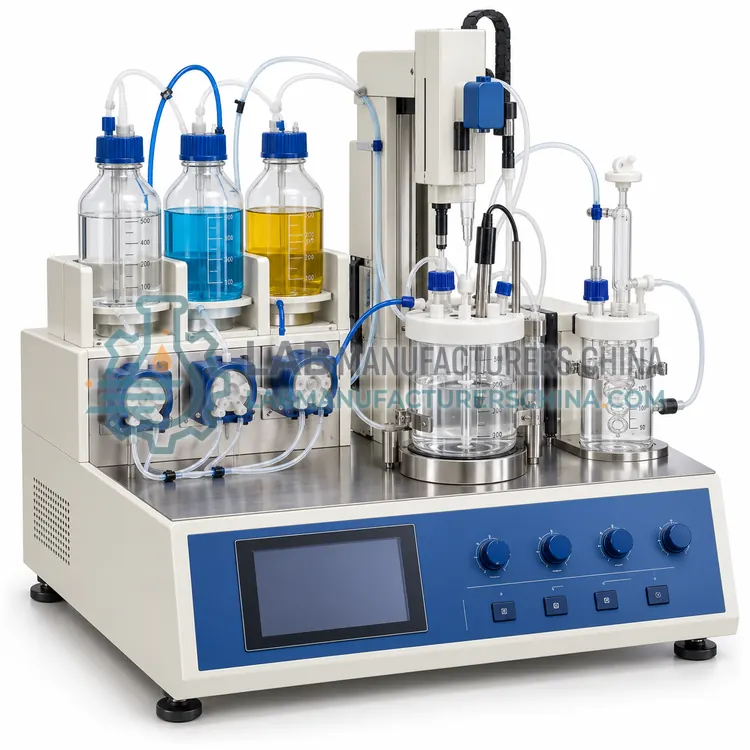
- Microwave Digestion System — A microwave digestion system heats samples with acids in sealed pressurized vessels using 2.45 GHz microwave energy, completing dissolution in 20 to 60 minutes.
How do I choose the right variant?
Match the preparation route to the analytical technique and sample type. XRF of ores and cement needs pulverizing to below 75 µm followed by pressing, or fusion for best accuracy. ICP and AAS need digestion or fusion to solutions, with microwave digestion suited to organic, geological and metallurgical samples in small batches. Hard or abrasive samples require tungsten carbide or zirconia grinding components, while trace-metal work needs agate or zirconia to avoid contamination. Check sample volume per batch, throughput, cross-contamination control, noise and dust extraction. Consider whether automated pressing or fusion with robotic handling is justified by sample count. Confirm that the prepared sample meets the method's particle size, homogeneity and mass requirements.
Where are Chemical Sample Preparation used?
Chemical Sample Preparation are specified in ore and mineral sample preparation for XRF and ICP, coal and coke sample reduction, cement and slag pellet and bead preparation, acid digestion of soils, alloys and chemicals and particle size reduction of catalysts and ceramics.
Which standards and certifications apply?
Work with Chemical Sample Preparation is commonly governed by ISO 18283, ISO 12743, ASTM D2013, ASTM E1842, ISO 14869-2, EPA 3051A, GB/T 474 and IEC 61010-1. Instrument certifications such as CE marking are confirmed per configuration and never assumed.
What are the key considerations before purchase?
Sample preparation often dominates total uncertainty, so control it like any analytical step. Clean crushers, mills and dies between samples with a cleaning sand or compressed air, and run a pre-contamination blank when trace elements matter. Choose grinding vessel material by the elements to be analyzed, since steel adds Fe, Cr and Mn while tungsten carbide adds W and Co. Install dust extraction and hearing protection around crushers and mills. Platinum-gold crucibles for fusion must be weighed, polished and protected from reducing samples containing sulfides or metals. Microwave vessels require torque-controlled closure, venting checks and acid-handling procedures. Record weights, times and temperatures for traceability under ISO/IEC 17025.