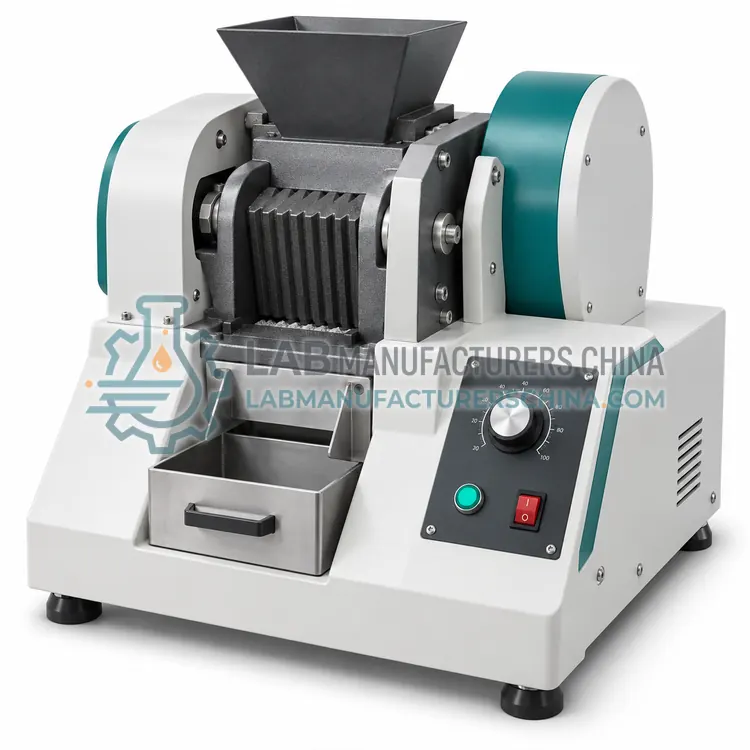
Vibratory Ring-and-Puck Pulverizer
振动环 puck 式粉碎机
- SKU CHE-0002
- Chemical Sample Preparation
- CE (to be confirmed)
- ISO 9001 manufacturing (to be confirmed)
Price on request — FOB / CIF quoted per order
Prices depend on configuration, quantity and destination port.
Key specifications
| Bowl capacity | 50, 100 or 250 mL |
|---|---|
| Feed size | ≤ 10 mm |
| Final fineness | 90% < 75 µm (typical) |
| Grinding time | 30–300 s programmable |
| Vibration speed | 700–1500 rpm |
| Sample amount | 10–100 g |
Request a quote Download brochure · to be provided
By Lab Manufacturers China Technical TeamLast reviewed Standards: ISO 18283, ISO 12743, ASTM D2013
What is the Vibratory Ring-and-Puck Pulverizer?
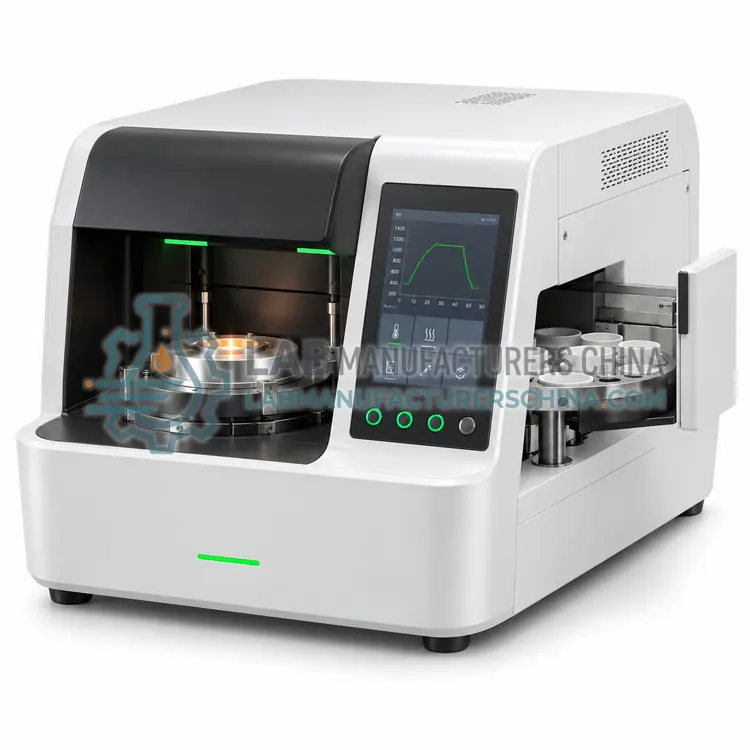
A vibratory ring-and-puck pulverizer grinds a few tens of grams of crushed material to below 75 µm in one to three minutes inside a hardened bowl. It is the standard final-stage mill for XRF, OES and ICP preparation of ores, cement, slag, coke and minerals.
What is the Vibratory Ring-and-Puck Pulverizer?
A vibratory ring-and-puck pulverizer grinds a few tens of grams of crushed material to below 75 µm in one to three minutes inside a hardened bowl. It is the standard final-stage mill for XRF, OES and ICP preparation of ores, cement, slag, coke and minerals.
Overview
The grinding bowl contains a solid puck and one or two concentric rings, and an eccentric drive vibrates the assembly at 700–1500 rpm, so the puck and rings impact and shear the sample against the bowl wall. Typical bowl capacity is 50–250 mL, and feed of 3–10 mm is reduced to 90% passing 75 µm in 60–180 seconds. Bowls are available in hardened chrome steel, tungsten carbide, zirconia and agate, allowing selection by contamination sensitivity. A pneumatic or manual clamp locks the bowl, and an acoustic enclosure reduces noise. Programmable timers give repeatable grinding times. Grinding aids such as wax tablets or ethylene glycol prevent caking of soft materials and support pellet binding. Cleaning between samples is done with quartz sand.
How does it work?
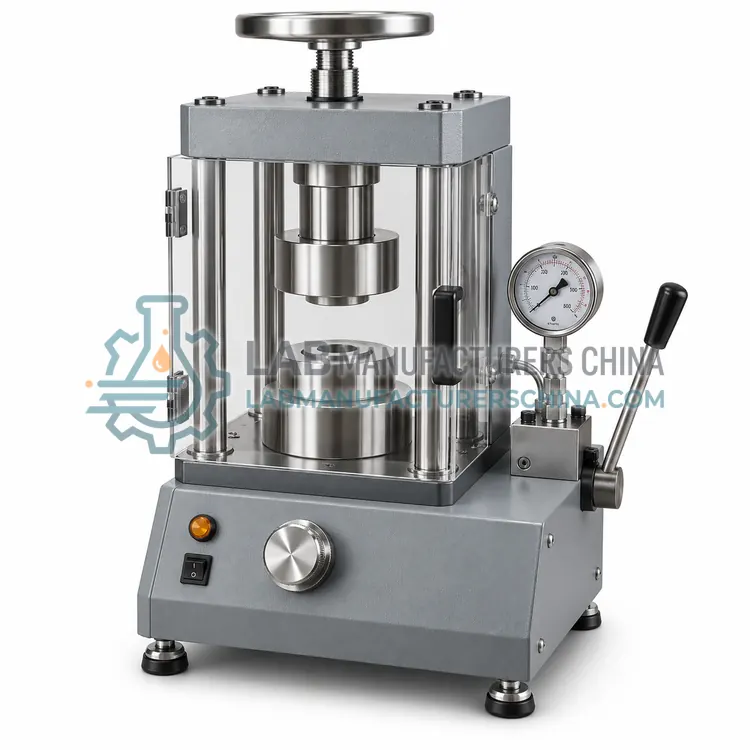
Preparation reduces a bulk sample to a small, homogeneous portion without changing composition. Size reduction proceeds in stages: jaw or roll crushers break lumps to a few millimeters by compressive force, and pulverizers such as ring-and-puck vibratory mills grind to below 75 µm by impact, shear and attrition in hardened steel, tungsten carbide or agate vessels. Pressing compacts powder with or without binder at 20–40 tons to create flat pellets for XRF. Fusion dissolves oxide samples in molten lithium borate flux at 1000–1100 °C to produce glass beads free of particle effects. Microwave digestion heats samples in acid inside sealed vessels at elevated pressure to convert solids to solutions, using dielectric heating from 2.45 GHz microwaves.
What are the key features?
- Eccentric vibratory drive at 700 to 1500 rpm for fast fine grinding
- Bowl materials in chrome steel, tungsten carbide, zirconia and agate
- Programmable grinding time with repeatable energy input per batch
- Pneumatic or manual bowl clamping with safety interlock
- Acoustic enclosure with ventilation to reduce noise and dust
- Bowl capacities from 50 to 250 mL for different sample volumes
What are the technical specifications?
A typical vibratory ring-and-puck pulverizer configuration offers bowl capacity of 50, 100 or 250 mL, feed size of ≤ 10 mm, final fineness of 90% < 75 µm (typical), grinding time of 30–300 s programmable, vibration speed of 700–1500 rpm and sample amount of 10–100 g. Values are indicative of the product class; the exact figures for each configuration are confirmed on the quotation and the calibration documents supplied with the instrument.
Which applications is it used for?
The Vibratory Ring-and-Puck Pulverizer is used in final grinding of ores and minerals for XRF, cement raw meal and clinker preparation, coke, coal and slag pulverizing, steel plant sample rooms and catalyst and ceramic powder milling. Across the wider Chemical Sample Preparation class, laboratories also deploy it for ore and mineral sample preparation for XRF and ICP, coal and coke sample reduction and cement and slag pellet and bead preparation.
Which standards and certifications apply?
Relevant standards and methods include ISO 18283, ISO 12743, ASTM D2013, ASTM E1842, ISO 14869-2, EPA 3051A, GB/T 474 and IEC 61010-1. Certification candidates for this model are CE and ISO 9001 manufacturing; each is to be confirmed for the specific configuration before shipment, and certificates are supplied only where they have been issued.
Sample preparation often dominates total uncertainty, so control it like any analytical step. Clean crushers, mills and dies between samples with a cleaning sand or compressed air, and run a pre-contamination blank when trace elements matter. Choose grinding vessel material by the elements to be analyzed, since steel adds Fe, Cr and Mn while tungsten carbide adds W and Co. Install dust extraction and hearing protection around crushers and mills. Platinum-gold crucibles for fusion must be weighed, polished and protected from reducing samples containing sulfides or metals. Microwave vessels require torque-controlled closure, venting checks and acid-handling procedures. Record weights, times and temperatures for traceability under ISO/IEC 17025.
How do I select the right Vibratory Ring-and-Puck Pulverizer?
Select this variant for routine fine grinding of hard, brittle solids before XRF or fusion, with small batches from 10 to 100 g. For softer, fibrous or heat-sensitive samples use a cutting or cryogenic mill. In an RFQ, specify bowl material by analyte elements, bowl volume, target fineness, throughput and noise enclosure.
How does it compare with other Chemical Sample Preparation variants?
Match the preparation route to the analytical technique and sample type. XRF of ores and cement needs pulverizing to below 75 µm followed by pressing, or fusion for best accuracy. ICP and AAS need digestion or fusion to solutions, with microwave digestion suited to organic, geological and metallurgical samples in small batches. Hard or abrasive samples require tungsten carbide or zirconia grinding components, while trace-metal work needs agate or zirconia to avoid contamination. Check sample volume per batch, throughput, cross-contamination control, noise and dust extraction. Consider whether automated pressing or fusion with robotic handling is justified by sample count. Confirm that the prepared sample meets the method's particle size, homogeneity and mass requirements.
Full specifications
| Bowl capacity | 50, 100 or 250 mL |
|---|---|
| Feed size | ≤ 10 mm |
| Final fineness | 90% < 75 µm (typical) |
| Grinding time | 30–300 s programmable |
| Vibration speed | 700–1500 rpm |
| Sample amount | 10–100 g |
| Bowl material options | Chrome steel, WC, zirconia, agate |
| Motor power | 0.75–2.2 kW |
| Noise level (with enclosure) | ≤ 75 dB(A) |
| Power supply | 220 or 380 V, 50 Hz |
Indicative values for this product class. Final specifications are confirmed on the quotation and in the calibration documents supplied with the instrument.
Applications
- Final grinding of ores and minerals for XRF
- Cement raw meal and clinker preparation
- Coke, coal and slag pulverizing
- Steel plant sample rooms
- Catalyst and ceramic powder milling
Key features
- Eccentric vibratory drive at 700 to 1500 rpm for fast fine grinding
- Bowl materials in chrome steel, tungsten carbide, zirconia and agate
- Programmable grinding time with repeatable energy input per batch
- Pneumatic or manual bowl clamping with safety interlock
- Acoustic enclosure with ventilation to reduce noise and dust
- Bowl capacities from 50 to 250 mL for different sample volumes
Frequently asked questions about Vibratory Ring-and-Puck Pulverizer
Most ores, slags and cement samples reach 90% passing 75 µm in one to three minutes. Harder or tougher materials such as chrome ore may need longer times or a grinding aid. Validate time with sieve analysis.
Agate and zirconia add only trace silicon, aluminum or zirconium, so they suit trace-element work, but they are fragile and limited to soft-to-medium hardness. Chrome steel is tough but adds Fe, Cr and Mn.
Grinding aids such as wax binder tablets or glycols reduce agglomeration and cake formation on the bowl wall, improve powder flow and can act as pressing binder for XRF pellets. The added mass should be recorded and kept constant.
Pressed powder pellets are commonly prepared from material ground to below 75 µm, and finer if mineralogical effects are significant. Fusion removes particle-size dependence, but samples still need grinding to about 100 µm or finer for complete dissolution in the flux.
Fusion beads give better accuracy for major oxides because they eliminate particle size and mineralogical effects, at the cost of dilution and reduced trace sensitivity. Pressed pellets are faster and cheaper, and better for trace elements.
Clean equipment between samples with pre-grinding a small portion of the next sample or cleaning sand, brush and compressed air. Use dedicated vessels for high- and low-concentration samples, and check cleanliness by running a blank.
Related models