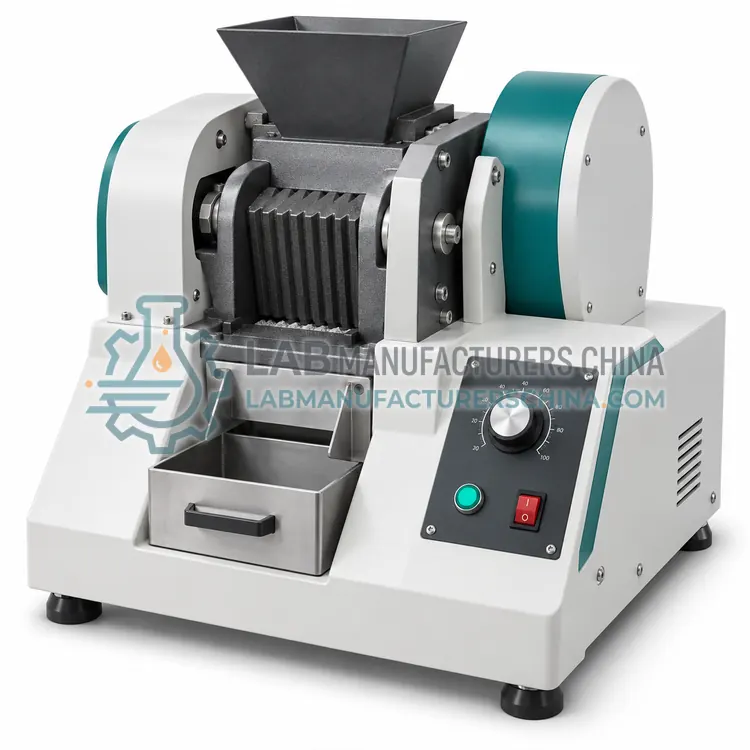
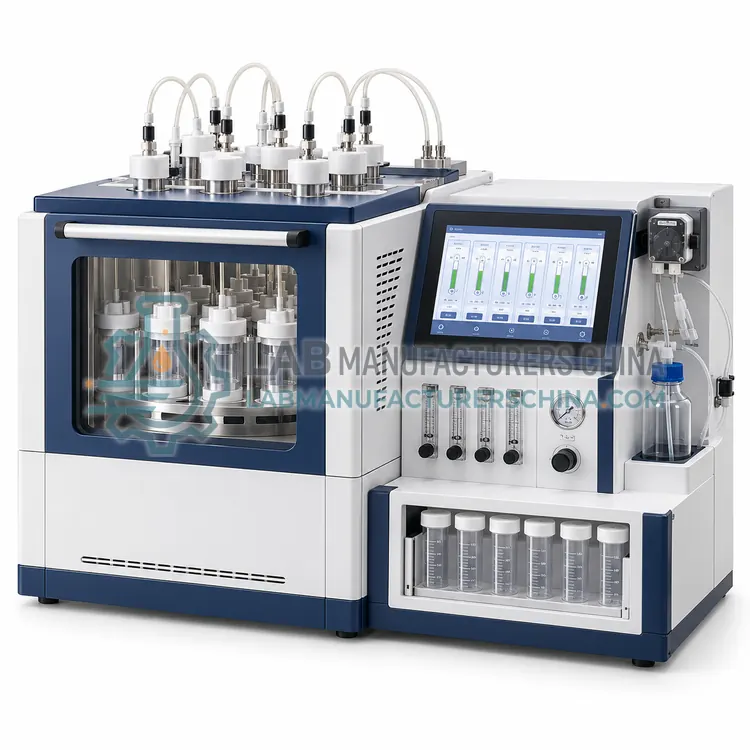
Microwave Digestion System
微波消解系统
- SKU CHE-0005
- Chemical Sample Preparation
- CE (to be confirmed)
- ISO 9001 manufacturing (to be confirmed)
- RoHS (to be confirmed)
Price on request — FOB / CIF quoted per order
Prices depend on configuration, quantity and destination port.
Key specifications
| Microwave frequency | 2.45 GHz |
|---|---|
| Maximum microwave power | 1200–1800 W |
| Vessel capacity | 50–100 mL per vessel |
| Number of vessels | 8–40 (rotor dependent) |
| Maximum temperature | 260 °C |
| Maximum pressure | 40–100 bar (up to 199 bar SRC) |
Request a quote Download brochure · to be provided
By Lab Manufacturers China Technical TeamLast reviewed Standards: ISO 18283, ISO 12743, ASTM D2013
What is the Microwave Digestion System?
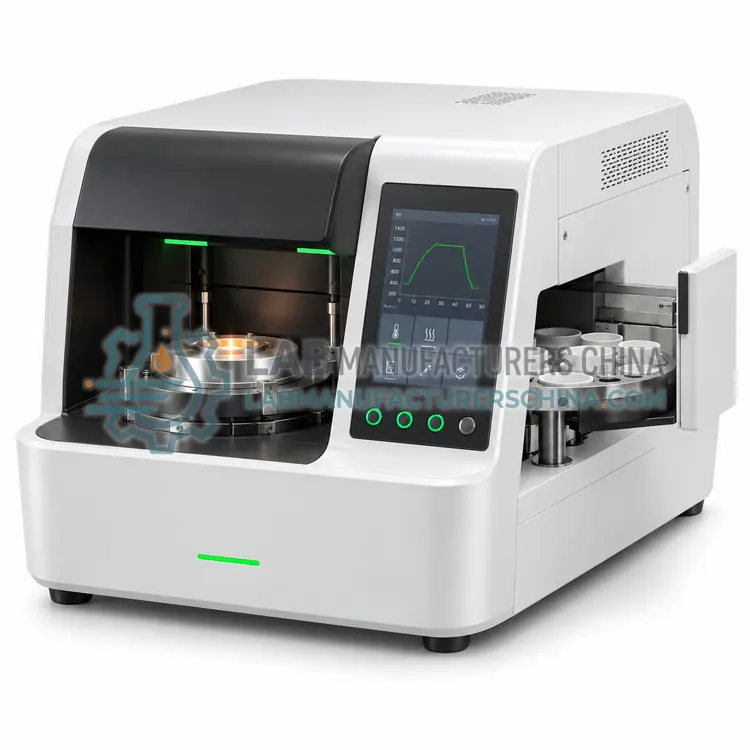
A microwave digestion system heats samples with acids in sealed pressurized vessels using 2.45 GHz microwave energy, completing dissolution in 20 to 60 minutes. It prepares soils, alloys, ores, polymers, chemicals and foods for ICP-OES, ICP-MS and AAS analysis.
What is the Microwave Digestion System?
A microwave digestion system heats samples with acids in sealed pressurized vessels using 2.45 GHz microwave energy, completing dissolution in 20 to 60 minutes. It prepares soils, alloys, ores, polymers, chemicals and foods for ICP-OES, ICP-MS and AAS analysis.
Overview
Microwaves heat the acid mixture directly by dipole rotation and ionic conduction, reaching 200–260 °C at pressures up to 40–100 bar in PTFE-TFM or quartz vessels within a steel or ceramic jacket. Fiber-optic or infrared sensors monitor temperature in a reference vessel, and pressure sensors control power to follow a programmed ramp. Rotors hold 8 to 40 vessels, with single-reaction-chamber designs handling mixed sample types at up to 199 bar. Typical digestions use nitric acid with hydrogen peroxide, and hydrofluoric acid for silicates, with hydrochloric acid for metals. Methods follow EPA 3051A and 3052 for soils and sludges. Closed vessels prevent loss of volatile elements such as Hg, As and Se and reduce contamination and blank levels compared with open digestion.
How does it work?
Preparation reduces a bulk sample to a small, homogeneous portion without changing composition. Size reduction proceeds in stages: jaw or roll crushers break lumps to a few millimeters by compressive force, and pulverizers such as ring-and-puck vibratory mills grind to below 75 µm by impact, shear and attrition in hardened steel, tungsten carbide or agate vessels. Pressing compacts powder with or without binder at 20–40 tons to create flat pellets for XRF. Fusion dissolves oxide samples in molten lithium borate flux at 1000–1100 °C to produce glass beads free of particle effects. Microwave digestion heats samples in acid inside sealed vessels at elevated pressure to convert solids to solutions, using dielectric heating from 2.45 GHz microwaves.
What are the key features?
- Temperature control by fiber-optic or infrared sensor with pressure monitoring
- Rotor options for 8 to 40 vessels or single reaction chamber designs
- PTFE-TFM and quartz vessels rated to 200–260 °C and 40–100 bar
- Programmable ramp, hold and cooling with stored EPA and ISO methods
- Pressure-release and overpressure safety with automatic vessel venting
- Touchscreen with method library and run records
What are the technical specifications?
A typical microwave digestion system configuration offers microwave frequency of 2.45 GHz, maximum microwave power of 1200–1800 W, vessel capacity of 50–100 mL per vessel, number of vessels of 8–40 (rotor dependent), maximum temperature of 260 °C and maximum pressure of 40–100 bar (up to 199 bar SRC). Values are indicative of the product class; the exact figures for each configuration are confirmed on the quotation and the calibration documents supplied with the instrument.
Which applications is it used for?
The Microwave Digestion System is used in digestion of soils and sediments per EPA 3051A, alloy and metal dissolution for ICP-OES, ore and geological sample digestion with HF, polymer and plastics digestion for RoHS testing and food and pharmaceutical elemental analysis sample prep. Across the wider Chemical Sample Preparation class, laboratories also deploy it for ore and mineral sample preparation for XRF and ICP, coal and coke sample reduction and cement and slag pellet and bead preparation.
Which standards and certifications apply?
Relevant standards and methods include ISO 18283, ISO 12743, ASTM D2013, ASTM E1842, ISO 14869-2, EPA 3051A, GB/T 474 and IEC 61010-1. Certification candidates for this model are CE, ISO 9001 manufacturing and RoHS; each is to be confirmed for the specific configuration before shipment, and certificates are supplied only where they have been issued.
Sample preparation often dominates total uncertainty, so control it like any analytical step. Clean crushers, mills and dies between samples with a cleaning sand or compressed air, and run a pre-contamination blank when trace elements matter. Choose grinding vessel material by the elements to be analyzed, since steel adds Fe, Cr and Mn while tungsten carbide adds W and Co. Install dust extraction and hearing protection around crushers and mills. Platinum-gold crucibles for fusion must be weighed, polished and protected from reducing samples containing sulfides or metals. Microwave vessels require torque-controlled closure, venting checks and acid-handling procedures. Record weights, times and temperatures for traceability under ISO/IEC 17025.
How do I select the right Microwave Digestion System?
Select this variant when samples must be converted to solutions for ICP or AAS with low blanks and no volatile loss. For XRF, fusion or pressing is faster. In an RFQ, specify vessel count and volume, pressure and temperature ratings, sample types including organics, HF compatibility and methods such as EPA 3051A or ISO 14869-1.
How does it compare with other Chemical Sample Preparation variants?
Match the preparation route to the analytical technique and sample type. XRF of ores and cement needs pulverizing to below 75 µm followed by pressing, or fusion for best accuracy. ICP and AAS need digestion or fusion to solutions, with microwave digestion suited to organic, geological and metallurgical samples in small batches. Hard or abrasive samples require tungsten carbide or zirconia grinding components, while trace-metal work needs agate or zirconia to avoid contamination. Check sample volume per batch, throughput, cross-contamination control, noise and dust extraction. Consider whether automated pressing or fusion with robotic handling is justified by sample count. Confirm that the prepared sample meets the method's particle size, homogeneity and mass requirements.
Full specifications
| Microwave frequency | 2.45 GHz |
|---|---|
| Maximum microwave power | 1200–1800 W |
| Vessel capacity | 50–100 mL per vessel |
| Number of vessels | 8–40 (rotor dependent) |
| Maximum temperature | 260 °C |
| Maximum pressure | 40–100 bar (up to 199 bar SRC) |
| Temperature sensor | Fiber-optic or infrared, ±1 °C |
| Sample mass | 0.1–1.0 g (up to 5 g organic, vessel dependent) |
| Digestion time | 20–60 min including cooling |
| Vessel material | PTFE-TFM or quartz liner |
Indicative values for this product class. Final specifications are confirmed on the quotation and in the calibration documents supplied with the instrument.
Applications
- Digestion of soils and sediments per EPA 3051A
- Alloy and metal dissolution for ICP-OES
- Ore and geological sample digestion with HF
- Polymer and plastics digestion for RoHS testing
- Food and pharmaceutical elemental analysis sample prep
Key features
- Temperature control by fiber-optic or infrared sensor with pressure monitoring
- Rotor options for 8 to 40 vessels or single reaction chamber designs
- PTFE-TFM and quartz vessels rated to 200–260 °C and 40–100 bar
- Programmable ramp, hold and cooling with stored EPA and ISO methods
- Pressure-release and overpressure safety with automatic vessel venting
- Touchscreen with method library and run records
Frequently asked questions about Microwave Digestion System
Direct measurement in every vessel is impractical with sealed rotors, so a reference vessel with fiber-optic or infrared sensor controls the power. Samples of similar matrix and acid volume should fill all other vessels to ensure consistent heating.
Yes, in PTFE-TFM vessels, with appropriate safety training, but not in quartz liners, which HF attacks. Boric acid is commonly added afterwards to complex excess fluoride before analysis with glass ICP introduction systems.
Organic samples generate large gas volumes, so sample mass is limited, typically 0.25–0.5 g in standard vessels, using a stepped temperature program to control reaction. High-pressure single-chamber systems or predigestion allow larger masses.
Pressed powder pellets are commonly prepared from material ground to below 75 µm, and finer if mineralogical effects are significant. Fusion removes particle-size dependence, but samples still need grinding to about 100 µm or finer for complete dissolution in the flux.
Fusion beads give better accuracy for major oxides because they eliminate particle size and mineralogical effects, at the cost of dilution and reduced trace sensitivity. Pressed pellets are faster and cheaper, and better for trace elements.
Clean equipment between samples with pre-grinding a small portion of the next sample or cleaning sand, brush and compressed air. Use dedicated vessels for high- and low-concentration samples, and check cleanliness by running a blank.
Related models