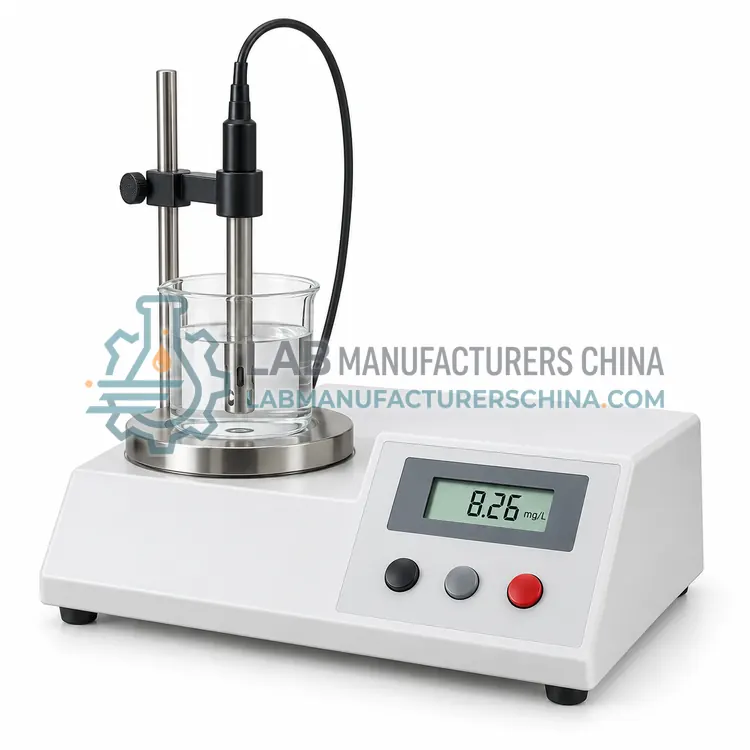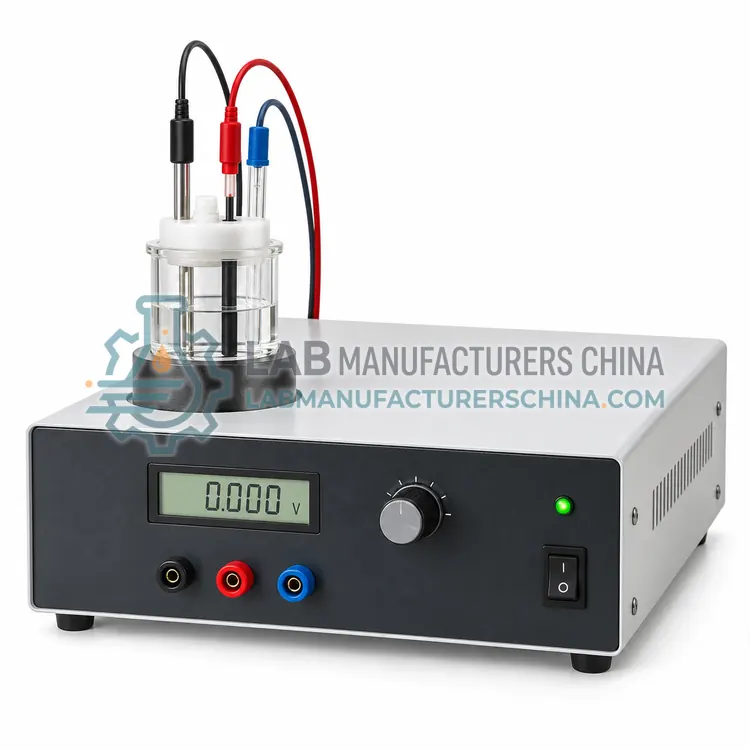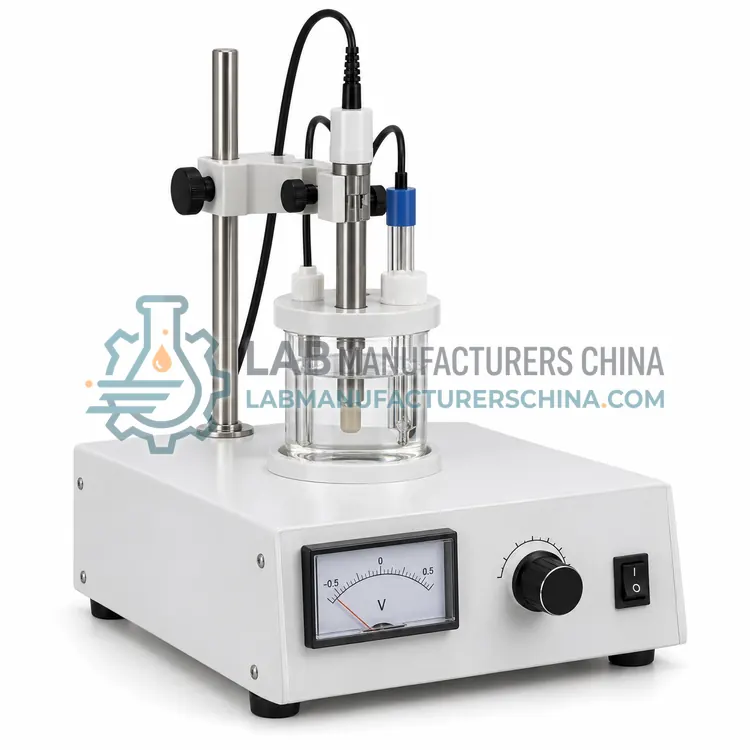
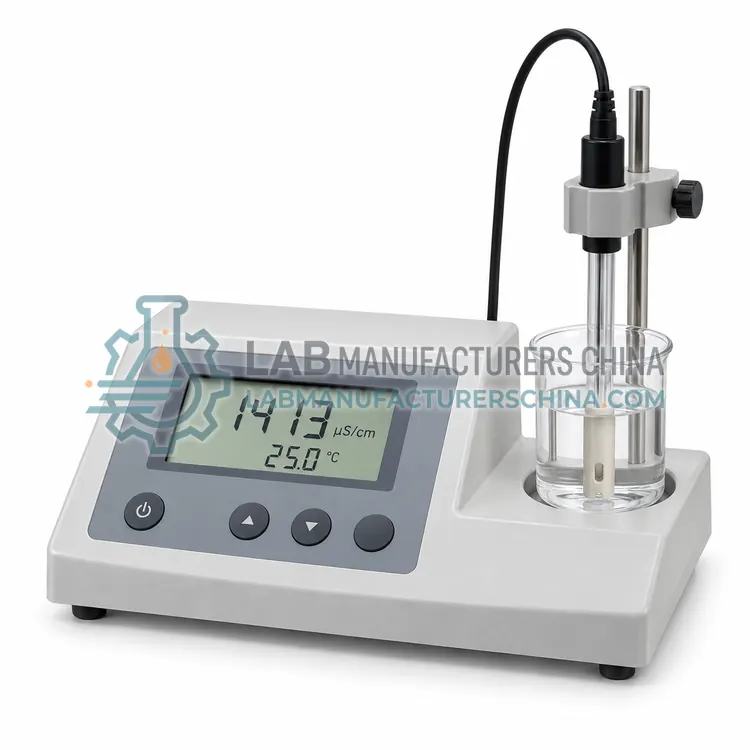
Benchtop Conductivity, TDS and Resistivity Meter
台式电导率、TDS 和电阻率仪
- SKU ELC-0002
- Electrochemical Analyzers
- CE (to be confirmed)
- ISO 9001 manufacturing (to be confirmed)
- RoHS (to be confirmed)
Price on request — FOB / CIF quoted per order
Prices depend on configuration, quantity and destination port.
Key specifications
| Conductivity range | 0.001 µS/cm to 1000 mS/cm |
|---|---|
| Accuracy | ±0.5% of reading |
| Resistivity range | 0.001 Ω·cm to 18.2 MΩ·cm |
| TDS range | 0–500 g/L |
| Salinity range | 0–80 (practical salinity scale) |
| Cell constants | 0.01, 0.1, 1.0, 10 cm^-1 |
Request a quote Download brochure · to be provided
By Lab Manufacturers China Technical TeamLast reviewed Standards: ASTM D1293, ASTM D1125, ASTM D888
What is the Benchtop Conductivity, TDS and Resistivity Meter?
A benchtop conductivity meter measures the ability of a solution to conduct current between electrodes at alternating voltage, and reports conductivity, resistivity, TDS and salinity. It is used for water purity, boiler and cooling water, process solutions and cleaning validation.
What is the Benchtop Conductivity, TDS and Resistivity Meter?
A benchtop conductivity meter measures the ability of a solution to conduct current between electrodes at alternating voltage, and reports conductivity, resistivity, TDS and salinity. It is used for water purity, boiler and cooling water, process solutions and cleaning validation.
Overview
The meter applies an alternating voltage to a conductivity cell, avoiding electrode polarization, and measures current to calculate conductance, multiplied by the cell constant to give conductivity in µS/cm or mS/cm. Four-electrode graphite or platinum cells cover wide ranges, while two-electrode stainless steel cells with K = 0.01 cm^-1 suit ultrapure water at 0.055 µS/cm. Automatic range switching spans about 0.001 µS/cm to 1000 mS/cm depending on the cell. Linear, nonlinear natural-water and ultrapure-water temperature compensation functions are provided, along with TDS factors and salinity scales. USP <645> compliant modes perform the stage 1 water check. Calibration uses certified KCl standards, with the cell constant determined and stored. Results can be logged with date, cell identity and temperature for traceability.
How does it work?
Electrochemical analysis links an electrical signal to analyte activity or concentration. Potentiometry measures the potential between an indicator electrode, such as a pH glass membrane or ion-selective membrane, and a reference electrode, related to ion activity by the Nernst equation, about 59.16 mV per decade at 25 °C for monovalent ions. Conductometry measures the ability of ions in solution to carry current between electrodes at alternating voltage, with temperature compensation. Amperometric sensors such as Clark cells measure the current from reduction of dissolved oxygen, whereas optical sensors measure luminescence quenching. Voltammetry sweeps potential across a working electrode and records current, with peak position identifying the species and peak height its concentration. Potentiostats control the potential of the working electrode against a reference while measuring current through a counter electrode.
What are the key features?
- Automatic range switching from 0.001 µS/cm to 1000 mS/cm depending on cell
- Linear, natural-water and ultrapure-water temperature compensation algorithms
- Four-electrode cell support for wide-range measurements without range errors
- Conductivity, resistivity, TDS and salinity display modes
- USP <645> and EP 2.2.38 water stage 1 measurement function
- Cell constant determination with certified KCl standards
What are the technical specifications?
A typical benchtop conductivity, tds and resistivity meter configuration offers conductivity range of 0.001 µS/cm to 1000 mS/cm, accuracy of ±0.5% of reading, resistivity range of 0.001 Ω·cm to 18.2 MΩ·cm, TDS range of 0–500 g/L, salinity range of 0–80 (practical salinity scale) and cell constants of 0.01, 0.1, 1.0, 10 cm^-1. Values are indicative of the product class; the exact figures for each configuration are confirmed on the quotation and the calibration documents supplied with the instrument.
Which applications is it used for?
The Benchtop Conductivity, TDS and Resistivity Meter is used in purified and ultrapure water checks, boiler feedwater and cooling water, cleaning validation rinse water, fertilizer and brine solution control and beverage and process water QC. Across the wider Electrochemical Analyzers class, laboratories also deploy it for pH and ion control in water and process chemistry, conductivity of ultrapure and boiler water and dissolved oxygen in wastewater and fermentation.
Which standards and certifications apply?
Relevant standards and methods include ASTM D1293, ASTM D1125, ASTM D888, ISO 10523, ISO 7888, USP <645>, ASTM G5 and IEC 61010-1. Certification candidates for this model are CE, ISO 9001 manufacturing and RoHS; each is to be confirmed for the specific configuration before shipment, and certificates are supplied only where they have been issued.
Electrode condition dominates accuracy. Calibrate pH meters with two or three fresh NIST-traceable buffers bracketing the sample, record slope, which should be 95–105% of theoretical, and replace electrodes with slow response. Store glass electrodes in proper storage solution, never distilled water. Calibrate conductivity cells with certified standards such as 1413 µS/cm at 25 °C and verify temperature compensation. Keep optical dissolved oxygen caps within their service life. Reference electrode fill solutions need topping up and periodic replacement. For potentiostats, use shielded cables, a Faraday cage for nA-level work and correct connection to the working, reference and counter electrodes. Maintain calibration records suited to ISO/IEC 17025.
How do I select the right Benchtop Conductivity, TDS and Resistivity Meter?
Select this variant for water purity, salinity and process solution checks in the laboratory. For continuous monitoring choose an online conductivity analyzer. In an RFQ, state the conductivity range, cell constant needed, temperature compensation type, pharmacopoeial compliance such as USP <645>, number of channels and any requirement for 21 CFR Part 11 data handling.
How does it compare with other Electrochemical Analyzers variants?
Choose by the measured parameter and accuracy demanded. Routine pH, mV and ion concentration call for a benchtop pH or ion meter with suitable electrodes, and resolution of 0.001 pH is worthwhile only when electrodes and buffers support it. Ultrapure water, boiler water and process streams need a conductivity meter with the right cell constant, with 0.01 for ultrapure water and 1.0 for general use. Dissolved oxygen in water and fermentation suit optical sensors, which avoid electrolyte maintenance. Trace heavy metals at ppb level suit stripping voltammetry. Corrosion, battery and materials research require a potentiostat with adequate current range and impedance capability. Also consider data integrity features, electrode availability and calibration automation.
Full specifications
| Conductivity range | 0.001 µS/cm to 1000 mS/cm |
|---|---|
| Accuracy | ±0.5% of reading |
| Resistivity range | 0.001 Ω·cm to 18.2 MΩ·cm |
| TDS range | 0–500 g/L |
| Salinity range | 0–80 (practical salinity scale) |
| Cell constants | 0.01, 0.1, 1.0, 10 cm^-1 |
| Reference temperature | 20 °C or 25 °C selectable |
| Temperature compensation | 0–100 °C, linear and nonlinear |
| Temperature probe | NTC 30 kΩ or Pt1000 |
| Data interface | USB, RS-232 |
Indicative values for this product class. Final specifications are confirmed on the quotation and in the calibration documents supplied with the instrument.
Applications
- Purified and ultrapure water checks
- Boiler feedwater and cooling water
- Cleaning validation rinse water
- Fertilizer and brine solution control
- Beverage and process water QC
Key features
- Automatic range switching from 0.001 µS/cm to 1000 mS/cm depending on cell
- Linear, natural-water and ultrapure-water temperature compensation algorithms
- Four-electrode cell support for wide-range measurements without range errors
- Conductivity, resistivity, TDS and salinity display modes
- USP <645> and EP 2.2.38 water stage 1 measurement function
- Cell constant determination with certified KCl standards
Frequently asked questions about Benchtop Conductivity, TDS and Resistivity Meter
Use K = 0.01 cm^-1 for ultrapure water below 20 µS/cm, K = 0.1 for up to about 200 µS/cm, K = 1.0 for typical 10–20,000 µS/cm, and K = 10 for high-conductivity brines. Mismatched cell constants cause range errors.
Theoretically pure water has a conductivity of 0.055 µS/cm (resistivity 18.18 MΩ·cm) at 25 °C. It rises quickly by absorbing atmospheric CO2, so ultrapure measurements are made in flow-through cells to prevent contamination.
Immerse the cell in a certified standard, such as 0.01 mol/L KCl (1413 µS/cm at 25 °C), and let the meter compute the cell constant from the measured conductance. Standard choice should be near the working range.
A pH meter reads hydrogen ion activity from a glass electrode. An ion meter also reads other ions, such as fluoride, nitrate or sodium, with ion-selective electrodes and reports concentration using calibration standards and ionic strength adjusters. Most benchtop units combine both functions.
Ion mobility rises with temperature, increasing conductivity by roughly 2% per °C for most aqueous solutions. Meters use automatic temperature compensation to report conductivity at a reference of 25 °C, using a linear coefficient or nonlinear function for natural and ultrapure water.
With good care, pH glass electrodes last 6–24 months. Replace when calibration slope falls below about 92–95%, response is slow, or readings drift. Extreme pH, high temperature, fluoride and protein-rich samples shorten lifetime.
Related models