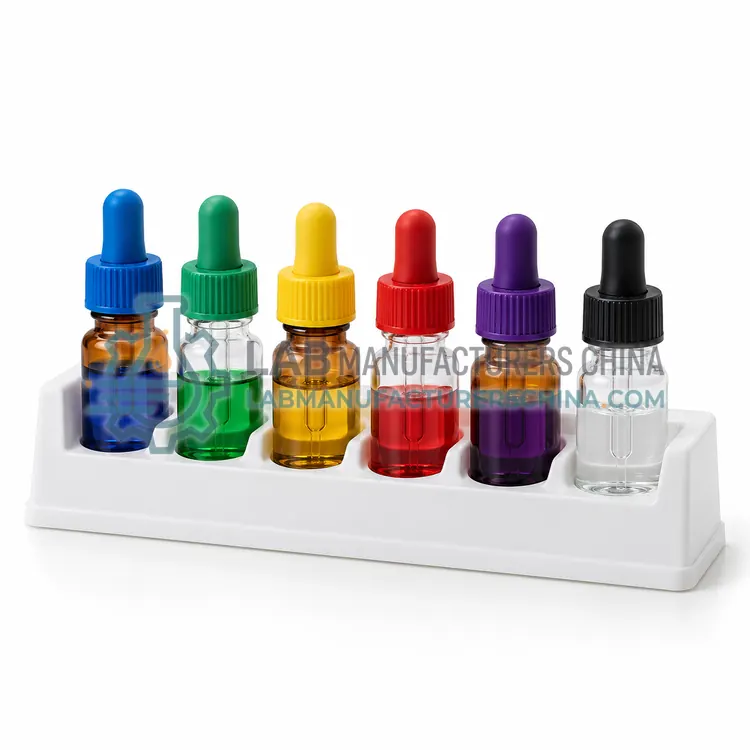
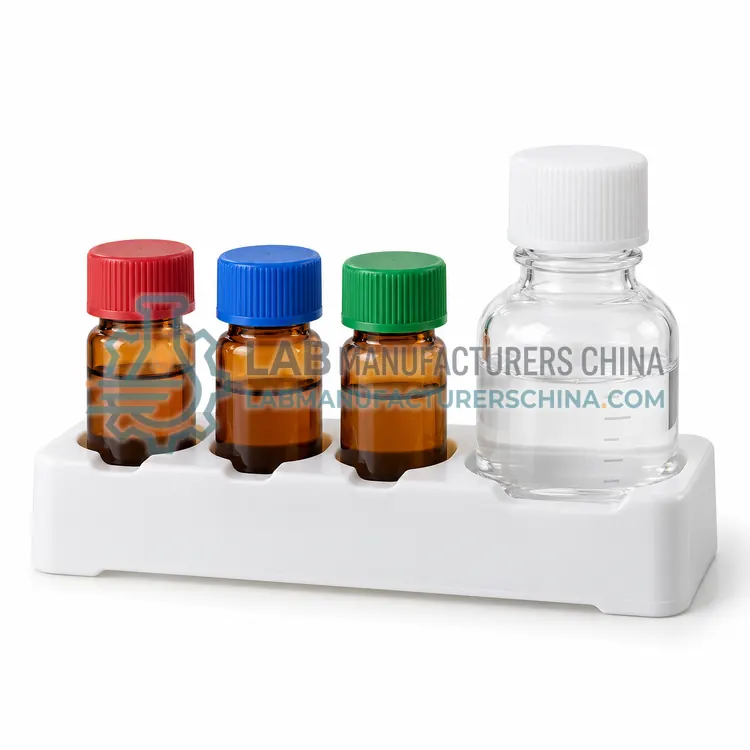
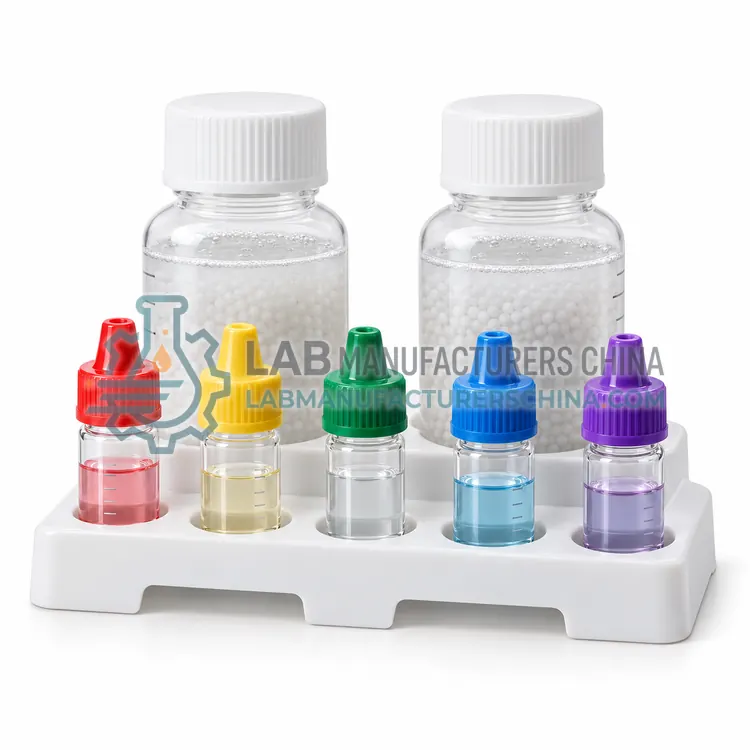
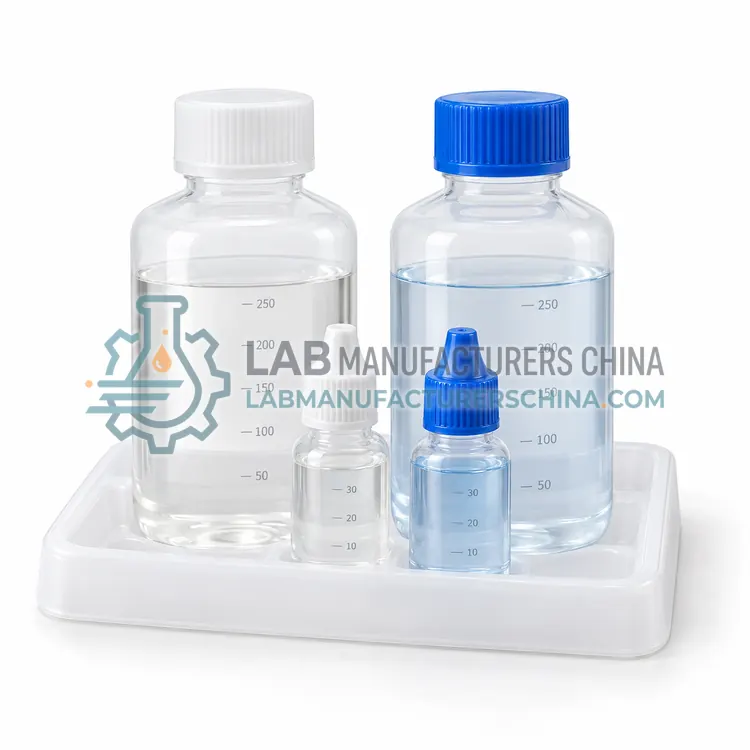
How do Cytometry Reagents work?
Cytometry reagents make cellular properties detectable as optical signals. Monoclonal antibodies conjugated to fluorochromes such as FITC, PE, APC, or tandem and polymer dyes bind specific antigens, and the laser-excited fluorescence is proportional to antigen density. Nucleic acid and amine-reactive dyes discriminate live from dead cells, because membrane-compromised cells take up DNA dyes or expose more amines. Calibration and compensation beads bind antibodies through capture moieties or carry defined fluorochrome content, providing consistent positive and negative populations for compensation matrices and standardization. Fixation cross-links proteins, often with formaldehyde, while permeabilization with detergents or alcohol allows antibodies to reach intracellular or nuclear targets. Lysing solutions remove red blood cells by osmotic or ammonium-chloride lysis while preserving leukocyte scatter properties.
Which Cytometry Reagents variants are available?
- Fluorochrome-Conjugated Monoclonal Antibody Panel Reagents — Fluorochrome-conjugated monoclonal antibodies are purified, specific antibody clones covalently linked to fluorescent dyes for detecting cell surface or intracellular antigens by flow cytometry.
- Fixable Viability Dye Reagents — Fixable viability dyes are amine-reactive fluorescent dyes that covalently label dead cells with compromised membranes and survive fixation and permeabilization.
- Compensation and Calibration Bead Reagents — Compensation and calibration beads are uniform polystyrene microspheres used to set compensation matrices and to monitor cytometer performance.
- Fixation and Permeabilization Buffer Reagents — Fixation and permeabilization buffer reagents preserve cell structure and open membranes so antibodies can reach intracellular, cytoplasmic or nuclear antigens.
- Red Blood Cell Lysing Reagents — Red blood cell lysing reagents selectively lyse erythrocytes in whole blood or bone marrow while preserving leukocyte scatter and antigen expression.
How do I choose the right variant?
Choose reagents to match the instrument's lasers and filters, since fluorochromes must be excited and detected by your configuration. Assign bright fluorochromes to low-density antigens and dim ones to abundant antigens, and avoid spectral overlap between tandem dyes. Confirm antibody clone, species reactivity and validated application for flow cytometry. For intracellular or phospho targets, select compatible fixation and permeabilization buffers. Include a viability dye in every panel, and use compatible compensation beads for each fluorochrome. Check lot-to-lot consistency documentation, storage conditions at 2 to 8 degrees Celsius, expiry dating and supply of bulk or lyophilized formats for regulated assays. Titrate each antibody in your own cells to find the optimal staining concentration.
Where are Cytometry Reagents used?
Cytometry Reagents are specified in immunophenotyping panels, live/dead cell discrimination, instrument compensation and QC, intracellular cytokine and transcription factor staining, whole blood leukocyte analysis and cell therapy product characterization.
Which standards and certifications apply?
Work with Cytometry Reagents is commonly governed by CLSI H62, CLSI H43, ISO 20391-2, ISO 13485 (IVD reagent manufacturing), EU IVDR 2017/746 and ISAC MIFlowCyt. Instrument certifications such as CE marking are confirmed per configuration and never assumed.
What are the key considerations before purchase?
Store antibodies and dyes at 2 to 8 degrees Celsius, protected from light, and never freeze tandem dyes, which degrade and cause spillover. Titrate every new antibody lot, and record lot numbers in your experiment records. Use Fc receptor blocking where needed, and include fluorescence-minus-one and isotype or biological controls when setting gates. Prepare fresh formaldehyde solutions and validate fixation time for each epitope. Dispose of azide-containing buffers and lysing reagents according to local chemical regulations, as sodium azide can form explosive metal azides in plumbing. For regulated assays, source reagents with certificates of analysis, and revalidate panels when changing vendors or clones.