How do Sample Loaders work?
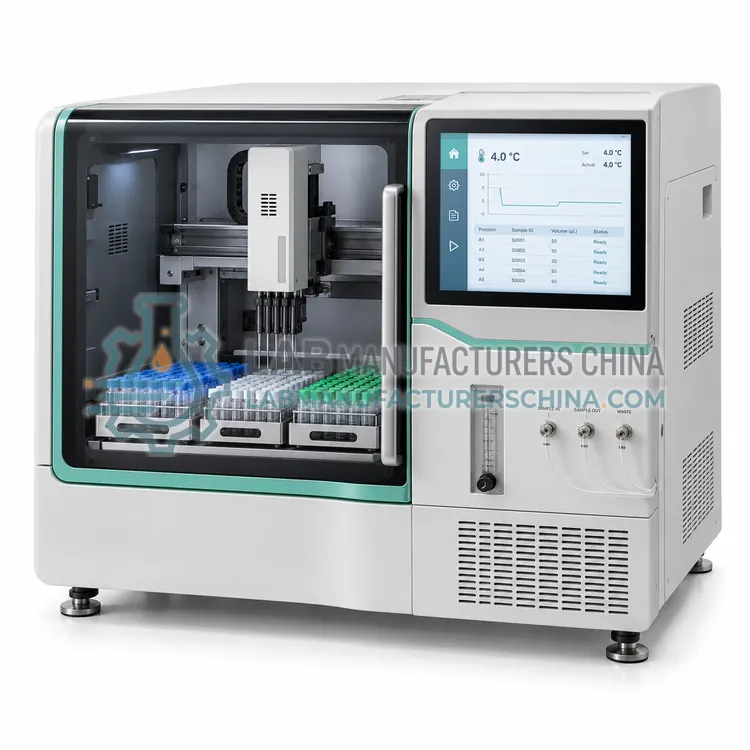
A sample loader positions a container under or beside the cytometer's sample injection probe using a motorized carousel, rack or X-Y-Z robotic arm. The probe descends into the tube or well, often after a programmed mixing step by vortexing, pipette aspiration or orbital shaking, and aspirates a defined volume with a syringe pump or pneumatic metering system. The sample is delivered to the flow cell, and the probe exterior and interior are rinsed with sheath or wash solution in a wash station to limit carry-over. Liquid-level sensors and pressure monitoring detect empty wells or clogs. Software sequences the run order, synchronizes acquisition with the cytometer, and writes one FCS file per well with its plate position and metadata.
Which Sample Loaders variants are available?
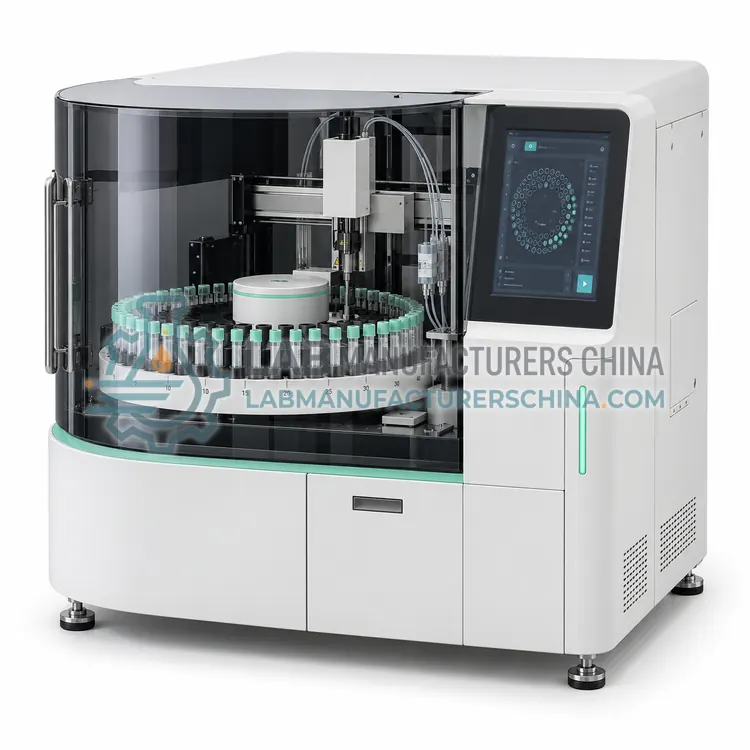
- Tube Carousel Sample Loader — A tube carousel sample loader holds 12 to 40 standard cytometry tubes on a rotating turntable and feeds them sequentially to the cytometer probe.
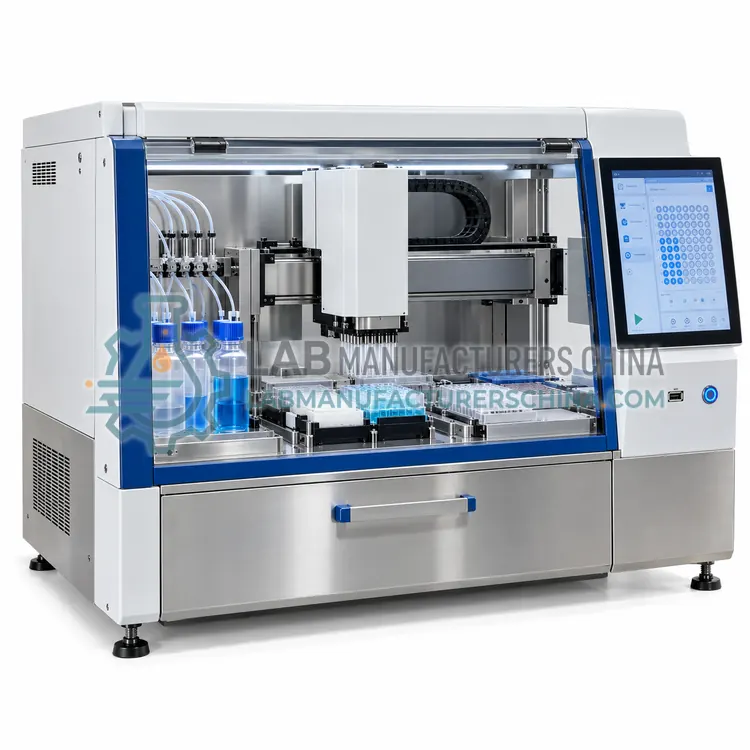
- Microplate High-Throughput Sampler — A microplate high-throughput sampler presents 96 or 384-well plates to a cytometer and samples each well in sequence with rapid mixing and wash cycles.
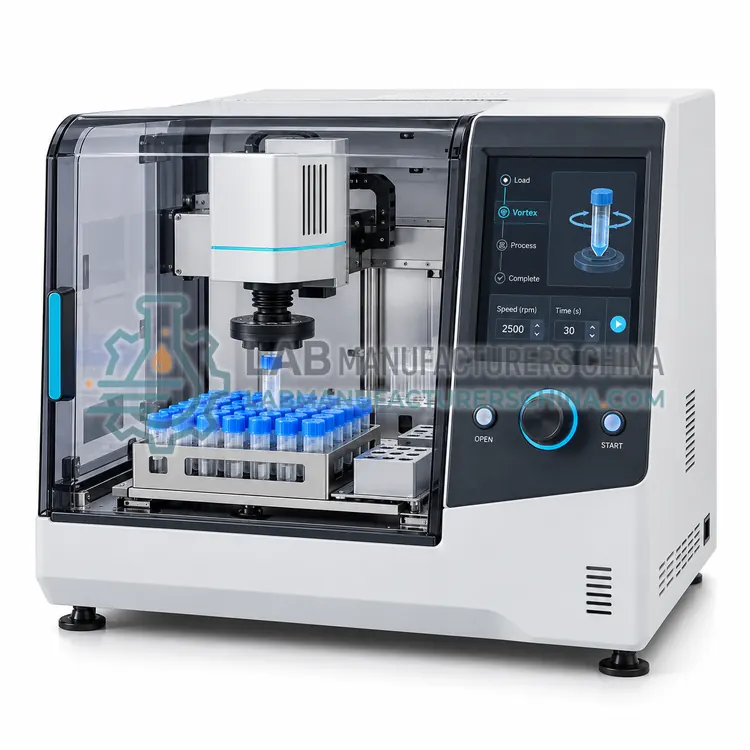
- Tube Sample Loader with Integrated Vortex Mixer — A tube sample loader with integrated vortex mixer vortexes each tube immediately before aspiration so that settled or clumped cells are fully resuspended.
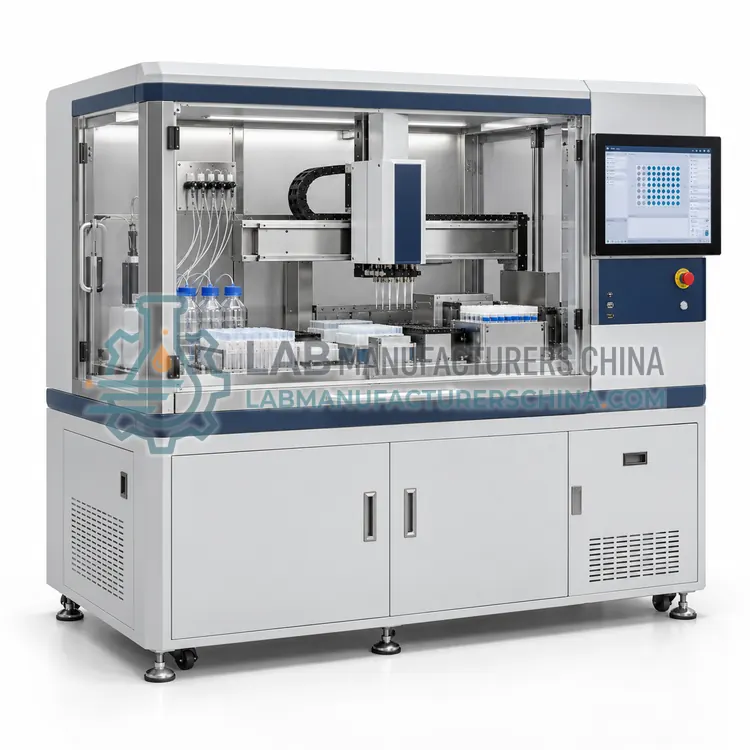
- Robotic Walk-Away Sample Handler — A robotic walk-away sample handler uses an X-Y-Z gantry or articulated arm to load tubes, plates or both into a cytometer, often with stackers and barcode tracking.
- Temperature-Controlled Sample Loader — A temperature-controlled sample loader holds tubes or plates at a set temperature, typically 4 to 37 degrees Celsius, during the run.
How do I choose the right variant?
Select a loader by the container formats, throughput and sample type you handle. Tube carousels suit routine clinical panels with 12 to 40 tubes, while microplate samplers support 96 and 384-well screening. Check carry-over specification, typically below 0.5 percent, and the minimum sample volume and dead volume, which matter for precious samples. Confirm mixing capability, because sedimenting cells need resuspension before each draw. Consider temperature control when samples are labile, and barcode reading for chain-of-custody. Verify mechanical and software compatibility with your cytometer model and whether the loader supports walk-away operation, automatic cleaning and error recovery. Finally review the footprint and whether a biosafety cabinet placement is needed.
Where are Sample Loaders used?
Sample Loaders are specified in high-throughput drug screening, unattended clinical immunophenotyping runs, CAR-T and cell therapy in-process testing, multiplex bead assay reading, cell-based antibody discovery and environmental and microbial sample monitoring.
Which standards and certifications apply?
Work with Sample Loaders is commonly governed by ISO 20391-1, CLSI H62, IEC 61010-1, IEC 61010-2-101, ISAC FCS 3.1 and ANSI SLAS microplate footprint (ANSI/SLAS 1-2004). Instrument certifications such as CE marking are confirmed per configuration and never assumed.
What are the key considerations before purchase?
Verify the loader is aligned with the cytometer probe and that the probe height and stroke are calibrated for each container type. Validate carry-over by running a high-concentration bead or cell sample followed by blanks, and confirm volume accuracy gravimetrically. Clean the wash station and replace probe tubing according to the manufacturer's schedule, using bleach or dedicated decontamination solution when biohazardous samples are run. Enable audit trail and user access control if data are used in regulated work. Plates should be sealed or covered during long runs to limit evaporation, and samples fixed or kept cold to maintain stability. Periodically check mechanical movement, and keep software and firmware versions under change control.