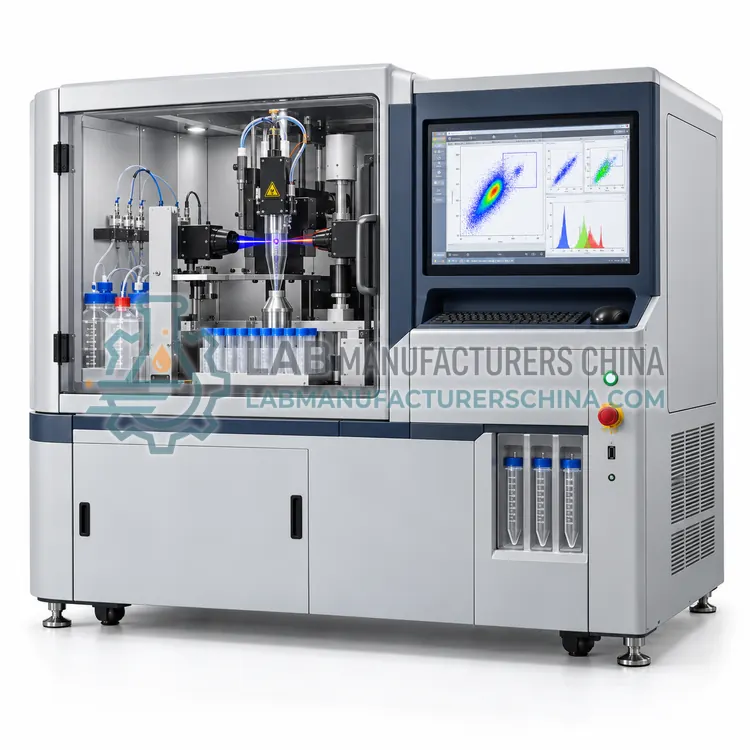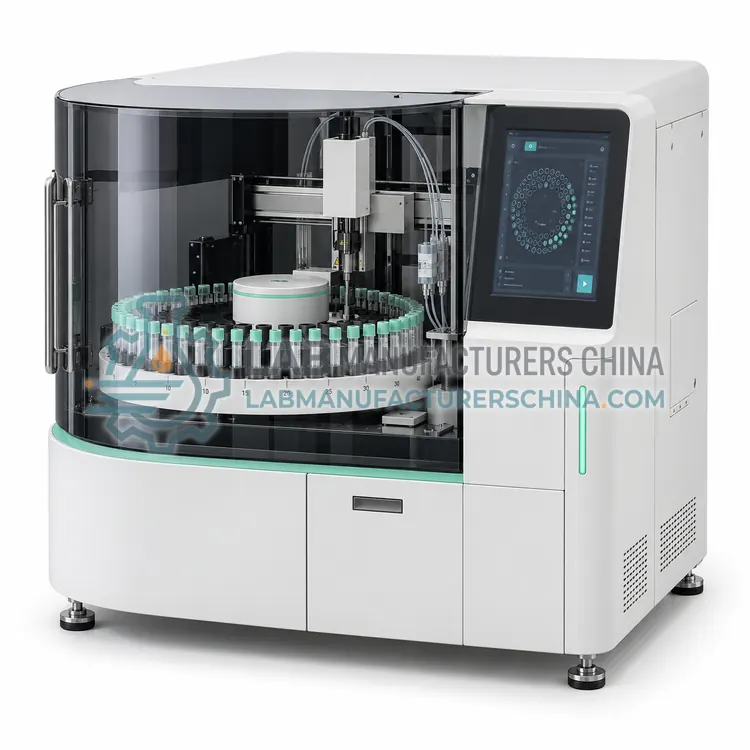
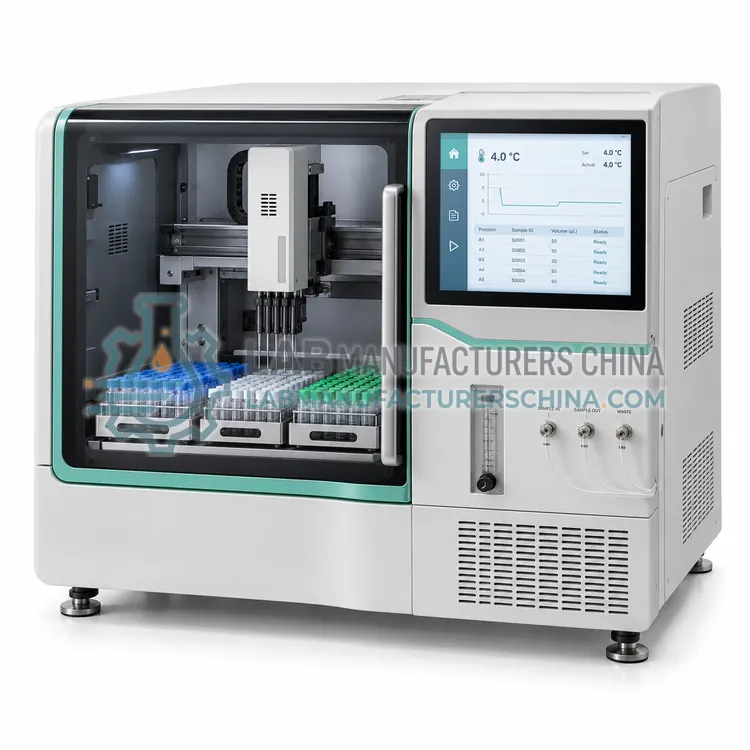
Temperature-Controlled Sample Loader
温控型进样器
- SKU SAL-0005
- Sample Loaders
- CE (to be confirmed)
- IEC 61010-1 compliance (to be confirmed)
- ISO 9001 manufacturing (to be confirmed)
Price on request — FOB / CIF quoted per order
Prices depend on configuration, quantity and destination port.
Key specifications
| Temperature range | 4–37 °C |
|---|---|
| Temperature stability | Within ±1 °C |
| Cooling method | Peltier or circulating chiller |
| Formats | Tube rack (12–40) or 96/384-well plates |
| Time to 4 °C | Approx. 20–30 min |
| Carry-over | Below 0.5% |
Request a quote Download brochure · to be provided
By Lab Manufacturers China Technical TeamLast reviewed Standards: ISO 20391-1, CLSI H62, IEC 61010-1
What is the Temperature-Controlled Sample Loader?
A temperature-controlled sample loader holds tubes or plates at a set temperature, typically 4 to 37 degrees Celsius, during the run. It preserves labile samples such as live cells, kinetic assays and phospho-protein stained cells, where waiting time at room temperature would change results.
What is the Temperature-Controlled Sample Loader?
A temperature-controlled sample loader holds tubes or plates at a set temperature, typically 4 to 37 degrees Celsius, during the run. It preserves labile samples such as live cells, kinetic assays and phospho-protein stained cells, where waiting time at room temperature would change results.
Overview
Temperature-controlled loaders integrate a thermoelectric Peltier block or circulating chiller beneath the tube rack or plate stage, maintaining sample temperature within about 1 degree Celsius of the setpoint over the range of roughly 4 to 37 degrees. Cooling at 4 degrees slows metabolism and degradation of live or partially stained samples during long queues, while warming to 37 degrees supports kinetic assays such as calcium flux and live-cell functional tests. Insulated covers limit condensation and evaporation, and dew point control or dry air purge prevents water accumulation on cold surfaces. The loader may be available in tube carousel or plate formats. Temperature sensors log conditions alongside each acquisition so excursions can be identified. Warm-up or cool-down may take 10 to 30 minutes, and condensation must be managed to avoid contamination.
How does it work?
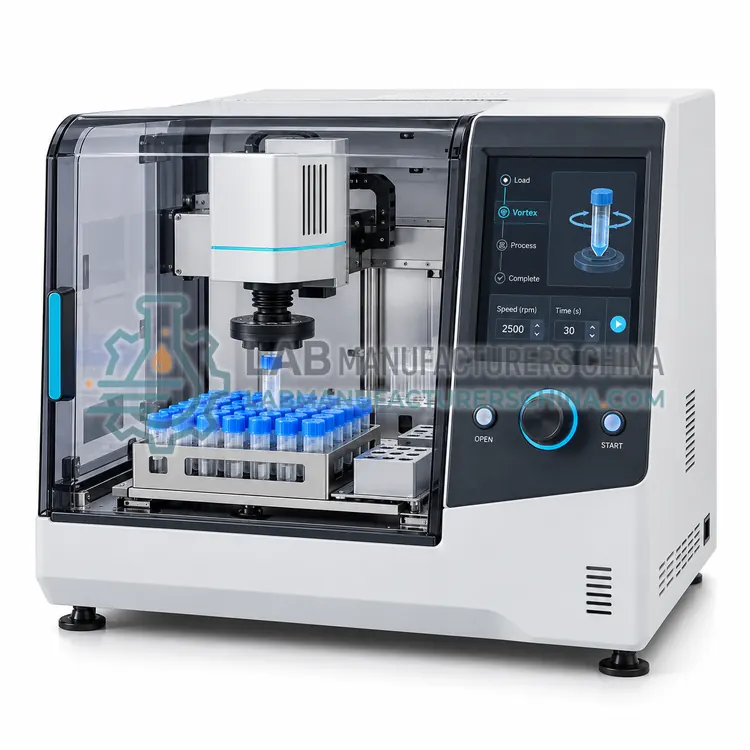
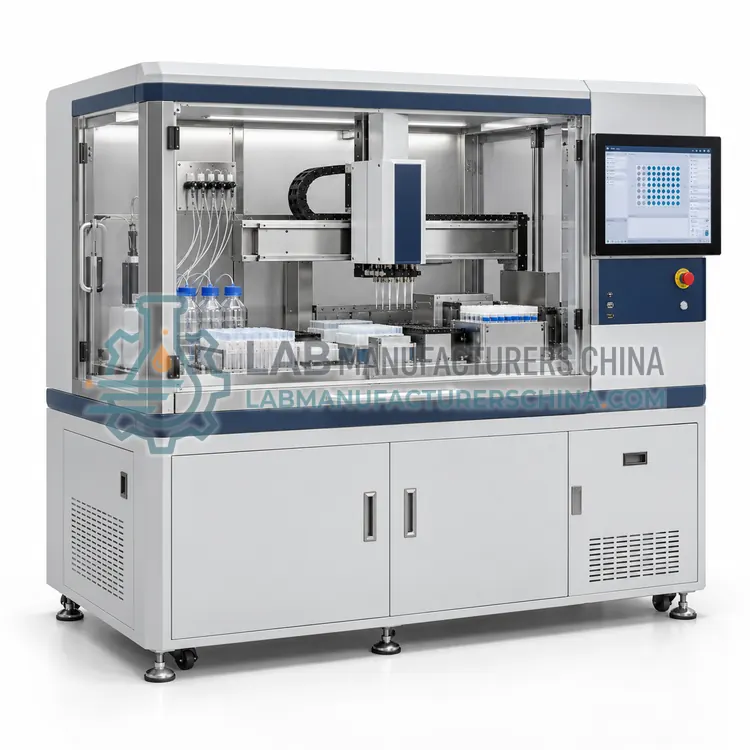
A sample loader positions a container under or beside the cytometer's sample injection probe using a motorized carousel, rack or X-Y-Z robotic arm. The probe descends into the tube or well, often after a programmed mixing step by vortexing, pipette aspiration or orbital shaking, and aspirates a defined volume with a syringe pump or pneumatic metering system. The sample is delivered to the flow cell, and the probe exterior and interior are rinsed with sheath or wash solution in a wash station to limit carry-over. Liquid-level sensors and pressure monitoring detect empty wells or clogs. Software sequences the run order, synchronizes acquisition with the cytometer, and writes one FCS file per well with its plate position and metadata.
What are the key features?
- Peltier or chiller module holds samples between about 4 and 37 degrees Celsius
- Temperature stability within about 1 degree Celsius of the setpoint
- Insulated cover limits condensation and evaporation during long runs
- Temperature logged alongside each acquisition for traceability
- Available in tube carousel and microplate configurations
- Dry air purge option prevents water accumulation on cold surfaces
What are the technical specifications?
A typical temperature-controlled sample loader configuration offers temperature range of 4–37 °C, temperature stability of Within ±1 °C, cooling method of Peltier or circulating chiller, formats of Tube rack (12–40) or 96/384-well plates, time to 4 °C of Approx. 20–30 min and carry-over of Below 0.5%. Values are indicative of the product class; the exact figures for each configuration are confirmed on the quotation and the calibration documents supplied with the instrument.
Which applications is it used for?
The Temperature-Controlled Sample Loader is used in phospho-flow and signaling studies, kinetic calcium flux assays, live-cell functional screening, fragile primary cell runs and long queue runs in cold storage. Across the wider Sample Loaders class, laboratories also deploy it for high-throughput drug screening, unattended clinical immunophenotyping runs and CAR-T and cell therapy in-process testing.
Which standards and certifications apply?
Relevant standards and methods include ISO 20391-1, CLSI H62, IEC 61010-1, IEC 61010-2-101, ISAC FCS 3.1 and ANSI SLAS microplate footprint (ANSI/SLAS 1-2004). Certification candidates for this model are CE, IEC 61010-1 compliance and ISO 9001 manufacturing; each is to be confirmed for the specific configuration before shipment, and certificates are supplied only where they have been issued.
Verify the loader is aligned with the cytometer probe and that the probe height and stroke are calibrated for each container type. Validate carry-over by running a high-concentration bead or cell sample followed by blanks, and confirm volume accuracy gravimetrically. Clean the wash station and replace probe tubing according to the manufacturer's schedule, using bleach or dedicated decontamination solution when biohazardous samples are run. Enable audit trail and user access control if data are used in regulated work. Plates should be sealed or covered during long runs to limit evaporation, and samples fixed or kept cold to maintain stability. Periodically check mechanical movement, and keep software and firmware versions under change control.
How do I select the right Temperature-Controlled Sample Loader?
Choose temperature control when live-cell viability, phospho-epitope stability or kinetic behavior is temperature-sensitive and runs last more than an hour. Fixed samples stored cold before the run generally do not need it. In an RFQ, specify the required temperature range, stability, container format, condensation management and logging requirements.
How does it compare with other Sample Loaders variants?
Select a loader by the container formats, throughput and sample type you handle. Tube carousels suit routine clinical panels with 12 to 40 tubes, while microplate samplers support 96 and 384-well screening. Check carry-over specification, typically below 0.5 percent, and the minimum sample volume and dead volume, which matter for precious samples. Confirm mixing capability, because sedimenting cells need resuspension before each draw. Consider temperature control when samples are labile, and barcode reading for chain-of-custody. Verify mechanical and software compatibility with your cytometer model and whether the loader supports walk-away operation, automatic cleaning and error recovery. Finally review the footprint and whether a biosafety cabinet placement is needed.
Full specifications
| Temperature range | 4–37 °C |
|---|---|
| Temperature stability | Within ±1 °C |
| Cooling method | Peltier or circulating chiller |
| Formats | Tube rack (12–40) or 96/384-well plates |
| Time to 4 °C | Approx. 20–30 min |
| Carry-over | Below 0.5% |
| Condensation control | Insulated cover, dry air purge (optional) |
| Temperature logging | Per acquisition in metadata |
| Mixing method | Vortex or orbital shake |
| Power supply | 100–240 V AC, 50/60 Hz |
Indicative values for this product class. Final specifications are confirmed on the quotation and in the calibration documents supplied with the instrument.
Applications
- Phospho-flow and signaling studies
- Kinetic calcium flux assays
- Live-cell functional screening
- Fragile primary cell runs
- Long queue runs in cold storage
Key features
- Peltier or chiller module holds samples between about 4 and 37 degrees Celsius
- Temperature stability within about 1 degree Celsius of the setpoint
- Insulated cover limits condensation and evaporation during long runs
- Temperature logged alongside each acquisition for traceability
- Available in tube carousel and microplate configurations
- Dry air purge option prevents water accumulation on cold surfaces
Frequently asked questions about Temperature-Controlled Sample Loader
Live cells change metabolism, surface marker expression and viability when held at room temperature for hours, and phospho-epitopes can degrade. Holding samples at 4 degrees, or warming to 37 degrees for kinetic work, keeps results consistent across long queues.
Insulated covers, sealing films on plates and a dry-air purge limit moisture on cold surfaces. Condensation can cause pipetting errors and contamination, so drain paths and wipe-down routines should be included in operating procedures.
Most models can heat to about 37 degrees using the same Peltier module, enabling kinetic assays such as calcium flux. Because samples in the probe path are not heated, short transit times and calibrated temperature checks at the stage should be verified.
It is an automated device that positions tubes or plates under the cytometer's sample probe, mixes and injects each sample, and washes the probe between samples. It lets a cytometer run many samples unattended and with consistent timing and volumes.
Carry-over is limited by rinsing the probe inside and out with sheath or wash solution between samples, using dedicated wash stations and optional bleach cycles. Manufacturers typically specify below 0.5 percent, which users should verify with a high-concentration sample followed by blanks.
Some models accept both through interchangeable racks or adapters, but many are designed for a single format. Tube carousels suit 12 to 40 tubes, while plate samplers handle 96 or 384-well plates, so choose based on your dominant workflow.
Related models
Fluorochrome-Conjugated Monoclonal Antibody Panel Reagents
荧光素偶联单克隆抗体检测组合试剂
- ISO 13485 manufacturing (to be confirmed)
- +2