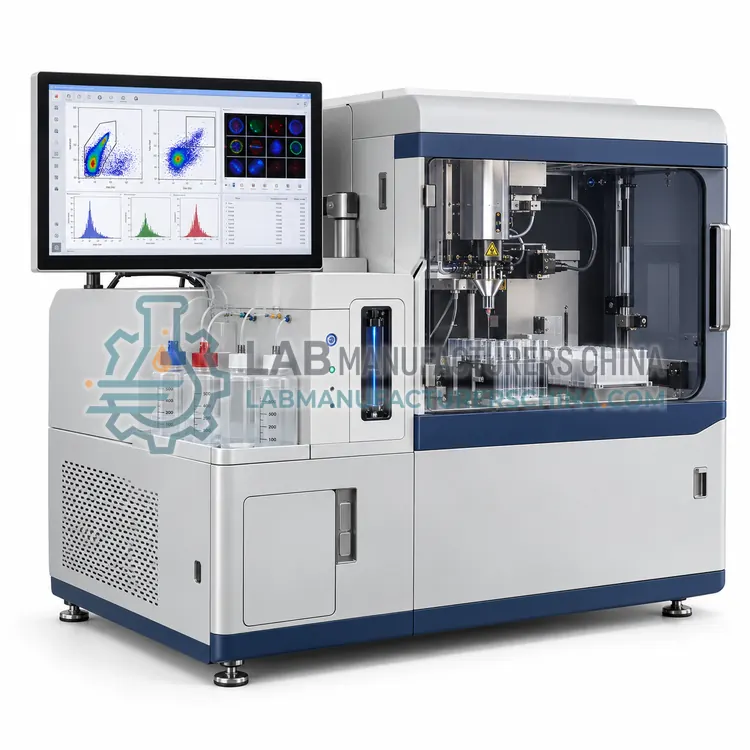
How do Cell Sorters work?
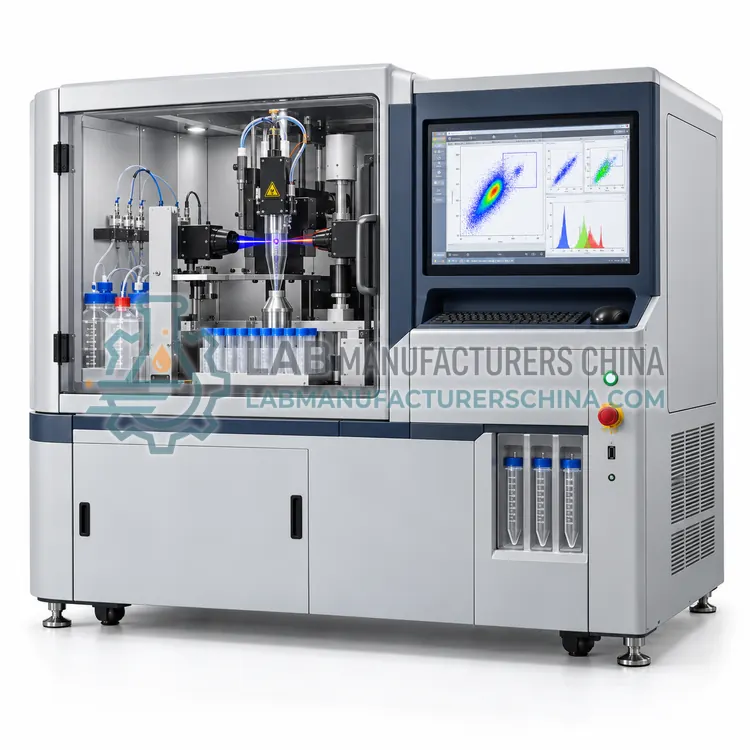
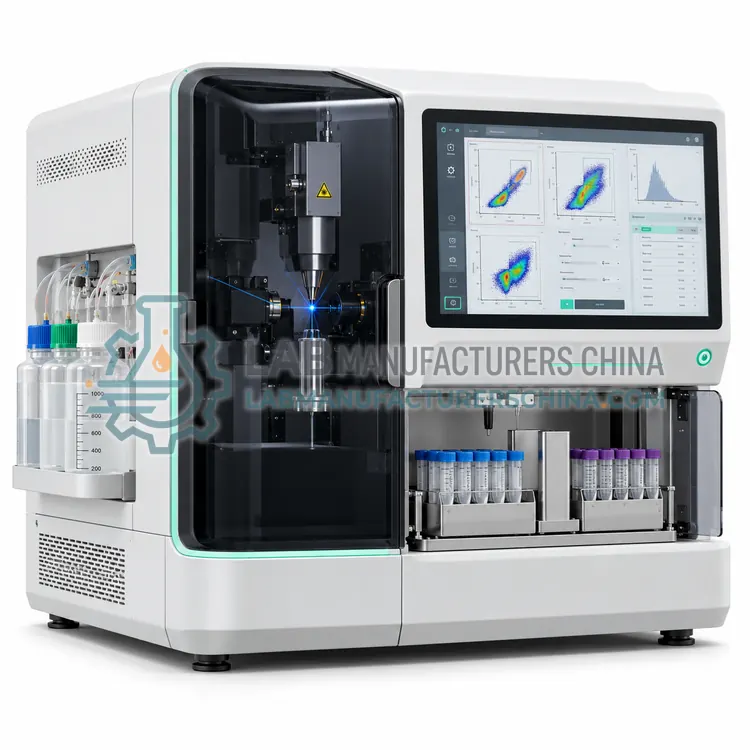
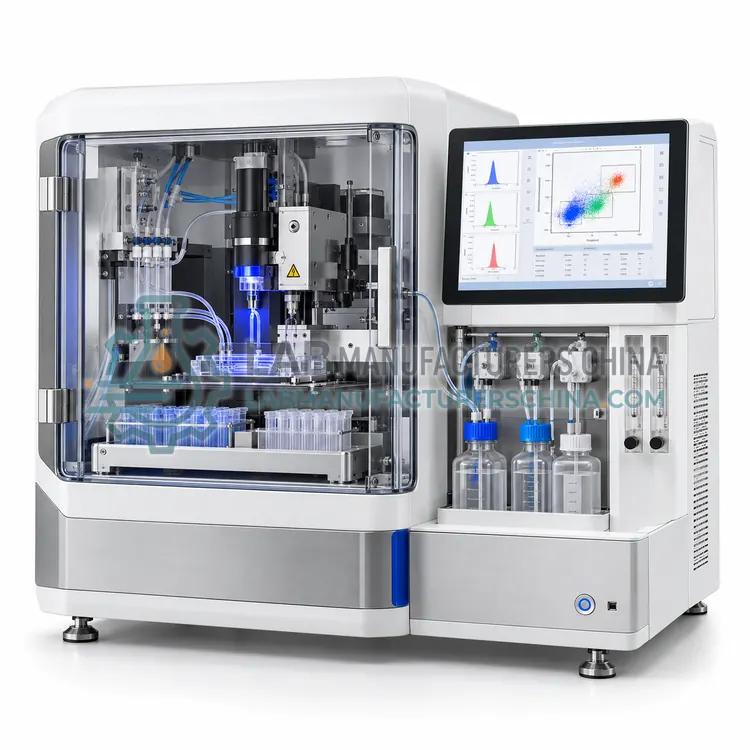
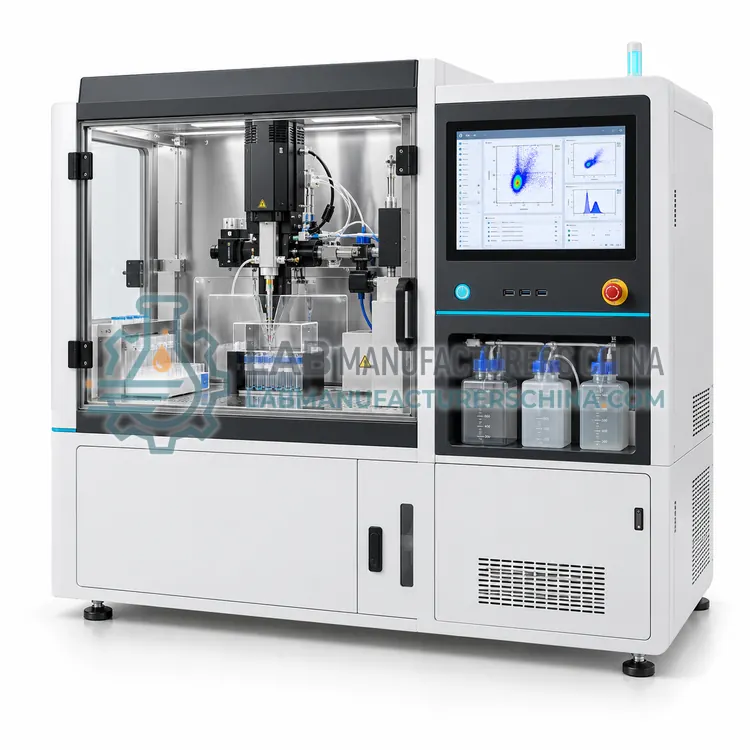
Sorters analyze cells like an analyzer, then apply a decision in real time. In droplet sorters, a piezoelectric transducer vibrates the nozzle at 20 to 100 kHz so the stream breaks into uniform droplets just after the laser intercept. When a cell matching the sort gate is about to be enclosed, the electronics apply a charge to the stream, and the droplet separates carrying that charge. Charged droplets pass through high-voltage deflection plates and fall into tubes or multiwell plates, while uncharged droplets go to waste. A drop delay calibrated with fluorescent beads defines the time between detection and droplet break-off. Microfluidic chip sorters instead use valves, piezo actuators or optical forces inside a disposable cartridge, enclosing the sample away from aerosols.
Which Cell Sorters variants are available?
- High-Speed Droplet Cell Sorter — A high-speed droplet cell sorter is a multi-laser jet-in-air system that sorts up to four or six populations simultaneously at tens of thousands of events per second.
- Benchtop Cell Sorter — A benchtop cell sorter is a compact droplet or chip-based sorter with two to four lasers and two-way to four-way sorting.
- Microfluidic Chip-Based Cell Sorter — A microfluidic chip-based cell sorter performs sorting inside a sealed, disposable cartridge using valves or actuators instead of charged droplets.
- Aerosol-Contained Biosafety Cell Sorter — An aerosol-contained biosafety cell sorter is a droplet sorter housed in an enclosed chamber with HEPA-filtered air evacuation, sometimes inside a class II biosafety cabinet.
- Image-Enabled Cell Sorter — An image-enabled cell sorter captures a high-speed image of each cell and sorts based on morphology, localization or cell-cell interaction in addition to fluorescence intensity.
How do I choose the right variant?
Choose a sorter on purity, yield, viability and containment requirements. Determine how many populations you need to collect at once, since two-way, four-way and six-way sorting require different deflection hardware. Match nozzle size, from 70 to 130 micrometers, to cell size and fragility; larger nozzles and lower pressure are gentler for primary cells. Check sort speed, typically 20,000 to 70,000 events per second, against the abort rate and recovery. For infectious, human primary or viral vector samples, specify an aerosol-managed or enclosed system and a class II biosafety cabinet. Consider single-cell deposition into 96 or 384-well plates, index sorting, number of lasers, and ease of use. Also confirm sterile fluidics cleaning and availability of service engineers.
Where are Cell Sorters used?
Cell Sorters are specified in stem cell and progenitor enrichment, single-cell cloning of engineered cell lines, sorting for single-cell RNA sequencing, CRISPR-edited population isolation, immune cell subset purification and microbial and environmental cell sorting.
Which standards and certifications apply?
Work with Cell Sorters is commonly governed by ISAC Cell Sorter Biosafety Standards, IEC 61010-1, IEC 60825-1, EN 12469, ISO 14698-1, CLSI H62 and ISAC FCS 3.1. Instrument certifications such as CE marking are confirmed per configuration and never assumed.
What are the key considerations before purchase?
Sorters need a clean, temperature-stable room, compressed air or nitrogen supply and often a dedicated operator. Perform daily setup with calibration beads to set drop delay, verify stream stability and check sort accuracy. Decontaminate fluidics with bleach or dedicated cleaning solutions before and after every sample and sterilize sheath paths for primary cell work. Sorting human or infectious material requires a biosafety assessment, with containment verified by an aerosol test such as potassium iodide or fluorescent bead methods. Nozzles, O-rings and sheath filters are consumables and should be replaced on a schedule. Laboratories should log sorts, purity checks and preventive maintenance to support reproducibility and audits.