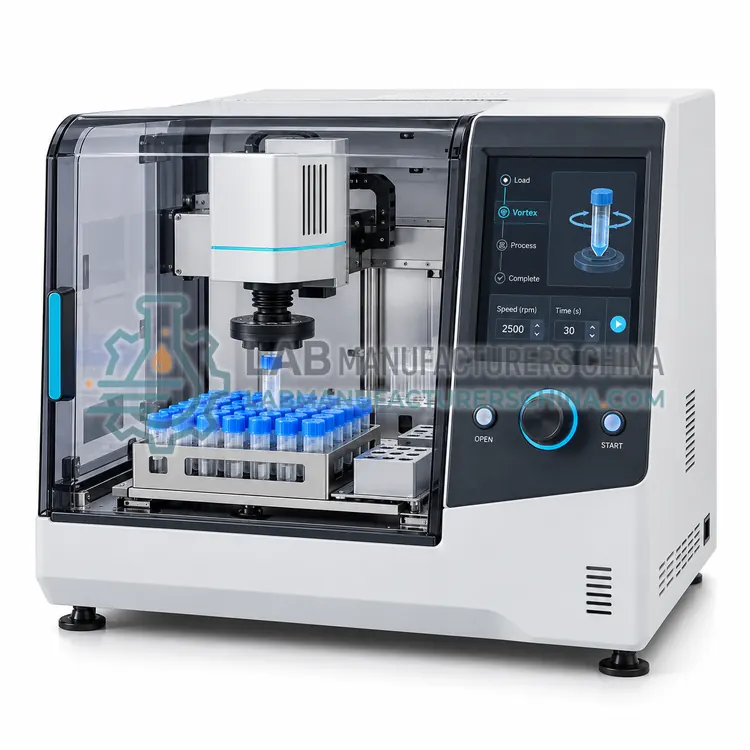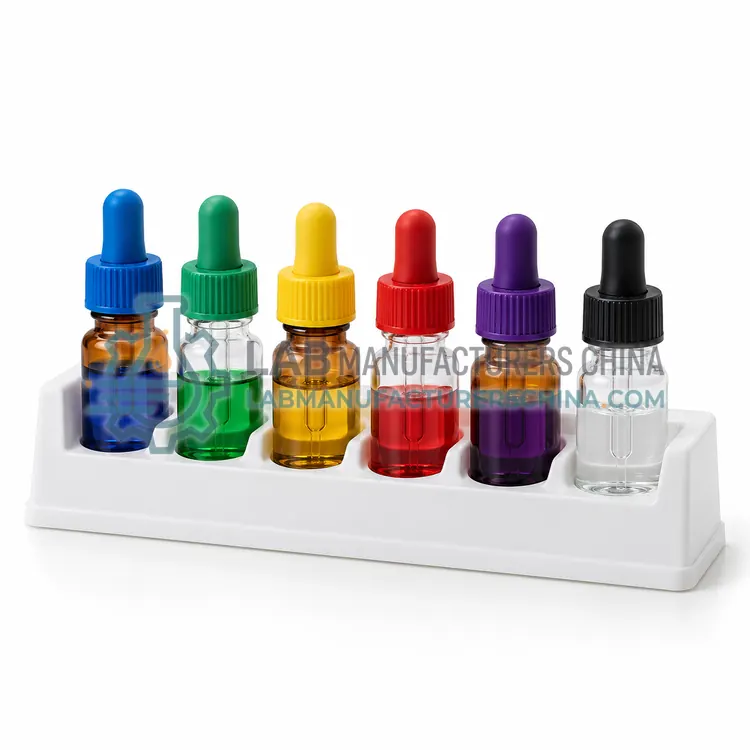
Fluorochrome-Conjugated Monoclonal Antibody Panel Reagents
荧光素偶联单克隆抗体检测组合试剂
- ISO 13485 manufacturing (to be confirmed)
- +2
Welcome to Lab Manufacturers China — laboratory instruments direct from a Chinese manufacturer
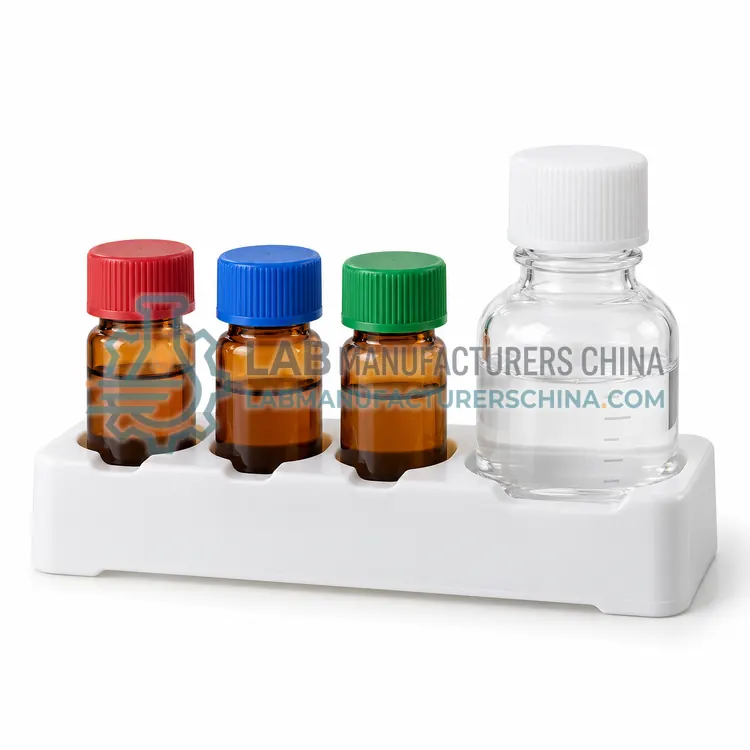
可固定活性染料试剂
Price on request — FOB / CIF quoted per order
Prices depend on configuration, quantity and destination port.
| Reactive chemistry | Amine-reactive succinimidyl ester |
|---|---|
| Excitation options | UV, 405, 488, 633/640 nm |
| Format | Lyophilized, reconstitute in DMSO |
| Typical working dilution | 1:1000 |
| Staining time | 15–30 min at 2–8 °C |
| Live/dead separation | 10- to 50-fold |
By Lab Manufacturers China Technical TeamLast reviewed Standards: CLSI H62, CLSI H43, ISO 20391-2
Fixable viability dyes are amine-reactive fluorescent dyes that covalently label dead cells with compromised membranes and survive fixation and permeabilization. They are added to surface-stained cells before fixation so dead cells can be excluded from analysis in intracellular or long-duration staining workflows.
Fixable viability dyes are amine-reactive fluorescent dyes that covalently label dead cells with compromised membranes and survive fixation and permeabilization. They are added to surface-stained cells before fixation so dead cells can be excluded from analysis in intracellular or long-duration staining workflows.
Amine-reactive viability dyes contain succinimidyl ester groups that react with free amines on proteins. Live cells with intact membranes label only at surface amines and stay dim, whereas dead cells allow dye access to abundant intracellular amines, producing 10- to 50-fold brighter staining. Because the bond is covalent, the label persists through formaldehyde fixation and detergent permeabilization, unlike propidium iodide or 7-AAD. Available in multiple colors excited by UV, violet, blue, red and far-red lasers, dyes are usually supplied lyophilized in DMSO-reconstituted vials and used at 1:1000 dilution in protein-free buffer. Staining should be done in buffer lacking protein, as amines in serum quench the dye. Dead-cell exclusion improves panel quality by removing nonspecific binders, and these dyes are standard in intracellular cytokine and transcription factor staining.
Cytometry reagents make cellular properties detectable as optical signals. Monoclonal antibodies conjugated to fluorochromes such as FITC, PE, APC, or tandem and polymer dyes bind specific antigens, and the laser-excited fluorescence is proportional to antigen density. Nucleic acid and amine-reactive dyes discriminate live from dead cells, because membrane-compromised cells take up DNA dyes or expose more amines. Calibration and compensation beads bind antibodies through capture moieties or carry defined fluorochrome content, providing consistent positive and negative populations for compensation matrices and standardization. Fixation cross-links proteins, often with formaldehyde, while permeabilization with detergents or alcohol allows antibodies to reach intracellular or nuclear targets. Lysing solutions remove red blood cells by osmotic or ammonium-chloride lysis while preserving leukocyte scatter properties.
A typical fixable viability dye reagents configuration offers reactive chemistry of Amine-reactive succinimidyl ester, excitation options of UV, 405, 488, 633/640 nm, format of Lyophilized, reconstitute in DMSO, typical working dilution of 1:1000, staining time of 15–30 min at 2–8 °C and live/dead separation of 10- to 50-fold. Values are indicative of the product class; the exact figures for each configuration are confirmed on the quotation and the calibration documents supplied with the instrument.
The Fixable Viability Dye Reagents is used in intracellular cytokine staining, transcription factor staining, phospho-flow workflows, cell therapy product viability and long-duration multi-step staining. Across the wider Cytometry Reagents class, laboratories also deploy it for immunophenotyping panels, live/dead cell discrimination and instrument compensation and QC.
Relevant standards and methods include CLSI H62, CLSI H43, ISO 20391-2, ISO 13485 (IVD reagent manufacturing), EU IVDR 2017/746 and ISAC MIFlowCyt. Certification candidates for this model are ISO 9001 manufacturing, RUO labeling and REACH compliance; each is to be confirmed for the specific configuration before shipment, and certificates are supplied only where they have been issued.
Store antibodies and dyes at 2 to 8 degrees Celsius, protected from light, and never freeze tandem dyes, which degrade and cause spillover. Titrate every new antibody lot, and record lot numbers in your experiment records. Use Fc receptor blocking where needed, and include fluorescence-minus-one and isotype or biological controls when setting gates. Prepare fresh formaldehyde solutions and validate fixation time for each epitope. Dispose of azide-containing buffers and lysing reagents according to local chemical regulations, as sodium azide can form explosive metal azides in plumbing. For regulated assays, source reagents with certificates of analysis, and revalidate panels when changing vendors or clones.
Choose fixable viability dyes whenever cells will be fixed or permeabilized after staining. For unfixed live analysis, simpler DNA dyes such as propidium iodide or 7-AAD are sufficient. Select a color that leaves your panel's brightest channels free, and specify laser, pack size and storage requirements in the RFQ.
Choose reagents to match the instrument's lasers and filters, since fluorochromes must be excited and detected by your configuration. Assign bright fluorochromes to low-density antigens and dim ones to abundant antigens, and avoid spectral overlap between tandem dyes. Confirm antibody clone, species reactivity and validated application for flow cytometry. For intracellular or phospho targets, select compatible fixation and permeabilization buffers. Include a viability dye in every panel, and use compatible compensation beads for each fluorochrome. Check lot-to-lot consistency documentation, storage conditions at 2 to 8 degrees Celsius, expiry dating and supply of bulk or lyophilized formats for regulated assays. Titrate each antibody in your own cells to find the optimal staining concentration.
| Reactive chemistry | Amine-reactive succinimidyl ester |
|---|---|
| Excitation options | UV, 405, 488, 633/640 nm |
| Format | Lyophilized, reconstitute in DMSO |
| Typical working dilution | 1:1000 |
| Staining time | 15–30 min at 2–8 °C |
| Live/dead separation | 10- to 50-fold |
| Fixation compatibility | Formaldehyde, methanol |
| Pack size | 200–1,000 tests |
| Storage (unopened) | −20 °C, protected from light |
| Shelf life | 12–24 months |
Indicative values for this product class. Final specifications are confirmed on the quotation and in the calibration documents supplied with the instrument.
Propidium iodide and 7-AAD are non-covalent DNA intercalators that leak out or redistribute once cells are fixed and permeabilized. Fixable amine-reactive dyes bond covalently to proteins, so the live/dead discrimination remains after fixation and intracellular staining.
The dye reacts with any free amine, so protein in serum or BSA buffers consumes the reagent before it reaches cells. Staining in plain PBS without protein, then washing with protein buffer to quench, gives consistent labeling.
Yes, they occupy one fluorescence channel like any dye. Choose a color whose emission does not overlap with critical markers, and include single-stained or bead controls for compensation, using a mix of live and heat-killed cells.
A typical experiment needs fluorochrome-conjugated antibodies, a viability dye, staining buffer with protein, and Fc block. Intracellular staining adds fixation and permeabilization buffers, while compensation beads, counting beads and lysing solutions support calibration, absolute counts and whole blood work.
Match each fluorochrome to your instrument's lasers and detectors, pair bright dyes with weakly expressed antigens, and minimize spectral overlap between channels. Use a spillover spreading matrix or panel design tool to check spreading error before finalizing a panel.
Too much antibody increases nonspecific binding and background, while too little reduces the signal and staining index. Titration with serial dilutions on your own cells identifies the concentration with the best separation of positive and negative populations and saves reagent.
荧光素偶联单克隆抗体检测组合试剂

高维流式数据分析软件