Lab Manufacturers China

CO2 Incubators

CO2 培养箱

CON · Cell Culture Equipment · 5 models

By Lab Manufacturers China Technical TeamLast reviewed Standards: IEC 61010-1, IEC 61010-2-010, IEC 61326-1

Standards referenced

  • IEC 61010-1
  • IEC 61010-2-010
  • IEC 61326-1
  • EN 12469
  • ISO 14644-1
  • USP <1046>

What are CO2 Incubators?

CO2 incubators maintain the temperature, humidity and carbon dioxide concentration that mammalian cell cultures need, holding bicarbonate-buffered medium near pH 7.4. They are used in cell culture, stem cell, bioprocess and clinical laboratories for routine and regulated work.

5 models of CO2 Incubators

The 5 models below are current configurations; specifications are confirmed on quotation.

Air-Jacketed CO2 Incubator

气套式 CO2 培养箱

  • CON-0001
  • CO2 Incubators
  • CE (to be confirmed)
  • ISO 9001 manufacturing (to be confirmed)
  • IEC 61010-1 safety (to be confirmed)
Chamber volume:
50–200 L (model dependent)
Temperature range:
ambient +5 to 50 °C, set at 37 °C
Temperature uniformity:
within ±0.3 °C at 37 °C
CO2 range:
0–20%, controlled at 5%
CO2 accuracy:
within ±0.1–0.3% (infrared sensor)
Humidity:
above 90% relative humidity with water pan

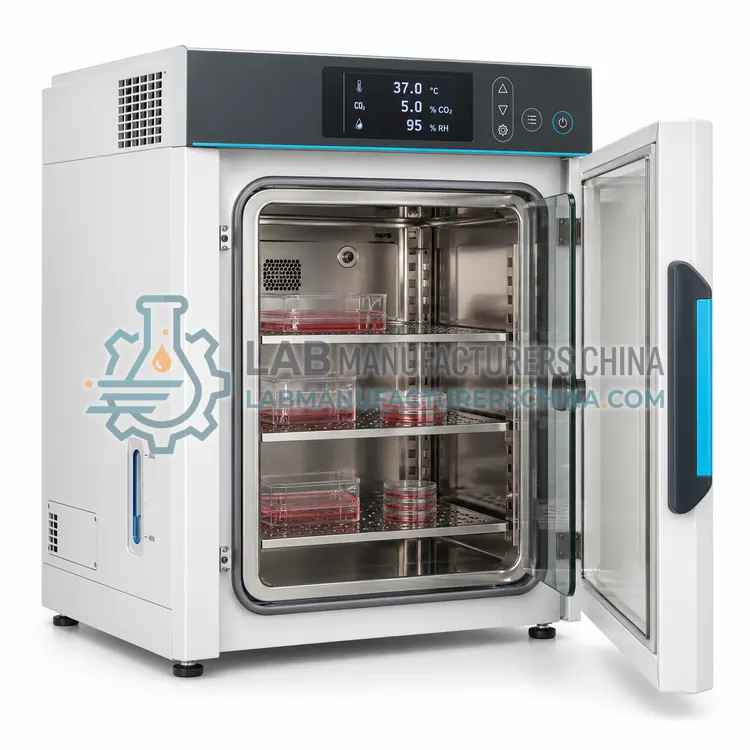
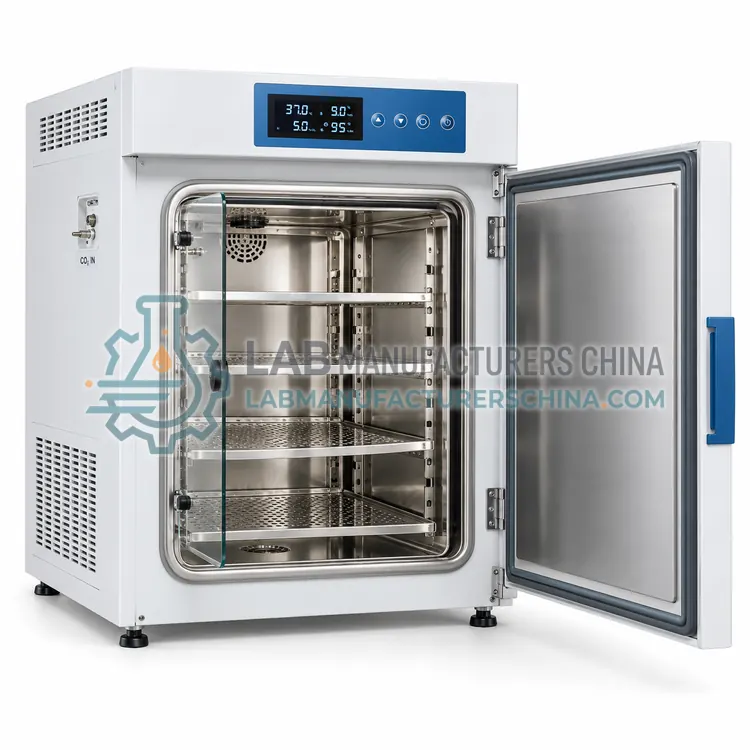
An air-jacketed CO2 incubator surrounds the chamber with heated air to hold 37 °C and 5% CO2, warming quickly and recovering rapidly after door openings. It suits routine cell culture in laboratories that value easy maintenance and light weight.

Request a quote
View details

Water-Jacketed CO2 Incubator

水套式 CO2 培养箱

  • CON-0002
  • CO2 Incubators
  • CE (to be confirmed)
  • ISO 9001 manufacturing (to be confirmed)
  • IEC 61010-1 safety (to be confirmed)
Chamber volume:
150–300 L (model dependent)
Temperature range:
ambient +5 to 50 °C, set at 37 °C
Temperature uniformity:
within ±0.2 °C at 37 °C
Jacket volume:
approx. 20–40 L distilled water
CO2 range:
0–20%, controlled at 5%
CO2 accuracy:
within ±0.1–0.3% (infrared sensor)

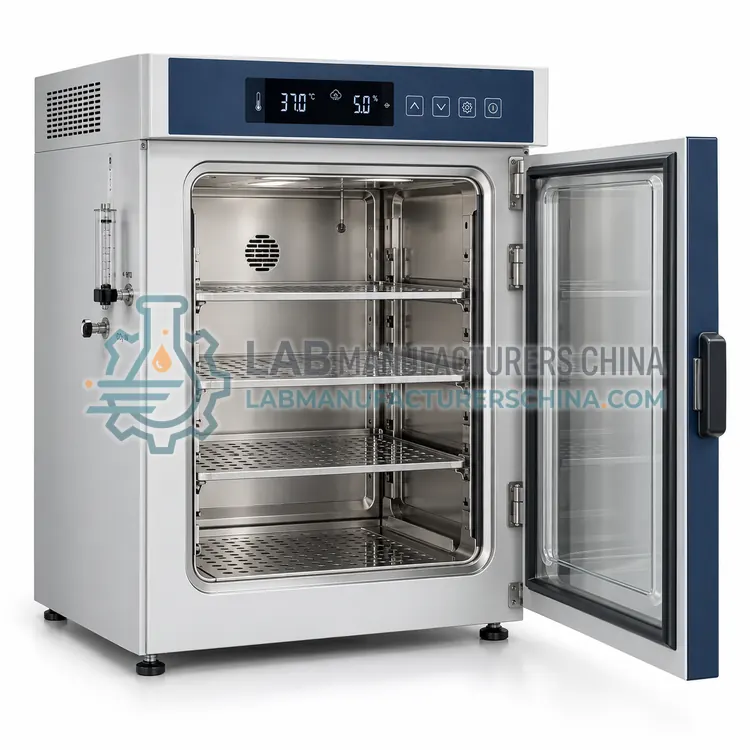
A water-jacketed CO2 incubator surrounds the chamber with a sealed water jacket that buffers temperature exceptionally well, holding 37 °C through power interruptions and frequent door use. It is chosen where culture stability is critical.

Request a quote
View details

Direct-Heat CO2 Incubator

直热式 CO2 培养箱

  • CON-0003
  • CO2 Incubators
  • CE (to be confirmed)
  • ISO 9001 manufacturing (to be confirmed)
  • IEC 61010-1 safety (to be confirmed)
Chamber volume:
50–180 L (model dependent)
Temperature range:
ambient +5 to 50 °C, set at 37 °C
Temperature uniformity:
within ±0.3–0.5 °C at 37 °C
CO2 range:
0–20%, controlled at 5%
CO2 accuracy:
within ±0.1–0.3%
Humidity:
above 90% relative humidity with water pan

A direct-heat CO2 incubator places heating elements in the chamber walls and uses natural convection instead of a fan, giving fast warm-up, easy cleaning and no moving parts in the culture space at a lower capital cost.

Request a quote
View details

Triple-Gas Hypoxia CO2 Incubator

三气低氧 CO2 培养箱

  • CON-0004
  • CO2 Incubators
  • CE (to be confirmed)
  • ISO 9001 manufacturing (to be confirmed)
  • IEC 61010-1 safety (to be confirmed)
Oxygen range:
0.1–21%
Oxygen control accuracy:
within ±0.2% at low set points
CO2 range:
0–20%, controlled at 5%
Temperature range:
ambient +5 to 50 °C, set at 37 °C
Oxygen sensor:
Zirconia or electrochemical, calibration every 1–3 months
Gas supply:
CO2 and nitrogen, or premixed triple gas

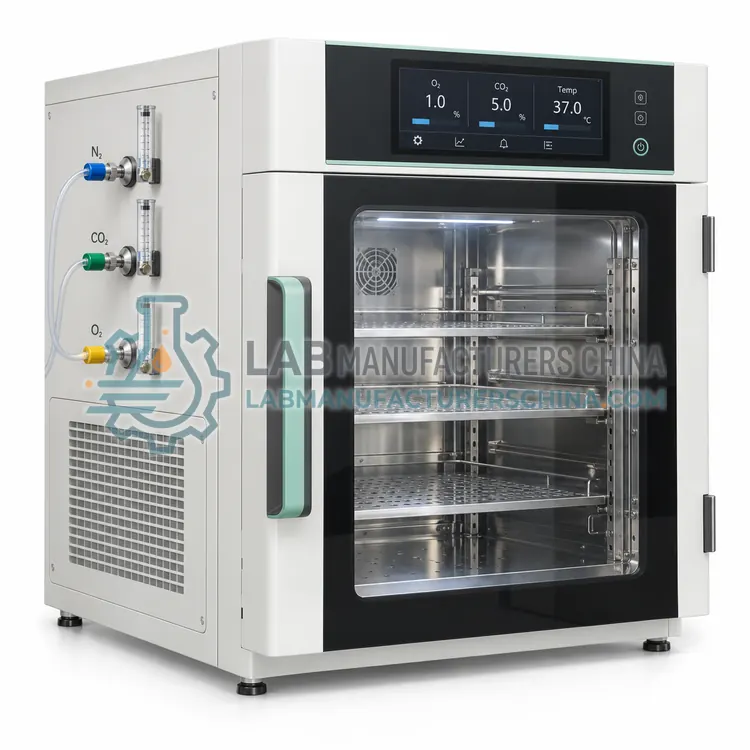
A triple-gas incubator controls oxygen as well as carbon dioxide by bleeding nitrogen into the chamber, holding oxygen from 0.1% to 21% for stem cell, embryo and tumour cultures that respond to physiological oxygen levels.

Request a quote
View details

CO2 Shaking Incubator

振荡式 CO2 培养箱

  • CON-0005
  • CO2 Incubators
  • CE (to be confirmed)
  • ISO 9001 manufacturing (to be confirmed)
  • IEC 61010-1 safety (to be confirmed)
Shaking speed:
50–300 rpm, within ±1 rpm
Orbit diameter:
10–50 mm (model dependent)
Temperature range:
ambient +5 to 60 °C, set at 37 °C
CO2 range:
0–20%, controlled at 5%
Vessel capacity:
up to 4 x 2 L flasks or 8 microplate positions
Working volume:
10 mL–2 L per vessel

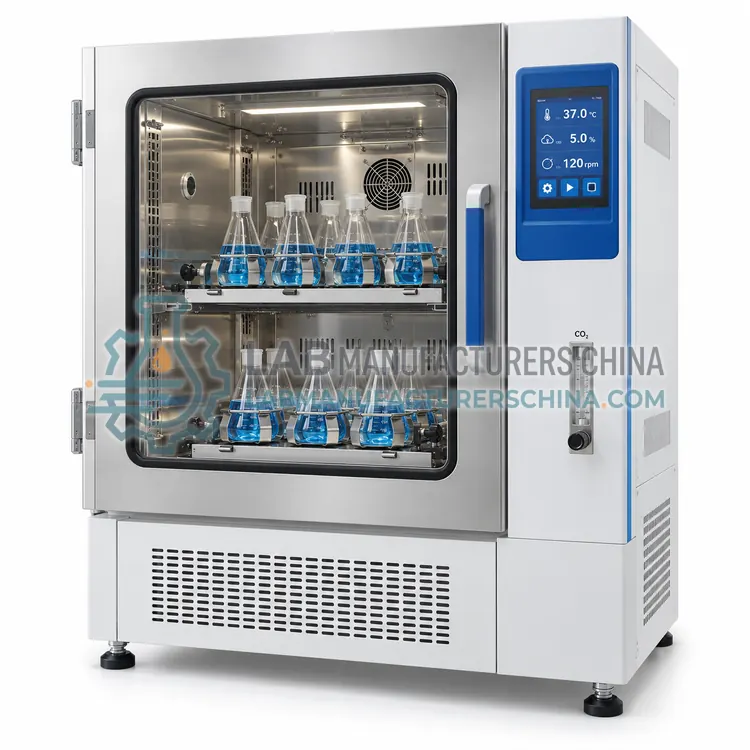
A CO2 shaking incubator combines orbital agitation with temperature and carbon dioxide control, so suspension cells and microcarrier cultures are mixed continuously for uniform nutrient and oxygen exposure at 37 °C and pH 7.4.

Request a quote
View details

Compare CO2 Incubators models

ModelChamber volumeTemperature rangeTemperature uniformityCO2 rangeCO2 accuracy
Air-Jacketed CO2 IncubatorCON-000150–200 L (model dependent)ambient +5 to 50 °C, set at 37 °Cwithin ±0.3 °C at 37 °C0–20%, controlled at 5%within ±0.1–0.3% (infrared sensor)
Water-Jacketed CO2 IncubatorCON-0002150–300 L (model dependent)ambient +5 to 50 °C, set at 37 °Cwithin ±0.2 °C at 37 °C0–20%, controlled at 5%within ±0.1–0.3% (infrared sensor)
Direct-Heat CO2 IncubatorCON-000350–180 L (model dependent)ambient +5 to 50 °C, set at 37 °Cwithin ±0.3–0.5 °C at 37 °C0–20%, controlled at 5%within ±0.1–0.3%
Triple-Gas Hypoxia CO2 IncubatorCON-0004100–200 Lambient +5 to 50 °C, set at 37 °C—0–20%, controlled at 5%—
CO2 Shaking IncubatorCON-0005—ambient +5 to 60 °C, set at 37 °C—0–20%, controlled at 5%—

Indicative values for this product class. Final specifications are confirmed on the quotation and in the calibration documents supplied with the instrument.

How do CO2 Incubators work?

Cells in culture cannot regulate their own environment, so the incubator supplies what the medium cannot. Temperature is held at 37 °C by a water jacket, an air jacket or direct heating elements around the chamber, with a PID controller and an over-temperature cut-out. Carbon dioxide is measured by an infrared or thermal conductivity sensor and injected from a supply cylinder to maintain 5% CO2, which keeps bicarbonate-buffered medium at physiological pH. A water pan or humidity injection keeps relative humidity above 90%, preventing evaporation that would concentrate salts and osmolytes and change the pH set point. Copper-lined or antimicrobial interior panels and HEPA filters reduce contamination risk, and an inner glass door limits gas exchange when the outer door is opened. Some models add nitrogen to control oxygen for hypoxic culture.

Which CO2 Incubators variants are available?

  • Air-Jacketed CO2 Incubator — An air-jacketed CO2 incubator surrounds the chamber with heated air to hold 37 °C and 5% CO2, warming quickly and recovering rapidly after door openings.
  • Water-Jacketed CO2 Incubator — A water-jacketed CO2 incubator surrounds the chamber with a sealed water jacket that buffers temperature exceptionally well, holding 37 °C through power interruptions and frequent door use.
  • Direct-Heat CO2 Incubator — A direct-heat CO2 incubator places heating elements in the chamber walls and uses natural convection instead of a fan, giving fast warm-up, easy cleaning and no moving parts in the culture space at a lower capital cost.
  • Triple-Gas Hypoxia CO2 Incubator — A triple-gas incubator controls oxygen as well as carbon dioxide by bleeding nitrogen into the chamber, holding oxygen from 0.1% to 21% for stem cell, embryo and tumour cultures that respond to physiological oxygen levels.
  • CO2 Shaking Incubator — A CO2 shaking incubator combines orbital agitation with temperature and carbon dioxide control, so suspension cells and microcarrier cultures are mixed continuously for uniform nutrient and oxygen exposure at 37 °C and pH 7.4.

How do I choose the right variant?

Choose the chamber type first. Water-jacketed incubators hold temperature most stably through power interruptions and suit laboratories with frequent door openings, while air-jacketed and direct-heat models warm up faster, are lighter and need less maintenance. Then consider contamination control: copper interior surfaces, HEPA filtration of the air circuit and high-temperature or vaporised hydrogen peroxide decontamination cycles reduce losses in busy laboratories. Check CO2 and temperature accuracy and uniformity, recovery time after door opening, humidity control, and whether oxygen control is needed for stem cell or hypoxia work. Review alarm functions, data logging, access control and remote monitoring if the incubator holds irreplaceable cultures or is part of a regulated process. Confirm stackability, shelf adjustability and available chamber volumes before ordering.

Where are CO2 Incubators used?

CO2 Incubators are specified in routine mammalian cell line culture, stem cell and primary cell maintenance, vaccine and recombinant protein production, clinical cytogenetics and virus culture and hypoxic culture and organoid growth.

Which standards and certifications apply?

Work with CO2 Incubators is commonly governed by IEC 61010-1, IEC 61010-2-010, IEC 61326-1, EN 12469, ISO 14644-1 and USP <1046>. Instrument certifications such as CE marking are confirmed per configuration and never assumed.

What are the key considerations before purchase?

Install the incubator on a level surface away from direct sunlight, heat sources and draughts, leaving clearance for the gas connection and ventilation. Fill the humidity pan with sterile distilled water and change it weekly, since stagnant water is a common contamination source; some models use humidity injection that avoids standing water. Verify temperature and CO2 accuracy at installation and at least every six months with a calibrated external instrument, and record recovery time after door opening. Do not overload shelves, because air circulation is needed for uniformity. Handle spills immediately, use only compatible disinfectants, and follow the manufacturer's decontamination procedure before servicing. Keep a log of cleaning, calibration and decontamination events so that culture problems can be traced.

Frequently asked questions about CO2 Incubators

Water-jacketed chambers hold temperature more stably during power cuts and heavy door use, but are heavier and need more maintenance. Air-jacketed and direct-heat units warm up faster, recover quickly and are easier to move, which suits most routine laboratories.

Need help specifying CO2 Incubators?

Request a quote