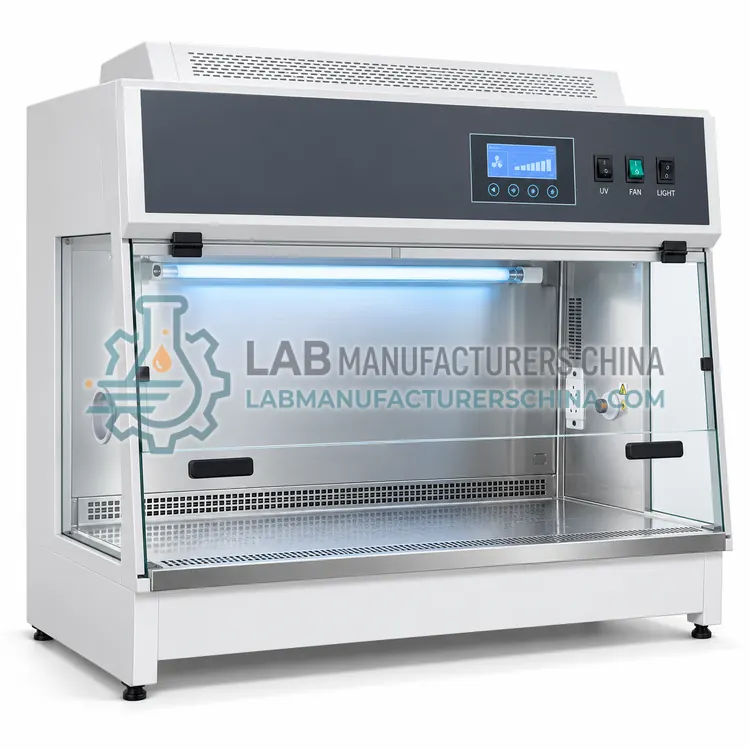
How do Cell Culture Hoods work?
Sterile work depends on supplying particle-free air and preventing entry of contaminants from the room. Room air is drawn through a HEPA filter that removes 99.99% of particles at 0.3 µm, and the filtered air flows in a laminar stream over the work surface. In a clean bench, air moves horizontally or vertically across the surface and out toward the operator, protecting the sample only. In a class II biological safety cabinet, air enters a front grille, passes through the supply filter to create a sterile downflow curtain, and is then split so that part recirculates and part is exhausted through a second HEPA filter, protecting both product and operator. A front air barrier prevents room air from entering the work zone when arms reach in, and airflow velocities are designed to balance containment against the risk of disturbing cultures.
Which Cell Culture Hoods variants are available?
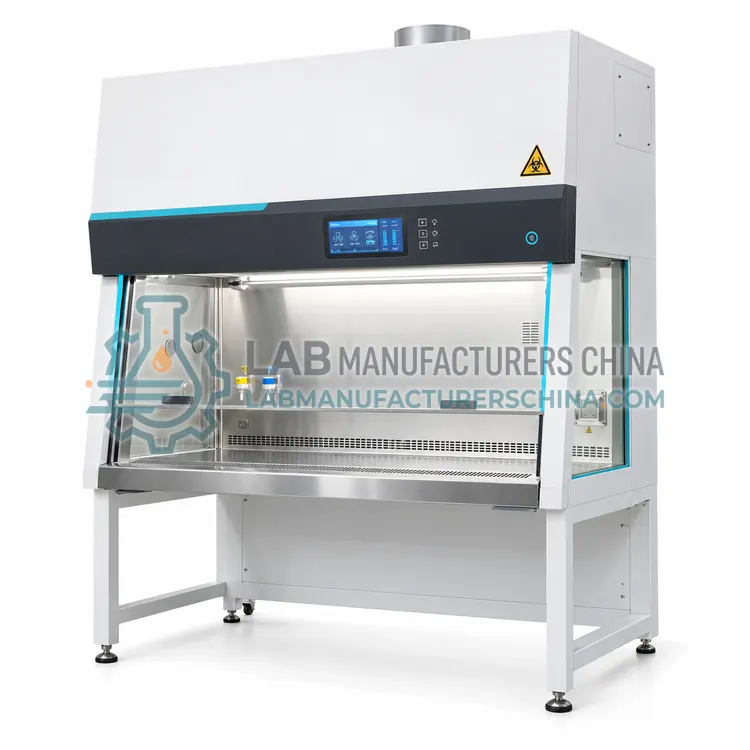
- Class II Type A2 Biological Safety Cabinet — A class II type A2 biosafety cabinet draws 70% of its air through HEPA filters and recirculates it, exhausting the remainder through a second filter, protecting both operator and culture for most cell and tissue work.
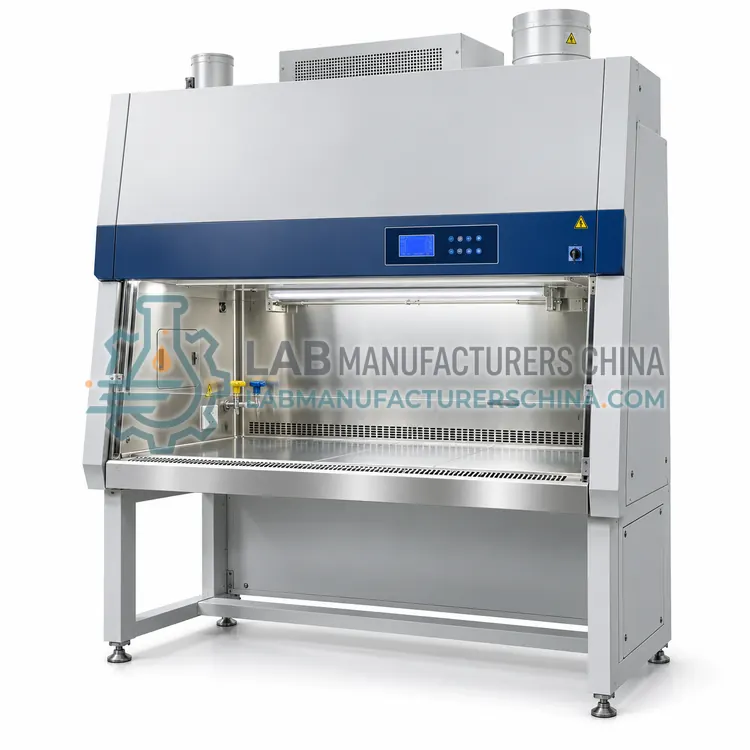
- Class II Type B2 Biological Safety Cabinet — A class II type B2 biosafety cabinet passes all of its air through HEPA filters and exhausts it outdoors, so no air is recirculated.
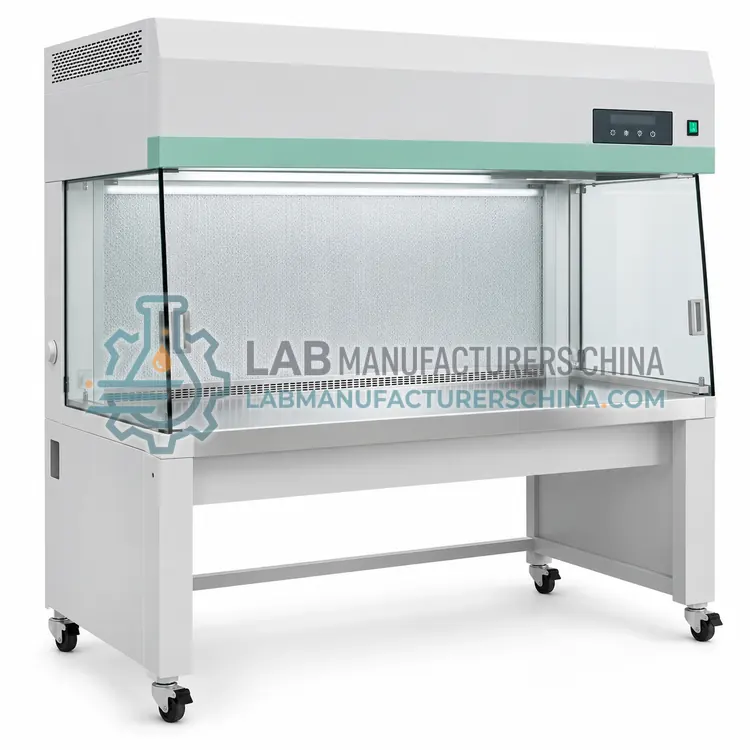
- Horizontal Laminar Flow Clean Bench — A horizontal laminar flow clean bench pushes HEPA-filtered air from the back of the work surface toward the operator, bathing cultures in sterile air.
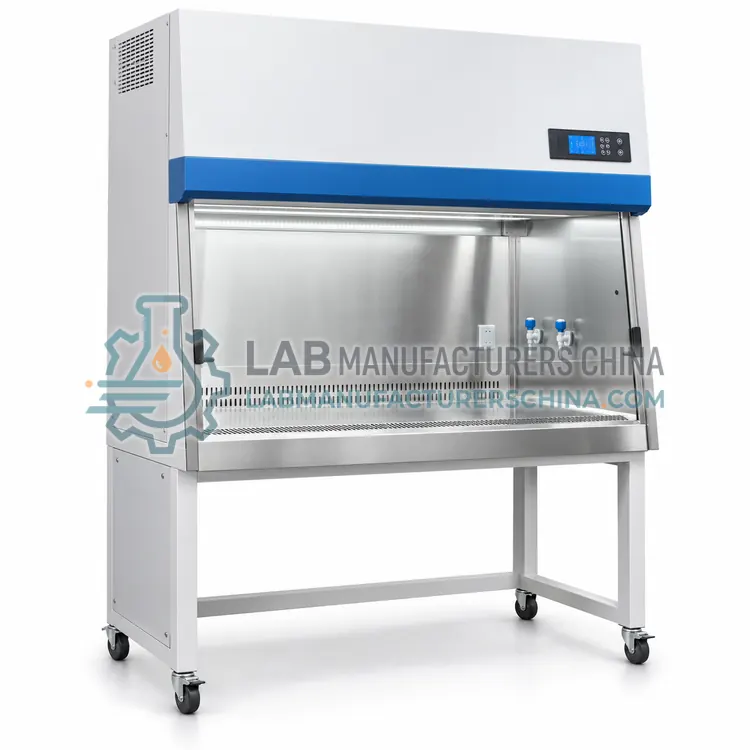
- Vertical Laminar Flow Cell Culture Hood — A vertical laminar flow hood delivers HEPA-filtered air downward onto the work surface from the top of the enclosure, protecting cultures while keeping the operator's hands clear and reducing draughts across open vessels.
- Benchtop Cell Culture Enclosure with UV Sterilisation — A benchtop cell culture enclosure creates a small sterile workspace with HEPA-filtered air and UV sterilisation, giving a low-cost, portable solution for occasional culture work where a full cabinet is not available.
How do I choose the right variant?
Decide first whether the operator needs protection. Any work with human or animal cells, infectious material or genetically modified organisms requires a class II cabinet, and a type A2 model covers most cell culture needs when recirculating exhaust is acceptable. Type B2 cabinets exhaust all air to the outside and are used with volatile chemicals or radionuclides that must not recirculate. Clean benches are appropriate only for non-hazardous cultures where sample protection alone is sufficient. Then check working dimensions, airflow velocities and alarms, filter integrity test points, interior material, UV lamp, and whether an electrical outlet panel and gas or vacuum service are needed inside the work zone. Confirm that the cabinet will be certified after installation in your laboratory and that the annual certification service is available locally.
Where are Cell Culture Hoods used?
Cell Culture Hoods are specified in aseptic cell culture and subculture, primary cell and stem cell handling, media preparation and bottle filling, cell therapy product processing and viral vector and infectious cell work.
Which standards and certifications apply?
Work with Cell Culture Hoods is commonly governed by EN 12469, NSF/ANSI 49, ISO 14644-1, IEC 61010-1, IEC 61326-1 and USP <1046>. Instrument certifications such as CE marking are confirmed per configuration and never assumed.
What are the key considerations before purchase?
A new or relocated cabinet must be certified after installation and yearly thereafter, with filter integrity, downflow velocity, inflow velocity and airflow visualisation recorded against EN 12469 or NSF/ANSI 49. Avoid placing the cabinet near doors, windows, air supply diffusers or high-traffic routes, because draughts disturb the air barrier. Clean the work surface before and after use with 70% ethanol or a compatible disinfectant, and run the blower for several minutes before starting work. Do not block the front or rear grilles with equipment, since that alters airflow and can break containment. UV lamps are a supplement, not a substitute, for cleaning, and should be replaced when intensity falls below specification. Record certification, cleaning and maintenance in a log for audit purposes.