How do Roller Systems work?
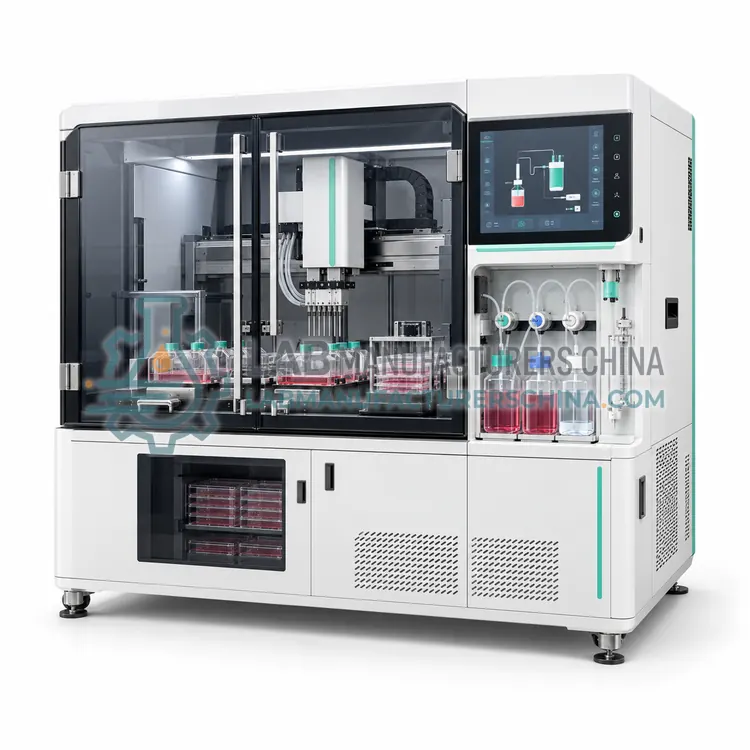
Rotating a cylindrical vessel slowly, usually 0.1–2 rpm, keeps a thin film of medium moving over the inner surface. Adherent cells attach to the wetted wall and are alternately submerged in medium and exposed to the gas phase as the bottle turns, which improves oxygen transfer compared with a static flask and distributes nutrients evenly. Suspension cells are kept gently in motion so they do not settle. For high-density processes the vessels are placed in a warm cabinet or an incubated roller apparatus that controls temperature and, in some designs, carbon dioxide. Cell yield scales with the internal surface area of the bottle, so a 1,700 cm² roller bottle provides the equivalent growth area of several T-flasks while using less medium. Shear stress remains low because the fluid motion is gentle.
Which Roller Systems variants are available?
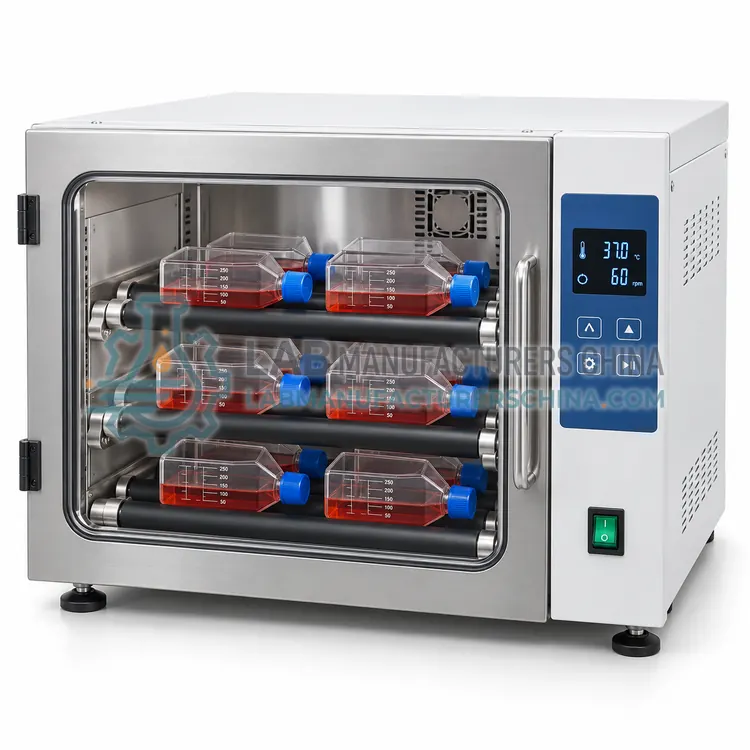
- Roller Bottle Apparatus — A roller bottle apparatus rotates bottles at 0.1–2 rpm on driven rollers in a compact frame, providing large growth surface per unit volume for adherent cell scale-up in vaccine and protein production.
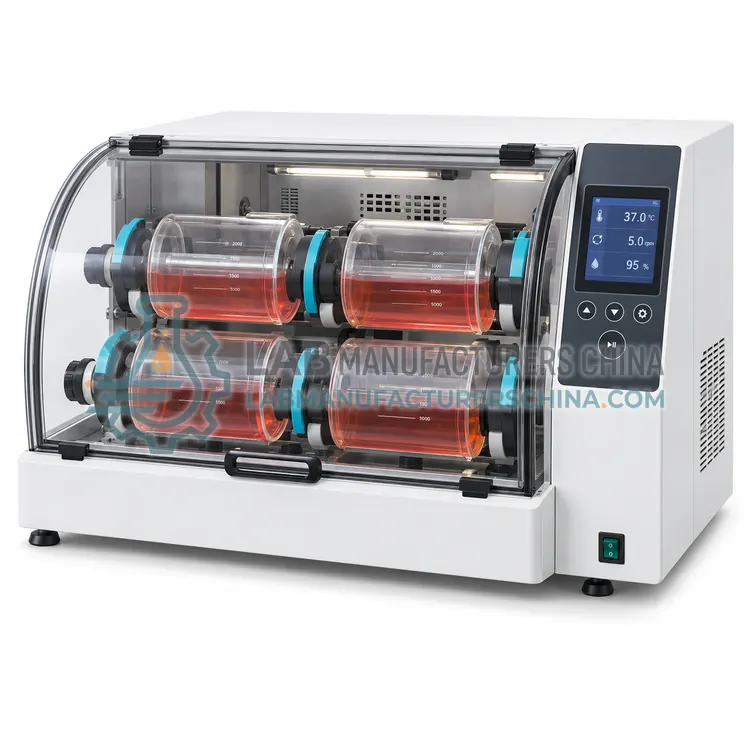
- Incubated Roller Bottle Apparatus — An incubated roller bottle apparatus combines rotation with built-in temperature and carbon dioxide control, so adherent cultures can be grown outside a conventional incubator with monitored and logged conditions for regulated production runs.
- Roller Mixer for Suspension Culture — A roller mixer provides gentle end-over-end agitation for suspension cells, blood samples and cultures in sealed tubes or bottles, keeping cells in suspension without the shear of stirring or the settling of static containers.
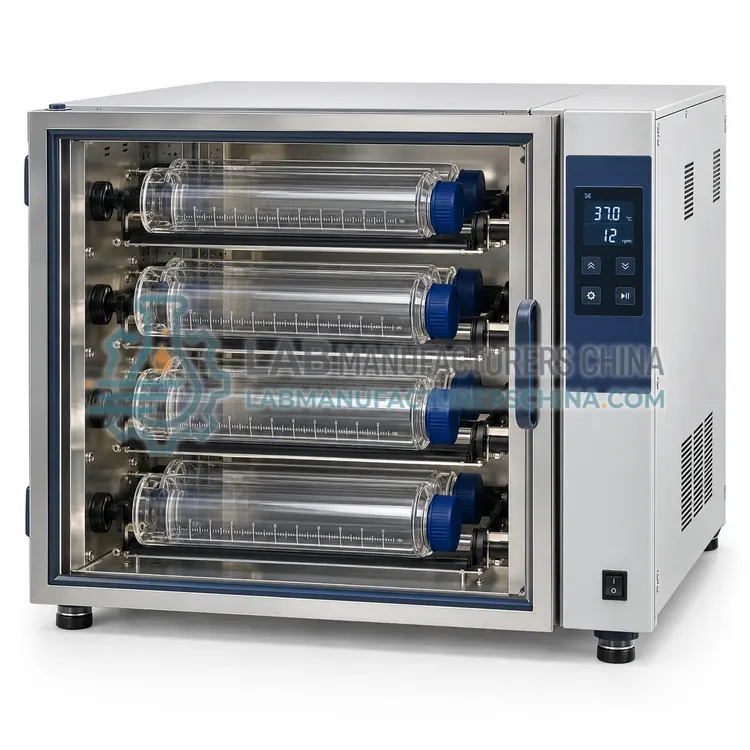
- Roller Drum Bioreactor System — A roller drum bioreactor holds multiple roller bottles or a large drum on a rotating frame with temperature control and optional perfusion, increasing adherent cell surface area for industrial vaccine and protein production.
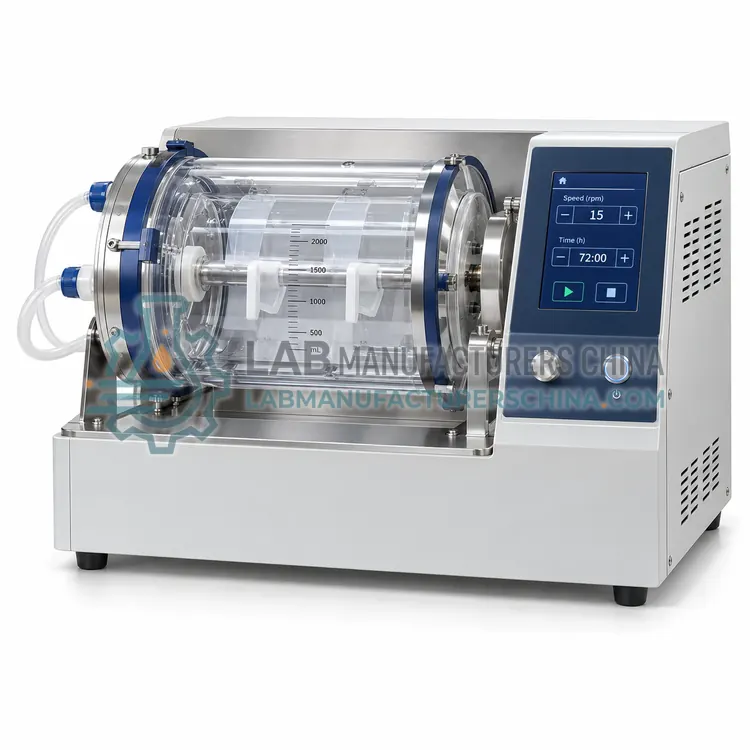
- Rotating Wall Vessel Bioreactor — A rotating wall vessel bioreactor rotates a fluid-filled cylinder so that cells remain suspended with minimal shear stress and no settling, creating a low-stress environment for three-dimensional aggregates and sensitive primary cell types.
How do I choose the right variant?
Choose by scale and control requirements. A basic roller apparatus with adjustable speed suits laboratories that use a separate CO2 incubator, while an incubated roller system with temperature and CO2 control reduces handling and improves reproducibility. Roller mixers provide gentle agitation for suspension cells in bottles or tubes rather than surface growth. For larger adherent processes, roller drum bioreactors and packed-bed or rotating wall vessels increase surface area further and can be integrated with perfusion. Decide on the number of positions, speed range and accuracy, vessel compatibility, motor type and whether CO2 control is required. Check that the apparatus fits your incubator or cabinet, that bottles are secured against slipping at higher speeds, and that the surface material is compatible with the cleaning and sterilisation method you use.
Where are Roller Systems used?
Roller Systems are specified in vaccine production in adherent cell lines, recombinant protein expression scale-up, mesenchymal stem cell expansion, monoclonal antibody production from hybridomas and bulk virus stock preparation.
Which standards and certifications apply?
Work with Roller Systems is commonly governed by IEC 61010-1, IEC 61010-2-010, IEC 61326-1, ISO 14644-1, USP <1046> and ISO 9001. Instrument certifications such as CE marking are confirmed per configuration and never assumed.
What are the key considerations before purchase?
Place the apparatus on a level surface, because uneven loading causes bottles to creep and can lead to breakage. Load bottles symmetrically and secure them with the supplied clamps or retaining rings. Medium volume should be about 10–20% of bottle capacity, enough for the film to cover the inner surface without splashing into the cap filter. Change medium or split cultures according to cell density, and let bottles warm to 37 °C before inoculation, since cold medium slows attachment. Clean the rollers and frame regularly to remove spilled medium, which otherwise attracts contamination. If the unit is used inside an incubator, confirm that its heat output does not disturb chamber temperature, and record speed settings and run times in batch documentation.