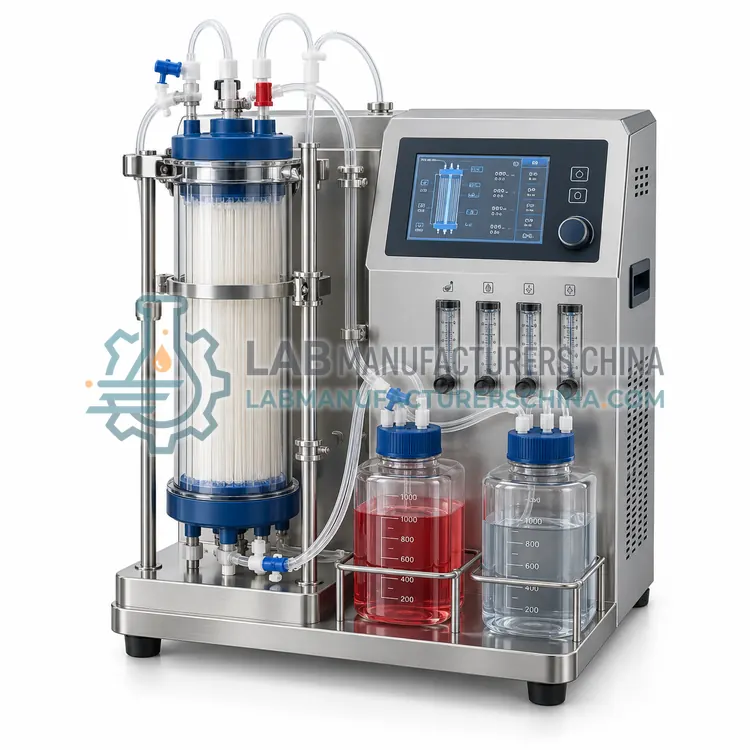
How do Cell Culture Systems work?
Scaling cell culture means increasing the surface available for adherent cells or the volume in which suspension cells can grow, while maintaining oxygen, nutrients, pH and temperature. Spinner vessels stir medium with an impeller or a magnetic bar so that cells and microcarriers stay suspended and gas exchange occurs at the surface or through a sparger. Perfusion systems continuously replace medium, keeping nutrient concentrations stable and removing lactate and ammonia, which supports much higher cell densities than batch culture. Hollow fibre bioreactors grow cells on the outside or inside of semi-permeable fibres, supplying oxygen and nutrients by diffusion through the fibre wall and reaching densities of 10⁷–10⁸ cells per millilitre, but sampling cells for counting is difficult. Microfluidic systems keep cells in channels of 100 µm to a few millimetres, giving precise control of flow, gradients and shear at very small volumes. Automated platforms handle flasks or plates robotically, combining incubation, imaging and liquid handling.
Which Cell Culture Systems variants are available?
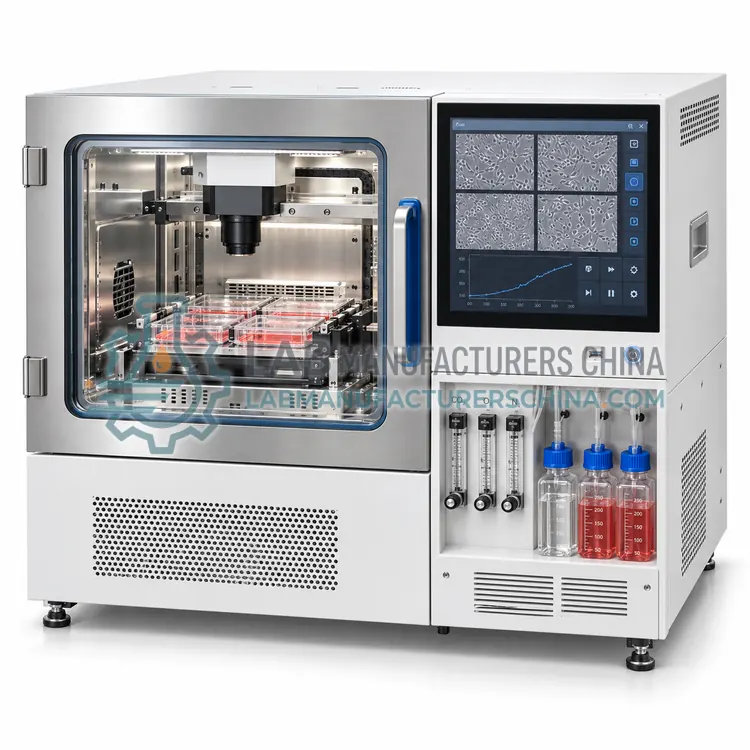
- Automated Cell Culture Platform — An automated cell culture platform combines a robotic handler, incubator, liquid handling and imaging to feed, passage, sample and monitor flasks or plates on a schedule, reducing hands-on time and improving consistency for parallel cultures.
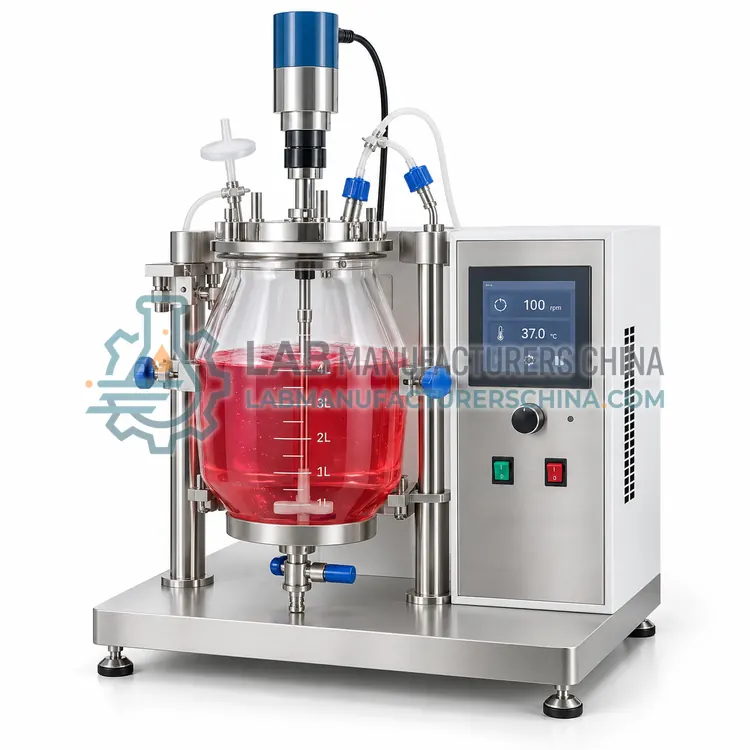
- Spinner Flask Cell Culture System — A spinner flask system cultures suspension cells or microcarrier-attached cells in a stirred vessel from 100 mL to several litres, providing a simple and scalable bridge between flask culture and bench-scale bioreactor processes.
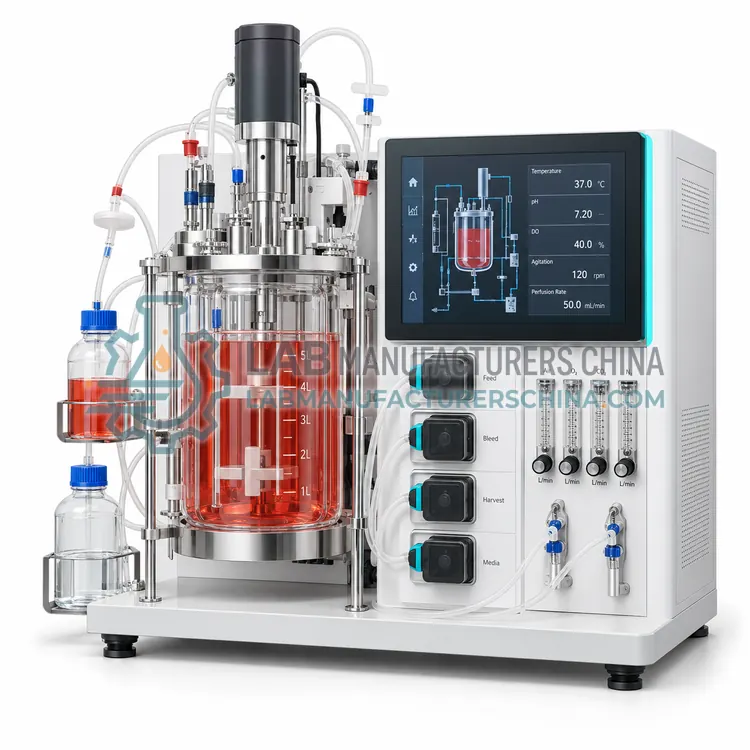
- Perfusion Cell Culture Bioreactor System — A perfusion bioreactor continuously replaces medium while retaining cells, keeping nutrients high and metabolites low so that cell densities reach 20–100 million cells per millilitre.
- Hollow Fibre Cell Culture Bioreactor — A hollow fibre bioreactor grows cells around or inside semi-permeable fibres, supplying oxygen and nutrients by diffusion across a very large membrane area to reach densities of 10⁷–10⁸ cells per millilitre in a compact device.
- Microfluidic Cell Culture System — A microfluidic cell culture system grows cells in channels from 100 µm to a few millimetres wide, giving precise control of flow, shear stress and chemical gradients at low volume for mechanistic, organ-on-chip and screening studies.
How do I choose the right variant?
Choose by scale, cell type and how much control the process needs. For a few flasks, an automated platform reduces hands-on time and improves consistency but does not increase capacity much. For suspension cells and microcarrier cultures, spinner vessels are the standard intermediate step, with volume from 100 mL to several litres. When cell density or product titre is the limiting factor, perfusion systems and hollow fibre bioreactors provide far higher densities per unit volume, at the cost of more complex control and harder cell sampling. Microfluidic systems suit mechanistic studies, organ-on-chip models and low-volume screening rather than production. Compare working volume, achievable cell density, oxygenation method, shear levels, perfusion control, sterility of fluid paths, automation level and the availability of validated protocols for your cell type.
Where are Cell Culture Systems used?
Cell Culture Systems are specified in suspension cell expansion for antibody production, microcarrier-based adherent cell culture, cell therapy process development, organ-on-chip and microphysiological studies and viral vector production in high-density culture.
Which standards and certifications apply?
Work with Cell Culture Systems is commonly governed by IEC 61010-1, IEC 61010-2-010, IEC 61326-1, ISO 14644-1, USP <1046> and ISO 20387. Instrument certifications such as CE marking are confirmed per configuration and never assumed.
What are the key considerations before purchase?
Start with the oxygen demand: at high density, dissolved oxygen becomes limiting before nutrients do, so sparging, headspace aeration or membrane oxygenation must be matched to the expected cell number. Check that shear from impellers or bubbles does not damage sensitive cells, and reduce agitation or add protective agents where necessary. Perfusion systems need validated tubing, sterile connections and pumps, and the medium feed rate must be tied to measured metabolite concentrations rather than a fixed schedule. Clean and sterilise vessels by autoclaving or single-use assemblies, and verify sterility with a control incubation before inoculating valuable cultures. Record inoculum density, agitation, gas flow, perfusion rate and sampling times so that runs can be compared, and validate the whole culture process against a reference method when results are reported.