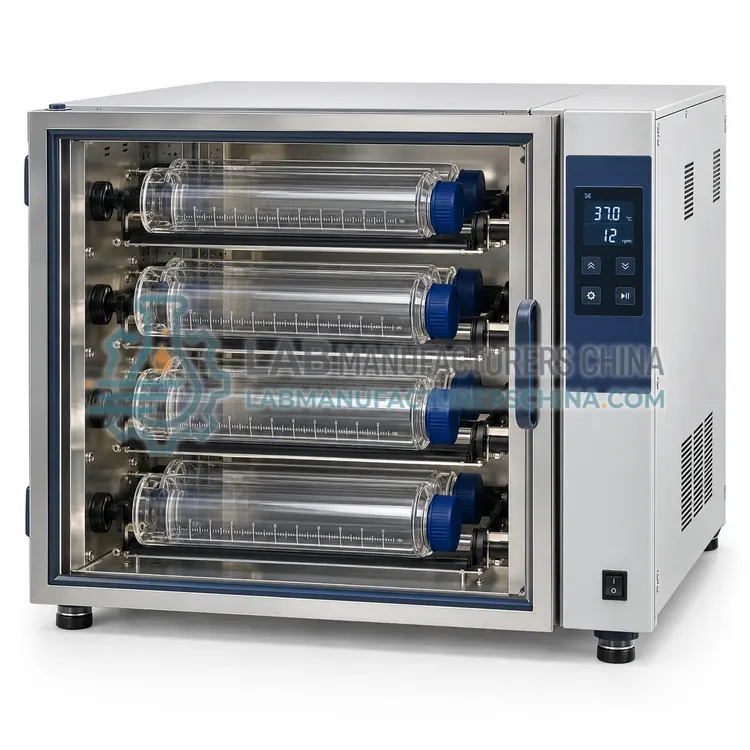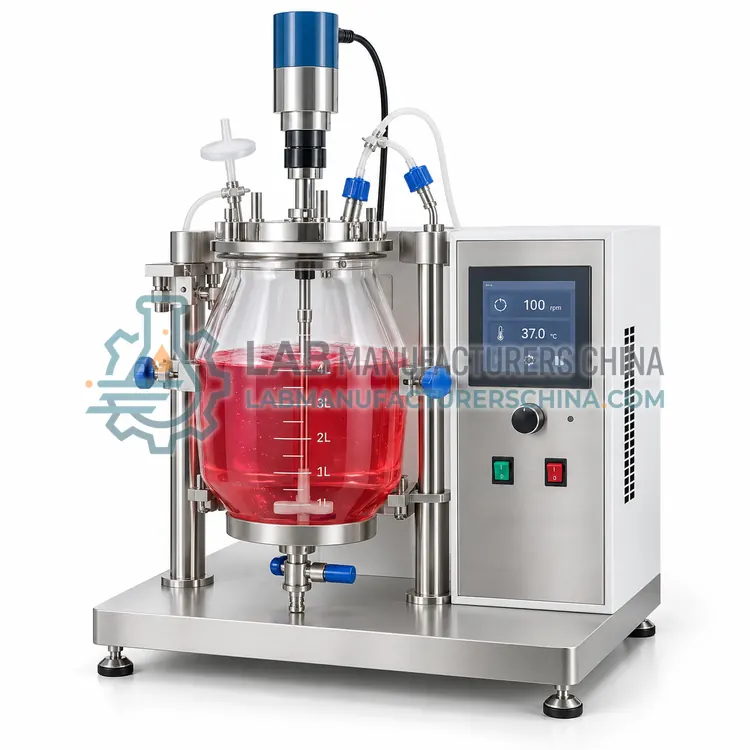
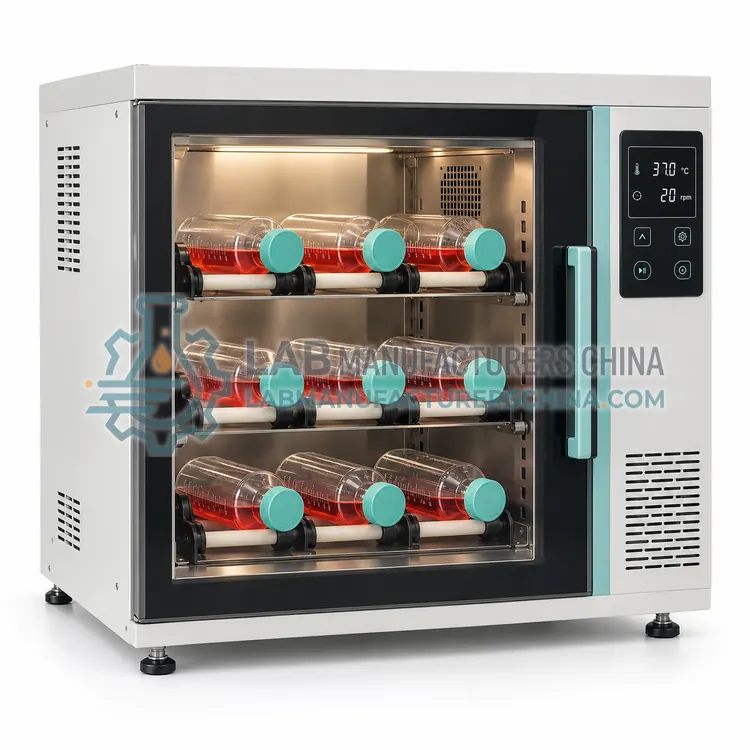
Perfusion Cell Culture Bioreactor System
灌注式细胞培养生物反应器
- SKU CCS-0003
- Cell Culture Systems
- CE (to be confirmed)
- ISO 9001 manufacturing (to be confirmed)
- ISO 13485 manufacturing (to be confirmed)
- IEC 61010-1 safety (to be confirmed)
Price on request — FOB / CIF quoted per order
Prices depend on configuration, quantity and destination port.
Key specifications
| Working volume | 0.5–50 L (model dependent) |
|---|---|
| Cell density | 20–100 x 10⁶ cells/mL |
| Perfusion rate | 0.5–5 vessel volumes per day |
| Cell retention | ATF, spin filter, acoustic or settler |
| Dissolved oxygen control | 10–100% air saturation, cascade control |
| pH control | 6.8–7.4 with CO2 and base addition |
Request a quote Download brochure · to be provided
By Lab Manufacturers China Technical TeamLast reviewed Standards: IEC 61010-1, IEC 61010-2-010, IEC 61326-1
What is the Perfusion Cell Culture Bioreactor System?
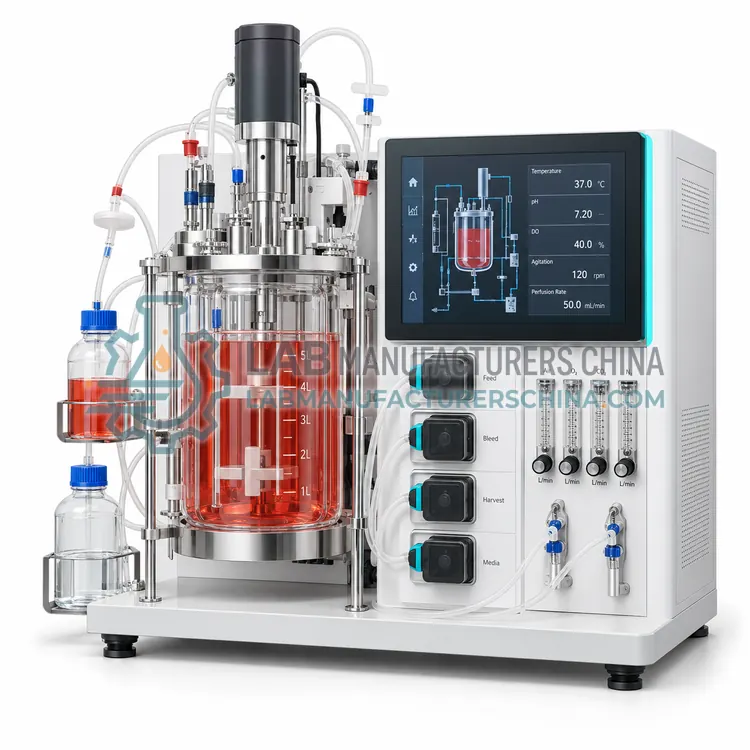
A perfusion bioreactor continuously replaces medium while retaining cells, keeping nutrients high and metabolites low so that cell densities reach 20–100 million cells per millilitre. It suits high-titre antibody and viral vector processes.
What is the Perfusion Cell Culture Bioreactor System?
A perfusion bioreactor continuously replaces medium while retaining cells, keeping nutrients high and metabolites low so that cell densities reach 20–100 million cells per millilitre. It suits high-titre antibody and viral vector processes.
Overview
The vessel is stirred or wave-agitated, and a separation device retains cells while clarified medium is removed. Cell retention uses an alternating tangential flow filter, a spin filter, an acoustic separator or a settling device, each with different shear and fouling characteristics. Fresh medium is fed at a rate set by measured glucose, lactate or cell-specific perfusion rate, and dissolved oxygen and pH are controlled by cascades of gas flow, agitation and base addition. Densities of 20–100 million cells per millilitre are achievable, which reduces the reactor volume needed for a given output and simplifies facility design. The trade-off is complexity: pumps, filters and connections must remain sterile for weeks, and filter fouling or a pump failure can end a run.
How does it work?
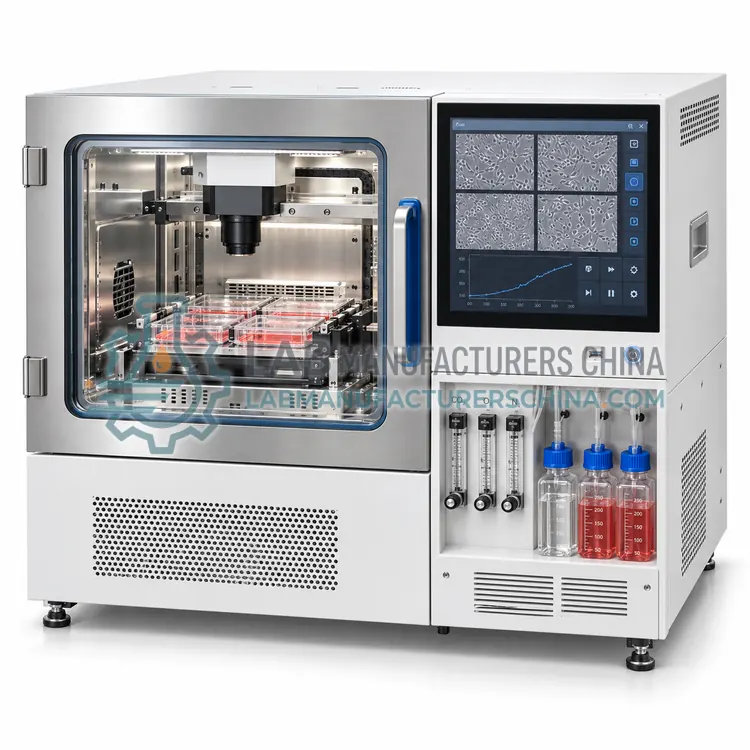
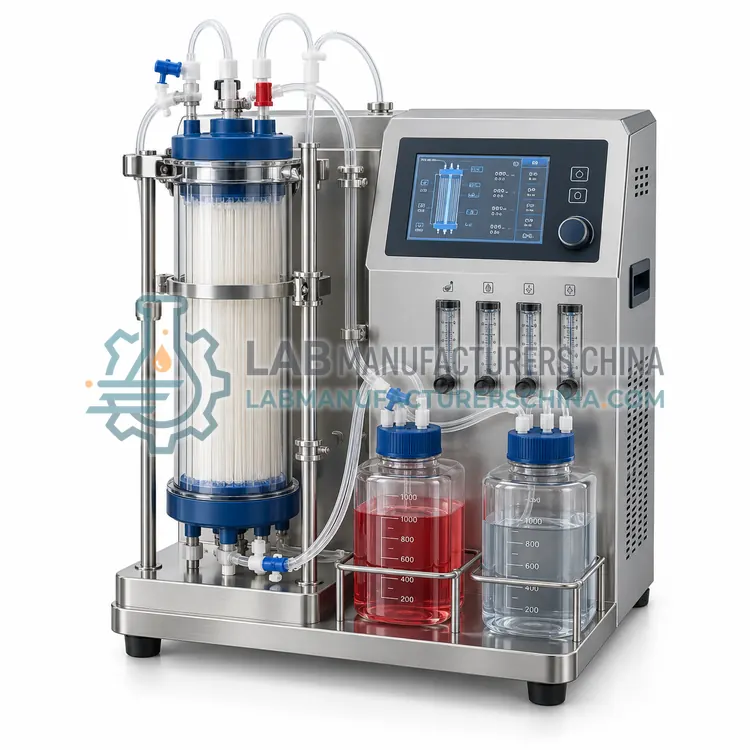
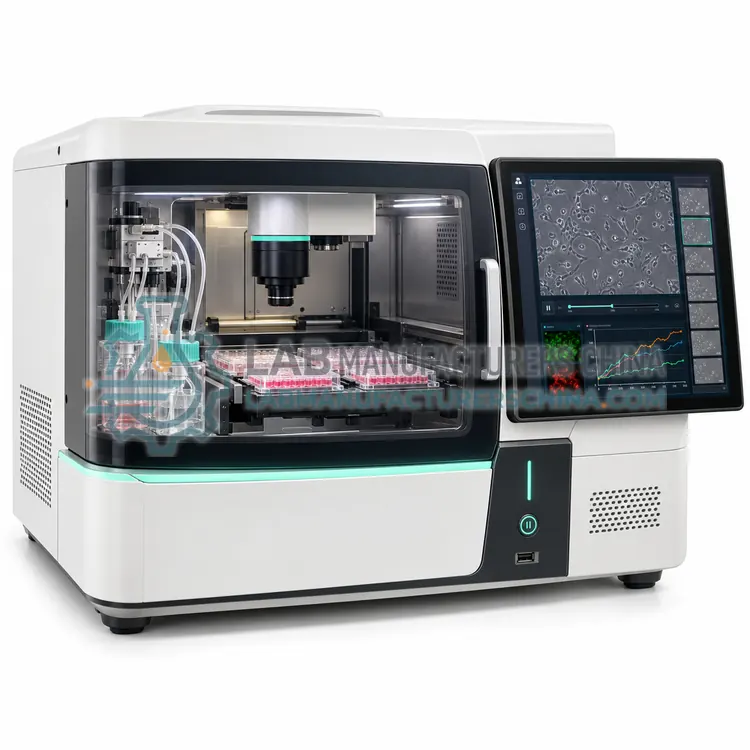
Scaling cell culture means increasing the surface available for adherent cells or the volume in which suspension cells can grow, while maintaining oxygen, nutrients, pH and temperature. Spinner vessels stir medium with an impeller or a magnetic bar so that cells and microcarriers stay suspended and gas exchange occurs at the surface or through a sparger. Perfusion systems continuously replace medium, keeping nutrient concentrations stable and removing lactate and ammonia, which supports much higher cell densities than batch culture. Hollow fibre bioreactors grow cells on the outside or inside of semi-permeable fibres, supplying oxygen and nutrients by diffusion through the fibre wall and reaching densities of 10⁷–10⁸ cells per millilitre, but sampling cells for counting is difficult. Microfluidic systems keep cells in channels of 100 µm to a few millimetres, giving precise control of flow, gradients and shear at very small volumes. Automated platforms handle flasks or plates robotically, combining incubation, imaging and liquid handling.
What are the key features?
- Cell retention by alternating tangential flow, spin filter or acoustic separation
- Perfusion rate set by measured metabolites or specific rate
- Dissolved oxygen and pH control by cascade
- Cell densities of 20–100 million per millilitre
- Single-use or stainless vessel with sterile fluid path
- Continuous harvest of clarified product from the outflow
What are the technical specifications?
A typical perfusion cell culture bioreactor system configuration offers working volume of 0.5–50 L (model dependent), cell density of 20–100 x 10⁶ cells/mL, perfusion rate of 0.5–5 vessel volumes per day, cell retention of ATF, spin filter, acoustic or settler, dissolved oxygen control of 10–100% air saturation, cascade control and pH control of 6.8–7.4 with CO2 and base addition. Values are indicative of the product class; the exact figures for each configuration are confirmed on the quotation and the calibration documents supplied with the instrument.
Which applications is it used for?
The Perfusion Cell Culture Bioreactor System is used in high-titre antibody production, viral vector and vaccine manufacturing, cell therapy expansion in bioreactors and continuous production of secreted proteins. Across the wider Cell Culture Systems class, laboratories also deploy it for suspension cell expansion for antibody production, microcarrier-based adherent cell culture and cell therapy process development.
Which standards and certifications apply?
Relevant standards and methods include IEC 61010-1, IEC 61010-2-010, IEC 61326-1, ISO 14644-1, USP <1046> and ISO 20387. Certification candidates for this model are CE, ISO 9001 manufacturing, ISO 13485 manufacturing and IEC 61010-1 safety; each is to be confirmed for the specific configuration before shipment, and certificates are supplied only where they have been issued.
Start with the oxygen demand: at high density, dissolved oxygen becomes limiting before nutrients do, so sparging, headspace aeration or membrane oxygenation must be matched to the expected cell number. Check that shear from impellers or bubbles does not damage sensitive cells, and reduce agitation or add protective agents where necessary. Perfusion systems need validated tubing, sterile connections and pumps, and the medium feed rate must be tied to measured metabolite concentrations rather than a fixed schedule. Clean and sterilise vessels by autoclaving or single-use assemblies, and verify sterility with a control incubation before inoculating valuable cultures. Record inoculum density, agitation, gas flow, perfusion rate and sampling times so that runs can be compared, and validate the whole culture process against a reference method when results are reported.
How do I select the right Perfusion Cell Culture Bioreactor System?
Select a perfusion bioreactor when cell density or product titre limits a batch process, or when a labile product must be harvested continuously. Specify working volume, retention device, perfusion control strategy, oxygen and pH control ranges and the sterility assurance of the fluid path.
How does it compare with other Cell Culture Systems variants?
Choose by scale, cell type and how much control the process needs. For a few flasks, an automated platform reduces hands-on time and improves consistency but does not increase capacity much. For suspension cells and microcarrier cultures, spinner vessels are the standard intermediate step, with volume from 100 mL to several litres. When cell density or product titre is the limiting factor, perfusion systems and hollow fibre bioreactors provide far higher densities per unit volume, at the cost of more complex control and harder cell sampling. Microfluidic systems suit mechanistic studies, organ-on-chip models and low-volume screening rather than production. Compare working volume, achievable cell density, oxygenation method, shear levels, perfusion control, sterility of fluid paths, automation level and the availability of validated protocols for your cell type.
Full specifications
| Working volume | 0.5–50 L (model dependent) |
|---|---|
| Cell density | 20–100 x 10⁶ cells/mL |
| Perfusion rate | 0.5–5 vessel volumes per day |
| Cell retention | ATF, spin filter, acoustic or settler |
| Dissolved oxygen control | 10–100% air saturation, cascade control |
| pH control | 6.8–7.4 with CO2 and base addition |
| Agitation | Stirred or wave-induced |
| Run duration | weeks, depending on sterility and filter performance |
| Data logging | pH, DO, temperature, perfusion and metabolite trends |
| Dimensions (W x D x H) | approx. 800 x 700 x 1,300 mm |
Indicative values for this product class. Final specifications are confirmed on the quotation and in the calibration documents supplied with the instrument.
Applications
- High-titre antibody production
- Viral vector and vaccine manufacturing
- Cell therapy expansion in bioreactors
- Continuous production of secreted proteins
Key features
- Cell retention by alternating tangential flow, spin filter or acoustic separation
- Perfusion rate set by measured metabolites or specific rate
- Dissolved oxygen and pH control by cascade
- Cell densities of 20–100 million per millilitre
- Single-use or stainless vessel with sterile fluid path
- Continuous harvest of clarified product from the outflow
Frequently asked questions about Perfusion Cell Culture Bioreactor System
Base it on measured glucose and lactate concentrations or on a target cell-specific perfusion rate, typically 0.05–0.5 nL per cell per day. Feeding by schedule rather than by measurement risks either nutrient limitation or unnecessary medium consumption.
Filter fouling or clogging, pump failure, gas supply interruption and loss of sterility over multi-week runs. Monitoring of pressure across the retention device, pump status and sterility checks helps identify problems before a run is lost.
It increases the number of connections and fluid transfers, so yes, unless single-use sterile assemblies and aseptic connectors are used. Longer runs also mean more time for any contamination to become apparent.
Keep oxygen transfer and mixing constant rather than only increasing volume: match the volumetric mass transfer coefficient and specific power input across scales. Nutrient concentration, pH control and inoculation density should also be held constant so that growth rates remain comparable.
When cell density above about 20–30 million cells per millilitre is required, or when a product degrades in the medium. Perfusion keeps nutrients high and metabolites low, increasing volumetric productivity, but needs reliable pumps, sterility and metabolite monitoring.
It provides a very large surface area in a small volume, reaching densities of 10⁷–10⁸ cells per millilitre with gentle, diffusion-based oxygenation. The trade-off is that cells are hard to sample and harvest, so it suits secreted-product processes.
Related models