How do Clinical Centrifuges work?
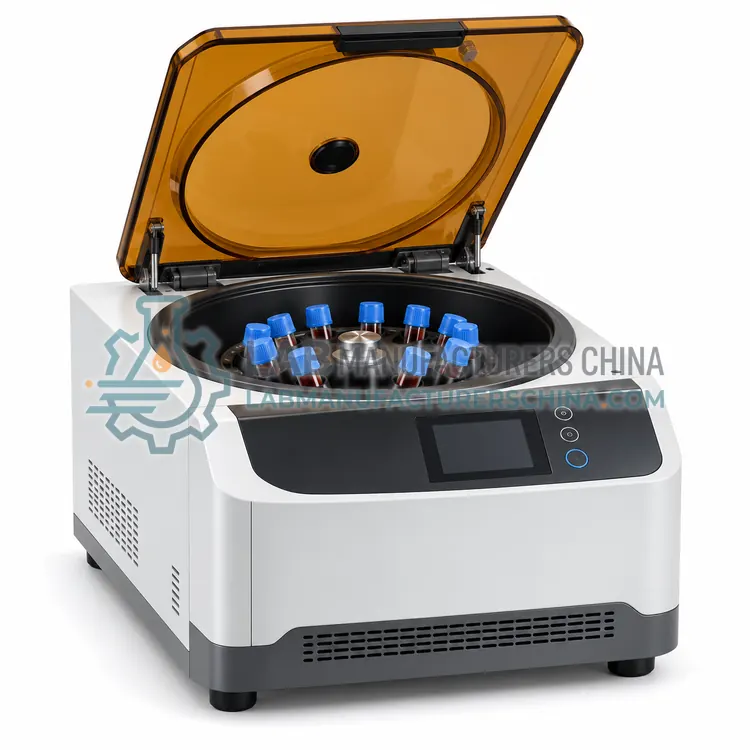
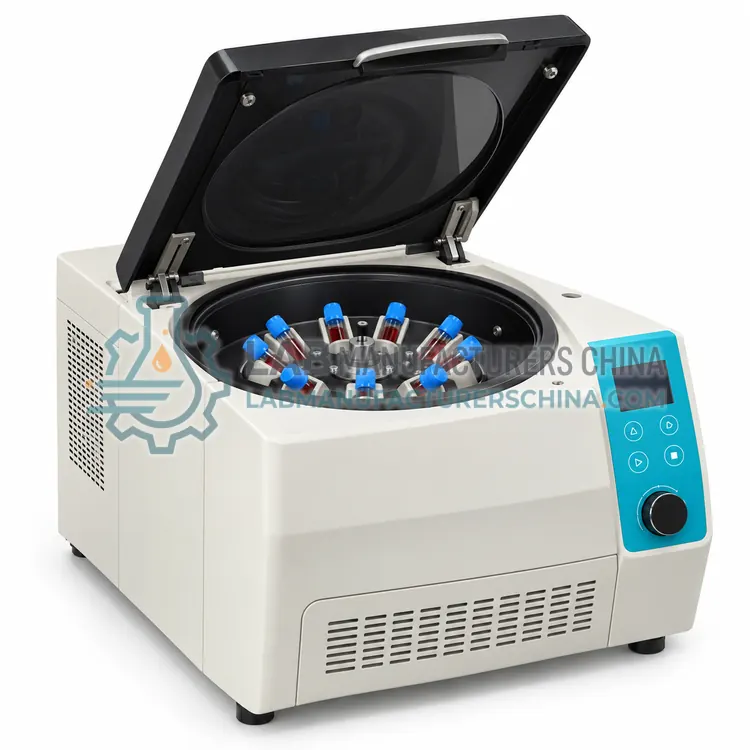
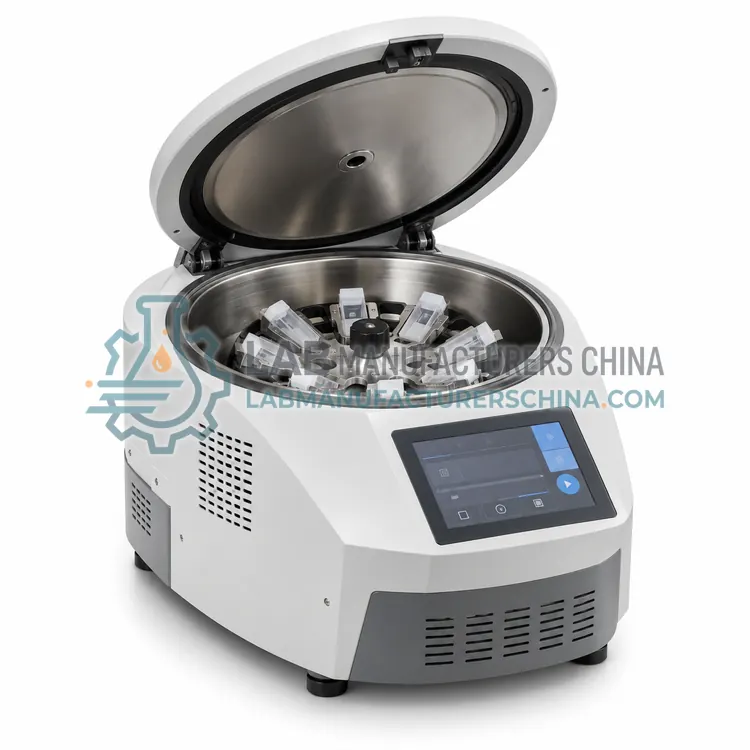
A centrifuge replaces gravity with a much larger centrifugal force. A motor, usually a brushless induction or DC drive, spins a rotor holding sample tubes, and relative centrifugal force rises with the square of speed: RCF = 1.118 × 10⁻⁵ × r × rpm², where r is radius in centimeters. Heavier components such as red cells move to the tube bottom while serum or plasma stays above, often separated by a gel barrier that forms a solid layer during spinning. Swing-out rotors let tubes settle horizontally for a flat interface, while fixed-angle rotors shorten pelleting distance. Refrigerated models use a compressor to hold chamber temperature at 4 to 20 °C, and safety systems include lid locks, imbalance detection and overspeed protection. Programmable acceleration and braking profiles prevent remixing of separated layers.
Which Clinical Centrifuges variants are available?
- Low-Speed Clinical Centrifuge for Serum Separation — A low-speed clinical centrifuge for serum separation spins blood collection tubes in a swing-out rotor at up to about 4,000 rpm to separate serum or plasma.
- Refrigerated Blood Bank Centrifuge — A refrigerated blood bank centrifuge spins blood bags and large-volume tubes at controlled temperature, usually 4 °C to 22 °C, to separate red cells, plasma and platelets.
- Microhematocrit Centrifuge — A microhematocrit centrifuge spins heparinized capillary tubes at about 10,000–15,000 rpm to pack red cells and measure hematocrit as the packed cell volume percentage.
- Cytocentrifuge — A cytocentrifuge deposits cells from low-cell-count fluids such as cerebrospinal fluid, body fluids and bronchoalveolar lavage onto a glass slide within a small circular area using gentle force.
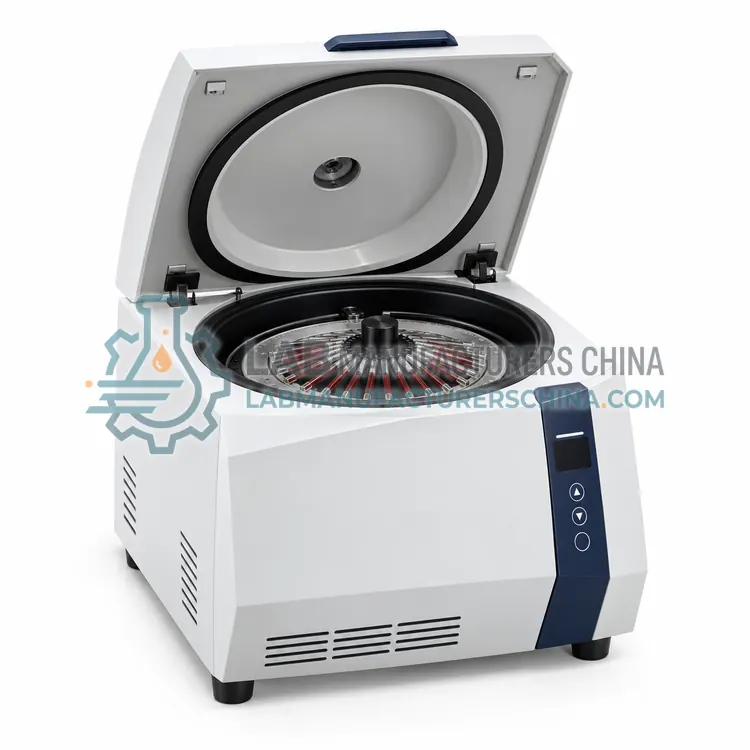
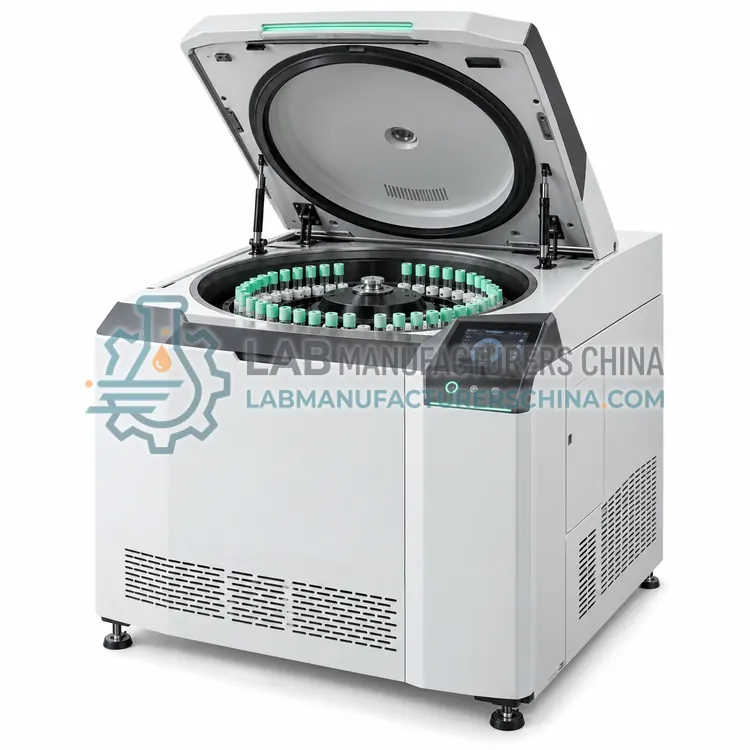
- High-Capacity Floor-Standing Clinical Centrifuge — A high-capacity floor-standing clinical centrifuge holds 48 to over 100 blood collection tubes per run for central laboratories with heavy daily pre-analytical volume.
How do I choose the right variant?
Choose by sample type, tube format and temperature need. Routine serum or plasma separation in gel tubes needs a swing-out rotor reaching 3,000–4,000 rpm, roughly 1,500 to 2,200 × g, and a capacity matching peak hourly tube load. Blood bank and platelet work call for refrigeration at 20–24 °C or 4 °C and larger bucket capacity. Microhematocrit and cytospin tasks need purpose-built rotors. Check rotor and adapter compatibility with your tube diameters, maximum RCF, noise, footprint and programmability of acceleration and braking. Confirm lid lock and imbalance safety, biohazard containment with sealed buckets, and availability of spare rotors and service.
Where are Clinical Centrifuges used?
Clinical Centrifuges are specified in serum and plasma separation, blood component preparation, microhematocrit determination, cytology slide preparation and urine sediment concentration.
Which standards and certifications apply?
Work with Clinical Centrifuges is commonly governed by IEC 61010-2-020, IEC 61010-1, ISO 15189, CLSI GP44, ISO 13485 and EN 12469. Instrument certifications such as CE marking are confirmed per configuration and never assumed.
What are the key considerations before purchase?
Place the centrifuge on a rigid level bench with clearance around it, and never run it unbalanced; opposite tubes must match within the tolerance stated in the manual. Use sealed buckets or aerosol-tight lids for infectious specimens. Verify speed with a photo-tachometer and temperature with a reference thermometer during installation and annually. Inspect rotors for cracks, corrosion and pitting, record run hours, and retire them at the manufacturer's service life. Clean with mild disinfectant, and clean the condenser of refrigerated models. Keep records under ISO 15189 and follow IEC 61010-2-020 safety requirements.