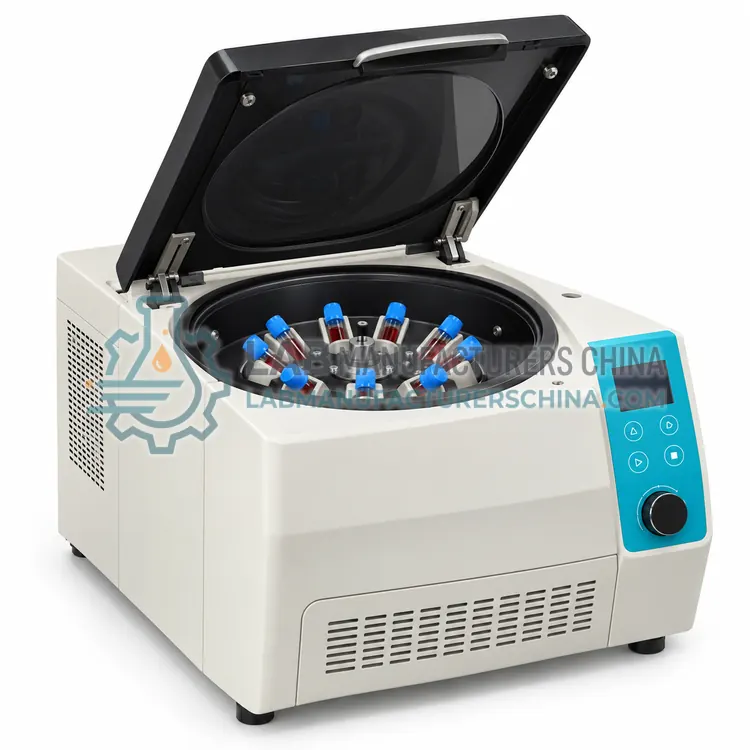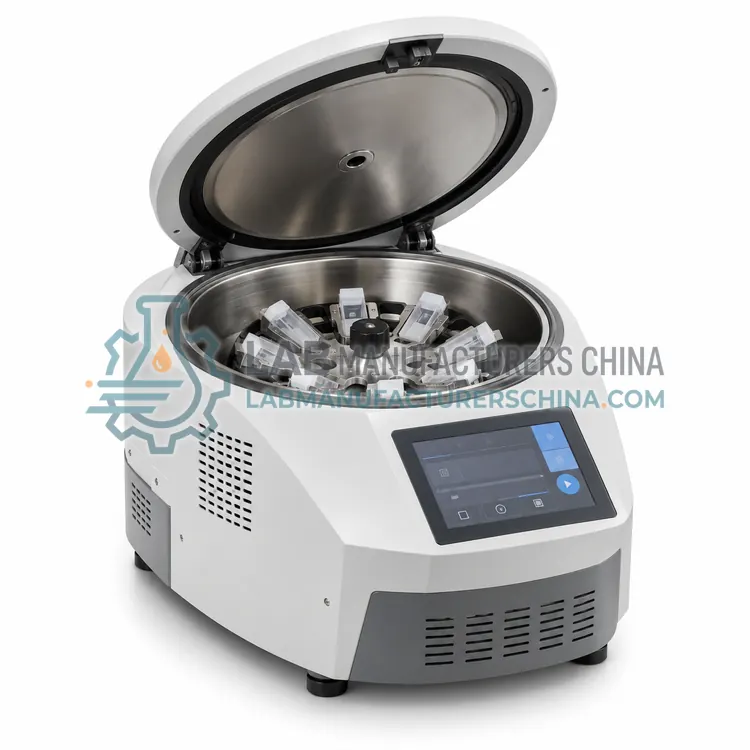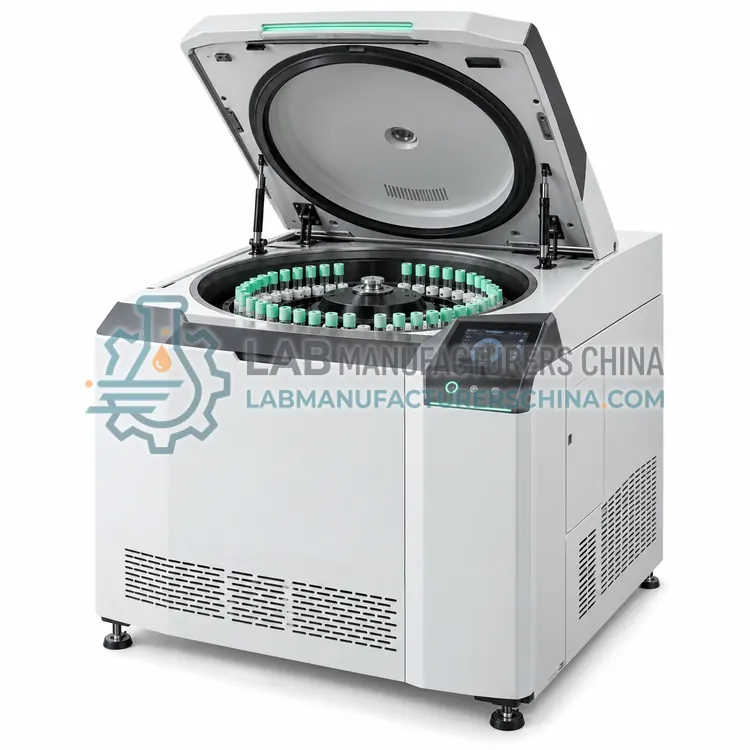
Microhematocrit Centrifuge
微量血细胞比容离心机
- SKU CLC-0003
- Clinical Centrifuges
- CE (to be confirmed)
- ISO 13485 quality system (to be confirmed)
Price on request — FOB / CIF quoted per order
Prices depend on configuration, quantity and destination port.
Key specifications
| Maximum speed | 12,000–15,000 rpm |
|---|---|
| Maximum RCF | Approx. 10,000–15,000 × g |
| Capacity | 24 capillary tubes (typical) |
| Capillary size | 75 mm × 1.1 mm ID |
| Timer | 0–10 min |
| Hematocrit reading | Graduated card 0–100 % or digital reader |
Request a quote Download brochure · to be provided
By Lab Manufacturers China Technical TeamLast reviewed Standards: IEC 61010-2-020, IEC 61010-1, ISO 15189
What is the Microhematocrit Centrifuge?
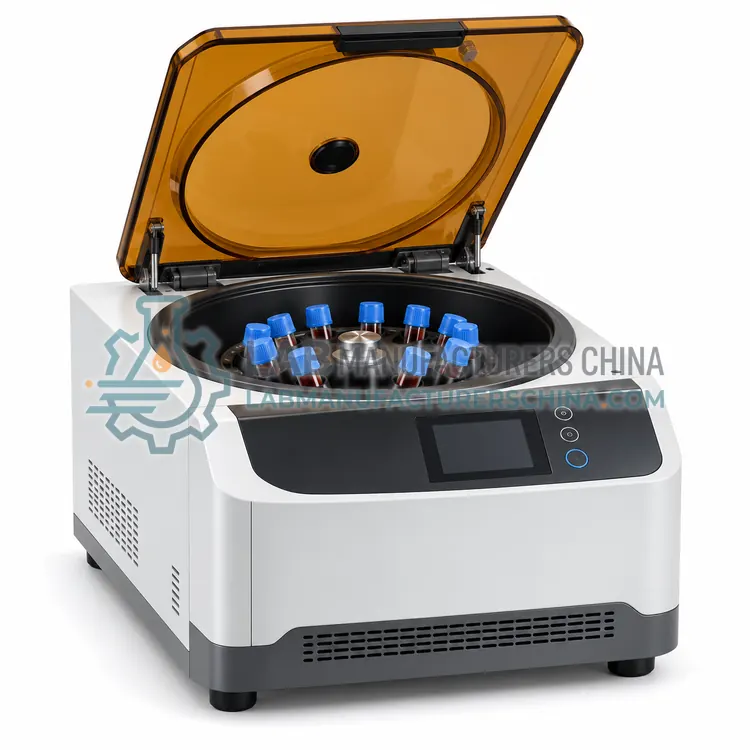
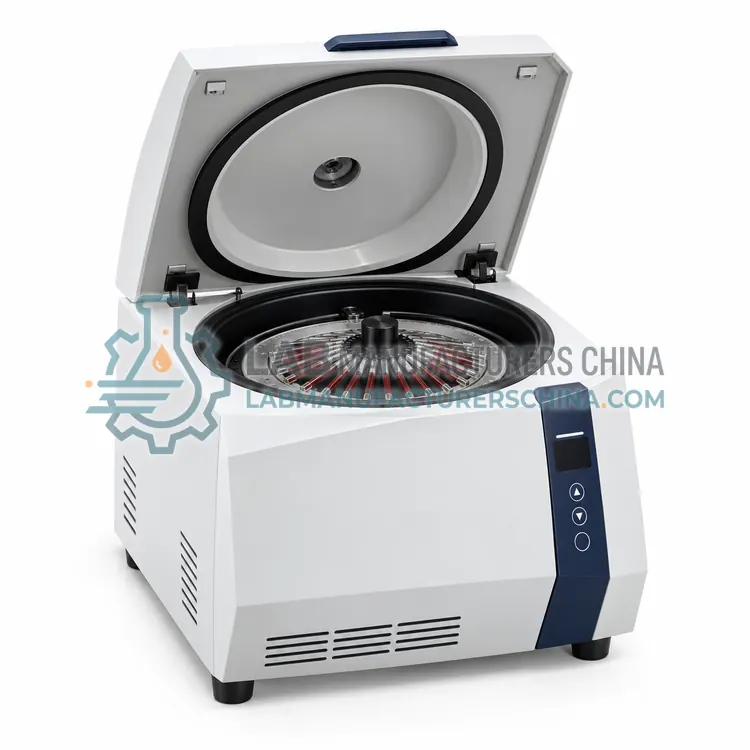
A microhematocrit centrifuge spins heparinized capillary tubes at about 10,000–15,000 rpm to pack red cells and measure hematocrit as the packed cell volume percentage. It is used in clinics, blood donation centers and laboratories for quick anemia screening.
What is the Microhematocrit Centrifuge?
A microhematocrit centrifuge spins heparinized capillary tubes at about 10,000–15,000 rpm to pack red cells and measure hematocrit as the packed cell volume percentage. It is used in clinics, blood donation centers and laboratories for quick anemia screening.
Overview
The instrument holds 24 or more capillary tubes in a radial rotor with a rubber-like gasket that seals the bottom ends. Spinning at about 11,000 to 15,000 rpm, giving roughly 10,000 to 15,000 × g, packs the red cells in 3 to 5 minutes. After centrifugation, the tube is read on a graduated card or integrated reader, measuring the ratio of red-cell column to total column height. Capillary tubes are typically 75 mm long with 1.1 mm inner diameter and hold about 50 to 60 µL. Safety features include a lid lock and an electronic timer with automatic braking. A built-in reader in some models displays hematocrit directly. The method needs very little blood and gives quick results, though buffy coat and trapped plasma can cause small errors compared with automated analyzers.
How does it work?
A centrifuge replaces gravity with a much larger centrifugal force. A motor, usually a brushless induction or DC drive, spins a rotor holding sample tubes, and relative centrifugal force rises with the square of speed: RCF = 1.118 × 10⁻⁵ × r × rpm², where r is radius in centimeters. Heavier components such as red cells move to the tube bottom while serum or plasma stays above, often separated by a gel barrier that forms a solid layer during spinning. Swing-out rotors let tubes settle horizontally for a flat interface, while fixed-angle rotors shorten pelleting distance. Refrigerated models use a compressor to hold chamber temperature at 4 to 20 °C, and safety systems include lid locks, imbalance detection and overspeed protection. Programmable acceleration and braking profiles prevent remixing of separated layers.
What are the key features?
- Radial rotor holding 24 or more capillary tubes
- Speeds of 11,000–15,000 rpm for 3–5 minute packing
- Electronic timer with automatic braking and lid lock
- Optional integrated hematocrit reader
- Uses 50–60 µL capillary blood samples
- Gasket seals bottom ends of capillary tubes during spinning
What are the technical specifications?
A typical microhematocrit centrifuge configuration offers maximum speed of 12,000–15,000 rpm, maximum RCF of Approx. 10,000–15,000 × g, capacity of 24 capillary tubes (typical), capillary size of 75 mm × 1.1 mm ID, timer of 0–10 min and hematocrit reading of Graduated card 0–100 % or digital reader. Values are indicative of the product class; the exact figures for each configuration are confirmed on the quotation and the calibration documents supplied with the instrument.
Which applications is it used for?
The Microhematocrit Centrifuge is used in anemia screening in clinics, blood donor pre-screening, neonatal hematocrit testing and veterinary and research laboratories. Across the wider Clinical Centrifuges class, laboratories also deploy it for serum and plasma separation, blood component preparation and microhematocrit determination.
Which standards and certifications apply?
Relevant standards and methods include IEC 61010-2-020, IEC 61010-1, ISO 15189, CLSI GP44, ISO 13485 and EN 12469. Certification candidates for this model are CE and ISO 13485 quality system; each is to be confirmed for the specific configuration before shipment, and certificates are supplied only where they have been issued.
Place the centrifuge on a rigid level bench with clearance around it, and never run it unbalanced; opposite tubes must match within the tolerance stated in the manual. Use sealed buckets or aerosol-tight lids for infectious specimens. Verify speed with a photo-tachometer and temperature with a reference thermometer during installation and annually. Inspect rotors for cracks, corrosion and pitting, record run hours, and retire them at the manufacturer's service life. Clean with mild disinfectant, and clean the condenser of refrigerated models. Keep records under ISO 15189 and follow IEC 61010-2-020 safety requirements.
How do I select the right Microhematocrit Centrifuge?
Choose this variant when a fast, low-cost hematocrit is needed from capillary blood at a donation site, clinic or neonatal unit, or as a check on automated analyzer results. In the RFQ specify capacity, maximum speed, reader type, timer range and capillary tube format. Ask whether a calibration check of speed and timer is included.
How does it compare with other Clinical Centrifuges variants?
Choose by sample type, tube format and temperature need. Routine serum or plasma separation in gel tubes needs a swing-out rotor reaching 3,000–4,000 rpm, roughly 1,500 to 2,200 × g, and a capacity matching peak hourly tube load. Blood bank and platelet work call for refrigeration at 20–24 °C or 4 °C and larger bucket capacity. Microhematocrit and cytospin tasks need purpose-built rotors. Check rotor and adapter compatibility with your tube diameters, maximum RCF, noise, footprint and programmability of acceleration and braking. Confirm lid lock and imbalance safety, biohazard containment with sealed buckets, and availability of spare rotors and service.
Full specifications
| Maximum speed | 12,000–15,000 rpm |
|---|---|
| Maximum RCF | Approx. 10,000–15,000 × g |
| Capacity | 24 capillary tubes (typical) |
| Capillary size | 75 mm × 1.1 mm ID |
| Timer | 0–10 min |
| Hematocrit reading | Graduated card 0–100 % or digital reader |
| Brake | Automatic electronic brake |
| Lid | Transparent, interlocked |
| Noise level | ≤ 65 dB(A) |
| Dimensions | About 330 × 330 × 210 mm |
| Power supply | 220 V AC, 50/60 Hz, 100–200 W |
Indicative values for this product class. Final specifications are confirmed on the quotation and in the calibration documents supplied with the instrument.
Applications
- Anemia screening in clinics
- Blood donor pre-screening
- Neonatal hematocrit testing
- Veterinary and research laboratories
Key features
- Radial rotor holding 24 or more capillary tubes
- Speeds of 11,000–15,000 rpm for 3–5 minute packing
- Electronic timer with automatic braking and lid lock
- Optional integrated hematocrit reader
- Uses 50–60 µL capillary blood samples
- Gasket seals bottom ends of capillary tubes during spinning
Frequently asked questions about Microhematocrit Centrifuge
The standard run is 3 to 5 minutes at about 10,000 to 15,000 × g, which packs red cells to a stable column. Extended time may be needed for samples with high hematocrit or sickle cells to remove trapped plasma.
Standard tubes are 75 mm long with about 1.1 mm inner diameter, coated with heparin for anticoagulation, and sealed at one end with clay or wax. Plain tubes are used for blood already anticoagulated with EDTA.
Hematocrit is read as the height of the red-cell column divided by the height of the total column, including plasma, multiplied by 100. A graduated card aligns the ends of the column, or a digital reader measures it, and results are given as percent or L/L.
It separates blood and other specimens by density. Typical uses are obtaining serum or plasma before analysis, packing red cells for hematocrit, preparing blood components in blood banks, and concentrating cells onto slides for cytology. It is a core pre-analytical instrument in laboratories.
Rpm is rotor speed in revolutions per minute, while RCF is the actual force on the sample, expressed in multiples of gravity. RCF depends on both speed and rotor radius, so protocols should state RCF in × g to give the same separation on different centrifuges.
Refrigeration limits heating from rotor friction and preserves temperature-sensitive analytes or cells. Blood bank platelet preparations are spun near 20–24 °C, while plasma and some hormone or enzyme samples are spun at 4 °C. Unrefrigerated units can warm by several degrees during long runs.
Related models