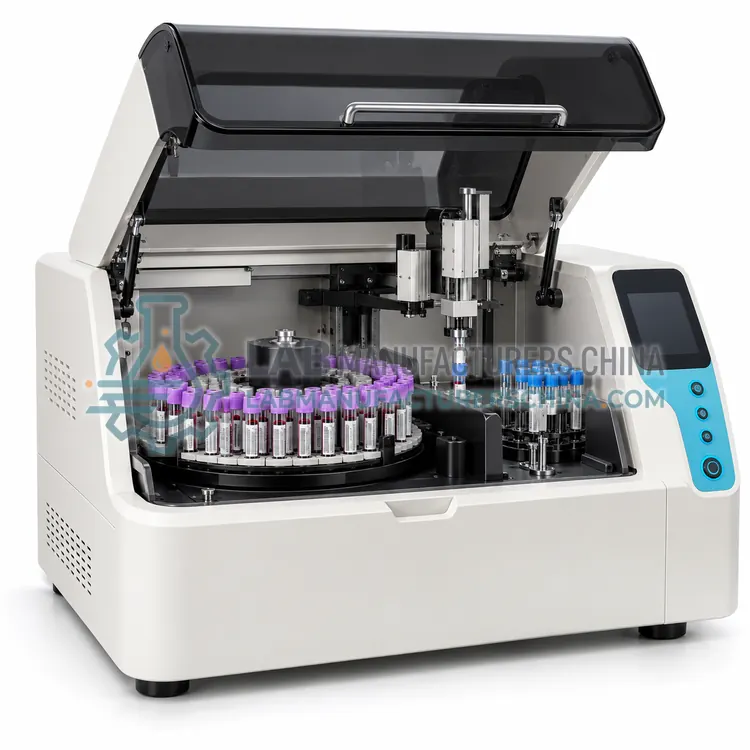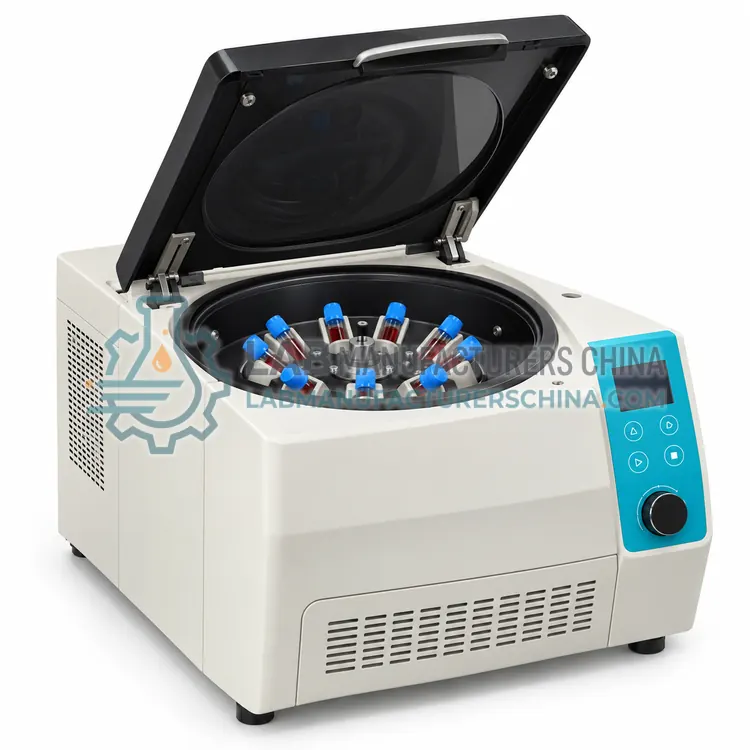
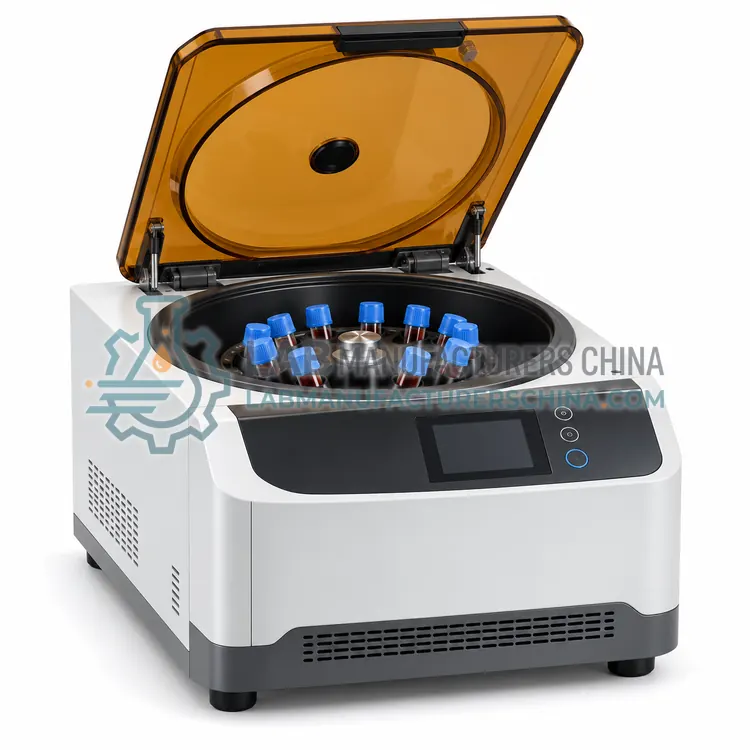
Low-Speed Clinical Centrifuge for Serum Separation
血清分离低速临床离心机
- SKU CLC-0001
- Clinical Centrifuges
- CE (to be confirmed)
- ISO 13485 quality system (to be confirmed)
Price on request — FOB / CIF quoted per order
Prices depend on configuration, quantity and destination port.
Key specifications
| Maximum speed | 4,000 rpm |
|---|---|
| Maximum RCF | 2,200 × g (typical) |
| Capacity | 6 × 15 mL to 24 × 7 mL (rotor dependent) |
| Rotor type | Swing-out |
| Speed accuracy | ±20 rpm |
| Timer | 1–99 min, continuous |
Request a quote Download brochure · to be provided
By Lab Manufacturers China Technical TeamLast reviewed Standards: IEC 61010-2-020, IEC 61010-1, ISO 15189
What is the Low-Speed Clinical Centrifuge for Serum Separation?
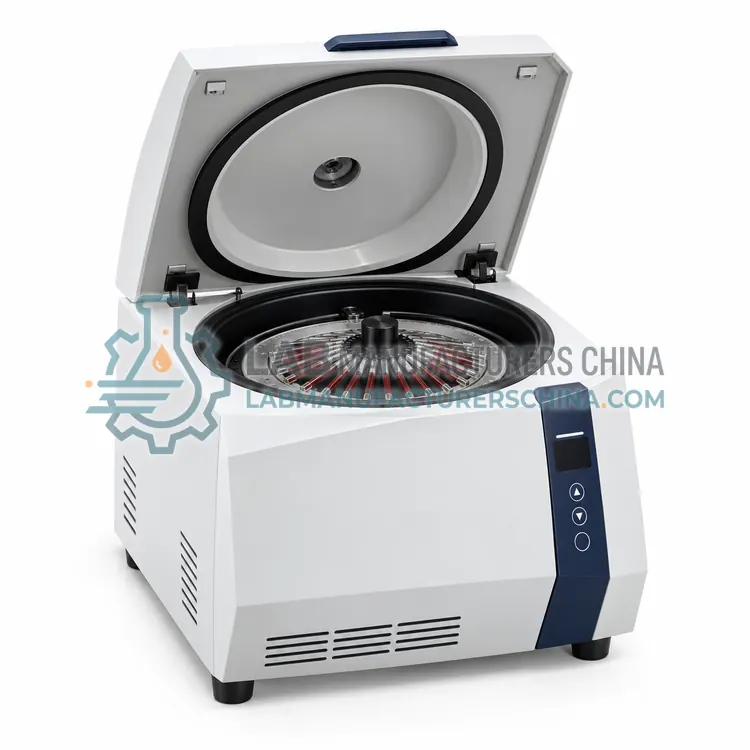
A low-speed clinical centrifuge for serum separation spins blood collection tubes in a swing-out rotor at up to about 4,000 rpm to separate serum or plasma. It is the standard pre-analytical instrument in hospital laboratories, clinics and health centers using gel or clot activator tubes.
What is the Low-Speed Clinical Centrifuge for Serum Separation?
A low-speed clinical centrifuge for serum separation spins blood collection tubes in a swing-out rotor at up to about 4,000 rpm to separate serum or plasma. It is the standard pre-analytical instrument in hospital laboratories, clinics and health centers using gel or clot activator tubes.
Overview
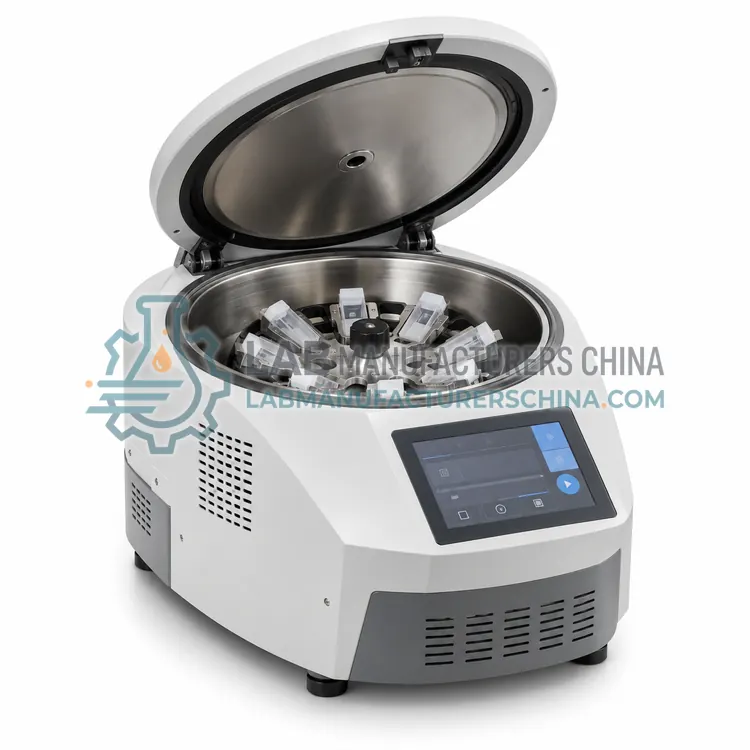
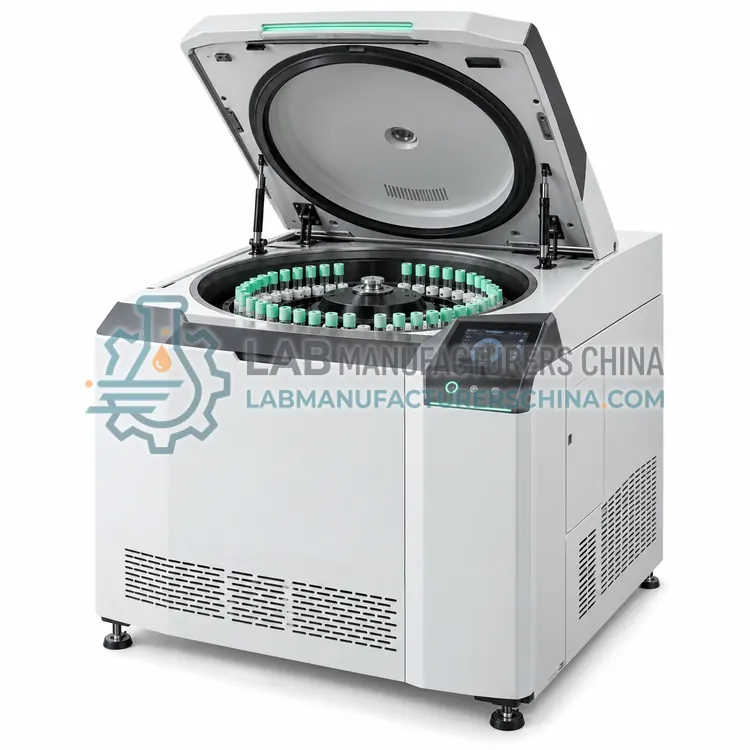
This variant runs at 500 to 4,000 rpm with a maximum RCF of about 2,000 to 2,500 × g, enough to form a stable gel barrier in serum separator tubes in 5 to 10 minutes. A swing-out rotor with 4, 6 or 12 buckets takes 5 to 15 mL vacuum tubes, with adapters for smaller sizes. Brushless motor drive reduces noise and maintenance, and a microprocessor controller stores programs with speed, time and ramp settings. Lid lock interlock and imbalance detection stop the run safely. Acceleration and braking rates are adjustable, preventing remixing of the gel layer. Because it is unrefrigerated, it is unsuited to heat-sensitive samples, but it is compact, quiet and economical. Models with a transparent or steel bowl and sealed buckets contain aerosols when handling infectious samples.
How does it work?
A centrifuge replaces gravity with a much larger centrifugal force. A motor, usually a brushless induction or DC drive, spins a rotor holding sample tubes, and relative centrifugal force rises with the square of speed: RCF = 1.118 × 10⁻⁵ × r × rpm², where r is radius in centimeters. Heavier components such as red cells move to the tube bottom while serum or plasma stays above, often separated by a gel barrier that forms a solid layer during spinning. Swing-out rotors let tubes settle horizontally for a flat interface, while fixed-angle rotors shorten pelleting distance. Refrigerated models use a compressor to hold chamber temperature at 4 to 20 °C, and safety systems include lid locks, imbalance detection and overspeed protection. Programmable acceleration and braking profiles prevent remixing of separated layers.
What are the key features?
- Swing-out rotor with 4, 6 or 12 buckets for 5–15 mL blood tubes
- Speed range of 500–4,000 rpm with RCF up to about 2,200 × g
- Brushless motor drive with low noise and low maintenance
- Program memory with adjustable acceleration and braking
- Lid lock interlock and automatic imbalance detection
- Sealed buckets available for aerosol containment
What are the technical specifications?
A typical low-speed clinical centrifuge for serum separation configuration offers maximum speed of 4,000 rpm, maximum RCF of 2,200 × g (typical), capacity of 6 × 15 mL to 24 × 7 mL (rotor dependent), rotor type of Swing-out, speed accuracy of ±20 rpm and timer of 1–99 min, continuous. Values are indicative of the product class; the exact figures for each configuration are confirmed on the quotation and the calibration documents supplied with the instrument.
Which applications is it used for?
The Low-Speed Clinical Centrifuge for Serum Separation is used in serum separation in gel tubes, routine chemistry preparation, clinic and health center laboratories and emergency department STAT samples. Across the wider Clinical Centrifuges class, laboratories also deploy it for serum and plasma separation, blood component preparation and microhematocrit determination.
Which standards and certifications apply?
Relevant standards and methods include IEC 61010-2-020, IEC 61010-1, ISO 15189, CLSI GP44, ISO 13485 and EN 12469. Certification candidates for this model are CE and ISO 13485 quality system; each is to be confirmed for the specific configuration before shipment, and certificates are supplied only where they have been issued.
Place the centrifuge on a rigid level bench with clearance around it, and never run it unbalanced; opposite tubes must match within the tolerance stated in the manual. Use sealed buckets or aerosol-tight lids for infectious specimens. Verify speed with a photo-tachometer and temperature with a reference thermometer during installation and annually. Inspect rotors for cracks, corrosion and pitting, record run hours, and retire them at the manufacturer's service life. Clean with mild disinfectant, and clean the condenser of refrigerated models. Keep records under ISO 15189 and follow IEC 61010-2-020 safety requirements.
How do I select the right Low-Speed Clinical Centrifuge for Serum Separation?
Select this variant for routine serum and plasma separation where samples do not require refrigeration and throughput is moderate. In the RFQ specify maximum RCF, rotor capacity by tube size, sealed bucket requirement, acceleration and braking control, noise limit and power supply voltage. Confirm rotor compatibility with your current tube brands.
How does it compare with other Clinical Centrifuges variants?
Choose by sample type, tube format and temperature need. Routine serum or plasma separation in gel tubes needs a swing-out rotor reaching 3,000–4,000 rpm, roughly 1,500 to 2,200 × g, and a capacity matching peak hourly tube load. Blood bank and platelet work call for refrigeration at 20–24 °C or 4 °C and larger bucket capacity. Microhematocrit and cytospin tasks need purpose-built rotors. Check rotor and adapter compatibility with your tube diameters, maximum RCF, noise, footprint and programmability of acceleration and braking. Confirm lid lock and imbalance safety, biohazard containment with sealed buckets, and availability of spare rotors and service.
Full specifications
| Maximum speed | 4,000 rpm |
|---|---|
| Maximum RCF | 2,200 × g (typical) |
| Capacity | 6 × 15 mL to 24 × 7 mL (rotor dependent) |
| Rotor type | Swing-out |
| Speed accuracy | ±20 rpm |
| Timer | 1–99 min, continuous |
| Acceleration/braking | Adjustable 1–9 steps |
| Drive | Brushless DC motor |
| Noise level | ≤ 62 dB(A) |
| Dimensions | About 400 × 480 × 350 mm |
| Power supply | 220 V AC, 50/60 Hz, 400 W |
Indicative values for this product class. Final specifications are confirmed on the quotation and in the calibration documents supplied with the instrument.
Applications
- Serum separation in gel tubes
- Routine chemistry preparation
- Clinic and health center laboratories
- Emergency department STAT samples
Key features
- Swing-out rotor with 4, 6 or 12 buckets for 5–15 mL blood tubes
- Speed range of 500–4,000 rpm with RCF up to about 2,200 × g
- Brushless motor drive with low noise and low maintenance
- Program memory with adjustable acceleration and braking
- Lid lock interlock and automatic imbalance detection
- Sealed buckets available for aerosol containment
Frequently asked questions about Low-Speed Clinical Centrifuge for Serum Separation
Gel serum tubes are typically spun for 10 minutes at about 1,000 to 1,300 × g, or 5 to 7 minutes at higher force where the tube supplier allows. Follow the tube manufacturer's instructions, because gel barrier formation depends on both force and time.
A swing-out rotor is preferred for gel tubes because tubes lie horizontal during spinning, producing a flat gel barrier and clean serum layer. Fixed-angle rotors suit pelleting cells and small tubes but can tilt the gel interface.
Yes. The same unit can spin serum tubes after clotting and heparin or EDTA plasma tubes immediately after collection. Set program speed and time for each tube type, and do not re-centrifuge gel tubes that have already been spun, since this can disturb the barrier.
It separates blood and other specimens by density. Typical uses are obtaining serum or plasma before analysis, packing red cells for hematocrit, preparing blood components in blood banks, and concentrating cells onto slides for cytology. It is a core pre-analytical instrument in laboratories.
Rpm is rotor speed in revolutions per minute, while RCF is the actual force on the sample, expressed in multiples of gravity. RCF depends on both speed and rotor radius, so protocols should state RCF in × g to give the same separation on different centrifuges.
Refrigeration limits heating from rotor friction and preserves temperature-sensitive analytes or cells. Blood bank platelet preparations are spun near 20–24 °C, while plasma and some hormone or enzyme samples are spun at 4 °C. Unrefrigerated units can warm by several degrees during long runs.