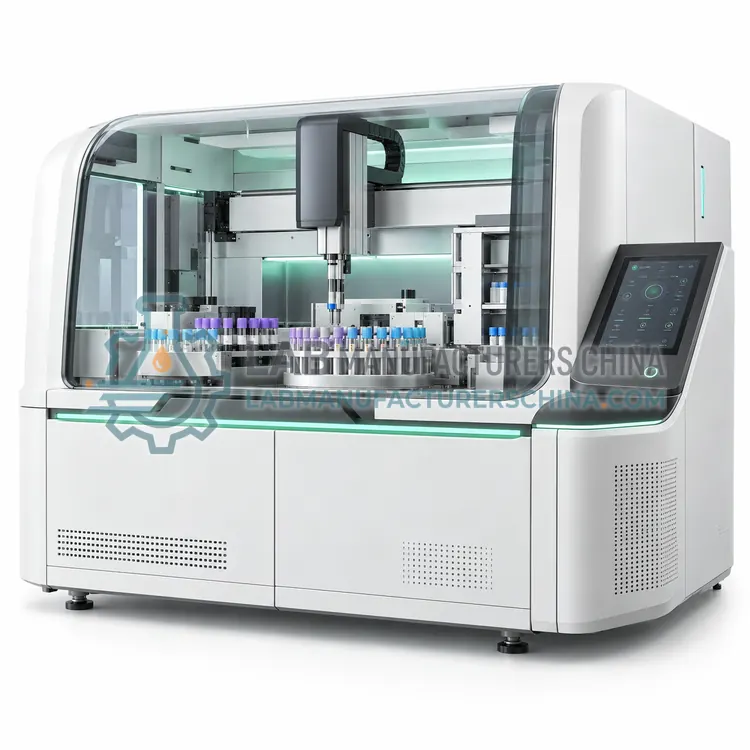
How do Sample Processing work?
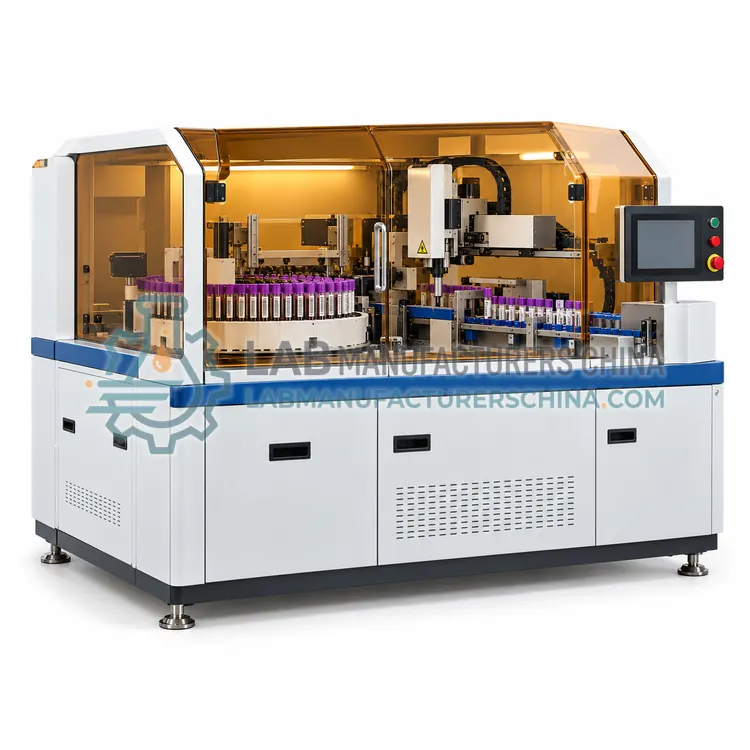
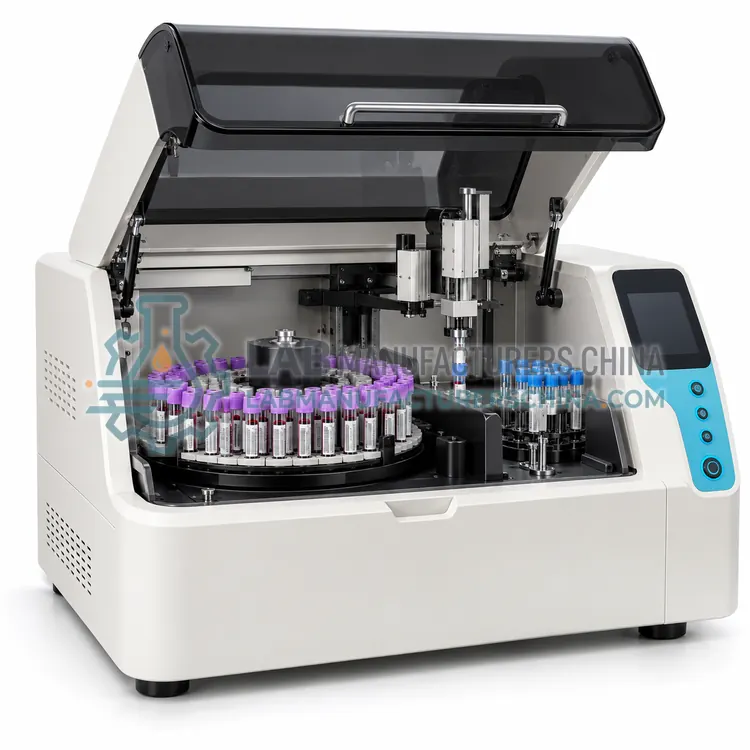
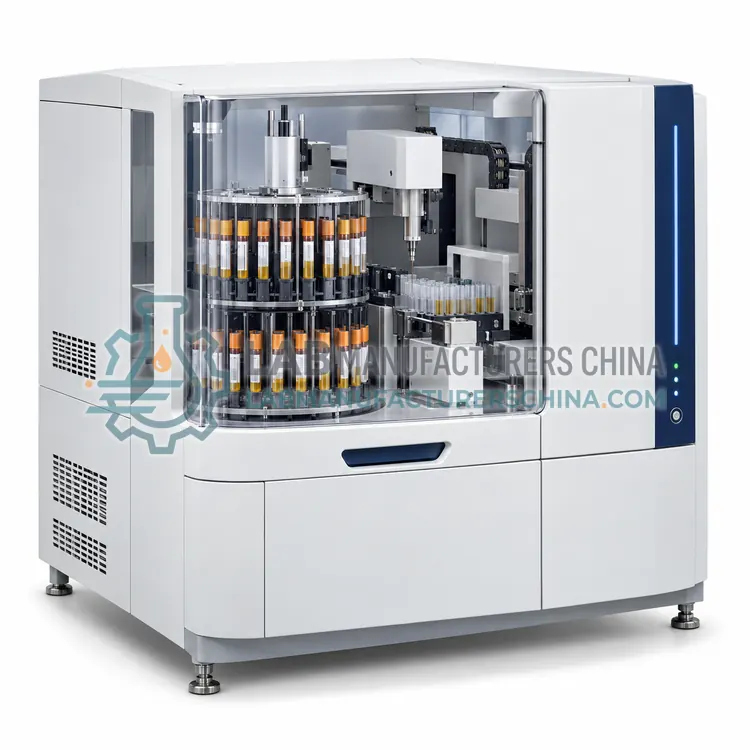
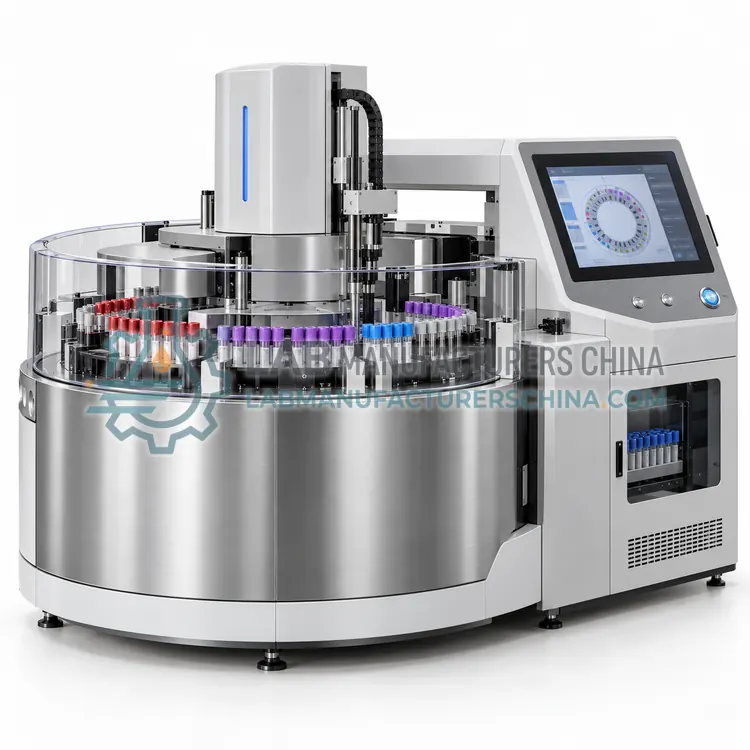
Pre-analytical automation combines barcode identification, robotic handling and liquid transfer. A tube enters on an input lane where a camera or laser scanner reads the barcode and a vision system identifies tube type, cap color and height. A gripper lifts the tube, and a decapper removes the stopper by torque-controlled rotation or pull, detecting cap type to avoid breakage. Sorting systems route tubes by test request through conveyors, diverters or robotic arms into racks for each analyzer. Aliquoters use disposable tips on a pipetting channel with capacitive liquid-level detection and clot detection to transfer serum or plasma to labeled secondary tubes. Recappers apply a new cap or pierceable seal to limit evaporation and aerosol. Everything is coordinated by middleware that exchanges orders and results with the laboratory information system.
Which Sample Processing variants are available?
- Automatic Blood Collection Tube Labeling System — An automatic blood collection tube labeling system prints and applies barcode labels to empty collection tubes from the laboratory information system order.
- Automated Tube Decapper and Recapper — An automated tube decapper and recapper removes stoppers from primary sample tubes and reseals them after testing.
- Automated Serum Aliquoting System — An automated serum aliquoting system transfers measured volumes of serum or plasma from centrifuged primary tubes into labeled secondary tubes or plates.
- Pre-Analytical Tube Sorting System — A pre-analytical tube sorting system reads barcodes on incoming primary tubes and sorts them into racks by destination analyzer or test group.
- Refrigerated Sample Tube Storage and Retrieval System — A refrigerated sample tube storage and retrieval system stores tested primary or secondary tubes at 2–8 °C in racks and retrieves them by barcode for add-on or repeat testing.
How do I choose the right variant?
Begin with daily tube volume and the tube types in use, because capacity and gripper compatibility differ. A laboratory processing under 300 tubes a day may only need a labeler or a standalone decapper, while over 1,000 tubes a day justifies a sorter with aliquoting. Check the range of tube diameters, 12 to 16 mm, and heights, 75 to 100 mm, that the system accepts, and whether it handles pediatric micro-tubes and gel tubes. Evaluate cap removal reliability, aerosol containment and whether it handles screw and push caps. Confirm middleware and LIS connectivity, footprint, consumable cost for tips and caps, and the service response commitment, since downtime stops the whole pre-analytical flow.
Where are Sample Processing used?
Sample Processing are specified in hospital central laboratory pre-analytics, reference laboratory high-volume receiving, blood bank sample preparation, outreach and clinic specimen consolidation and biobanking of residual patient samples.
Which standards and certifications apply?
Work with Sample Processing is commonly governed by ISO 15189, CLSI GP44, CLSI AUTO01, CLSI AUTO03, ISO 15190 and IEC 61010-2-101. Instrument certifications such as CE marking are confirmed per configuration and never assumed.
What are the key considerations before purchase?
Sample handling must protect staff and sample integrity. Place equipment where racks and conveyors connect to analyzers, and supply stable power and network. Validate barcode quality against the label specifications and test each tube type from your collection supplier. Verify aliquot volume accuracy, carryover, and absence of cross-contamination with dye or analyte studies. Review centrifugation and pre-analytical stability limits for each analyte so automated waiting times do not compromise results. Decontaminate grippers and decks per the manual, and dispose of tips and caps as biohazardous waste. Keep spare grippers and sensors on site, and document validation under ISO 15189.