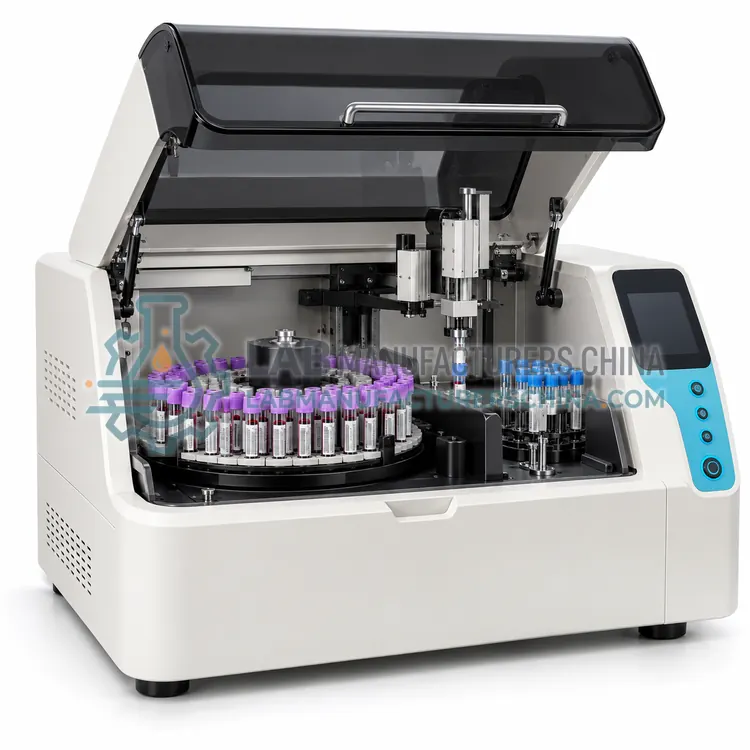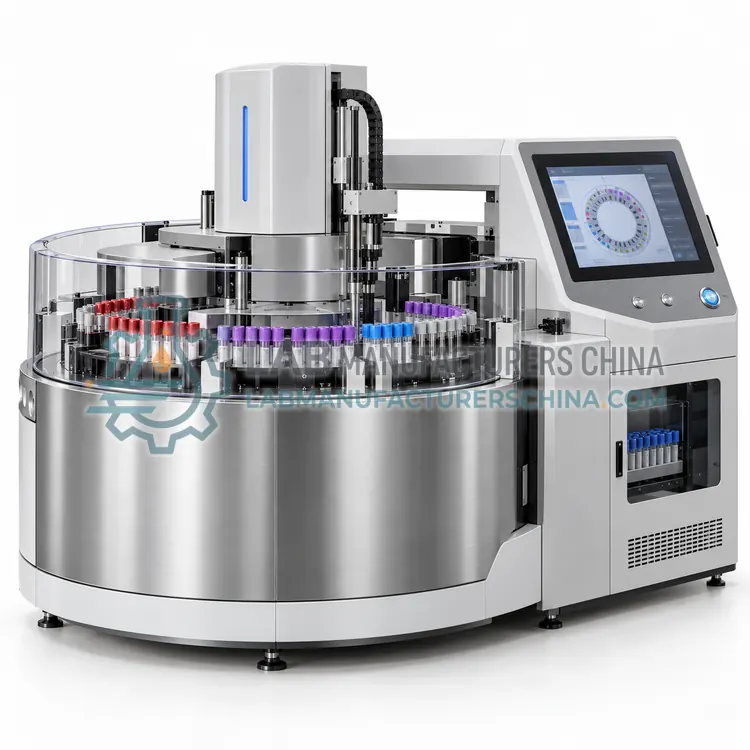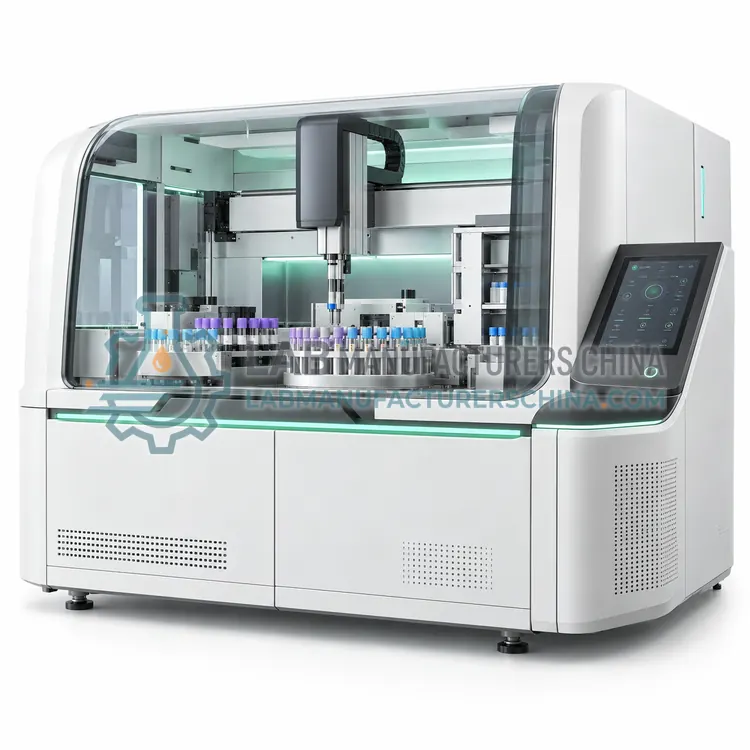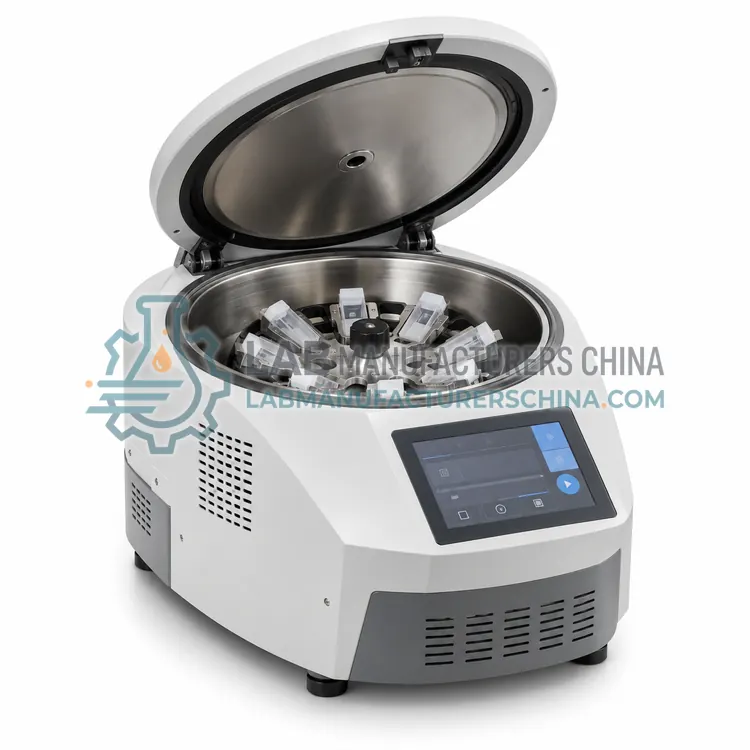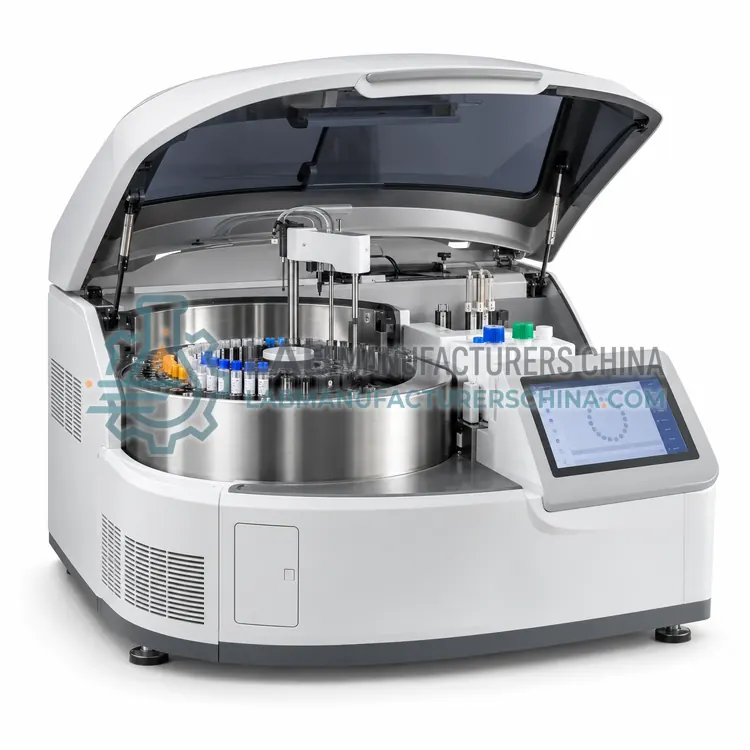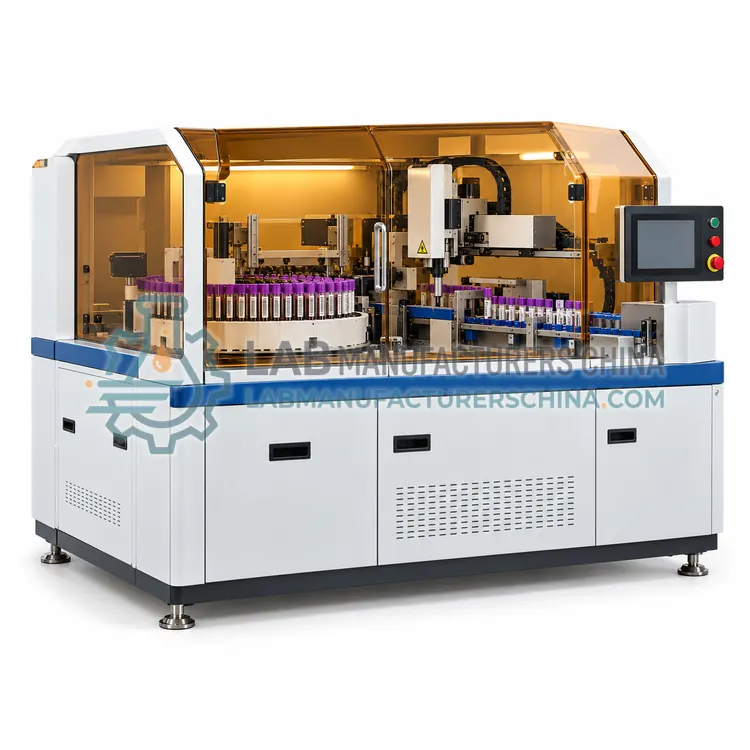
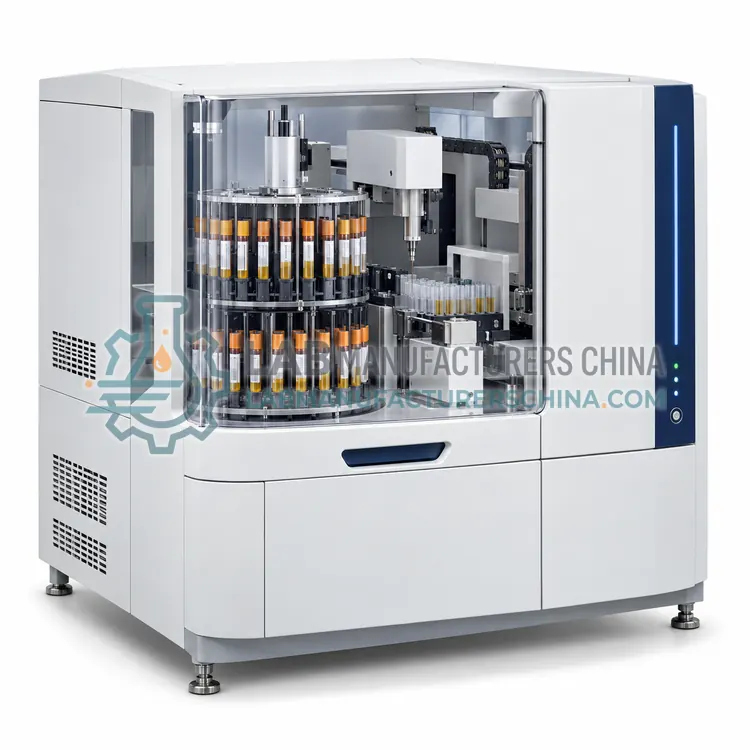
Automated Serum Aliquoting System
自动血清分注系统
- SKU SPR-0003
- Sample Processing
- CE (to be confirmed)
- ISO 13485 quality system (to be confirmed)
Price on request — FOB / CIF quoted per order
Prices depend on configuration, quantity and destination port.
Key specifications
| Throughput | 200–600 primary tubes/h |
|---|---|
| Aliquot volume | 50 µL–2 mL |
| Volume accuracy | ±5 % or ±5 µL (typical) |
| Child tubes per sample | Up to 5 |
| Tip type | Conductive disposable, 300 µL / 1,000 µL |
| Liquid-level detection | Capacitive with clot and pressure monitoring |
Request a quote Download brochure · to be provided
By Lab Manufacturers China Technical TeamLast reviewed Standards: ISO 15189, CLSI GP44, CLSI AUTO01
What is the Automated Serum Aliquoting System?
An automated serum aliquoting system transfers measured volumes of serum or plasma from centrifuged primary tubes into labeled secondary tubes or plates. It supports multi-analyzer workflows, send-out testing and sample archiving in reference laboratories and hospital central laboratories.
What is the Automated Serum Aliquoting System?
An automated serum aliquoting system transfers measured volumes of serum or plasma from centrifuged primary tubes into labeled secondary tubes or plates. It supports multi-analyzer workflows, send-out testing and sample archiving in reference laboratories and hospital central laboratories.
Overview
The aliquoter uses a robotic pipetting channel with conductive disposable tips and capacitive liquid-level detection to locate the serum surface above the gel barrier. It aspirates a programmed volume, typically 50 µL to 2 mL, and dispenses it into pre-labeled or newly labeled secondary tubes. Pressure monitoring on the pipetting channel detects clots, short samples and air aspiration. A vision module checks serum level, hemolysis, icterus and lipemia indices by color, and can flag compromised samples. One primary tube can be split into three to five aliquots according to test orders, each with a barcode that links to the parent. Typical throughput is 200 to 600 primary tubes per hour. Disposable tips remove carryover risk, and UV or disinfectant decontamination of the deck is scheduled after each shift.
How does it work?
Pre-analytical automation combines barcode identification, robotic handling and liquid transfer. A tube enters on an input lane where a camera or laser scanner reads the barcode and a vision system identifies tube type, cap color and height. A gripper lifts the tube, and a decapper removes the stopper by torque-controlled rotation or pull, detecting cap type to avoid breakage. Sorting systems route tubes by test request through conveyors, diverters or robotic arms into racks for each analyzer. Aliquoters use disposable tips on a pipetting channel with capacitive liquid-level detection and clot detection to transfer serum or plasma to labeled secondary tubes. Recappers apply a new cap or pierceable seal to limit evaporation and aerosol. Everything is coordinated by middleware that exchanges orders and results with the laboratory information system.
What are the key features?
- Capacitive liquid-level detection with conductive disposable tips
- Pressure monitoring detects clots, short samples and air aspiration
- Serum indices check for hemolysis, icterus and lipemia by vision
- Aliquot volumes from 50 µL to 2 mL into 3–5 child tubes
- Child barcodes linked to parent tube in LIS
- Throughput of 200–600 primary tubes per hour
What are the technical specifications?
A typical automated serum aliquoting system configuration offers throughput of 200–600 primary tubes/h, aliquot volume of 50 µL–2 mL, volume accuracy of ±5 % or ±5 µL (typical), child tubes per sample of Up to 5, tip type of Conductive disposable, 300 µL / 1,000 µL and liquid-level detection of Capacitive with clot and pressure monitoring. Values are indicative of the product class; the exact figures for each configuration are confirmed on the quotation and the calibration documents supplied with the instrument.
Which applications is it used for?
The Automated Serum Aliquoting System is used in reference laboratory send-out preparation, multi-analyzer hospital laboratories, biobank and archive aliquoting and pharmacokinetic and trial sample processing. Across the wider Sample Processing class, laboratories also deploy it for hospital central laboratory pre-analytics, reference laboratory high-volume receiving and blood bank sample preparation.
Which standards and certifications apply?
Relevant standards and methods include ISO 15189, CLSI GP44, CLSI AUTO01, CLSI AUTO03, ISO 15190 and IEC 61010-2-101. Certification candidates for this model are CE and ISO 13485 quality system; each is to be confirmed for the specific configuration before shipment, and certificates are supplied only where they have been issued.
Sample handling must protect staff and sample integrity. Place equipment where racks and conveyors connect to analyzers, and supply stable power and network. Validate barcode quality against the label specifications and test each tube type from your collection supplier. Verify aliquot volume accuracy, carryover, and absence of cross-contamination with dye or analyte studies. Review centrifugation and pre-analytical stability limits for each analyte so automated waiting times do not compromise results. Decontaminate grippers and decks per the manual, and dispose of tips and caps as biohazardous waste. Keep spare grippers and sensors on site, and document validation under ISO 15189.
How do I select the right Automated Serum Aliquoting System?
Select this variant when one specimen must feed several analyzers or be archived, or when send-out volume is high. In the RFQ specify aliquot volumes and count, tip size, expected hourly throughput, serum index checking, child-tube labeling and LIS integration. Smaller laboratories may prefer manual pipetting with a labeler.
How does it compare with other Sample Processing variants?
Begin with daily tube volume and the tube types in use, because capacity and gripper compatibility differ. A laboratory processing under 300 tubes a day may only need a labeler or a standalone decapper, while over 1,000 tubes a day justifies a sorter with aliquoting. Check the range of tube diameters, 12 to 16 mm, and heights, 75 to 100 mm, that the system accepts, and whether it handles pediatric micro-tubes and gel tubes. Evaluate cap removal reliability, aerosol containment and whether it handles screw and push caps. Confirm middleware and LIS connectivity, footprint, consumable cost for tips and caps, and the service response commitment, since downtime stops the whole pre-analytical flow.
Full specifications
| Throughput | 200–600 primary tubes/h |
|---|---|
| Aliquot volume | 50 µL–2 mL |
| Volume accuracy | ±5 % or ±5 µL (typical) |
| Child tubes per sample | Up to 5 |
| Tip type | Conductive disposable, 300 µL / 1,000 µL |
| Liquid-level detection | Capacitive with clot and pressure monitoring |
| Serum indices | Vision-based H, I, L |
| Tube diameter | 12–16 mm |
| Input capacity | 100–300 primary tubes |
| Decontamination | UV lamp and surface disinfection |
| Power supply | 220 V AC, 50/60 Hz, 800 W |
Indicative values for this product class. Final specifications are confirmed on the quotation and in the calibration documents supplied with the instrument.
Applications
- Reference laboratory send-out preparation
- Multi-analyzer hospital laboratories
- Biobank and archive aliquoting
- Pharmacokinetic and trial sample processing
Key features
- Capacitive liquid-level detection with conductive disposable tips
- Pressure monitoring detects clots, short samples and air aspiration
- Serum indices check for hemolysis, icterus and lipemia by vision
- Aliquot volumes from 50 µL to 2 mL into 3–5 child tubes
- Child barcodes linked to parent tube in LIS
- Throughput of 200–600 primary tubes per hour
Frequently asked questions about Automated Serum Aliquoting System
Volume accuracy is usually within ±5 percent for volumes above 100 µL, with slightly wider tolerance at smaller volumes. Accuracy should be verified during installation using gravimetric or dye tests and rechecked periodically as part of quality procedures.
Pressure sensors on the pipetting channel monitor aspiration. A clot or blocked tip causes abnormal pressure curves, and air aspiration shows a different trace. The instrument then stops, flags the sample and can skip it for manual review.
No. Samples must be centrifuged beforehand, typically 10 minutes at 1,000 to 1,300 g for gel serum tubes, so the aliquoter can aspirate clear serum above the gel barrier. Some systems are combined with an inline centrifuge module.
It covers all steps from specimen collection to analysis, including identification, transport, centrifugation, decapping, aliquoting and sorting. Most laboratory errors arise in this phase, so automation of labeling, decapping and aliquoting reduces mislabeling, exposure risk and delay before samples reach the analyzers.
Aliquoting lets one patient specimen serve several analyzers or tests at once and allows a stored portion for retesting. It also separates serum from cells after centrifugation, limits repeated freeze-thaw, and avoids sending primary tubes through multiple instruments.
Most systems accept a defined range of tube diameters and heights, often 12 to 16 mm diameter and 75 to 100 mm height, with adapters for pediatric tubes. Cap designs vary, so confirm compatibility with each tube manufacturer's products and test them before commissioning.