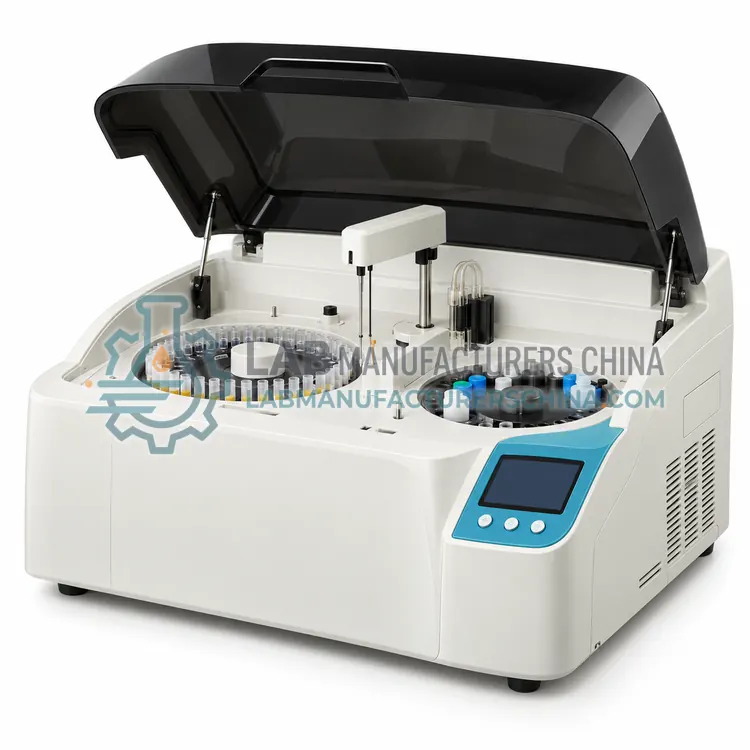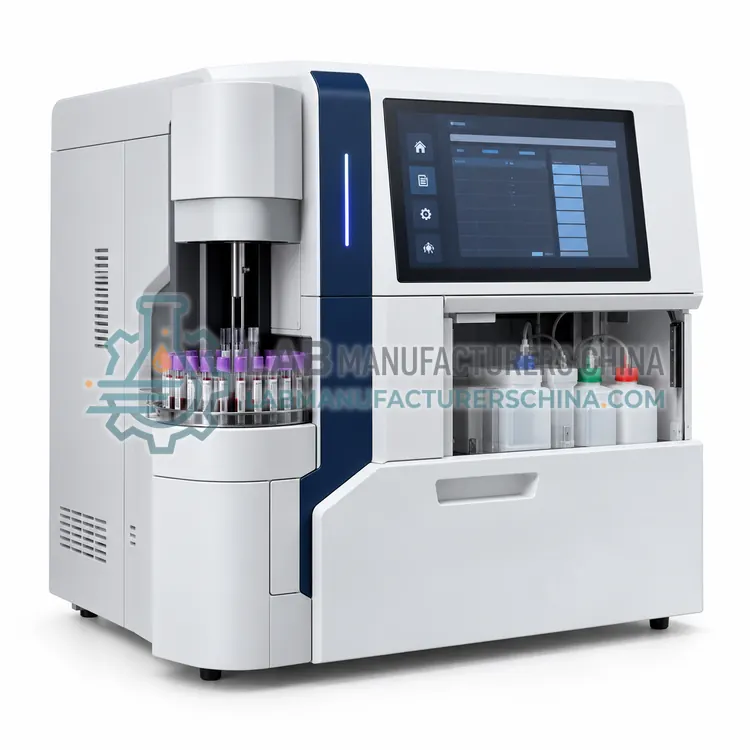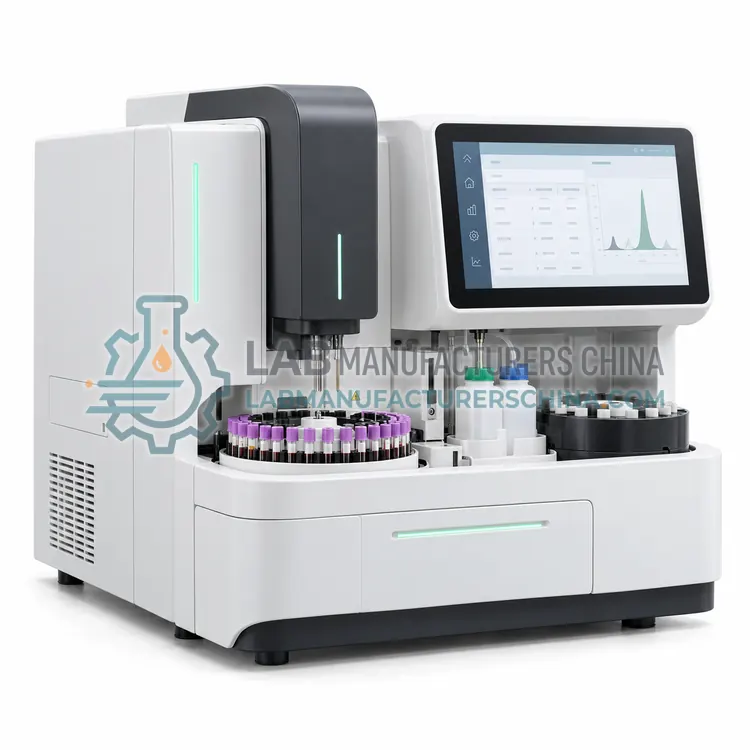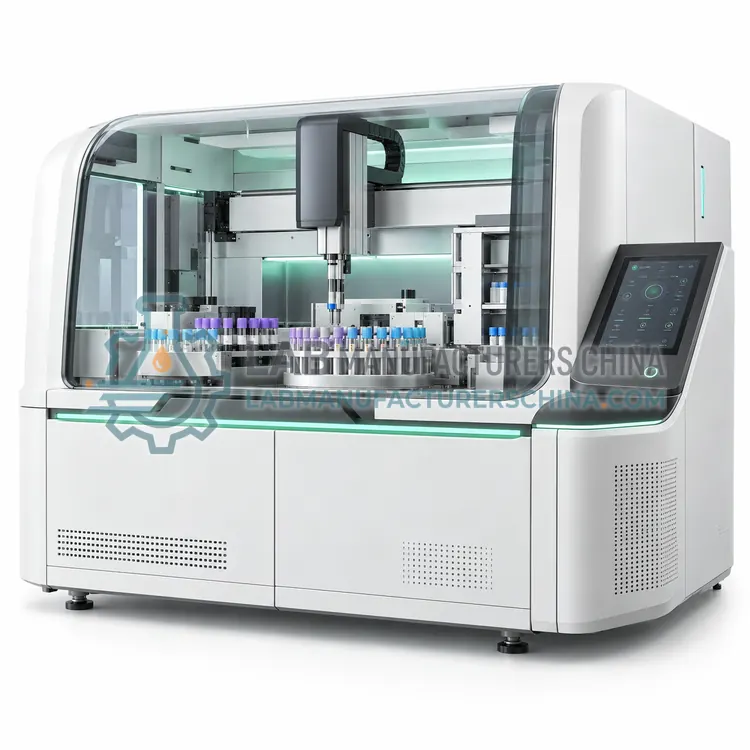
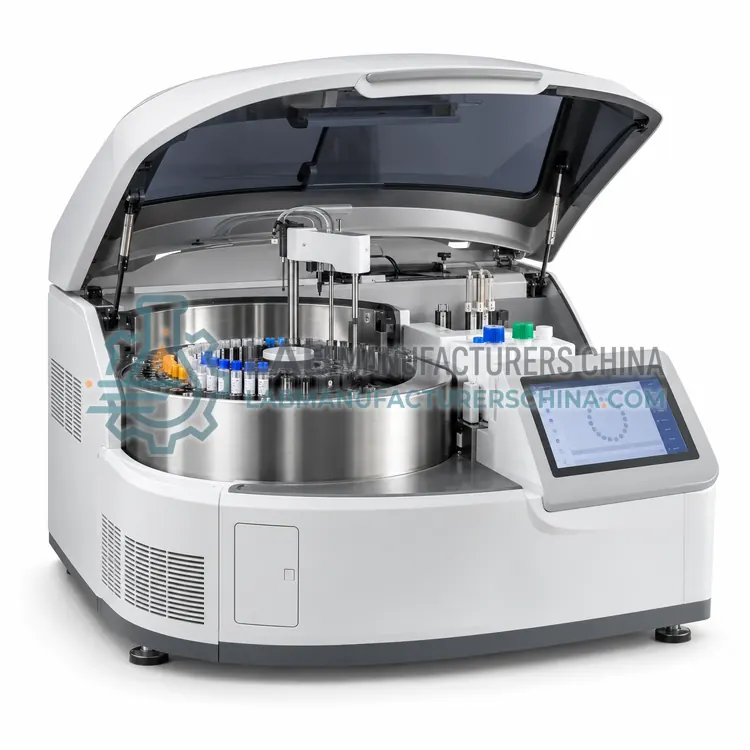
Specific Protein Analyzer
特定蛋白分析仪
- SKU CLA-0004
- Clinical Analyzers
- CE (to be confirmed)
- ISO 13485 quality system (to be confirmed)
- NMPA registration (to be confirmed)
Price on request — FOB / CIF quoted per order
Prices depend on configuration, quantity and destination port.
Key specifications
| Detection principle | Rate nephelometry / immunoturbidimetry |
|---|---|
| Throughput | 30–60 tests/h |
| Light source | Laser diode or LED, 340–670 nm |
| Sample volume | 2–20 µL per test |
| Measuring range (CRP) | 0.2–480 mg/L (hs-CRP 0.05–10 mg/L) |
| Precision | CV ≤ 5% (typical) |
Request a quote Download brochure · to be provided
By Lab Manufacturers China Technical TeamLast reviewed Standards: ISO 15189, CLSI EP05-A3, CLSI EP06
What is the Specific Protein Analyzer?
A specific protein analyzer quantifies plasma proteins such as CRP, immunoglobulins, complement and transferrin by measuring light scattered or absorbed by antigen-antibody complexes. It supports inflammation, immune status and renal protein testing in hospital, clinic and independent reference laboratories.
What is the Specific Protein Analyzer?
A specific protein analyzer quantifies plasma proteins such as CRP, immunoglobulins, complement and transferrin by measuring light scattered or absorbed by antigen-antibody complexes. It supports inflammation, immune status and renal protein testing in hospital, clinic and independent reference laboratories.
Overview
When a patient protein reacts with its specific antibody in buffer containing polyethylene glycol, insoluble complexes form and scatter light. In rate nephelometry, a detector at a low angle, commonly 13 to 90 degrees, records the maximum rate of scatter increase, which is proportional to antigen concentration. Immunoturbidimetry measures the absorbance loss of transmitted light. Instruments use laser diodes or LEDs at 340 to 670 nm, thermostatted cuvettes at 37 °C, automatic sample dilution and antigen-excess checks to avoid falsely low results at high concentrations. Latex-enhanced reagents extend sensitivity for low-level CRP. Calibration uses multi-point curves stored per reagent lot. Some analyzers run 30 to 60 protein tests per hour in closed cartridge or open cuvette formats.
How does it work?
Most clinical analyzers quantify an analyte by converting its concentration into a measurable signal. Photometric analyzers mix sample with reagent in a reaction cuvette, hold it at 37 °C, and measure absorbance at selected wavelengths through a grating or filter wheel; concentration follows the Beer–Lambert relation against a calibration curve. Ion-selective electrode modules measure the potential of Na+, K+ and Cl- across a selective membrane relative to a reference electrode. Turbidimetric and nephelometric modules detect light scattered by antigen-antibody complexes. Chromatographic analyzers separate hemoglobin fractions by cation-exchange HPLC. Key components include a sample and reagent probe with liquid-level detection, a precision syringe, a thermostatted reaction unit, a detection optic, and software that applies calibration, quality control rules and result flagging.
What are the key features?
- Rate nephelometry or immunoturbidimetry detection
- Automatic antigen-excess detection with re-dilution
- Latex-enhanced high-sensitivity CRP capability
- Thermostatted reaction at 37 °C with laser or LED source
- Multi-point calibration stored per reagent lot
- Menu covering CRP, IgG, IgA, IgM, C3, C4, transferrin and more
What are the technical specifications?
A typical specific protein analyzer configuration offers detection principle of Rate nephelometry / immunoturbidimetry, throughput of 30–60 tests/h, light source of Laser diode or LED, 340–670 nm, sample volume of 2–20 µL per test, measuring range (CRP) of 0.2–480 mg/L (hs-CRP 0.05–10 mg/L) and precision of CV ≤ 5% (typical). Values are indicative of the product class; the exact figures for each configuration are confirmed on the quotation and the calibration documents supplied with the instrument.
Which applications is it used for?
The Specific Protein Analyzer is used in CRP and inflammation testing, immunoglobulin and complement assessment, renal protein testing (microalbumin, β2-microglobulin) and rheumatology and immunology laboratories. Across the wider Clinical Analyzers class, laboratories also deploy it for routine serum chemistry, electrolyte and blood gas testing and diabetes monitoring (HbA1c).
Which standards and certifications apply?
Relevant standards and methods include ISO 15189, CLSI EP05-A3, CLSI EP06, CLSI C24, IEC 61010-2-101 and IEC 61010-1. Certification candidates for this model are CE, ISO 13485 quality system and NMPA registration; each is to be confirmed for the specific configuration before shipment, and certificates are supplied only where they have been issued.
Install on a level bench away from direct sunlight, vibration and strong electromagnetic sources, with stable power, a dedicated earth and a supply of purified water that meets CLSI Type II quality where the analyzer requires it. Verify performance before clinical use through precision, linearity, carryover and method comparison studies in line with CLSI EP protocols. Run internal quality control every day and join an external quality assessment scheme. Schedule daily probe cleaning, weekly lamp and cuvette checks, and replacement of tubing, syringes and lamps per the maintenance plan. Treat all samples and waste as biohazardous and follow local regulations for disposal.
How do I select the right Specific Protein Analyzer?
Choose this variant when the laboratory runs protein panels such as CRP, immunoglobulins and complement at volumes that do not justify routine chemistry capacity, or when high sensitivity is required. In the RFQ specify the menu, hs-CRP range, antigen-excess handling, reagent format and daily test count.
How does it compare with other Clinical Analyzers variants?
Start with the test menu and daily workload, because throughput and reagent format set the platform. Low volumes of routine chemistry suit a semi-automated photometer, while several hundred samples a day call for a benchtop random-access analyzer. Decide whether you need open reagent channels, which lower cost per test but require you to validate each assay, or closed reagent systems that simplify operation. Check sample volume needs for pediatric work, onboard reagent capacity, cuvette type and waste handling. For electrolytes, blood gas or HbA1c, choose a dedicated analyzer rather than stretching a general chemistry unit. Confirm LIS connectivity through HL7 or ASTM, barcode reading, and the availability of service engineers and spare parts in your region.
Full specifications
| Detection principle | Rate nephelometry / immunoturbidimetry |
|---|---|
| Throughput | 30–60 tests/h |
| Light source | Laser diode or LED, 340–670 nm |
| Sample volume | 2–20 µL per test |
| Measuring range (CRP) | 0.2–480 mg/L (hs-CRP 0.05–10 mg/L) |
| Precision | CV ≤ 5% (typical) |
| Reaction temperature | 37 °C |
| Dilution | Automatic, up to 1:1000 |
| Sample positions | 30–60 positions |
| Calibration | Multi-point, lot specific |
| Interface | USB, Ethernet, HL7/ASTM |
Indicative values for this product class. Final specifications are confirmed on the quotation and in the calibration documents supplied with the instrument.
Applications
- CRP and inflammation testing
- Immunoglobulin and complement assessment
- Renal protein testing (microalbumin, β2-microglobulin)
- Rheumatology and immunology laboratories
Key features
- Rate nephelometry or immunoturbidimetry detection
- Automatic antigen-excess detection with re-dilution
- Latex-enhanced high-sensitivity CRP capability
- Thermostatted reaction at 37 °C with laser or LED source
- Multi-point calibration stored per reagent lot
- Menu covering CRP, IgG, IgA, IgM, C3, C4, transferrin and more
Frequently asked questions about Specific Protein Analyzer
Nephelometry measures light scattered at an angle from the immune complexes, while turbidimetry measures the reduction of transmitted light. Nephelometry generally offers higher sensitivity at low concentrations, and turbidimetry runs on standard chemistry photometers. Both rely on the same antigen-antibody reaction.
At very high antigen concentrations, antibody becomes saturated by free antigen and fewer large complexes form, so the signal falls and the result can be falsely low. Analyzers check for this by adding more antigen or testing a dilution, then flagging or re-running the sample.
Many can run immunoturbidimetric protein assays with suitable reagents, particularly CRP, but sensitivity and antigen-excess control may be lower. A dedicated analyzer gives a wider protein menu, high-sensitivity assays and built-in excess checks, and suits laboratories with heavy immunology workloads.
A clinical analyzer measures concentrations of substances such as glucose, enzymes, electrolytes, lipids and proteins in patient samples. Results support diagnosis, treatment decisions and monitoring in hospitals, clinics and reference laboratories. Different platforms cover chemistry, electrolytes, blood gases, specific proteins and HbA1c.
An open system accepts reagents from any supplier once channel parameters are programmed and validated, which gives flexibility and lower cost per test. A closed system uses reagents supplied for that platform with pre-set parameters and barcodes, which simplifies operation but limits supplier choice.
Calibration frequency depends on the assay and reagent lot. Many photometric tests are recalibrated at each new reagent lot, after major maintenance, or when quality control shifts beyond limits. Electrolyte electrodes are typically calibrated automatically every few hours. Follow the reagent instructions for use and your laboratory procedure.