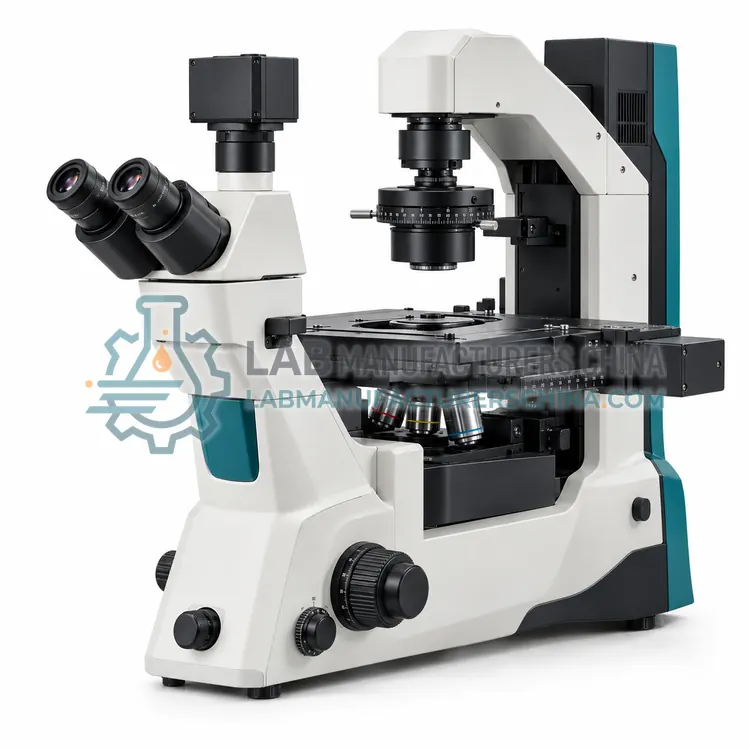
How do Inverted Microscopes work?
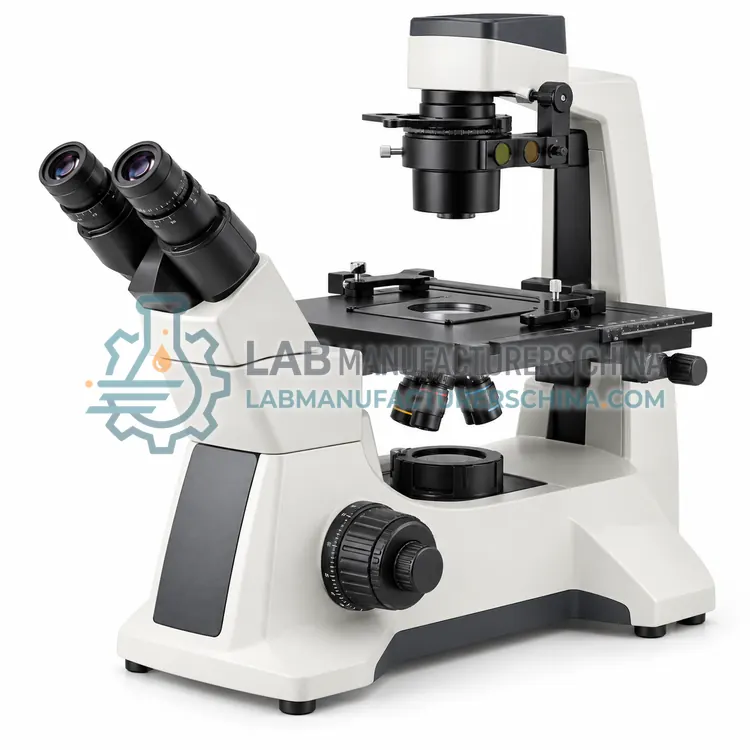
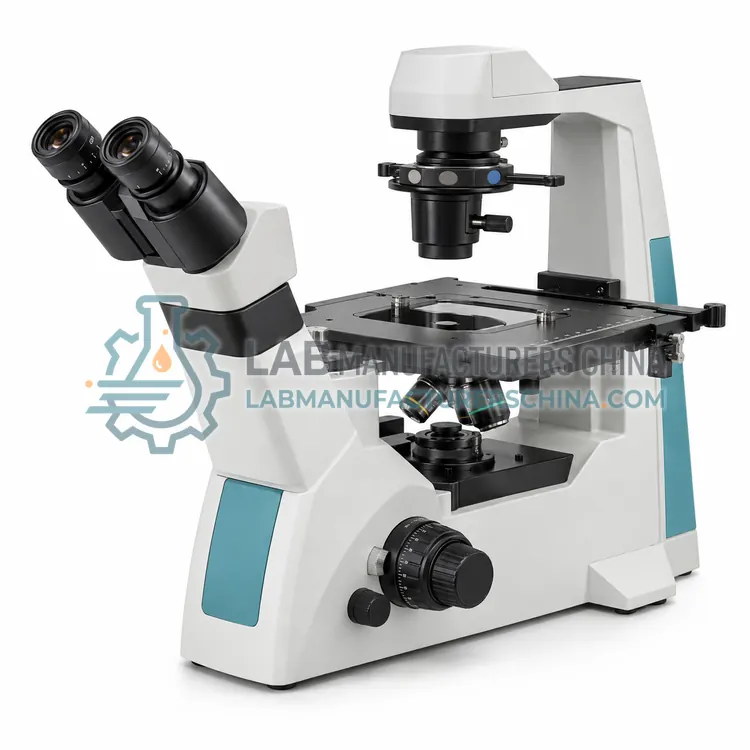
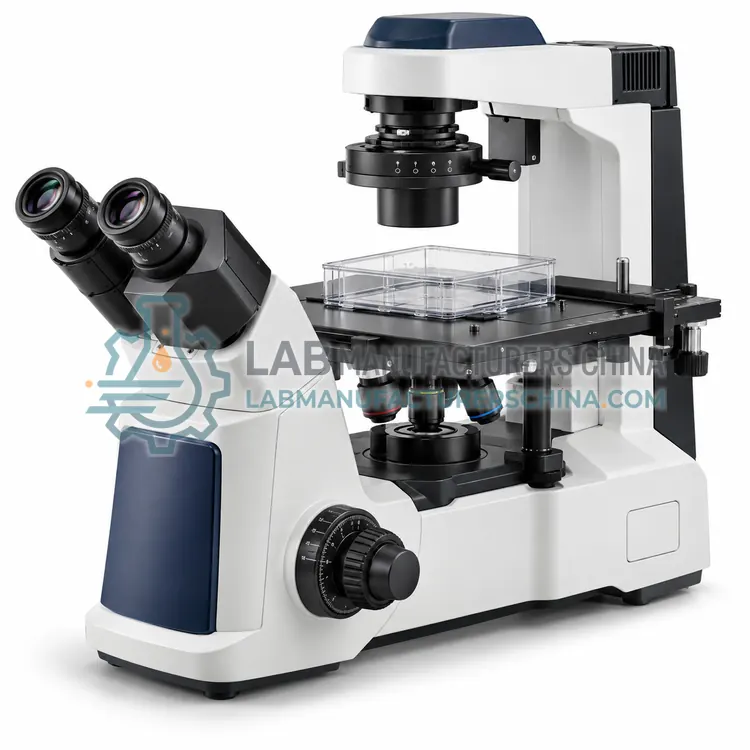
An inverted microscope reverses the usual arrangement so the objective looks upward from beneath the stage while the light source and condenser sit above. The specimen remains in a flask, dish or multi-well plate, so it need not be transferred to a slide. Long working distance objectives focus through the plastic or glass base of the vessel. Transmitted brightfield and phase contrast provide morphology, while episcopic illumination through the objective allows fluorescence. Ambient conditions can be controlled with heated stages and carbon dioxide chambers. The design supports observations of living material, micromanipulation and time-lapse imaging without disturbing the specimen.
Which Inverted Microscopes variants are available?
- Routine Inverted Microscope — A routine inverted microscope provides basic brightfield and transmitted-light observation of specimens in flasks and dishes.
- Inverted Phase Contrast Microscope — An inverted phase contrast microscope converts refractive index differences into contrast, making unstained living cells clearly visible in culture vessels.
- Inverted Tissue Culture Microscope — An inverted tissue culture microscope is configured for daily routine observation inside incubators and laminar flow cabinets.
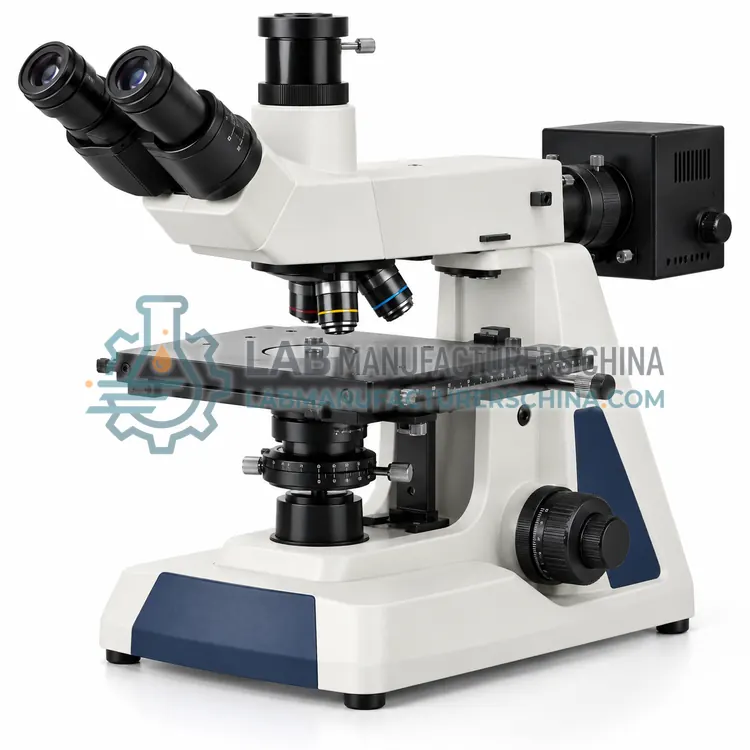
- Inverted Metallurgical Microscope — An inverted metallurgical microscope observes opaque samples from below using reflected light, so the polished or prepared surface faces downward.
- Motorized Inverted Microscope — A motorized inverted microscope automates stage movement, focus and often objective and filter changes, enabling high-throughput, reproducible imaging.
How do I choose the right variant?
Choose an inverted microscope whenever the specimen must stay in its vessel, especially living cells. Decide the observation method first: brightfield for stained or dense samples, phase contrast for unstained living cells, and fluorescence for labelled molecules. Confirm the working distance suits the vessel base and whether an environmental chamber or heated stage is required. For multi-well plates and automated imaging, a motorised stage reduces handling. For wafer or component inspection, an inverted metallurgical version with reflected illumination is used. Match objectives, condenser and camera to the required resolution.
Where are Inverted Microscopes used?
Inverted Microscopes are specified in live-cell and tissue culture microscopy, cell biology and stem-cell research, in vitro fertilisation and embryo work and semiconductor wafer and component inspection.
Which standards and certifications apply?
Work with Inverted Microscopes is commonly governed by ISO 8036, ISO 19012-1, ISO 9345-1, ISO 8255-1 and IEC 61010-1. Instrument certifications such as CE marking are confirmed per configuration and never assumed.
What are the key considerations before purchase?
Keep the vessel base clean and free of condensation, which scatters light and blurs the image. For phase contrast, centre the annulus with the matching objective. Maintain temperature and gas conditions for live cells, and minimise light exposure to reduce phototoxicity and bleaching. Long working distance objectives are exposed to the sample and medium, so clean them gently and avoid immersion of non-immersion optics. Calibrate measurements for each objective and vessel thickness, and record the setup with images. Service the stage and focus mechanisms regularly for stable time-lapse work.