Lab Manufacturers China

Polarizing Microscopes

偏光显微镜

POM · Laboratory Microscopes · 5 models

By Lab Manufacturers China Technical TeamLast reviewed Standards: ISO 8036, ISO 19012-1, ASTM E3

Standards referenced

  • ISO 8036
  • ISO 19012-1
  • ASTM E3
  • ISO 7404-3
  • IEC 61010-1

What are Polarizing Microscopes?

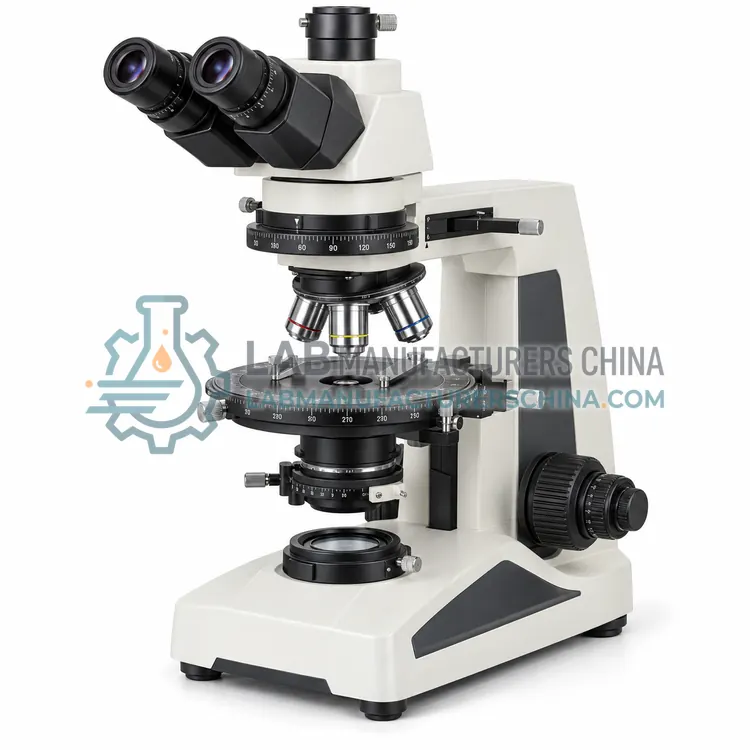
Polarizing microscopes use polarized light and a rotating stage to reveal optical anisotropy in crystals, minerals, fibres and polymers. They are used in geology, materials science, forensic and pharmaceutical testing to identify substances and study structure.

5 models of Polarizing Microscopes

The 5 models below are current configurations; specifications are confirmed on quotation.

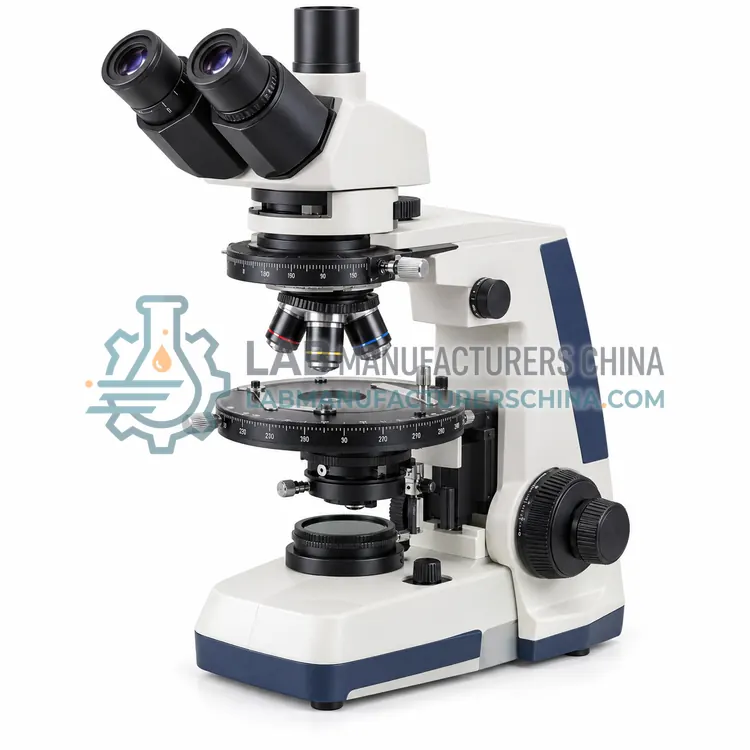
Petrographic Polarizing Microscope

岩相偏光显微镜

  • POM-0001
  • Polarizing Microscopes
  • CE (to be confirmed)
  • ISO 9001 manufacturing (to be confirmed)
Optical system:
Infinite corrected, strain-free
Magnification range:
40×–600×
Objectives:
4×, 10×, 40×, 60× strain-free
Stage:
Rotating 360°, graduated 1°
Polarizers:
Polarizer and analyser, crossed
Bertrand lens:
Focusable, centrable

A petrographic polarizing microscope is designed for transmitted-light study of thin sections of rocks and minerals. It combines crossed polarizers, a rotating centred stage and conoscopic observation for identification in geology laboratories.

Request a quote
View details

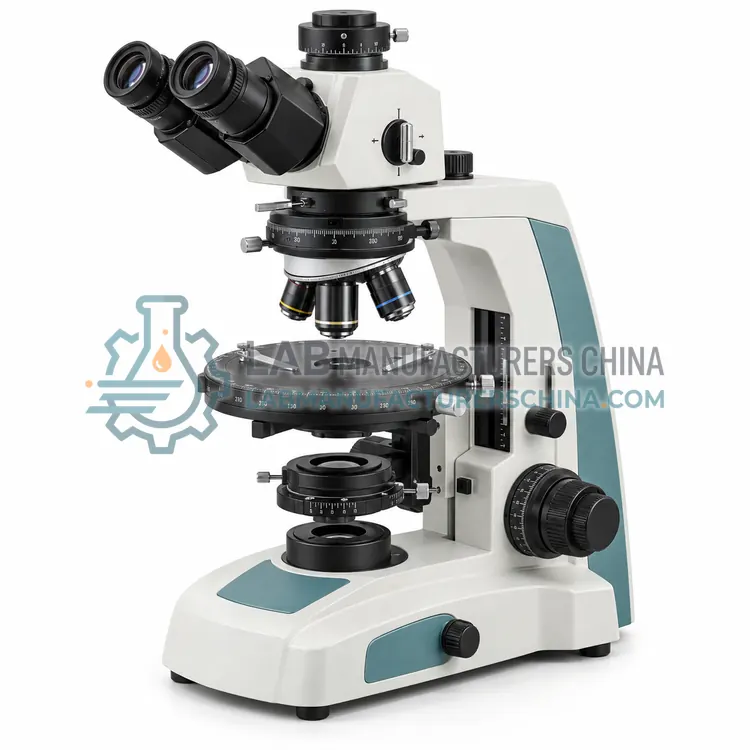
Transmission Polarizing Microscope

透射偏光显微镜

  • POM-0002
  • Polarizing Microscopes
  • CE (to be confirmed)
  • ISO 9001 manufacturing (to be confirmed)
Optical system:
Infinite corrected, strain-free
Magnification range:
40×–600×
Objectives:
4×, 10×, 40×, 60× strain-free
Stage:
Rotating 360°, graduated 1°
Polarizers:
Polarizer and analyser, crossed
Accessory slot:
For quarter-wave and full-wave plates

A transmission polarizing microscope examines transparent or thinly sectioned specimens in polarized transmitted light. It is used for crystals, fibres, films and biological birefringence where the sample transmits light. It is widely used in chemistry, materials and biology.

Request a quote
View details

Reflection Polarizing Microscope

反射偏光显微镜

  • POM-0003
  • Polarizing Microscopes
  • CE (to be confirmed)
  • ISO 9001 manufacturing (to be confirmed)
Optical system:
Infinite corrected, strain-free
Magnification range:
50×–1000×
Objectives:
5×, 10×, 20×, 50× plan
Stage:
Rotating 360°, graduated 1°
Polarizers:
Polarizer and analyser, crossed
Contrast modes:
Reflected brightfield, darkfield, polarized

A reflection polarizing microscope examines opaque polished specimens in polarized reflected light. It is used for ores, metals, ceramics and coatings where the surface reflects light and transmitted observation is not possible.

Request a quote
View details

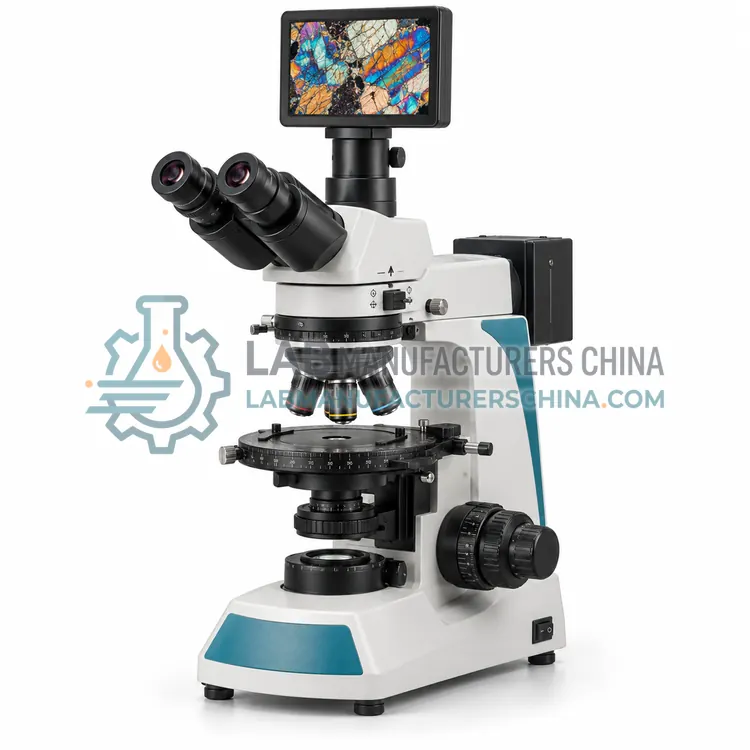
Digital Polarizing Microscope

数字偏光显微镜

  • POM-0004
  • Polarizing Microscopes
  • CE (to be confirmed)
  • ISO 9001 manufacturing (to be confirmed)
Optical system:
Infinite corrected, strain-free
Magnification range:
40×–600×
Objectives:
4×, 10×, 40×, 60× strain-free
Camera resolution:
5–20 MP
Stage:
Rotating 360°, graduated 1°
Polarizers:
Polarizer and analyser, crossed

A digital polarizing microscope captures polarized-light images through a digital camera and analyzes them with software. It combines anisotropy observation with measurement, annotation and archival of results. Recording of stage angle and polarization state supports reproducibility.

Request a quote
View details

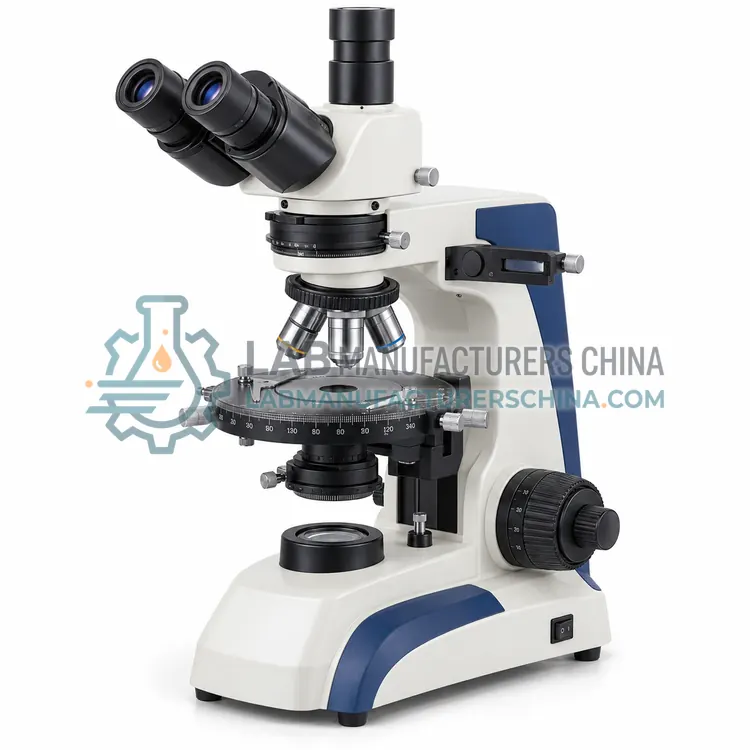
Rotating Stage Polarizing Microscope

旋转载物台偏光显微镜

  • POM-0005
  • Polarizing Microscopes
  • CE (to be confirmed)
  • ISO 9001 manufacturing (to be confirmed)
Optical system:
Infinite corrected, strain-free
Magnification range:
40×–600×
Objectives:
4×, 10×, 40×, 60× strain-free
Stage rotation:
360°, 0.1° graduation
Centring:
Dual centring screws
Polarizers:
Rotatable polarizer and analyser

A rotating stage polarizing microscope emphasises precise, centred stage rotation for measuring extinction angles and optical orientation. It is used where angular measurement accuracy is the primary requirement, especially in quantitative mineralogy.

Request a quote
View details

Compare Polarizing Microscopes models

ModelOptical systemMagnification rangeObjectivesStagePolarizers
Petrographic Polarizing MicroscopePOM-0001Infinite corrected, strain-free40×–600×4×, 10×, 40×, 60× strain-freeRotating 360°, graduated 1°Polarizer and analyser, crossed
Transmission Polarizing MicroscopePOM-0002Infinite corrected, strain-free40×–600×4×, 10×, 40×, 60× strain-freeRotating 360°, graduated 1°Polarizer and analyser, crossed
Reflection Polarizing MicroscopePOM-0003Infinite corrected, strain-free50×–1000×5×, 10×, 20×, 50× planRotating 360°, graduated 1°Polarizer and analyser, crossed
Digital Polarizing MicroscopePOM-0004Infinite corrected, strain-free40×–600×4×, 10×, 40×, 60× strain-freeRotating 360°, graduated 1°Polarizer and analyser, crossed
Rotating Stage Polarizing MicroscopePOM-0005Infinite corrected, strain-free40×–600×4×, 10×, 40×, 60× strain-free—Rotatable polarizer and analyser

Indicative values for this product class. Final specifications are confirmed on the quotation and in the calibration documents supplied with the instrument.

How do Polarizing Microscopes work?

A polarizing microscope places a polarizer below the specimen and an analyser above it, usually with their transmission directions crossed. Isotropic materials appear dark under crossed polarizers, while anisotropic materials split light into two rays and change its polarization, producing interference colours and extinction positions as the stage rotates. With a full-wave plate and accessory plates, retardation and optical sign can be estimated, and conoscopic observation with a Bertrand lens shows interference figures that identify crystal systems and optic axes. A rotating, centred stage with graduated scale allows precise angle measurement. Polarized light therefore converts differences in crystal orientation and refractive index into visible colours and extinction behaviour.

Which Polarizing Microscopes variants are available?

  • Petrographic Polarizing Microscope — A petrographic polarizing microscope is designed for transmitted-light study of thin sections of rocks and minerals.
  • Transmission Polarizing Microscope — A transmission polarizing microscope examines transparent or thinly sectioned specimens in polarized transmitted light.
  • Reflection Polarizing Microscope — A reflection polarizing microscope examines opaque polished specimens in polarized reflected light.
  • Digital Polarizing Microscope — A digital polarizing microscope captures polarized-light images through a digital camera and analyzes them with software.
  • Rotating Stage Polarizing Microscope — A rotating stage polarizing microscope emphasises precise, centred stage rotation for measuring extinction angles and optical orientation.

How do I choose the right variant?

Choose a polarizing microscope when optical anisotropy must be studied, such as identifying minerals, crystals, fibres or polymer structure. Decide whether transmitted polarized light is sufficient or whether reflected polarized light is also needed for opaque ores and polished sections. Confirm the stage rotates and is centred, and that a graduated scale with vernier is present for angle measurement. Consider whether strain-free objectives, a Bertrand lens, accessory plates and a conoscopic path are required. For quantitative work, a compensator and calibrated plates may be needed. Digital models add imaging and measurement software.

Where are Polarizing Microscopes used?

Polarizing Microscopes are specified in mineral and rock identification, crystal and pharmaceutical polymorph study, fibre and polymer orientation analysis and forensic and biological birefringence examination.

Which standards and certifications apply?

Work with Polarizing Microscopes is commonly governed by ISO 8036, ISO 19012-1, ASTM E3, ISO 7404-3 and IEC 61010-1. Instrument certifications such as CE marking are confirmed per configuration and never assumed.

What are the key considerations before purchase?

Centre and focus the rotating stage so the specimen stays in view, and calibrate the crosshair and scale against a known reference before measuring angles. Use strain-free objectives and keep polarizer and analyser clean; strain in optics or contamination produces false colours and extinction. Set the analyser accurately to extinction with no specimen in place. For quantitative retardation work, verify accessory plates and compensators and record their orientation. Avoid heat and vibration, which disturb optical alignment, and store the microscope with accessories protected. Recalibrate after service.

Frequently asked questions about Polarizing Microscopes

Birefringence is the property of anisotropic materials to split a light ray into two rays that travel at different speeds and have different refractive indices. Under crossed polarizers it produces interference colours and characteristic extinction as the specimen rotates, which helps identify and study such materials.

Need help specifying Polarizing Microscopes?

Request a quote