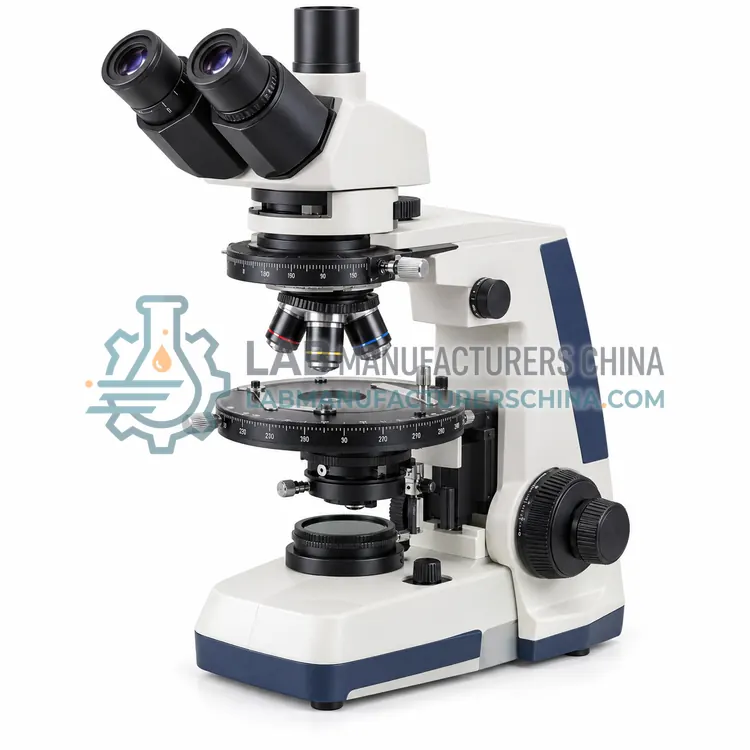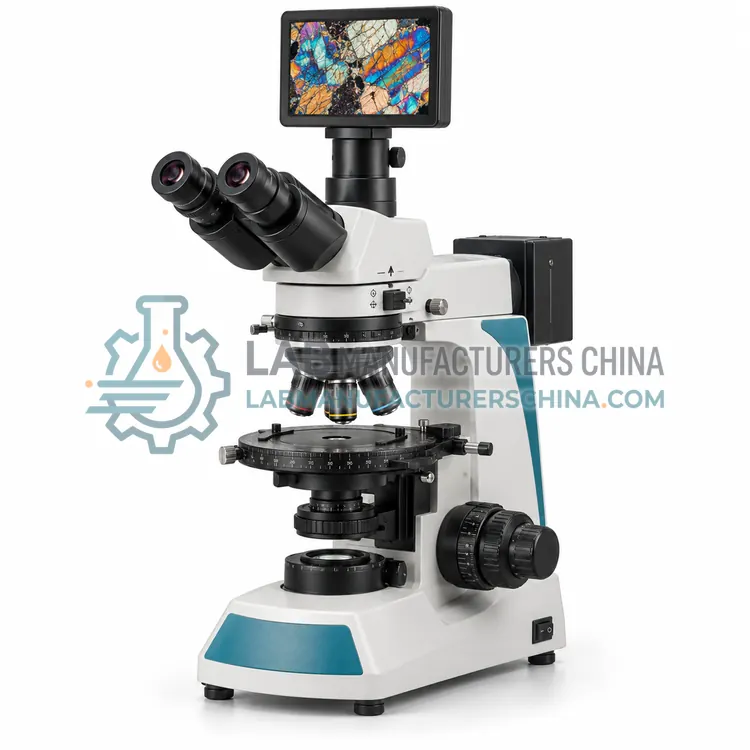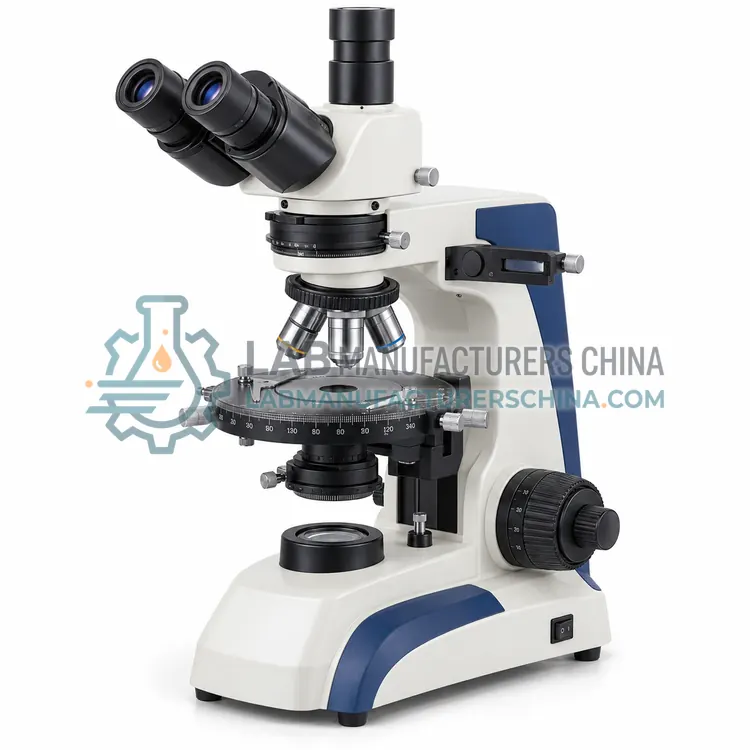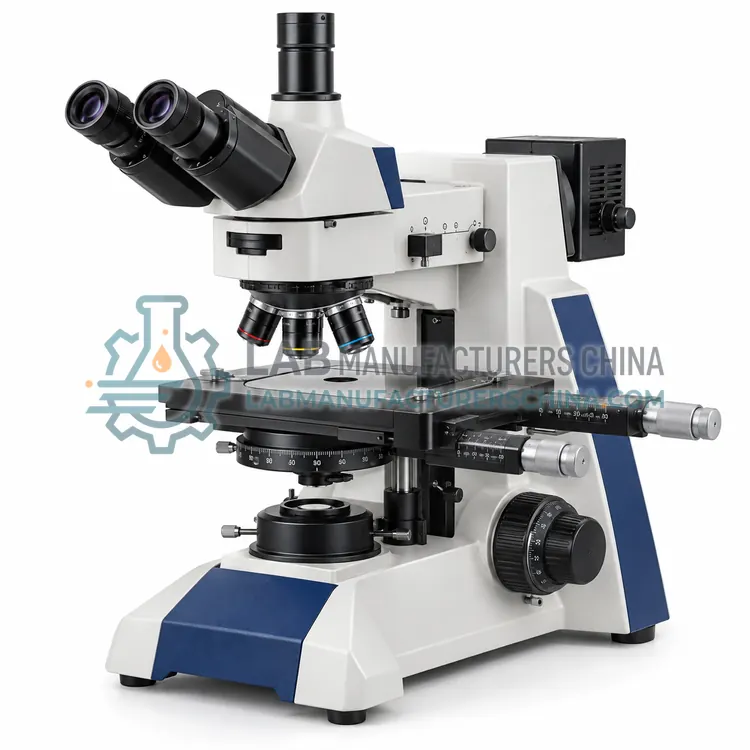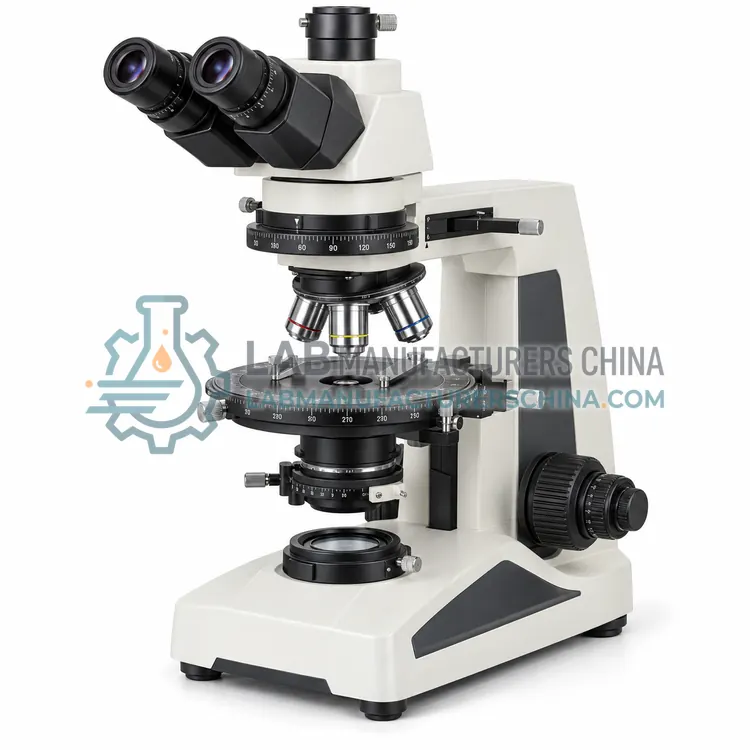
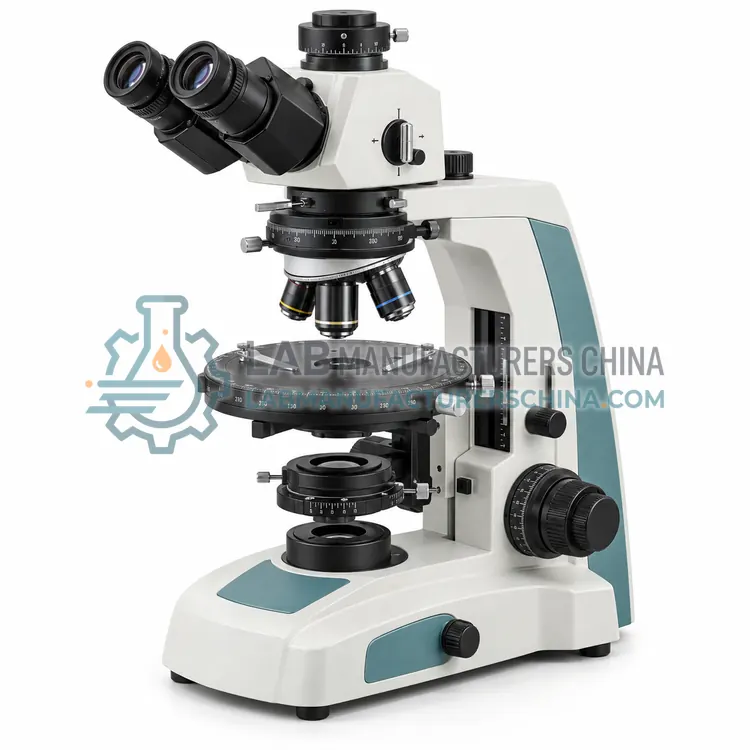
Reflection Polarizing Microscope
反射偏光显微镜
- SKU POM-0003
- Polarizing Microscopes
- CE (to be confirmed)
- ISO 9001 manufacturing (to be confirmed)
Price on request — FOB / CIF quoted per order
Prices depend on configuration, quantity and destination port.
Key specifications
| Optical system | Infinite corrected, strain-free |
|---|---|
| Magnification range | 50×–1000× |
| Objectives | 5×, 10×, 20×, 50× plan |
| Stage | Rotating 360°, graduated 1° |
| Polarizers | Polarizer and analyser, crossed |
| Contrast modes | Reflected brightfield, darkfield, polarized |
Request a quote Download brochure · to be provided
By Lab Manufacturers China Technical TeamLast reviewed Standards: ISO 8036, ISO 19012-1, ASTM E3
What is the Reflection Polarizing Microscope?
A reflection polarizing microscope examines opaque polished specimens in polarized reflected light. It is used for ores, metals, ceramics and coatings where the surface reflects light and transmitted observation is not possible.
What is the Reflection Polarizing Microscope?
A reflection polarizing microscope examines opaque polished specimens in polarized reflected light. It is used for ores, metals, ceramics and coatings where the surface reflects light and transmitted observation is not possible.
Overview
A reflection polarizing microscope illuminates an opaque polished specimen with polarized light through the objective and analyses the reflected light with a second polarizer. Reflected-light polarimetry reveals anisotropy in ore minerals by showing different reflectance, colour and extinction behaviour as the stage rotates. It is used for polished ore sections, metals with anisotropic phases, ceramics and coatings, and can be combined with brightfield and darkfield reflection. A rotating stage and crossed polarizers support extinction measurements, and strain-free objectives avoid added birefringence. The configuration is common in ore microscopy and in materials laboratories studying anisotropic structures.
How does it work?
A polarizing microscope places a polarizer below the specimen and an analyser above it, usually with their transmission directions crossed. Isotropic materials appear dark under crossed polarizers, while anisotropic materials split light into two rays and change its polarization, producing interference colours and extinction positions as the stage rotates. With a full-wave plate and accessory plates, retardation and optical sign can be estimated, and conoscopic observation with a Bertrand lens shows interference figures that identify crystal systems and optic axes. A rotating, centred stage with graduated scale allows precise angle measurement. Polarized light therefore converts differences in crystal orientation and refractive index into visible colours and extinction behaviour.
What are the key features?
- Polarized reflected-light illumination
- Analyser for crossed-polarized reflection
- Rotating stage for extinction measurement
- Combined brightfield and darkfield options
- Strain-free objectives for accurate polarimetry
What are the technical specifications?
A typical reflection polarizing microscope configuration offers optical system of Infinite corrected, strain-free, magnification range of 50×–1000×, objectives of 5×, 10×, 20×, 50× plan, stage of Rotating 360°, graduated 1°, polarizers of Polarizer and analyser, crossed and contrast modes of Reflected brightfield, darkfield, polarized. Values are indicative of the product class; the exact figures for each configuration are confirmed on the quotation and the calibration documents supplied with the instrument.
Which applications is it used for?
The Reflection Polarizing Microscope is used in ore mineral identification, anisotropic metal phase study, ceramic and coating anisotropy and coal and carbon material microscopy. Across the wider Polarizing Microscopes class, laboratories also deploy it for mineral and rock identification, crystal and pharmaceutical polymorph study and fibre and polymer orientation analysis.
Which standards and certifications apply?
Relevant standards and methods include ISO 8036, ISO 19012-1, ASTM E3, ISO 7404-3 and IEC 61010-1. Certification candidates for this model are CE and ISO 9001 manufacturing; each is to be confirmed for the specific configuration before shipment, and certificates are supplied only where they have been issued.
Centre and focus the rotating stage so the specimen stays in view, and calibrate the crosshair and scale against a known reference before measuring angles. Use strain-free objectives and keep polarizer and analyser clean; strain in optics or contamination produces false colours and extinction. Set the analyser accurately to extinction with no specimen in place. For quantitative retardation work, verify accessory plates and compensators and record their orientation. Avoid heat and vibration, which disturb optical alignment, and store the microscope with accessories protected. Recalibrate after service.
How do I select the right Reflection Polarizing Microscope?
Select a reflection polarizing microscope for opaque polished specimens that show optical anisotropy. Confirm the stage rotates and is centred, that the polarizer and analyser can be crossed, and that objectives are strain-free. Combined brightfield and darkfield modes are useful for complementary structure assessment. Ensure the illumination suits both dark and bright reflectance materials.
How does it compare with other Polarizing Microscopes variants?
Choose a polarizing microscope when optical anisotropy must be studied, such as identifying minerals, crystals, fibres or polymer structure. Decide whether transmitted polarized light is sufficient or whether reflected polarized light is also needed for opaque ores and polished sections. Confirm the stage rotates and is centred, and that a graduated scale with vernier is present for angle measurement. Consider whether strain-free objectives, a Bertrand lens, accessory plates and a conoscopic path are required. For quantitative work, a compensator and calibrated plates may be needed. Digital models add imaging and measurement software.
Full specifications
| Optical system | Infinite corrected, strain-free |
|---|---|
| Magnification range | 50×–1000× |
| Objectives | 5×, 10×, 20×, 50× plan |
| Stage | Rotating 360°, graduated 1° |
| Polarizers | Polarizer and analyser, crossed |
| Contrast modes | Reflected brightfield, darkfield, polarized |
| Illumination | Reflected, 12 V 50 W halogen or LED |
| Eyepiece | 10× with crosshair |
| Camera port | C-mount trinocular |
| Power supply | 100–240 V AC |
Indicative values for this product class. Final specifications are confirmed on the quotation and in the calibration documents supplied with the instrument.
Applications
- Ore mineral identification
- Anisotropic metal phase study
- Ceramic and coating anisotropy
- Coal and carbon material microscopy
Key features
- Polarized reflected-light illumination
- Analyser for crossed-polarized reflection
- Rotating stage for extinction measurement
- Combined brightfield and darkfield options
- Strain-free objectives for accurate polarimetry
Frequently asked questions about Reflection Polarizing Microscope
Opaque materials whose optical anisotropy must be assessed, such as ore minerals, some metals with anisotropic phases, graphite and certain ceramics, need reflected polarized light. Transparent specimens are better examined with transmitted polarized light.
The analyser is set crossed with the polarizer, and the stage is rotated until the grain becomes darkest, which is the extinction position. The angle is read from the graduated stage. Comparison with reference data for the mineral identifies its orientation and helps classification.
Yes, a poorly polished or scratched surface scatters light, reducing contrast and introducing false features. Consistent grinding and polishing, and sometimes etching, are needed so that reflectance, colour and extinction reflect the material rather than preparation artefacts.
Birefringence is the property of anisotropic materials to split a light ray into two rays that travel at different speeds and have different refractive indices. Under crossed polarizers it produces interference colours and characteristic extinction as the specimen rotates, which helps identify and study such materials.
Rotating the stage changes the orientation of the specimen relative to the polarizers, so the extinction positions and interference colours can be observed and measured. The graduated scale and vernier let the extinction angle be read and compared with reference data for identification.
Orthoscopic observation uses parallel light to form a normal image of the specimen, showing interference colours and extinction. Conoscopic observation inserts a Bertrand lens to converge the light and form an interference figure in the back focal plane, revealing optic axes and helping determine the crystal system.
Related models