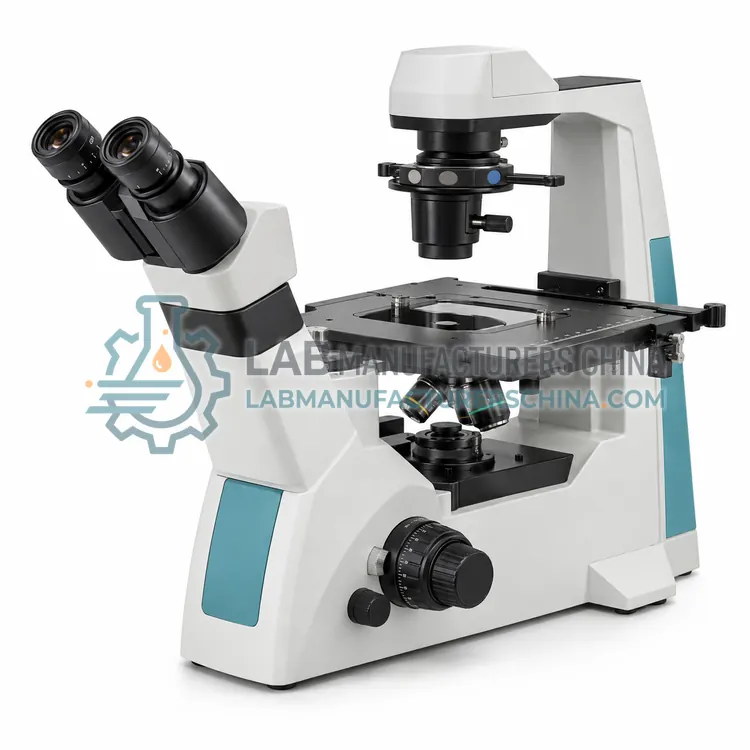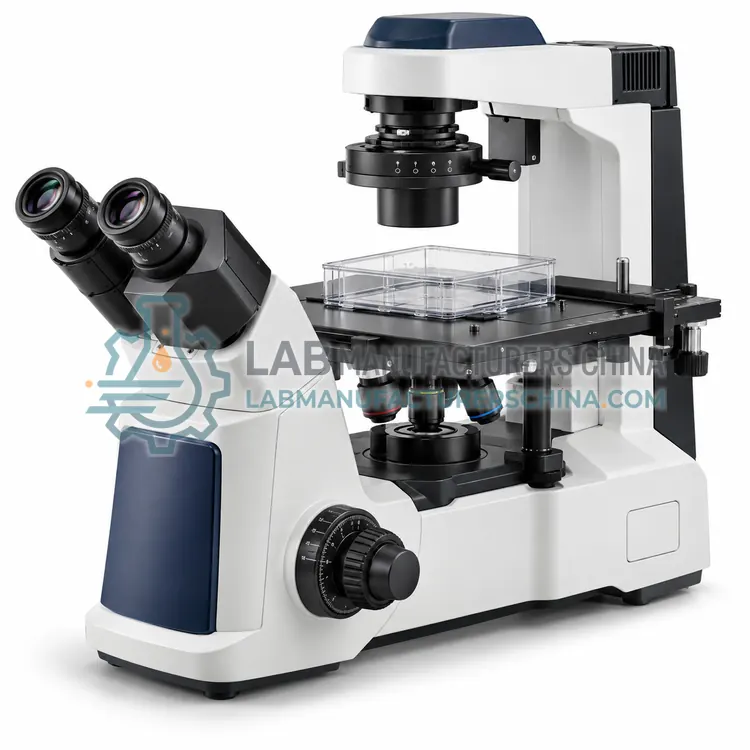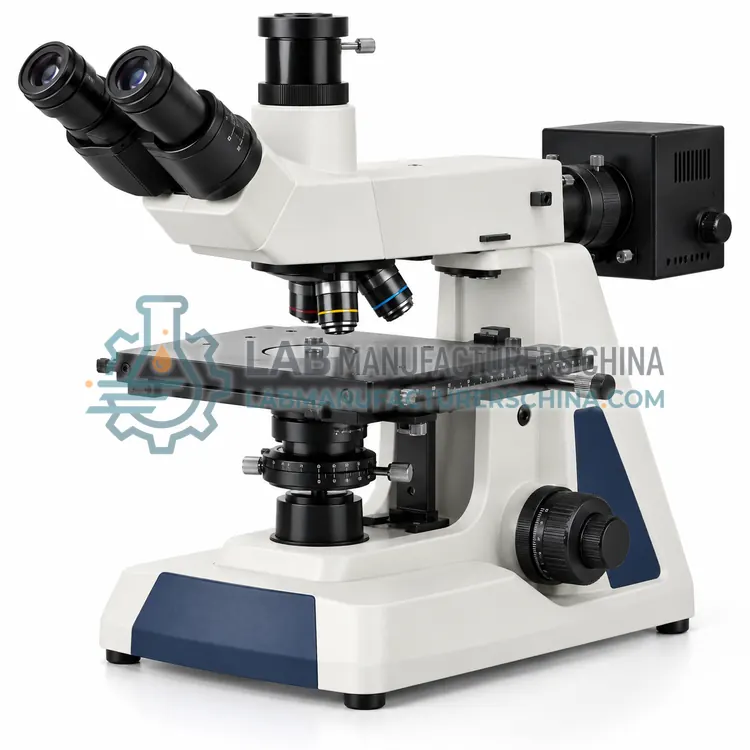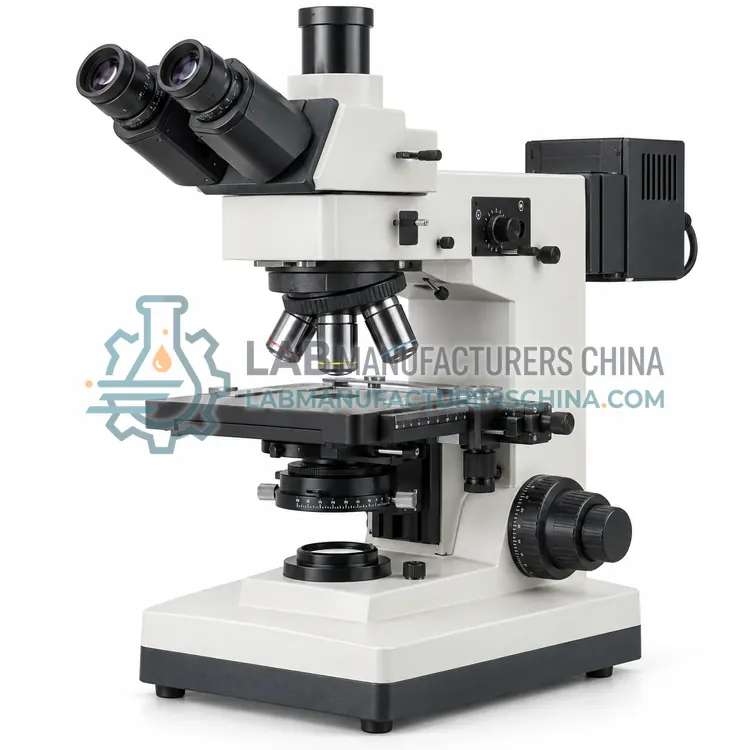
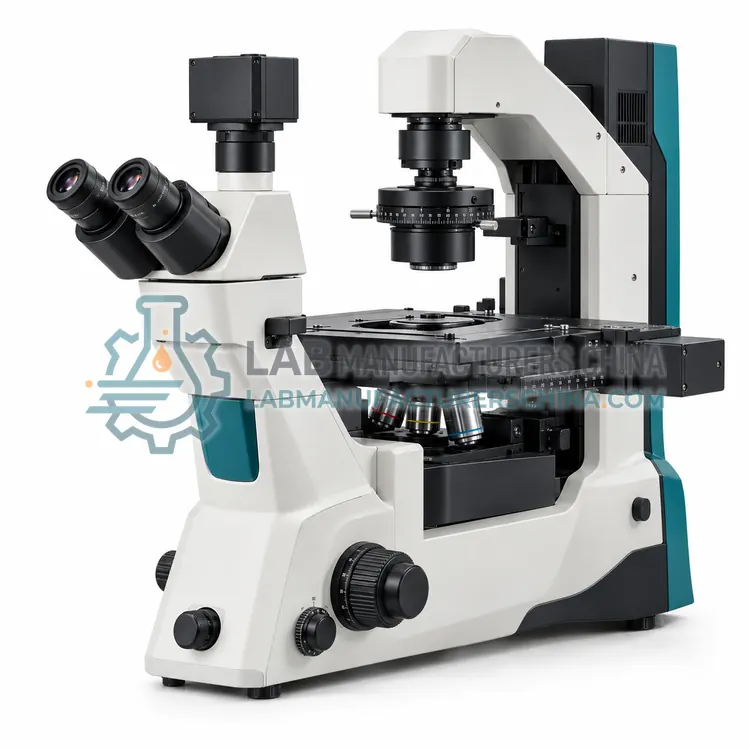
Motorized Inverted Microscope
电动倒置显微镜
- SKU INM-0005
- Inverted Microscopes
- CE (to be confirmed)
- ISO 9001 manufacturing (to be confirmed)
Price on request — FOB / CIF quoted per order
Prices depend on configuration, quantity and destination port.
Key specifications
| Optical system | Infinite corrected, fluorescence ready |
|---|---|
| Magnification range | 40×–600× |
| Objectives | 4×, 10×, 20×, 40×, 60× long working distance |
| Stage | Motorised XYZ with encoders |
| Positioning accuracy | ±1 µm |
| Filter turret | Motorised, 4-position |
Request a quote Download brochure · to be provided
By Lab Manufacturers China Technical TeamLast reviewed Standards: ISO 8036, ISO 19012-1, ISO 9345-1
What is the Motorized Inverted Microscope?
A motorized inverted microscope automates stage movement, focus and often objective and filter changes, enabling high-throughput, reproducible imaging. It is used for plate screening, time-lapse studies and automated image acquisition with minimal operator intervention.
What is the Motorized Inverted Microscope?
A motorized inverted microscope automates stage movement, focus and often objective and filter changes, enabling high-throughput, reproducible imaging. It is used for plate screening, time-lapse studies and automated image acquisition with minimal operator intervention.
Overview
A motorized inverted microscope drives the stage in x, y and z with stepper or servo motors under software control, so positions, focus and channels can be set, saved and repeated precisely. Objective nosepieces, filter turrets and illumination may also be motorised, allowing fully automated multi-channel, multi-position acquisition. Motorisation supports multi-well plate scanning, tiled large-area imaging, z-stacks and long-term time-lapse experiments with minimal operator intervention. Encoders improve positional accuracy and reproducibility. The instrument is typically integrated with incubators, plate handlers and analysis software to form an automated imaging platform. Software stores positions, focus offsets and channel settings as reusable protocols.
How does it work?
An inverted microscope reverses the usual arrangement so the objective looks upward from beneath the stage while the light source and condenser sit above. The specimen remains in a flask, dish or multi-well plate, so it need not be transferred to a slide. Long working distance objectives focus through the plastic or glass base of the vessel. Transmitted brightfield and phase contrast provide morphology, while episcopic illumination through the objective allows fluorescence. Ambient conditions can be controlled with heated stages and carbon dioxide chambers. The design supports observations of living material, micromanipulation and time-lapse imaging without disturbing the specimen.
What are the key features?
- Motorised XYZ stage under software control
- Automated objective and filter changing
- Multi-well plate and tiled image acquisition
- Z-stack and time-lapse automation
- Encoders for positional reproducibility
What are the technical specifications?
A typical motorized inverted microscope configuration offers optical system of Infinite corrected, fluorescence ready, magnification range of 40×–600×, objectives of 4×, 10×, 20×, 40×, 60× long working distance, stage of Motorised XYZ with encoders, positioning accuracy of ±1 µm and filter turret of Motorised, 4-position. Values are indicative of the product class; the exact figures for each configuration are confirmed on the quotation and the calibration documents supplied with the instrument.
Which applications is it used for?
The Motorized Inverted Microscope is used in high-content plate screening, automated time-lapse imaging, large-area tiled imaging and reproducible multi-position experiments. Across the wider Inverted Microscopes class, laboratories also deploy it for live-cell and tissue culture microscopy, cell biology and stem-cell research and in vitro fertilisation and embryo work.
Which standards and certifications apply?
Relevant standards and methods include ISO 8036, ISO 19012-1, ISO 9345-1, ISO 8255-1 and IEC 61010-1. Certification candidates for this model are CE and ISO 9001 manufacturing; each is to be confirmed for the specific configuration before shipment, and certificates are supplied only where they have been issued.
Keep the vessel base clean and free of condensation, which scatters light and blurs the image. For phase contrast, centre the annulus with the matching objective. Maintain temperature and gas conditions for live cells, and minimise light exposure to reduce phototoxicity and bleaching. Long working distance objectives are exposed to the sample and medium, so clean them gently and avoid immersion of non-immersion optics. Calibrate measurements for each objective and vessel thickness, and record the setup with images. Service the stage and focus mechanisms regularly for stable time-lapse work.
How do I select the right Motorized Inverted Microscope?
Choose a motorized inverted microscope for high-throughput, automated or long-term experiments requiring reproducible positioning. Confirm stage accuracy and travel suit the plate format, that the motorised turrets cover the required channels, and that software supports the workflow and data records. Check environmental control for live-cell work and integration with plate handlers if needed.
How does it compare with other Inverted Microscopes variants?
Choose an inverted microscope whenever the specimen must stay in its vessel, especially living cells. Decide the observation method first: brightfield for stained or dense samples, phase contrast for unstained living cells, and fluorescence for labelled molecules. Confirm the working distance suits the vessel base and whether an environmental chamber or heated stage is required. For multi-well plates and automated imaging, a motorised stage reduces handling. For wafer or component inspection, an inverted metallurgical version with reflected illumination is used. Match objectives, condenser and camera to the required resolution.
Full specifications
| Optical system | Infinite corrected, fluorescence ready |
|---|---|
| Magnification range | 40×–600× |
| Objectives | 4×, 10×, 20×, 40×, 60× long working distance |
| Stage | Motorised XYZ with encoders |
| Positioning accuracy | ±1 µm |
| Filter turret | Motorised, 4-position |
| Environmental control | Temperature and CO₂ chamber option |
| Camera port | C-mount, scientific camera ready |
| Control interface | USB, Ethernet |
| Power supply | 100–240 V AC |
Indicative values for this product class. Final specifications are confirmed on the quotation and in the calibration documents supplied with the instrument.
Applications
- High-content plate screening
- Automated time-lapse imaging
- Large-area tiled imaging
- Reproducible multi-position experiments
Key features
- Motorised XYZ stage under software control
- Automated objective and filter changing
- Multi-well plate and tiled image acquisition
- Z-stack and time-lapse automation
- Encoders for positional reproducibility
Frequently asked questions about Motorized Inverted Microscope
Motors allow positions, focus and channels to be programmed and repeated exactly, which supports multi-well scanning, tiling and time-lapse imaging without manual adjustment. This improves reproducibility and throughput and reduces operator fatigue and error during long experiments.
Software can refocus at each time point using image-based autofocus, or use a hardware focus sensor that tracks the surface or coverslip. Combined with a stable stage and controlled temperature, these methods keep the sample in focus during long time-lapse experiments.
Yes. Many motorized microscopes accept robotic plate handlers and incubator integration so that multi-plate experiments run unattended. Integration requires compatible software and mechanical interfaces, and is usually specified together with the imaging platform.
With the objective below, the specimen stays in its culture vessel and the space above the stage is free for medium, tools and perfusion. This allows living cells to be observed without transferring them to a slide, and gives room for micromanipulation and environmental control.
Yes. Episcopic illumination passes through the objective from below, so fluorescence filter cubes work as in an upright microscope. This allows live cells in dishes to be imaged for labelled molecules while remaining in culture conditions.
The objective must focus through the plate base, typically about 1 mm thick, without touching it. Working distances of several millimetres are common for inverted objectives, and the best value depends on the vessel, the required numerical aperture and whether tools must also access the sample.
Related models